Cat-Safe Houseplants That Keep Your Home Green Without Risk
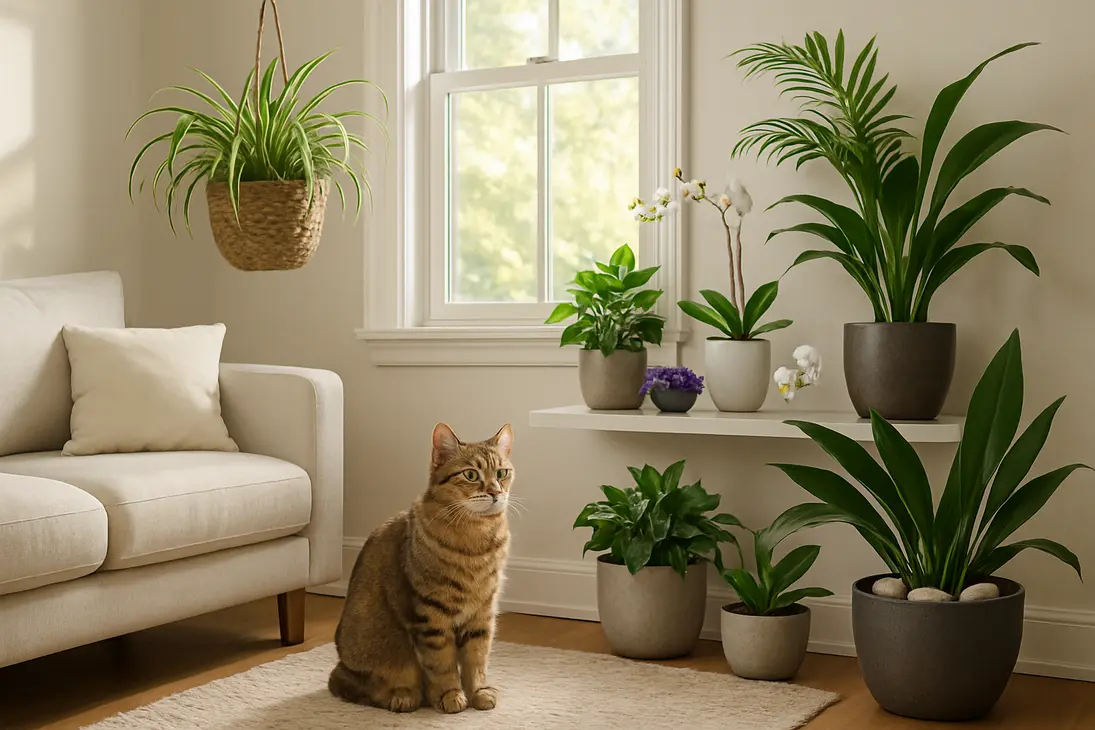
Living with cats does not mean giving up indoor plants. It means choosing carefully, because many common houseplants are irritating or toxic if a cat chews leaves, drinks saucer water, digs in soil, or knocks over a pot.
The safest plan is simple: choose cat safe houseplants considered non-toxic, then place and maintain them so your cat is less likely to chew, dig, or climb through them. Even a non-toxic plant can cause trouble if your cat eats a lot of it, swallows potting mix, or breaks the container.
What “Cat-Safe” Really Means for Houseplants
“Cat-safe” usually means a plant is not known to be toxic to cats if they nibble a small amount. It does not mean the plant is edible, harmless, or guaranteed not to cause stomach upset.
Think of non-toxic plants as safer choices, not risk-free decorations.
Non-toxic vs. harmless
A non-toxic plant should not cause poisoning the way lilies, sago palm, or oleander can. However, cats may still have problems after chewing safe plants, including:
- Vomiting from too much plant material
- Loose stool or mild stomach upset
- Gagging on long leaves
- Choking risk from thick stems or dropped pieces
- Irritation from soil, fertilizer, or pest treatments
Spider plants, for example, are widely treated as safe for cats, but a cat that chews them constantly may still vomit or develop a habit you need to redirect.
Why cats chew houseplants
Cats chew plants because of boredom, curiosity, texture, movement, or easy access. Kittens explore with their mouths, while indoor adult cats may investigate plants because they add changing smells and textures to the home.
Plant chewing is not always a nutritional issue. Long, strappy plants such as spider plants and ponytail palms can be especially tempting, even when non-toxic. If your cat is a persistent chewer, choose tougher plants with less dangling foliage and use placement as part of your safety plan.
When to call a vet or pet poison hotline
Call your veterinarian or a pet poison hotline promptly if:
- Your cat chewed a known toxic plant
- You are unsure what the plant is
- Your cat contacted lily pollen, leaves, stems, petals, or vase water
- Your cat is drooling, vomiting repeatedly, trembling, weak, swollen around the mouth, or breathing abnormally
- Your cat ate treated soil, fertilizer, pesticides, or systemic insecticides
Have the plant name or photo, amount eaten if known, your cat’s weight, and symptoms ready. Do not wait for severe symptoms with high-risk plants such as lilies or sago palm.
Best Cat-Safe Houseplants for Different Homes
The right plant depends on light, watering habits, space, and your cat’s behavior. The plants below offer variety while being safer options around cats.
Easy, low-maintenance cat-safe plants
If you want greenery without a demanding routine, start with these:
| Plant | Best for | Care notes | Cat-owner note |
|---|---|---|---|
| Spider plant | Beginners, shelves, hanging baskets | Bright indirect light; water when top soil dries | Non-toxic, but dangling babies invite chewing |
| Parlor palm | Low to medium light | Keep lightly moist | Safer than many palms; soft fronds may attract batting |
| Ponytail palm | Forgetful waterers | Bright light; let soil dry well | Non-toxic, but grass-like leaves tempt some cats |
| Peperomia | Desks, windowsills, small spaces | Moderate light; avoid overwatering | Confirm the exact plant |
| Cast iron plant | Low effort, lower light | Tolerates neglect | Tough leaves are less snack-like |
Spider plants grow quickly but can become toys. Parlor palm is a practical indoor palm for lower light. Ponytail palm dislikes wet soil and suits forgetful waterers. Peperomias stay compact, while cast iron plant is one of the toughest options for lower light and inconsistent care.
Cat-safe plants for low-light rooms
Low light does not mean no light, but some plants tolerate dim rooms better than others.
Prayer plants have patterned leaves that fold and shift through the day. They prefer indirect light, steady moisture, and more humidity than many dry homes provide. Calatheas, often sold as Goeppertia, are also non-toxic to cats but can be fussy about dry air, hard water, and uneven moisture.
Parlor palm is one of the most practical low-light cat-safe plants because it grows slowly and keeps its shape. Boston fern can also be safe for cats, but it needs humidity and evenly moist soil. Watch plant names: asparagus fern is not the same as Boston fern and should be avoided around cats.
Colorful or decorative cat-safe choices
If you want more than green leaves, consider African violets, polka dot plant, fittonia, bromeliads, and orchids.
African violets are compact flowering plants for bright windowsills out of harsh midday sun. Polka dot plant has spotted leaves and may need pinching back to stay full. Fittonia, or nerve plant, has striking veined leaves and likes consistent moisture.
Bromeliads provide bold shape and color, usually in bright indirect light. Orchids, especially common moth orchids, are popular cat-safe flowering plants. They need airy orchid mix and should not sit in water.
Tall or statement plants that are safer for cats
Large plants are trickier because many trendy statement plants are unsafe for cats. Better options include areca palm, bamboo palm, money tree, and mature ponytail palm.
Areca palm gives a full, feathery look and needs room plus bright indirect light. Bamboo palm is another safer palm, but check the label: bamboo palm is not “lucky bamboo,” which is not a safe choice for cats.
Money tree, usually sold as Pachira aquatica, works well in bright indirect light. Its braided trunk is decorative, though some cats may scratch or chew it. Use a sturdy pot for any large plant because top-heavy containers are easy to tip.
Houseplants Cat Owners Should Avoid or Treat With Caution
Many “easy indoor plants” are not safe for cats. A plant can be beginner-friendly for humans and still be a poor choice for a pet household.
Highly toxic plants for cats
Avoid these plants in homes with cats, especially if your cat chews plants or has unsupervised access:
- Lilies: True lilies are among the most dangerous plants for cats. Leaves, petals, pollen, stems, and vase water are all concerns.
- Sago palm: All parts are dangerous, especially the seeds.
- Oleander: Highly toxic and not suitable where pets can access it.
- Dieffenbachia: Can cause mouth pain, drooling, and swelling.
- Philodendron: Many types contain irritating calcium oxalates.
- Pothos: Popular and easy, but not cat-safe due to similar irritating crystals.
Dieffenbachia, philodendron, and pothos may not carry the same risk as lilies, but they can still cause painful irritation and veterinary-level symptoms.
Popular “easy plants” that are not cat-safe
These plants appear often in beginner plant lists, but cat owners should choose alternatives:
- Snake plant
- Peace lily
- ZZ plant
- Monstera
- Jade plant
General plant advice often focuses on low maintenance, appearance, or low-light tolerance. For cat owners, toxicity matters just as much as ease of care.
Why plant labels and common names can be confusing
Common names are unreliable. “Palm,” “lily,” “bamboo,” and “fern” can refer to very different plants.
Parlor palm, areca palm, and bamboo palm are generally treated as cat-safe, while sago palm is dangerous. Peace lily is not a true lily, but it is still unsafe for cats. Boston fern is a safer fern, while asparagus fern is not.
When buying plants, look for the botanical name. If a tag only says “tropical foliage” or uses a vague common name, identify the plant before bringing it into a cat household.
How to Keep Cats and Houseplants Safely Together
Even with non-toxic plants, setup matters. A safe plant on a wobbly stand beside a favorite jumping route can still lead to broken pottery, spilled soil, or injury.
Place plants where cats can’t reach them
Watch how your cat moves through the room. Cats use furniture as pathways, so a plant that seems out of reach may be accessible from a sofa, windowsill, or bookshelf.
Good locations include closed rooms, high shelves with no launch point, or ventilated plant cabinets with light. For persistent climbers, “out of reach” may mean behind a door, not merely higher up.
Use hanging planters, shelves, and plant stands carefully
Hanging planters can protect tempting plants, but they must be secure. Use hooks or anchors rated for the weight of a watered plant, which is heavier than a dry one.
Shelves should be deep enough for the pot and not overloaded. Avoid heavy ceramic pots above beds, cat trees, or feeding areas. Plant stands should have a wide base and should not wobble when bumped.
Cover soil to discourage digging
Many cats are more interested in soil than leaves. To reduce digging, cover the soil surface with:
- Large smooth stones too big to swallow
- A fitted pot cover or mesh insert
- Coconut fiber mats cut to size
- Chunky bark, if your cat does not chew it
Avoid sharp gravel, small pebbles, cocoa mulch, or decorative materials treated with dyes or fragrances. Soil covers should let water pass through and should not trap moisture against stems.
Offer cat grass or catnip as a safer chewing outlet
Cat grass can redirect chewing, especially for cats that like thin, grassy leaves. Grow it in a stable, shallow pot and replace it when it becomes moldy, yellow, or chewed down.
Catnip may help some cats, though reactions vary. If catnip makes your cat wild and more likely to knock things over, use it away from plant shelves. The goal is to provide an approved target so houseplants are less interesting.
Avoid chemical deterrents, pesticides, and fertilizers cats may lick
Be cautious with anything applied to leaves, soil, or pot edges. Cats groom themselves and may lick residues from paws or fur.
Avoid essential oil sprays, mothballs, harsh bitter sprays not labeled for cats, and homemade deterrents based on concentrated citrus, pepper, or strong fragrances. Store fertilizers and pest products securely, wipe spills, and do not let cats drink from saucers. If you treat a plant, isolate it until the product is dry and safe according to the label.
Choosing the Right Cat-Safe Plant for Your Routine
A plant that fits your life is safer because stressed plants drop leaves, attract pests, and require more intervention. Match the plant to your habits before buying.
If you forget to water
Choose plants that tolerate drying out between waterings, such as:
- Ponytail palm
- Cast iron plant
- Peperomia
- Some bromeliads
- Parlor palm, if neglect is occasional
Avoid moisture-loving plants such as Boston fern, fittonia, and many calatheas if you routinely forget to water.
If your home has little natural light
Choose plants known for tolerating lower indoor light:
- Parlor palm
- Cast iron plant
- Prayer plant
- Calathea
- Boston fern
Low light slows growth and reduces water use, so check soil before watering. Overwatering in low light is one of the easiest ways to kill houseplants. If a room is truly dim all day, consider a grow light on a timer.
If your cat is a persistent chewer
Prioritize plant shape and placement over appearance. Avoid dangling leaves, grass-like foliage, and trailing stems within reach. Spider plants and ponytail palms may be non-toxic, but some cats find them irresistible.
Better choices may include cast iron plant, peperomia, African violet, orchids, or a sturdy money tree kept away from jumping routes. If plant chewing is obsessive, new, or paired with vomiting, appetite changes, or weight loss, mention it to your vet.
If you want variety without constant maintenance
Build a small collection with different textures but similar care needs:
- Bright indirect light: Peperomia, orchid, bromeliad, African violet
- Low-care greenery: Cast iron plant, parlor palm, ponytail palm
- Color and pattern: Prayer plant, calathea, fittonia, polka dot plant
Keep the number manageable. Five healthy, well-placed cat-safe plants are better than twenty plants you cannot monitor or identify.
Conclusion
Cat owners can enjoy a green home by choosing non-toxic plants, avoiding high-risk favorites, and arranging plants so chewing, digging, and tipping are less likely.
Good cat-conscious options include spider plants, parlor palms, ponytail palms, peperomias, cast iron plants, prayer plants, calatheas, Boston ferns, African violets, fittonias, bromeliads, orchids, areca palms, bamboo palms, and money trees.
Avoid or keep completely inaccessible lilies, sago palm, oleander, pothos, philodendron, dieffenbachia, snake plant, peace lily, ZZ plant, monstera, and jade plant. If your cat eats a plant you cannot identify, treat it as a possible risk and call your vet.
FAQ
What is the safest houseplant for cats?
There is no single safest plant for every cat. Good low-risk choices include spider plant, parlor palm, cast iron plant, peperomia, African violet, and Boston fern. The safest option is non-toxic, clearly identified, grown without risky chemicals, and placed where your cat is unlikely to chew or knock it over.
Are spider plants safe for cats?
Yes, spider plants are generally considered non-toxic to cats. However, their dangling leaves and baby plantlets attract chewing. If your cat eats a lot, it may vomit or have mild stomach upset.
Can cats get sick from non-toxic plants?
Yes. Non-toxic plants are not expected to poison your cat, but eating plant material can still cause vomiting, gagging, diarrhea, or irritation. Soil, fertilizers, pesticides, decorative stones, and broken pots can also create risks.
What should I do if my cat eats a toxic houseplant?
Remove the plant, take a photo or find the label, and call your veterinarian or a pet poison hotline right away. Do not wait for symptoms if the plant is a lily, sago palm, oleander, or another high-risk plant. Do not try home treatments unless a veterinary professional tells you to.
You Might Also Like