Are There Trees Without Roots?
A living tree cannot truly grow without roots. Roots absorb water and minerals, anchor the plant, store energy in many species, and connect the tree to the soil environment. If a tree has no functioning root system at all, it may stay green briefly by using stored moisture and carbohydrates, but it cannot survive long-term.
Confusion usually comes from one of three situations: the roots are hidden, the roots are tiny and newly formed, or the organism being called a “tree” is not a true tree. A seedling may look like only a shoot above the soil. A bare-root tree may arrive with roots trimmed short. Some algae, fungi, corals, or thalloid plants may look tree-like, but they are not trees in the botanical sense.
So, are there trees without roots? No—not true, living trees. But roots can be hidden, damaged, undeveloped, or confused with something else.
Can Any Tree Grow Without Roots?
No true tree can grow normally without roots. A tree needs roots to:
- absorb water from soil
- take up mineral nutrients
- anchor the trunk
- store carbohydrates in many species
- support beneficial soil relationships, including mycorrhizal associations
- replace water lost through leaves or needles
Leaves lose water through transpiration. Without roots, a tree is cut off from its water supply. Even dormant deciduous trees still need living tissues and viable roots to resume growth.
A freshly cut branch, holiday tree, or rootless sapling can look alive for a while. Buds may swell, leaves may briefly open, or bark may remain green under the surface. That does not mean the tree is growing without roots; it is using stored resources. Once those reserves are gone, decline follows unless new roots form.
Some woody plants can be propagated from cuttings. Willows, figs, mulberries, poplars, and some others may root readily under the right conditions. But the cutting becomes self-sustaining only after it produces roots.
Why roots may not be visible at first
Roots are often present long before they are obvious. In soil, they are hidden. A seed may send its first root downward before the shoot breaks the surface. In a pot, roots may be inside the root ball. In a bare-root tree, roots may be wrapped in moist packing material or pruned short for shipping.
Young feeder roots can be extremely fine, almost like pale threads. They are easy to break, overlook, or mistake for fibers in potting mix. A seedling may seem “rootless” simply because the shoot is more noticeable than the developing root.
Dormancy also causes confusion. A dormant bare-root fruit tree or shade tree may arrive with no leaves and little visible activity. That can be normal if the roots are moist and alive.
Difference between “no roots” and hidden, damaged, or undeveloped roots
Gardeners often use “no roots” for different situations.
| Situation | What it means | Can the tree survive? |
|---|---|---|
| Hidden roots | Roots are in soil, burlap, a root ball, or packing material | Usually, if healthy |
| Undeveloped roots | A seed or cutting has tiny new roots | Possibly, depending on species and care |
| Damaged roots | Roots exist but are dried, broken, rotted, or heavily pruned | Maybe, if enough live tissue remains |
| Truly no roots | No functioning root tissue at all | Not long-term for a true tree |
A tree with a reduced root system may recover in good conditions. A tree with no roots whatsoever is not a viable planting candidate in normal garden conditions.
Trees Grown From Seeds: What You Should See First
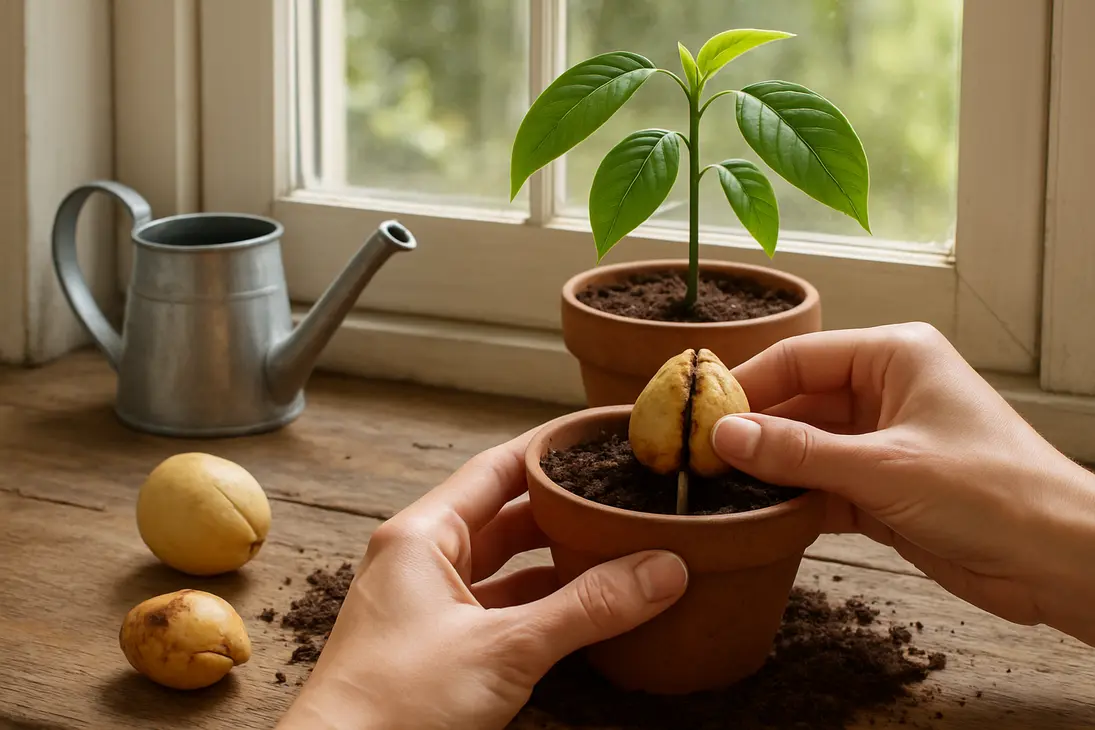
When a tree grows from seed, root growth usually begins before you see a leafy shoot. The seed contains an embryo and stored energy. Once moisture, oxygen, and temperature are suitable, germination begins. The first structure to emerge is usually the radicle, which becomes the primary root.
This early root anchors the seedling and begins taking up water. The shoot then grows upward toward light. Because this happens underground, someone checking only the soil surface may see no activity—or may see a shoot and assume it has no roots.
The radicle: the first sign of root growth
The radicle is the embryonic root. In many tree seeds, it appears as a small white or pale root tip. If you germinate seeds in a clear bag with a moist paper towel, this is often the first visible change.
The radicle is delicate. Do not handle it roughly, let it dry out, or leave it exposed to bright sun. If you pre-sprout tree seeds before potting them, plant them while the radicle is still manageable, usually pointing downward or gently sideways.
Some tree seeds need dormancy-breaking conditions before the radicle appears. Many temperate trees need cold, moist stratification; others have hard seed coats that slow water uptake. Slow germination does not mean the seed is rootless.
When seedlings appear above soil before roots are noticeable
A seedling may look like a tiny stem with no roots if it is pulled too early. The root may be:
- very thin
- coated with soil
- broken during pulling
- hidden inside a plug, peat pellet, or dense potting mix
Avoid tugging seedlings up to check for roots. This damages root hairs and can slow establishment. If you need to inspect germination, sow a few extra seeds in a transparent container, paper towel setup, or separate test pot.
Signs a seedling is developing normally
A tree seedling is likely developing normally if it shows steady growth and does not wilt immediately after emerging. Look for:
- a firm, upright stem
- leaves or cotyledons that expand and green up
- new growth after the first leaves appear
- no sour smell or mushy base at the soil line
- soil that stays lightly moist but not waterlogged
- slight resistance if you gently nudge it
Seedlings that collapse at the soil line may have damping-off, often encouraged by overly wet, stagnant conditions. Seedlings that emerge and stall may need more light, better drainage, a more suitable temperature, or simply more time.
Plants Often Mistaken for “Trees Without Roots”
Some organisms are called “trees” because of their shape, not because they are true trees. The word is used casually for branching forms: coral trees, mushroom-like forms, algae that resemble underwater forests, and even diagram “trees.” In gardening and botany, a true tree is a woody vascular plant with a persistent stem or trunk and a root system.
If someone asks which trees have no roots, stems, or leaves, the answer is that no true trees fit that description. Organisms without true roots, stems, and leaves belong to other biological groups or plant categories.
Thalloid plants and non-vascular plants
Thalloid plants have bodies not divided into true roots, stems, and leaves. Some algae and liverworts are described this way. Instead of a tree-like structure, they may have a flattened or sheet-like body called a thallus.
Non-vascular plants, such as mosses and liverworts, do not have the same water-conducting tissues as trees. Many have rhizoids, which help with attachment, but rhizoids are not true roots and do not function like a tree’s root system.
Moss on a rock, log, or trunk is not a tiny rootless tree. It is a different kind of plant with a different structure and life cycle.
Fungi, coral “trees,” and other non-tree examples
Fungi also cause confusion. Mushrooms can have stalks and branching forms, but fungi are not plants. They do not have roots, stems, or leaves. Their main body is usually a network of hyphae called mycelium, often hidden in soil, wood, or organic matter.
Corals may be called “trees” because some species form branching colonies, but coral is animal, not plant. There are also actual plants with common names such as coral tree, including species of Erythrina, and those do have roots.
Common names can mislead. “Tree” in a name does not always mean the organism is a botanical tree.
Why all true trees have stems, leaves or needles, and roots
True trees are vascular plants. They move water and minerals through xylem and transport sugars through phloem. Their leaves, needles, or scale-like foliage produce carbohydrates through photosynthesis. Their roots supply water and minerals and secure the plant.
A tree may lose its leaves seasonally. A trunk may be cut back and resprout from a living stump. Roots may be hidden, pruned, or damaged. But a living tree still depends on the relationship between roots, stem, and foliage.
Even unusual trees—mangroves with prop roots, bald cypress with knees, banyans with aerial roots, or figs that begin life perched on another plant—still have root systems.
What If You Receive or Find a Tree With No Roots?
This is the practical version of the question. Gardeners sometimes receive shipped trees that look like “just a stick,” especially bare-root fruit trees, roses, or small ornamentals. A Reddit gardening user, for example, described receiving a dry apricot tree with no roots and being told to plant it anyway. It is reasonable to inspect such a plant carefully.
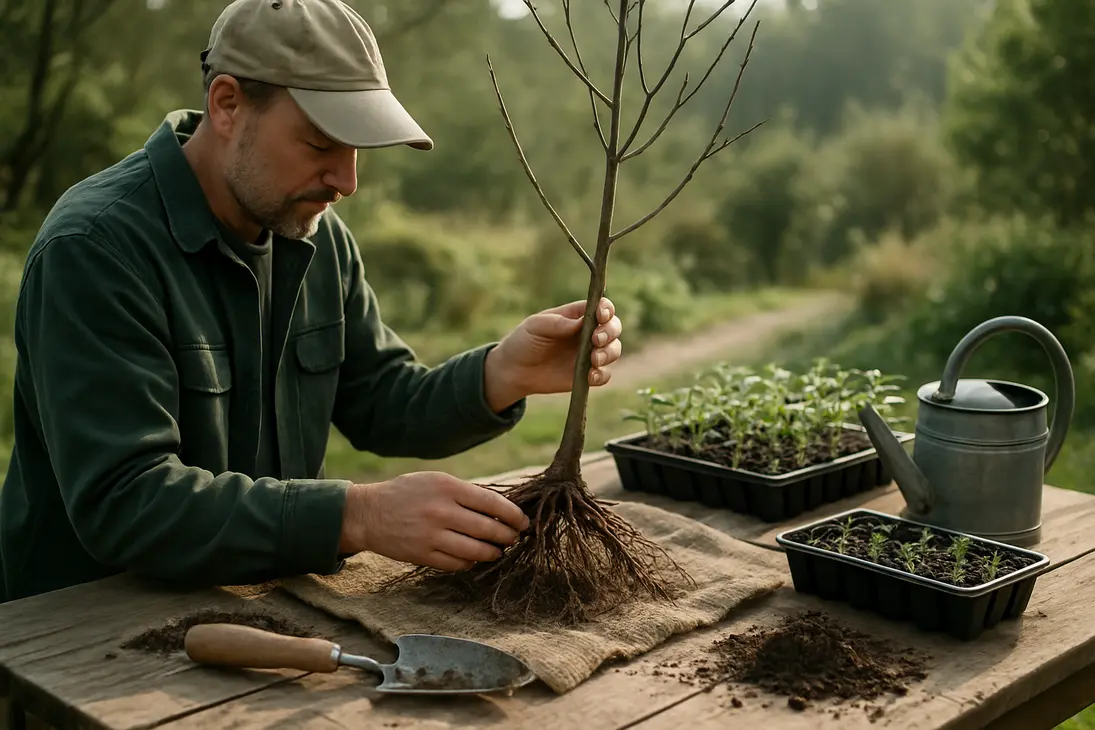
Bare-root trees are supposed to arrive dormant, not dead. They may look plain, but they should have a recognizable root system: main roots, smaller side roots, and ideally some fine roots. The roots should be moist, flexible, and protected from drying during shipping.
A severely root-pruned tree can sometimes survive. A truly rootless, dry stick should be treated with skepticism.
How to check if a bare-root tree is alive
Open the package as soon as it arrives. Do not leave a bare-root tree sitting in a warm garage or sunny entryway. Inspect it before planting so you can document its condition if needed.
Check for:
-
Root presence
A healthy bare-root tree does not need a huge root mass, but it should not be a clean, rootless pole. -
Root moisture
Roots should feel slightly damp, not crispy. Packing material should be moist but not foul-smelling. -
Root flexibility
Living roots usually bend somewhat. Dead roots often snap or crumble. -
Cambium color
Lightly scratch a tiny patch of bark on a twig or lower stem. Green or moist pale tissue beneath suggests life. Brown, dry tissue in multiple places is a bad sign. -
Bud condition
Dormant buds should be firm, not shriveled or hollow. -
Graft union, if present
On grafted fruit trees, inspect the graft union for cracks, rot, or breakage.
If the tree seems viable, soak the roots—not the entire top—for a few hours before planting, unless the nursery instructions say otherwise. Plant promptly, water thoroughly, and mulch around, not against, the trunk.
Signs the tree is dead or severely damaged
Some bare-root trees are merely dormant; others are not worth planting. Warning signs include:
| Sign | What it suggests |
|---|---|
| No visible roots at all | Very poor survival odds |
| Roots are brittle, dry, and snap easily | Severe desiccation |
| Bark is wrinkled and shriveled from top to bottom | Moisture loss and possible death |
| Scratch test shows brown, dry tissue in multiple areas | Dead cambium |
| Sour, rotten, or moldy smell from roots | Decay or poor storage |
| Broken graft union | Serious structural failure |
| Roots are black, mushy, and sloughing | Rot rather than dormancy |
A little broken root is normal in shipping. A few dead tips can be pruned cleanly. But a tree with no functional root system should not be sold as a healthy bare-root plant.
If you plant a questionable tree anyway, keep expectations realistic. Provide consistent moisture, avoid fertilizer burn, protect it from heat and wind, and wait for the normal bud-break window. Photograph the tree on arrival and contact the supplier promptly so any replacement period does not expire.
What to ask a nursery or supplier before accepting a replacement
Before accepting a replacement or store credit, ask:
- What root condition should I expect for this species and size?
- Is the tree grafted, and should the graft union be visible?
- How long was it in transit?
- Was it shipped dormant or actively growing?
- What is the replacement policy if it fails to leaf out?
- Do I need to plant it to keep the warranty valid?
- What photos do you require now?
- Will the replacement be inspected before shipping?
- Are shipping costs or warranty fees required?
Good nurseries provide clear planting instructions, realistic warranty terms, and plants with enough viable root tissue to establish. A bare-root tree does not need to look lush on arrival, but it should look alive.
Understanding Tree Root Growth and Common Misconceptions
The phrase “trees without roots” often appears alongside other misconceptions: that roots mirror the branches, that most roots plunge straight down, or that tangled roots automatically choke one another. Real root systems are usually more horizontal and widespread than many gardeners expect.
Understanding this helps you recognize a normal root system and plant trees where their roots can grow with fewer conflicts.
Most tree roots spread wider than people expect
Most absorbing roots are relatively shallow because oxygen, moisture, and organic matter are often most available in the upper soil layers. Large anchoring roots may go deeper depending on species and soil, but many tree roots spread outward well beyond the branch canopy.
This is why watering only at the trunk is often ineffective for established trees. It is also why compacted soil, trenching, paving, and construction can damage roots even when work is not right next to the trunk.
For newly planted trees, encourage roots to grow into surrounding soil. Dig a wide planting hole, loosen glazed edges, and set the root flare at the correct level. Do not bury the trunk deeply to “support” the tree; deep planting can suffocate roots and cause trunk problems.
Entangled roots do not automatically stop growth
Roots from neighboring trees, shrubs, lawns, and perennials often share soil space. Entanglement alone does not stop growth. In natural woodlands, roots overlap constantly.
The bigger issues are competition and physical defects. Trees may compete for water, nutrients, and oxygen. In containers or planting holes, roots can circle tightly and eventually girdle the trunk or major roots. A nursery-grown tree with circling roots should be corrected at planting when possible.
Do not panic because roots touch other roots underground. Do pay attention to limited soil volume, poor drainage, compaction, and circling roots near the base.
Planting distance matters near foundations, pipes, and sidewalks
Tree roots generally exploit existing opportunities. They are drawn to moisture, oxygen, and loosened soil. They can worsen cracks or enter damaged pipes, but they do not drill through sound concrete for no reason.
Still, planting distance matters. Large trees need soil volume for roots and overhead room for branches. Near foundations, sidewalks, driveways, sewer lines, and retaining walls, choose species carefully. A small ornamental tree may fit better than a large shade tree in a narrow strip.
Before planting, consider:
- mature height and canopy spread
- expected root spread and surface rooting tendencies
- distance from structures, pavement, and underground utilities
- soil drainage and compaction
- local climate and irrigation patterns
- whether the tree is grafted or on dwarfing rootstock
- access for pruning and maintenance
Dwarf and semi-dwarf fruit trees still have roots and still need adequate soil, water, and spacing. “Dwarf” does not mean rootless or maintenance-free.
Conclusion
There are no true living trees without roots. Roots may be hidden underground, newly formed from a germinating seed, reduced during bare-root shipping, or confused with other structures, but a tree needs a functioning root system to survive.
If you are growing trees from seed, expect the radicle—the first root—to appear before or alongside early shoot growth, even if you cannot see it in soil. If you receive a bare-root tree, inspect it for moist, flexible, living roots before planting. A dormant tree can look unimpressive and still be healthy, but a dry stick with no roots is not a normal or promising plant.
Many things called “trees” in casual language are not botanical trees at all. True trees have woody stems, leaves or needles, vascular tissues, and roots. When in doubt, look for the root system as the living support that makes tree growth possible.
FAQ
Can a tree grow from a seed without roots?
No. A tree seed normally produces a first root, called the radicle, during germination. This root may be hidden in soil or too small to notice, but it is essential. The shoot may be the first part you see above the soil, while root growth has already begun below.
What trees have no roots, stems, or leaves?
No true trees lack roots, stems, and leaves or needles. Organisms without those structures may be thalloid plants, algae, fungi, moss-like plants, or animals such as branching corals. They may look tree-like or have “tree” in a common name, but they are not true trees.
Can a bare-root tree survive if it arrives with no visible roots?
If it truly has no roots, its chances are very poor. A viable bare-root tree should have some living root tissue, even if trimmed. Moist, flexible roots and green cambium under the bark are good signs. Dry, brittle roots—or no roots at all—are reasons to contact the supplier immediately.
Why do some seedlings look like they have no roots?
Seedlings often look rootless because the roots are underground, very fine, or easily broken when pulled from soil. In normal germination, the first root appears early, but it may not be visible unless you germinate the seed in a transparent or paper towel setup. Avoid disturbing seedlings just to check.
Sources
- Reddit gardening discussion about receiving a dry, apparently rootless shipped tree: https://www.reddit.com/r/gardening/comments/u82st5/fast_growing_trees_scam
You Might Also Like