Can You Grow a Rowan Tree in California Zone 9?
Can a Rowan Tree Survive in California Zone 9?
Yes, but growing Rowan tree in CA zone 9 is a marginal project, not a reliable choice for every garden. A rowan can survive in the right microclimate, but many struggle where summers are long, dry, hot, and exposed.
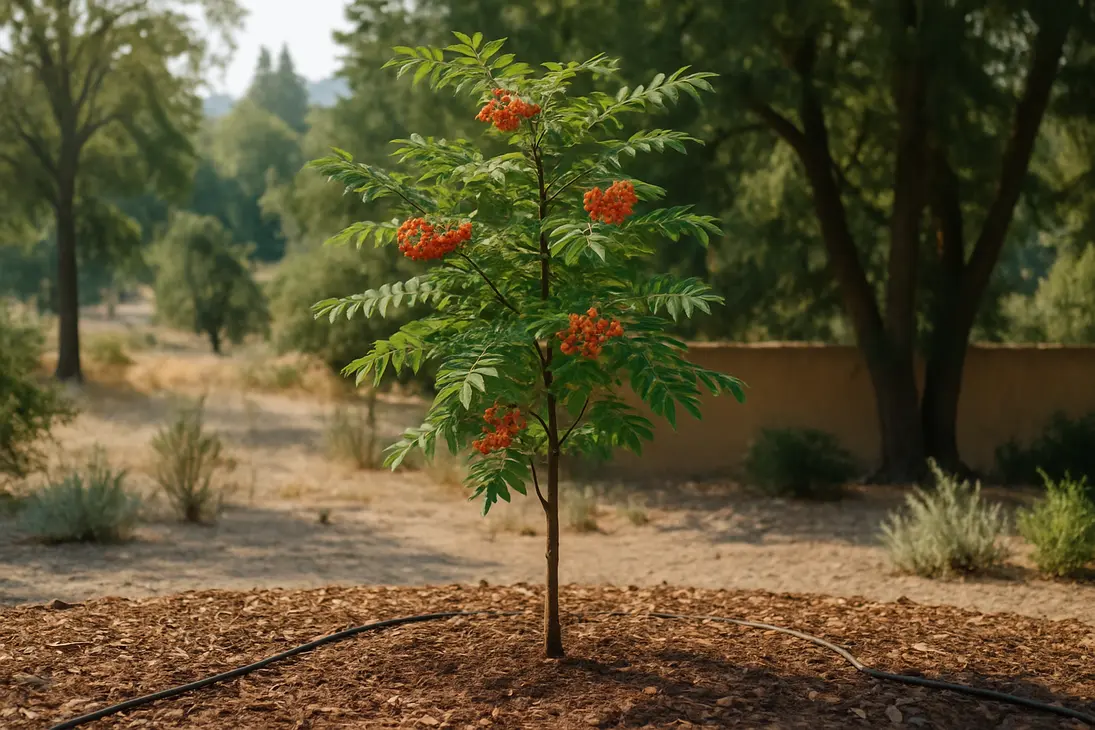
“Rowan” usually means European rowan or European mountain ash (Sorbus aucuparia), a small ornamental tree with white spring flowers, ferny leaves, and orange-red berries. It naturally prefers cooler, moister climates. USDA zone 9 only describes average winter lows; it does not account for summer heat, dry air, reflected heat, soil, or winter chill.
A zone 9 garden near the coast in Santa Cruz, Monterey, or parts of the Bay Area is very different from a zone 9 site in the Central Valley, inland Southern California, or a hot foothill area. Rowan may tolerate the winter but struggle with:
- Prolonged summer heat
- Dry soil and low humidity
- Reflected heat from paving or walls
- Warm nights
- Alkaline or compacted soil
- Insufficient winter chill
In a cool coastal or higher-elevation pocket, rowan may grow with careful siting, mulch, and irrigation. In a hot inland valley, it may scorch every summer, fail to berry, and decline. The honest answer is: possible in favorable parts of California zone 9, but unreliable in hot, dry zone 9 gardens.
Choose the Right Rowan Species and Planting Location
Species choice matters because not all Sorbus perform the same way. The classic European rowan, Sorbus aucuparia, is the one most gardeners picture, but it is strongly associated with cool climates. Some Sorbus species and hybrids may tolerate slightly warmer or drier conditions, but “more tolerant” does not mean heat-proof. Even a tougher rowan still needs a cool root zone, steady moisture, and protection from harsh afternoon sun.
Before planting, look for local proof. Check botanical gardens, independent nurseries, mature neighborhood landscapes, local gardening groups, and county or regional plant recommendations. Do not rely only on a mail-order hardiness-zone listing. If you cannot find healthy mature rowans in similar local conditions, treat that as a warning.
Best Microclimates for Rowan in California
The best California zone 9 sites for rowan feel cooler and moister than a typical inland garden.
Good candidates include:
| Microclimate | Why It Helps Rowan |
|---|---|
| Coastal zone 9 with fog or marine influence | Reduces summer heat and leaf scorch |
| Higher-elevation zone 9 | Provides cooler nights and better chill |
| North- or east-facing garden pockets | Avoids harsh afternoon sun |
| Irrigated beds or woodland edges | Keeps roots cooler and moist |
| Sheltered courtyards without reflected heat | Protects without baking the tree |
Poor candidates include Central Valley sites with repeated triple-digit heat, south- or west-facing slopes, narrow strips beside concrete, parking-lot-style exposures, dry windy foothills, desert-like gardens, and sites against heat-radiating walls.
A rowan can look healthy in spring and still fail the real test in July, August, and September. Judge the site by summer performance, not winter survival.
Sun, Shade, and Heat Protection
In cool climates, rowans often grow in full sun. In California zone 9, full sun may be too intense unless you are near the coast. In warmer gardens, aim for:
- Morning sun
- Bright open shade or filtered afternoon shade
- Protection from hot west sun
- No reflected heat from paving, gravel, or walls
Avoid the south or west side of a house, especially near stucco, brick, block, or concrete. A spot east of a taller tree, near a light canopy edge, or in a protected mixed planting is usually better.
Do not plant in deep shade. Too little light reduces flowering and can make the tree sparse. The goal is relief from the hottest part of the day, not darkness.
Planting and Care for Rowan Trees in Warm California Gardens
If you try a rowan, treat it as a cool-climate tree being helped through warm-climate summers. The first three years are critical because young trees have limited roots and are more vulnerable to heat and drought.
Plant in fall or very early spring when possible. Fall planting is often best in mild California areas because roots can grow during cool weather before summer arrives. Avoid planting just before heat waves.
Basic planting steps:
- Choose the coolest suitable site.
- Dig a wide hole no deeper than the root ball.
- Set the root flare at or slightly above soil level.
- Backfill mostly with native soil.
- Water thoroughly.
- Mulch widely, keeping mulch off the trunk.
- Stake only if necessary, and remove stakes once stable.
Do not fertilize heavily at planting. A stressed rowan needs steady moisture, oxygen, and root growth more than a flush of tender top growth.
Soil and Drainage
Rowan prefers soil that is well-drained but moisture-retentive. It should not sit in soggy, airless soil, but it also should not be in thin soil that dries out every afternoon.
Good soil is usually loamy, moderately fertile, open enough for root oxygen, moist but not waterlogged, and protected with mulch or nearby planting. Common California problems include compacted clay, alkaline soil, fast-draining decomposed granite, and stripped new-development soils. In high-pH or stressed conditions, rowan may show pale or chlorotic leaves.
If drainage is poor, do not dig a deep amended hole that becomes a sump. Plant slightly high, improve a broad area, and build soil quality over time with mulch and surface organic matter. If soil drains too fast, use mulch and drip irrigation to keep moisture available.
Watering Needs
Watering is one of the biggest success factors for rowan in California. It is not a “plant and forget” tree in a dry-summer climate.
During establishment, water deeply and consistently. The root zone should stay evenly moist, not saturated and not bone dry.
| Stage | Watering Goal |
|---|---|
| First few weeks | Keep root ball and surrounding soil moist |
| First summer | Deep water before wilting or scorch |
| Second and third summers | Continue deep irrigation during dry periods |
| Established tree | Water during long dry spells, heat waves, or visible stress |
In many zone 9 gardens, rainfall will not be enough after spring. Drip irrigation or a slow hose soak is better than frequent shallow sprinkling. Check moisture with a finger, trowel, or soil probe, especially during heat waves.
Mulch and Root-Zone Cooling
Mulch is essential for rowan in zone 9. It conserves moisture, moderates soil temperature, protects feeder roots, and improves soil texture as it breaks down.
Good mulch materials include arborist wood chips, shredded bark, leaf mold, or compost topped with coarser mulch. Apply mulch in a broad ring, ideally several feet from the trunk as the tree grows. Keep it about 2 to 4 inches deep, depending on material and drainage, and pull it back from the trunk to prevent bark problems.
Avoid rock mulch, gravel, black plastic, and bare exposed soil in hot climates. These increase root-zone heat and make summer stress worse. Low, compatible underplanting can help shade soil, but avoid aggressive plants that compete heavily with a young tree.
Pruning and Establishment
Keep pruning light while the tree establishes. Rowan naturally forms an attractive small tree shape, and heavy pruning can remove stored energy or stimulate tender growth at the wrong time.
Focus only on dead, damaged, or diseased branches; crossing branches that rub; crowded or narrow branch angles; and suckers or awkward low growth if needed.
Prune during dormancy or mild weather, not during summer stress. Avoid major canopy thinning in hot climates because foliage helps shade branches, bark, and the root area. If the tree is struggling, remove only what is clearly dead, broken, or hazardous.
Flowers, Berries, Pollination, and Wildlife Value
Rowan is valued for white spring flowers followed by bright berries that may persist into fall or winter, depending on birds and weather. In California zone 9, that display is possible but less reliable than in cooler climates.
Warm-climate stress can reduce flowering and fruiting. Poor berry set may result from young age, too little light, heat during bloom or fruit set, lack of compatible nearby Sorbus, irregular watering, or weak overall vigor.
The flowers attract pollinators, and the berries can feed birds. But if berries are your main reason for planting, be cautious: a marginal zone 9 site may not deliver the heavy display shown in cool-climate photos.
Is Rowan Dioecious?
Rowan trees are generally not dioecious. You usually do not need separate male and female trees to get berries. Many rowans have flowers with both male and female parts and can set fruit on their own.
However, self-fruitful does not always mean heavy fruit every year. Fruit set may improve if another compatible Sorbus is nearby, and pollinator activity and bloom weather also matter.
If a rowan fails to berry in California, the cause is more likely heat stress, youth, poor vigor, weak bloom conditions, or low pollinator activity than the absence of a “male” tree.
Are Rowan Berries Edible?
Rowan berries are best treated as ornamental and wildlife-friendly, not casual fresh fruit. Birds use them, and some rowan berries have traditionally been cooked into jellies or preserves. Raw berries are usually very bitter and may cause stomach upset if eaten in quantity.
If using rowan berries, confirm the plant’s identity, do not assume ornamental berries are edible, follow reliable food-preparation guidance, avoid eating them raw, and keep children from sampling unknown berries. For most California gardeners, rowan berries are more useful as a visual feature and bird food than as a kitchen crop.
Common Problems in Zone 9 and When to Choose an Alternative
Most rowan problems in California zone 9 come back to heat, drought, and site mismatch.
Likely issues include:
- Leaf scorch
- Premature leaf drop
- Sparse canopy growth
- Poor flowering
- Poor berry set
- Twig dieback
- Sunburn on exposed bark
- Spider mites or other pests on stressed foliage
- General decline after repeated hot summers
Pests and diseases can occur, but they are often secondary to stress. A tree under chronic heat and moisture stress is less able to defend itself and recover.
The key question is whether problems are occasional or annual. Slight scorch during an extreme heat wave may be tolerable. A rowan that collapses every summer despite good care is telling you the site is wrong.
Signs the Site Is Too Hot
Watch the tree from late spring through early fall. Rowan often looks promising in March and April, then reveals its limits in summer.
| Symptom | What It Usually Suggests |
|---|---|
| Brown, crispy leaf edges | Heat, sun, wind, or dry roots |
| Dull, fading, or curling leaves | Water or root stress |
| Early summer leaf drop | Tree reducing water demand |
| Weak annual growth | Repeated stress and low reserves |
| Twig or branch dieback | Chronic stress or root decline |
| Little or no flowering | Poor vigor, shade, youth, or climate stress |
| Flowers but few berries | Heat, pollination issues, or weak condition |
Before removing the tree, check basics: Is water reaching the root ball? Is mulch adequate? Is it planted too deep? Is reflected heat hitting it? Has it been over-pruned?
If the tree has deep irrigation, mulch, afternoon shade, and still scorches badly every summer, the site is probably too hot. Replacing it with a better-adapted plant is good gardening, not failure.
Better Alternatives for Hotter California Gardens
If your garden is hot, dry, inland, or exposed, choose a climate-adapted ornamental tree or shrub with flowers, berries, or wildlife value.
| Plant | Why It May Be Better |
|---|---|
| Toyon (Heteromeles arbutifolia) | California native with red winter berries and strong wildlife value |
| Serviceberry (Amelanchier spp.) | Flowers and berries; best in cooler or irrigated sites |
| Western redbud (Cercis occidentalis) | California native with spring bloom and good drought tolerance once established |
| Strawberry tree (Arbutus unedo) | Evergreen with ornamental flowers and fruit |
| Hawthorn (Crataegus spp.) | Flowers and berries; choose locally appropriate types |
| Coffeeberry (Frangula californica) | California native with wildlife value and dry-summer adaptation |
Toyon is often the closest emotional substitute for rowan in California: evergreen foliage, red berry clusters, bird value, and much better tolerance of dry summers. Serviceberry can be beautiful, but it is not automatically suited to every zone 9 site. Ask a local nursery what has survived several summers in your area.
Conclusion
Growing Rowan tree in CA zone 9 is possible only in the right conditions. The best chances are in coastal, foggy, higher-elevation, or otherwise cool microclimates with morning sun, afternoon shade, consistent summer water, well-drained moisture-retentive soil, and a protected root zone.
In hot inland zone 9 gardens, rowan is usually a gamble. It may leaf out beautifully in spring, then suffer scorch, early leaf drop, weak growth, and poor berrying through summer. If your garden is exposed, dry, and heat-reflective, a California-adapted berrying shrub or small tree will usually be more reliable.
FAQ
Is California zone 9 too warm for Rowan trees?
In many cases, yes. Rowan prefers cooler climates, so zone 9 is marginal unless the site has coastal influence, elevation, afternoon shade, or another cooling microclimate. Summer heat is usually the limiting factor.
Can Rowan grow in full sun in California?
In cooler coastal areas, possibly. In hotter zone 9 gardens, morning sun and afternoon shade are safer. Avoid full afternoon sun, reflected heat, and exposed west-facing sites.
How often should I water a Rowan tree in zone 9?
Water deeply and consistently during establishment and through dry summers. Keep soil evenly moist but not waterlogged. Check the root zone rather than using a fixed calendar because soil, wind, mulch, heat, and tree size all affect watering needs.
Will a Rowan tree produce berries in California?
It may, but berrying can be inconsistent in warm climates. Heat stress, young age, poor pollination conditions, low vigor, and unsuitable growing conditions can all reduce fruiting. A healthy tree in a cooler microclimate is much more likely to flower and berry well.
You Might Also Like