Which Seeds Can Be Planted in Soil—and What Happens if You Use the Wrong Type?
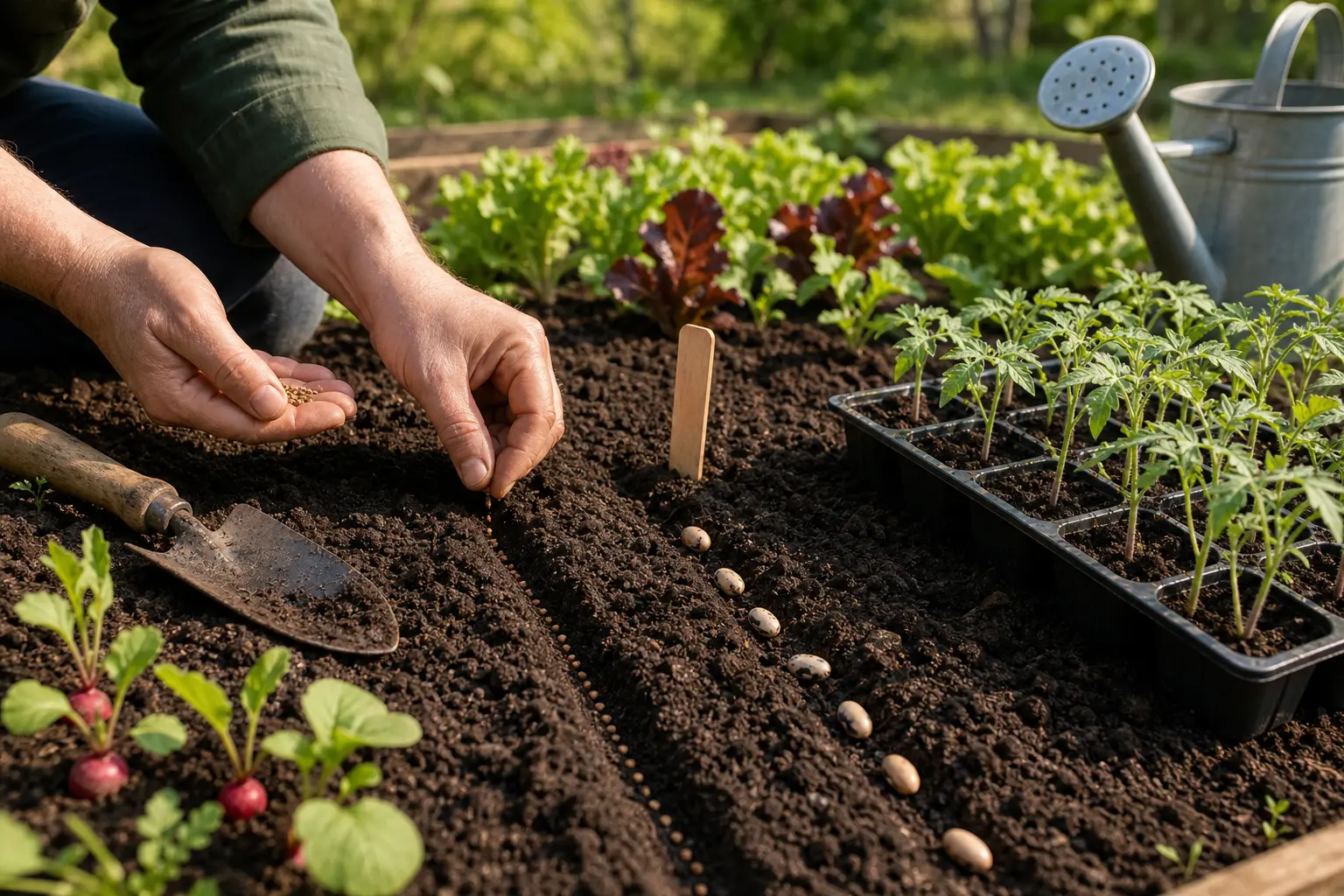
Most viable garden seeds can be planted in soil. The more important question is whether a seed should be direct-sown outdoors, started indoors, or given special treatment before sowing.
A carrot seed and a tomato seed can both grow in soil, but they are usually planted differently. Carrots grow best when sown where they will mature, while tomatoes often need an indoor start in cooler climates so they have enough time to produce fruit before autumn frost.
When seeds fail, soil itself is rarely the problem. More often, seed was old, planted at the wrong time, buried too deeply, kept too wet, or sown in conditions that do not suit that crop.
Choose Seeds That Suit Direct Sowing or Indoor Starting
Seeds commonly planted directly in garden soil
Direct sowing means planting seeds in their permanent outdoor location. It is simple, avoids transplant shock, and is especially useful for plants with sensitive roots.
Root crops are prime candidates for direct sowing:
- Carrots
- Radishes
- Beets
- Turnips
- Parsnips
Carrots and parsnips can become forked or misshapen if transplanted. Sow them in loose soil and thin seedlings to their final spacing.
Cool-season vegetables also work well outdoors. Peas, spinach, lettuce, arugula, kale, mustard greens, and many Asian greens can germinate in relatively cool soil. In mild climates, sowing small amounts every couple of weeks can extend the harvest.
Large seeds are generally easy to direct-sow, including beans, corn, squash, cucumbers, pumpkins, melons, and watermelons. However, these warm-season crops still need warm soil and frost-free weather.
Several annual flowers also prefer direct sowing because their roots dislike disturbance. Poppies, sunflowers, larkspur, nasturtiums, sweet peas, and calendula are common examples.
Seeds often started indoors before transplanting
Some crops take too long to mature if they are sown outdoors after spring arrives. Starting them indoors provides a protected head start while garden soil is still cold.
Vegetables commonly started indoors include:
- Tomatoes
- Peppers
- Eggplants
- Broccoli
- Cabbage
- Cauliflower
- Brussels sprouts
- Onions, especially from seed
Tomatoes, peppers, and eggplants need warmth and a long growing season. In short-summer regions, direct-sowing may result in plants that never produce ripe fruit before cold weather returns.
Broccoli and cabbage can be direct-sown in some climates, but indoor starts make it easier to plant sturdy seedlings at the right time. This is useful where spring turns hot quickly, since many brassicas struggle in heat.
Slow-growing plants may also be worth starting indoors. Lavender, for example, can germinate slowly and unevenly. Buying a young plug or nursery plant may be more practical if you need only a few plants.
Tender flowers such as petunias, impatiens, begonias, and some salvias are often started indoors because they need warmth and a long season to reach flowering size.
Seeds that need special treatment
Not all seeds should be covered with the same amount of soil.
Tiny seeds, including many petunias, snapdragons, lettuce varieties, and herbs, may need surface sowing or only a dusting of fine mix. Some need light to germinate, so burying them can prevent sprouting.
Other seeds have dormancy mechanisms that may require treatment:
- Cold stratification: A period of cold, moist conditions that imitates winter. Many perennial flowers, shrubs, and native plants need this.
- Soaking: Larger or hard-coated seeds such as peas, beans, nasturtiums, or sweet peas are sometimes soaked briefly to speed water absorption. This is optional for many crops.
- Scarification: Nicking or lightly sanding a hard seed coat so water can enter. This is most relevant to certain trees, perennials, and flowers.
- Light-sensitive germination: Seeds that need light should remain on or near the soil surface.
Saved seed from an open-pollinated plant is more likely to resemble its parent. Seed from a hybrid plant may germinate but produce plants that vary in size, flavor, color, vigor, or maturity time.
Match the Seed to the Soil, Season, and Growing Site
Start with viable, mature seed
Even perfect planting cannot revive seed that is dead or poorly developed. Use seed from a reputable packet or properly saved seed that was mature, dry, and stored in a cool, dry place.
Avoid seed that appears:
- Moldy, damp, crushed, insect-damaged, or shriveled
- Immature when collected
- Unusually discolored or soft
- Far beyond its expected storage life
Seed longevity varies. Onion and parsnip seed tends to lose viability relatively quickly, while many tomato, bean, and squash seeds can remain usable longer when stored properly.
Read the packet before planting. It should provide planting depth, spacing, expected germination time, indoor or outdoor sowing guidance, and an appropriate planting window.
Use soil that fits the crop
Germinating seeds mainly need close contact with moist soil, oxygen around the seed, and suitable temperatures.
Root crops need loose, stone-free ground. Carrots, parsnips, and long radishes may split or fork when they encounter compacted soil, rocks, fresh undecomposed manure, or dense clods. A deeply loosened or raised bed often produces straighter roots.
Most vegetables and annual flowers prefer soil that holds moisture but drains excess water. Soil that dries immediately after watering can make germination difficult, while waterlogged soil limits oxygen and encourages decay.
Lavender and other drought-adapted Mediterranean plants need especially sharp drainage once established. Heavy clay can hold water around the roots for too long. In dense clay, grow lavender in a raised area, on a slope, or in a container with freely draining growing medium.
Containers and raised beds are useful where native soil is compacted, rocky, poorly drained, or contaminated.
Wait for the right soil temperature
Calendar dates are only a starting point. Seeds respond to actual soil temperature, moisture, and weather.
Cool-season crops such as peas, spinach, lettuce, radishes, turnips, and leafy greens can germinate in cool, workable soil. Soil is workable when it is not frozen, waterlogged, or sticky enough to form heavy clumps.
Warm-season crops need reliably warm soil. Wait before sowing beans, corn, cucumbers, squash, pumpkins, melons, and watermelons. Warm daytime air does not necessarily mean the soil is warm enough, especially in heavy or wet ground.
When warm-season seeds sit in cold, saturated soil, they may remain dormant, decay, or rot before sprouting. Waiting a week or two for warmer conditions often produces stronger seedlings than planting early into chilly soil.
Plant Seeds at the Right Depth, Spacing, and Moisture Level
Follow the seed packet’s planting-depth guidance
Planting depth affects whether a seed has enough moisture to begin growing and enough energy to reach the surface.
A useful general rule is to plant a seed about two to three times as deep as its diameter. Large bean, pea, corn, and squash seeds can be planted deeper than tiny lettuce, basil, or flower seeds.
Packet instructions should take priority. Some seeds need light and should not be buried. Planting too deeply is a common cause of poor emergence: a seed may germinate underground but exhaust its stored energy before the shoot reaches daylight.
Space generously, then thin if needed
Gardeners often sow small seed somewhat thickly because not every seed will germinate. The key is thinning promptly after seedlings emerge.
Carrot seeds, for example, may be sown along a shallow row and then thinned. Lettuce, beets, spinach, and many flowers can also be thinned to give the strongest plants room to grow.
Do not dig up newly planted seeds simply because they may be close together. Let them sprout first. Once seedlings have developed small root systems, remove extras by snipping them at soil level or gently pulling them when soil is moist. Snipping is safest when seedlings are tightly crowded.
Some seedlings can be transplanted, especially lettuce, brassicas, tomatoes, and annual flowers. Root crops, peas, beans, poppies, and plants with sensitive taproots are less forgiving.
Keep the seed zone consistently moist, not waterlogged
Water gently after sowing to settle soil around the seed. A watering can with a rose attachment, a gentle hose nozzle, or bottom watering for containers helps prevent seeds from washing away.
During germination, the upper soil layer should remain evenly moist. Check with a fingertip rather than watering automatically every day. If the seed zone is barely damp, water gently; if it is still moist, wait.
The goal is damp soil with air spaces, not mud. Constant saturation deprives seeds of oxygen and increases rot risk, especially in cool weather or heavy clay. Once seedlings are established, water less often but more thoroughly as conditions require.
What Can Happen When the Wrong Seed or Planting Method Is Used?
The seeds may fail to germinate
A seed may not sprout because it is old, immature, damaged, or nonviable. Viable seed can also fail when conditions are unsuitable.
Common causes include:
- Soil that is too cold for that species
- Dry soil during germination
- Saturated or poorly drained soil
- Compacted ground with little air space
- Incorrect planting depth
- A light-requiring seed covered with soil
- A warm-season crop planted too early
Do not assume seeds are dead too soon. Germination time varies with temperature. Lettuce may emerge quickly, while parsley, lavender, parsnips, and many perennial flowers can take much longer.
Seeds can rot before they sprout
Rot is most likely when seeds remain cold and wet. This is a particular risk for cucumbers, squash, melons, watermelons, and beans planted early in spring.
A rotting seed may become soft, dark, slimy, or moldy, although it often breaks down underground unseen. Replanting into the same cold, wet conditions usually leads to the same result.
Improve the odds by waiting for warmer soil, loosening compacted ground, using raised beds where drainage is poor, and watering only when the seed zone begins to dry.
Seedlings may emerge weak, crowded, or stunted
Seeds can germinate successfully yet still struggle afterward.
Overcrowded seedlings compete for light, water, nutrients, and root space. They often become thin, pale, and more prone to disease. Thinning gives the remaining plants room to develop properly.
Dense clay, compacted soil, and hard crusts can restrict roots and make emergence difficult. A light mulch is useful after seedlings establish, but do not cover tiny seedlings with a thick layer that blocks light or buries them.
Timing matters after germination, too. A cucumber seedling exposed to cold may stop growing or die. Lettuce exposed to intense heat may bolt quickly, producing a flower stalk instead of a long harvest of leaves.
The plant may survive but perform poorly
Not every mismatch causes immediate failure. Sometimes a plant survives but never reaches its potential.
Carrots grown in stony, compacted ground may be short, twisted, or forked. Lavender planted in wet clay may decline from root stress. A tomato started too late may grow leaves and flowers but fail to ripen much fruit before frost. A melon bred for a long, hot summer may not mature in a short, cool season.
When a species repeatedly performs poorly, change the method. Start it indoors, choose an earlier-maturing variety, improve drainage, use a raised bed, or buy a healthy plug.
Conclusion
Nearly all garden seeds can be planted in soil, but successful seeds planted in soil depend on matching the seed to the method and conditions.
Choose fresh, viable seed. Direct-sow crops that dislike transplanting or grow quickly, and start long-season or tender crops indoors when your climate calls for it. Use soil that suits the crop, wait for appropriate soil temperatures, plant at the recommended depth, give seedlings enough space, and keep the seed zone moist without saturating it.
If seeds fail, look first at timing, drainage, depth, temperature, and watering. Those details usually determine whether a seed becomes a strong plant or never emerges.
FAQ
Can any seed be planted directly in soil?
Most viable seeds can physically be planted directly in soil, but not all will perform well that way in every climate. Carrots, radishes, peas, beans, squash, sunflowers, and many annual flowers are commonly direct-sown.
Tomatoes, peppers, eggplants, and slow-growing flowers are often started indoors because they need more time or warmth than the outdoor season provides. Seeds with dormancy requirements may also need chilling, soaking, scarification, or surface sowing.
Is it better to germinate seeds in paper towels or soil?
Paper-towel germination is useful for testing old seed or watching germination closely. It can help with large seeds that are easy to move immediately after the root appears.
For most garden seeds, sowing directly into soil or seed-starting mix is simpler. The emerging root is delicate, and transferring germinated seeds can break it. Direct sowing also avoids transplant disturbance for carrots, beans, peas, and poppies.
What should I do if I planted seeds too close together?
Leave newly planted seeds alone rather than digging them up immediately. Germination may be uneven, and moving buried seeds can cause damage.
After seedlings emerge, thin them to the spacing listed on the packet. Snip unwanted seedlings at soil level if they are tightly crowded. Sturdier seedlings such as lettuce or cabbage can sometimes be transplanted while small, although some losses are normal.
Will seeds rot if they are planted too early or watered too much?
They can. Seeds are most likely to rot when cold soil stays saturated, particularly warm-season seeds such as beans, cucumbers, squash, melons, and watermelons.
Plant at the correct time, use well-draining soil, and water enough to keep the seed zone evenly moist rather than constantly soaked. If rain has already moistened the bed or the soil still feels damp below the surface, additional daily watering is usually unnecessary.
You Might Also Like