How Do Plants Use Animals for Seed Dispersal?
Plants use animals for seed dispersal by attracting them with fruit, nuts, scents, colors, or other rewards, or by making seeds stick to fur, feathers, and feet. The animal usually gets food, while the plant gets movement.
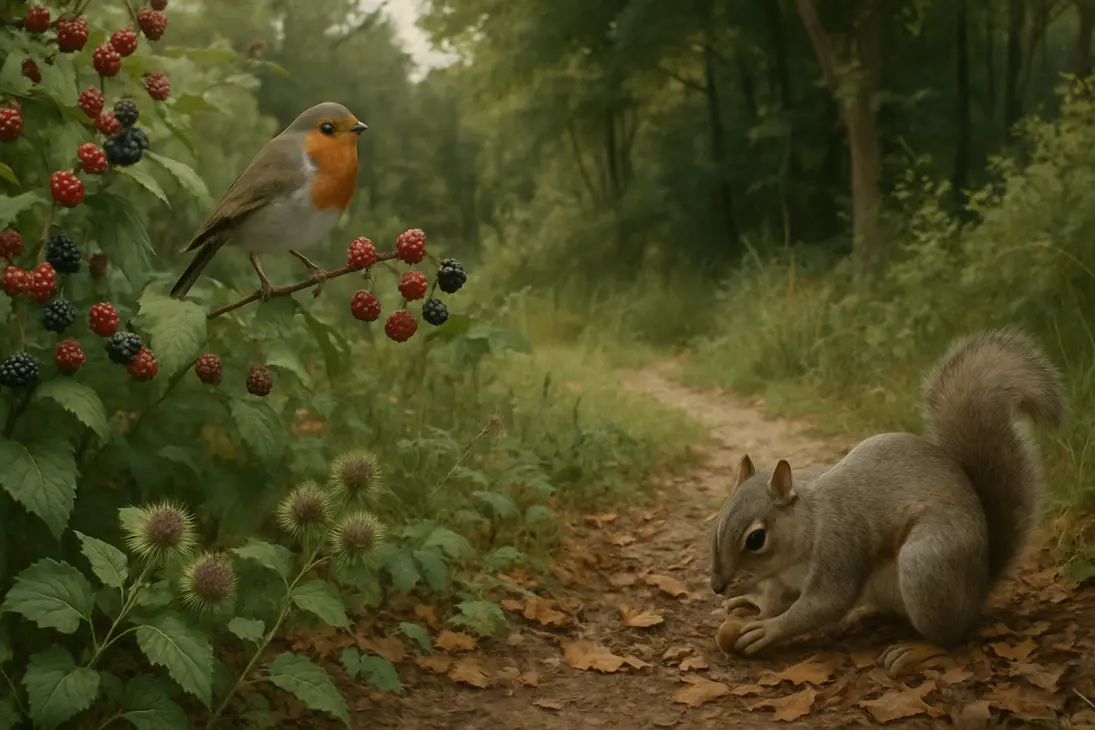
A bird eating berries, an ant carrying a seed, or a squirrel forgetting a buried acorn may all be helping plants reproduce. These interactions shape gardens, hedgerows, meadows, woodlands, and forests.
What Are Plant-Animal Interactions in Seed Dispersal?
Plant-animal interactions in seed dispersal are relationships in which animals move seeds away from the parent plant. Plants do not consciously “choose” animals, but traits such as fruit color, scent, seed shape, ripening time, hooks, and food rewards make certain animals more likely to eat, carry, bury, or spread their seeds.
Some plants rely on fleshy fruits designed to be eaten. Others have barbs or sticky surfaces that cling to fur and feathers. Still others benefit when squirrels, jays, mice, or ants store seeds and fail to retrieve all of them.
These interactions explain why seedlings often appear far from the original plant: under bird perches, along fences, at woodland edges, or in beds where animals have buried food.
Why Seed Dispersal Matters for Plants
Seed dispersal helps plants survive by reducing competition with the parent plant for light, water, nutrients, and rooting space. It can also help seeds escape some pests, fungi, and seed-eating animals that gather near adult plants.
Dispersal gives seeds a chance to reach better growing conditions, such as bare soil, sunny gaps, moist ditches, disturbed ground, or open beds. Over time, it also helps plant populations shift as shade, climate, land use, and disturbance patterns change.
How Animals Benefit From the Interaction
Animals usually participate because they get food. Birds, mammals, reptiles, and some fish eat fleshy fruits for sugars, water, fats, proteins, or minerals. The seeds may pass through the digestive tract and be deposited elsewhere in droppings.
Ants collect seeds with elaiosomes, small fat-rich food bodies. They carry the seeds to their nests, feed the reward to larvae, and often discard the intact seed in a protected place.
Squirrels, chipmunks, mice, and jays store nuts and seeds for later. Plants benefit when some buried seeds are forgotten, abandoned, or left to germinate. The exchange is not perfect—some animals destroy seeds, and many seeds land in poor sites—but enough are moved successfully to benefit the plant.
How Plants Attract Animals to Spread Their Seeds
Plants attract seed-dispersing animals with signals and rewards. Bird-dispersed fruits are often bright and visible, while fruits used by mammals or bats may be fragrant, soft, pale, or easy to find by smell.
In gardens, these strategies are easy to see. Bright berries draw birds, fallen fruit attracts mammals and insects, burrs cling to socks and pet fur, and acorns invite caching animals.
Bright Fruits and Visual Signals
Many bird-dispersed fruits use color as a signal. Red, orange, blue, purple, and black fruits stand out against green leaves. Dogwood, holly, elderberry, serviceberry, viburnum, blackberry, juniper, and many native shrubs use this visual advertising.
Color often signals ripeness. Unripe fruits are commonly green, hard, sour, or chemically defended. As seeds mature, fruits soften and become more attractive. This timing matters because seeds eaten too early may not be viable.
Birds are especially responsive to visual cues because many forage by sight. A berry-filled shrub in late summer or autumn can become a busy feeding station, especially if it also provides cover. For gardeners, native and regionally appropriate shrubs often support local wildlife better than ornamental plants with showy but less useful fruit.
Sweet, Fleshy, or Nutritious Rewards
Fleshy fruits are one of the clearest ways plants use animals. The edible pulp encourages animals to swallow fruits whole or carry them away.
| Plant reward | Common animal visitors | Seed dispersal result |
|---|---|---|
| Sweet pulp | Birds, foxes, raccoons, bears, bats | Seeds pass through digestion or are dropped |
| Nuts and acorns | Squirrels, mice, chipmunks, jays | Seeds are buried and sometimes forgotten |
| Elaiosomes | Ants | Seeds are carried to nests or refuse areas |
| Hooks or sticky coats | Mammals, birds, pets, people | Seeds hitchhike to new locations |
The plant benefits only if viable seeds are moved to places where they may grow. Some seeds have tough coats that survive digestion. In some species, passage through a gut weakens the coat or removes germination-inhibiting pulp; in others, digestion is simply tolerated.
Scents That Attract Specific Animals
Many plants use scent, especially when dispersers are active at night or forage by smell. Mammal-dispersed fruits are often strongly scented when ripe. Fallen apples, pawpaws, persimmons, figs, and many tropical fruits attract animals through fragrance as much as appearance.
Bat-dispersed fruits are often pale, exposed, musky, or strongly scented, making them easier for nocturnal animals to locate. Some fruits become aromatic only when fully ripe or overripe, helping attract animals when seeds are mature enough to survive dispersal.
Main Ways Animals Disperse Seeds
Animal seed dispersal happens in three main ways: seeds are eaten and deposited elsewhere, seeds hitchhike on animals, or seeds are buried and stored.
Each method has strengths and risks. A swallowed seed may travel far but land anywhere. A burr may cling well but fall in a poor spot. A buried nut may be perfectly planted—or eaten later.
Seeds Eaten and Deposited Elsewhere
This is internal dispersal, or endozoochory. An animal eats a fruit, digests the pulp, and later deposits the seed in droppings.
Birds move berry seeds over fences, into hedgerows, beneath perches, and along woodland edges. Mammals may move larger fruits along trails, field margins, stream corridors, and disturbed ground.
Droppings can provide moisture and nutrients, but they do not guarantee success. Seeds still need suitable light, temperature, soil contact, and moisture. Gardeners often see the result as “mystery seedlings” under fences, shrubs, or bird perches. Some are welcome natives; others may be weeds or invasive plants.
Seeds That Hitchhike on Animals
Some plants use external dispersal, or epizoochory. Their seeds attach to the outside of animals and fall off later.
These seeds may have hooks, barbs, bristles, sticky coatings, rough surfaces, or awns that tangle in fur and feathers. Burdock, beggar-ticks, cleavers, stickseed, and some grasses are familiar examples.
Hitchhiking can move seeds through meadows, along paths, into gardens, and across property lines. Pets can also spread seeds from wild areas into lawns and beds. Grooming after walks through tall grass or woodland edges reduces spread and prevents matting or irritation.
Seeds Buried or Stored by Animals
Some animals collect seeds and store them for later. Scatter-hoarding means seeds are hidden in many small caches rather than one central store.
Squirrels, chipmunks, mice, and some birds bury nuts and seeds in soil, leaf litter, lawns, and garden beds. Jays are important dispersers of oaks because they carry acorns away from the parent tree and bury them separately.
This method can be effective because the seed is placed underground, often at a useful depth for germination. The risk is that the animal may return and eat it, but some caches are forgotten, covered by snow, or left unused. Oaks, hickories, walnuts, beeches, and hazels can all benefit.
Examples of Animals That Help Plants Disperse Seeds
Many animals disperse seeds. Birds are the most visible in many gardens, but mammals, ants, reptiles, fish, large herbivores, and bats can all be important depending on the ecosystem.
Birds and Berry-Producing Plants
Birds are major seed dispersers in many temperate gardens and woodlands. Thrushes, robins, waxwings, catbirds, blackbirds, jays, and other birds eat fruits and move seeds.
Berry-producing plants that often benefit from birds include:
- Serviceberry
- Dogwood
- Elderberry
- Viburnum
- Holly
- Juniper
- Blackberry and raspberry
- Mulberry
- Wild cherry
- Hawthorn
Birds often deposit seeds beneath perches such as fences, tree branches, utility lines, shrubs, and hedge edges. This is why seedlings may appear in rows or clusters.
However, birds can also spread invasive fruiting plants. In many regions, invasive honeysuckles, privets, buckthorns, and similar shrubs spread partly because birds eat their berries. Choose non-invasive, locally suitable plants to support wildlife without creating future problems.
Mammals and Fleshy Fruits
Mammals disperse many fruits, especially those that are large, strongly scented, low-growing, or dropped when ripe.
Seed-dispersing mammals may include foxes, coyotes, raccoons, opossums, bears, deer, badgers, rodents, monkeys, apes, and fruit bats. Mammals can move seeds long distances because many have large home ranges. A fox eating berries along a hedgerow may deposit seeds far away, and fruit bats can carry seeds across gaps, roads, rivers, and disturbed areas.
Mammal dispersal is especially useful for plants with fruits too large for small birds. In gardens, mammals may spread native fruits, but they may also eat crops, dig beds, or spread unwanted seedlings.
Ants and Small Seed Rewards
Ant seed dispersal is easy to miss because it happens at ground level and often over short distances. Still, it is important for many woodland wildflowers and low-growing plants.
Plants that use ants produce seeds with elaiosomes, small fleshy or fatty attachments. Ants carry the seeds to the nest, remove the food body, and discard the seed. The discarded seed may end up underground, protected from some predators and drying.
Common ant-dispersed plants include:
- Violets
- Trilliums
- Bloodroot
- Dutchman’s breeches
- Hepatica
- Some sedges and woodland species
This dispersal may move seeds only a few feet, but that can be enough for woodland plants to expand slowly. Gardeners can support it by reducing soil disturbance, keeping leaf litter, and avoiding broad insecticide use.
Large Animals and Long-Distance Dispersal
Large animals can move seeds far and handle fruits or seeds too large for smaller animals. In tropical forests, elephants, tapirs, cassowaries, primates, and large fruit bats can be essential for big-seeded plants.
Large herbivores may disperse seeds internally through droppings or externally in mud, fur, hooves, and coats. Seeds can travel along migration routes, river corridors, forest paths, and grazing areas.
There is also a management concern. Livestock, horses, and wild large mammals can spread weed seeds through hay, manure, mud, and coats. Composting manure properly and monitoring new seedlings can reduce unwanted spread.
Why This Relationship Is Important for Ecosystems
Animal seed dispersal supports ecosystem health by helping forests and plant communities regenerate after storms, fires, tree falls, abandonment, or disturbance. Birds perch on branches and fence lines, mammals travel along edges, and ants work through leaf litter, bringing seeds into open spaces.
It also supports biodiversity. When animals move seeds to different microsites, plants are less clumped around parents. This creates more varied plant communities, which support more insects, fungi, birds, mammals, and soil life.
Animal dispersal helps plants respond to change. As climate, rainfall, shade, and disturbance patterns shift, seeds must reach newly suitable places. Animals can move seeds across gaps that wind, gravity, or simple dropping may not cross.
The relationship becomes vulnerable when seed-dispersing animals decline. If birds, bats, ants, native rodents, or large mammals disappear, some plants may still flower and fruit but fail to spread well. For gardeners, the practical lesson is to support wildlife while watching what spreads. Native fruiting shrubs, seed-bearing perennials, leaf litter, undisturbed soil, and reduced pesticide use can help, while invasive fruiting plants should be removed before they set seed when possible.
Conclusion
Plants use animals for seed dispersal because animals can move seeds away from the parent plant, carry them into new environments, and sometimes deposit or bury them in favorable conditions. Fruits, scents, colors, hooks, burrs, nuts, and food rewards are all tools for movement.
Animals benefit by getting fruit, fat-rich seed attachments, nuts, or stored food. Plants benefit when some seeds escape competition, avoid heavy pest pressure, and land where they can grow.
Whether it is a robin spreading berry seeds, an ant carrying a violet seed, a squirrel burying an acorn, or a bat moving fruit seeds through a tropical forest, animal seed dispersal is one of the most important relationships in living landscapes.
FAQ
Why do plants use animals to disperse seeds?
Plants use animals because animals can carry seeds away from the parent plant. This helps seeds avoid crowding, escape some pests and diseases, and reach places with better light, moisture, or soil.
What do animals get in return for dispersing seeds?
Animals usually get food. Birds and mammals eat fruit pulp, ants collect fat-rich seed attachments, and squirrels or jays store nuts and seeds for later.
Which animals are the most important seed dispersers?
It depends on the ecosystem. In gardens and woodlands, birds, squirrels, chipmunks, mice, ants, foxes, raccoons, and deer may all matter. In tropical forests, fruit bats, primates, elephants, tapirs, and large fruit-eating birds can be especially important.
Can plants disperse seeds without animals?
Yes. Wind, water, gravity, explosive seed pods, and simple dropping can all move seeds. Still, many plants rely partly or heavily on animals because animals can move seeds to places other methods may not reach.
You Might Also Like