What Happens to Light Seeds During Winnowing?
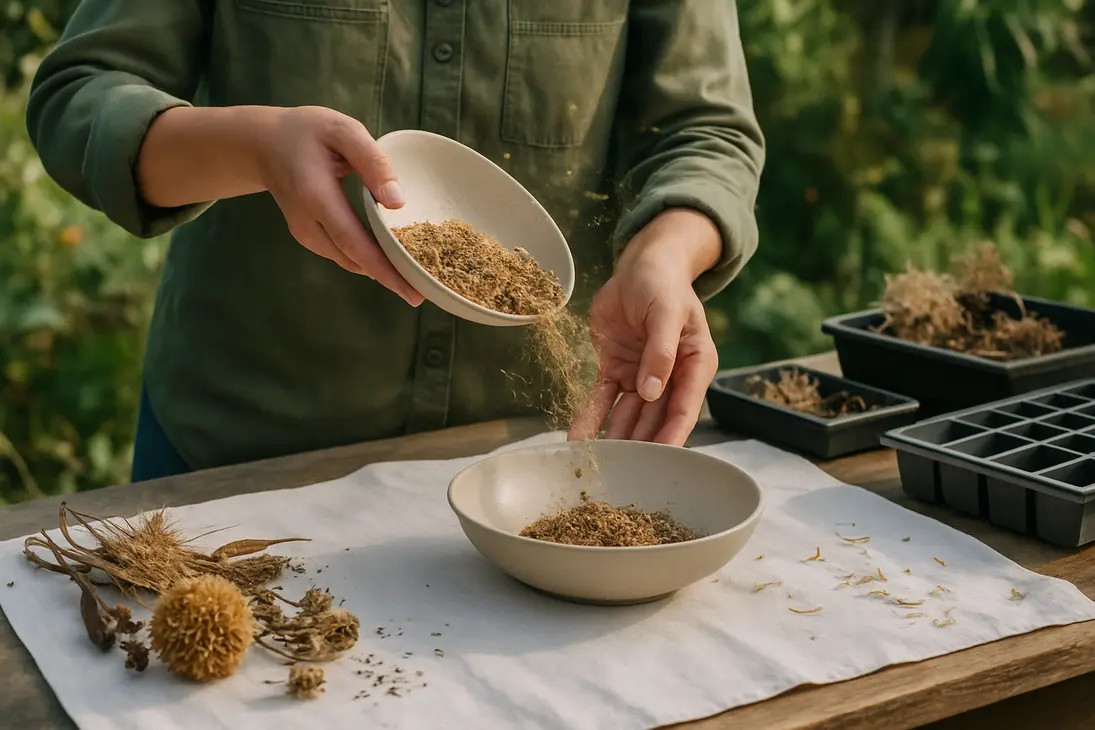
When seeds are winnowed, the lightest seeds are most likely to be lifted and carried away by wind or a fan. They often move with chaff, husks, dust, dried flower parts, and other lightweight debris, while heavier, denser seeds fall sooner and collect closer to the winnowing point.
The key caution is that light seeds are not always worthless seeds. Winnowing separates by weight, shape, and airflow behavior; it does not prove whether a seed is alive. Some seeds are naturally small, flat, papery, or light. Others are light because they are immature, hollow, insect-damaged, cracked, or poorly filled. Good winnowing uses enough airflow to clean the seed without blowing away viable seed.
What Winnowing Is and Why Seed Weight Matters
Winnowing is the process of separating heavier seeds or grain from lighter material with moving air. Traditionally, people tossed or poured a seed-and-chaff mixture in a breeze so the wind carried off the lighter pieces. Gardeners use the same idea with bowls, trays, sheets, tarps, or a box fan.
A seed lot ready for winnowing may contain:
- Mature seed
- Light or poorly filled seed
- Chaff and dust
- Pieces of pods, husks, stems, or seed heads
- Dried flower parts
- Insect-damaged fragments
Seed weight matters because air affects each piece differently. A full, dense seed drops quickly. A dry husk or empty seed coat has little mass for its size, so airflow pushes it farther. When you pour the mixture in front of gentle airflow, the heavy seed falls near the receiving container, the lightest material drifts away, and medium-weight pieces land between the two.
This is why winnowing works well for many dry seed crops, including beans, peas, grains, amaranth, lettuce, brassicas, herbs, and flowers, as long as the seed is fully dry and has already been loosened from the plant.
How Light Seeds Behave During Winnowing
During winnowing, light seeds travel farther than heavy seeds. In strong airflow, they may be blown completely out of the collection area with chaff and dust. In gentle airflow, they may simply land beyond the main pile of heavier seed.
| Material | What usually happens during winnowing |
|---|---|
| Heavy, mature seeds | Drop quickly near the pouring point or into the container |
| Medium-weight seeds | Fall slightly farther away or mix with cleaned seed |
| Light seeds | Drift farther and may land with chaff |
| Empty husks, dry leaves, dust | Blow away most easily |
| Stem or pod fragments | Vary by size, shape, and dryness |
This sorting is useful but imperfect. A small round seed may fall cleanly, while a flat viable seed may flutter away. A cracked seed may behave like chaff, and a heavy bit of pod may fall with good seed.
For home seed saving, the “light fraction” — the material blown away or landing farthest from the main seed pile — should be checked before disposal. It may contain debris, but it may also contain usable seed.
Why Light Seeds Blow Away More Easily
Light seeds blow away more easily because moving air has more effect on objects with low mass, high surface area, or shapes that catch the wind.
Important traits include:
- Low mass: Lighter seeds are easier for air to move.
- Large surface area: Flat or papery seeds catch more air.
- Shape: Winged, fluffy, or irregular seeds travel farther.
- Dryness: Dry chaff and empty seed coats are very light.
- Air resistance: Seeds that flutter or tumble drift more.
- Seed filling: Full seeds are usually heavier than empty or poorly filled seeds of the same type.
Chaff separates well because it is often dry, thin, irregular, and lightweight. Weak or immature seeds may also blow away because they are smaller, hollow, wrinkled, or only partly filled.
Seed shape complicates the picture. Lettuce, onion, carrot, dill, and many flower seeds are naturally light compared with beans or peas. They need much gentler airflow. Using the same fan setting for every crop is an easy way to lose good seed.
Are Light Seeds Always Bad Seeds?
No. Light seeds are not always bad seeds.
Some plants naturally produce small, light seeds that are perfectly healthy. Lettuce, basil, poppy, amaranth, carrot, onion, and many ornamental flowers have seeds that will never feel heavy like beans or peas. If you winnow them too aggressively, viable seed can leave with the chaff.
Within one seed batch, however, unusually light seeds are often less promising than heavier ones. They may be:
- Immature
- Hollow
- Poorly filled
- Cracked or damaged
- Insect-eaten
- Mold-damaged
- Old and deteriorated
Winnowing can improve a seed lot by removing some material least likely to germinate, but it is a cleaning and sorting method, not a final viability test. It can separate “more likely to be good” from “more questionable,” but inspection or germination testing gives better evidence.
Winnowing vs. Threshing: Where Light Seeds Fit in the Process
Threshing and winnowing are related, but they are different steps.
Threshing loosens seeds from the plant parts that hold them. This may mean rubbing dry seed heads, beating dry bean pods in a sack, crumbling flower heads, or rolling pods to free the seeds.
Winnowing comes after threshing. Once seeds are loose, airflow separates heavier seed from lighter chaff and debris.
For example, when saving cilantro seed, you might dry the seed heads and rub them to loosen the round seeds. That is threshing. Then you pour the mixture in a light breeze so stems and papery bits blow away while the round seeds fall into a bowl. That is winnowing.
Light seeds fit into the winnowing stage because this is when material is sorted by how it behaves in moving air. If seed heads are not threshed enough, good seeds may remain trapped in husks and blow away. If they are threshed too roughly, seeds may crack and later behave like lightweight debris. A staged, gentle process reduces both problems.
How to Winnow Seeds Without Losing Good Ones
The safest method is to start gently, work in small batches, and keep the blown material until you are sure it contains no seed worth saving.
A simple home method:
- Dry the seed heads or pods fully. Winnowing works best when seed and chaff are dry.
- Thresh first. Rub, crush, or shake dry plant material enough to loosen seeds.
- Use a clean catching area. A tray, tarp, sheet, or wide bowl makes stray seeds visible.
- Start with gentle airflow. Use a light breeze or fan on low.
- Pour slowly. Let the mixture fall in a thin stream, not a dump.
- Watch where material lands. Heavy seed should fall closest; chaff should move away.
- Adjust gradually. Change fan distance, fan speed, or pouring height.
- Repeat in stages. Several light passes are safer than one aggressive pass.
- Save the light fraction temporarily. Inspect it before discarding.
If good seeds are blowing out of the bowl, the airflow is too strong, the pour is too high, or the seed is too light for that setup.
For very small seeds, a fan may be unnecessary. Gently blowing across a shallow dish, swirling seeds in a bowl, or using a faint outdoor breeze may give better control. For heavier seeds like beans, peas, wheat, or large flower seeds, a fan can help, but it still needs careful adjustment.
If you are unsure how a crop will behave, test a spoonful first. Notice where the good seed lands, then continue with the rest.
Best Conditions for Winnowing
Good winnowing depends on dry, controlled conditions.
The best conditions include:
- Fully dry seeds: Damp seeds clean poorly and store poorly.
- Dry chaff: Crisp husks and plant pieces separate more easily.
- Moderate airflow: The breeze should move chaff, not blast seed away.
- A clean surface: A white sheet, tray, or tarp helps you see stray seeds.
- Small batches: They are easier to control and inspect.
- Good lighting: You need to distinguish seed from debris.
- Low humidity: Dry air keeps chaff light and crisp.
If seed heads feel leathery or chaff bends instead of crumbling, dry the material longer in a single layer in an airy place. Rushing this step causes poor separation and can increase mold risk in storage.
Outdoors, a steady light breeze works better than gusty wind. Indoors, a fan is more consistent, but it can still be too strong. Start several feet from the fan on the lowest setting and pour from a modest height. If everything drops straight down, increase airflow slightly. If seed flies away, reduce it.
Common Mistakes to Avoid
The most common mistake is using too much wind. Strong airflow may clean quickly, but it can also remove viable seed, especially from crops with small, flat, or papery seeds.
Avoid these mistakes:
- Starting with a strong fan setting.
- Pouring from too high.
- Winnowing before seeds are fully dry.
- Discarding the light fraction immediately.
- Assuming all blown seeds are dead.
- Mixing seed crops together.
- Working over grass or soil.
- Threshing too aggressively.
- Expecting one pass to finish the job.
A useful habit is to keep three containers: clean heavy seed, obvious chaff, and questionable light material. Re-winnow the questionable portion more gently, inspect it by hand, or test it for germination.
This matters most with crops such as lettuce, onion, carrot, basil, dill, poppy, amaranth, and many native or ornamental flowers. Their viable seeds may be light enough to lose through heavy-handed winnowing.
Checking Whether Light Seeds Are Still Viable
If you are unsure whether light seeds are worth keeping, check them before throwing them away.
Start with visual inspection. Compare light seeds with heavier seeds from the same batch. Good seeds are often plump for their type, evenly colored, and intact. Questionable seeds may look shriveled, cracked, flattened, dusty, moldy, chewed, or empty. With larger seeds, you can gently press a few; hollow or brittle seeds may collapse. Test only a sample, not the whole batch.
A float test may help with some larger seeds, but it is not reliable for every crop. Hollow or damaged seeds may float, but some viable seeds also float because of structure or trapped air. If you try it, use only a small sample and dry any kept seeds thoroughly afterward. Do not soak seeds you intend to store.
The most reliable home method is a germination test. Place a counted sample on a damp paper towel, coffee filter, or seed-starting mix. Keep it at a suitable temperature for that plant and check during the normal germination period. If most sprout, the light seeds are usable. If few or none sprout, they are probably not worth saving except as a learning sample.
Even a small test helps. If you test ten seeds and eight sprout, the lot is likely usable. If one or two sprout, sow more heavily or keep only the heavier fraction next time. If none sprout, the seed may be immature, dead, old, or damaged.
Remember that germination also depends on storage and sowing conditions. Seeds kept hot, damp, or in sunlight may lose viability faster. Seeds planted too deeply, too wet, too cold, or in compacted soil may fail even if they were alive. Winnowing improves cleanliness, but it does not replace good storage or proper sowing.
Conclusion
Light seeds are usually blown away during winnowing because wind or fan airflow moves them more easily than heavier, denser seeds. They often travel with chaff, husks, dust, and other debris, while mature heavy seeds fall sooner and collect near the winnowing point.
This is useful because winnowing can remove dust, dry plant fragments, hollow seeds, immature seeds, and insect-damaged material. But not every light seed is bad. Some crops naturally produce small, flat, papery, or airy seeds that may still be viable.
Use gentle airflow, work in small batches, repeat the process in stages, and keep the blown material until you have checked it. When in doubt, inspect the light seeds or run a small germination test before deciding what to discard.
FAQ
Where do light seeds go during winnowing?
Light seeds are carried farther by wind or a fan than heavy seeds. They usually move with chaff, husks, dust, and other lightweight debris, landing farther from the winnowing point or outside the main collection area.
Why do heavy seeds remain behind during winnowing?
Heavy seeds have more mass and are less affected by airflow. They fall sooner and collect near the pouring point or in the receiving container. This difference in weight and air resistance is what makes winnowing work.
Does winnowing remove bad seeds?
Often, yes. Winnowing can remove hollow, immature, damaged, or insect-eaten seeds because they tend to be lighter than full, mature seeds. But it is not a perfect quality test, since some viable seeds are naturally light.
Is winnowing the same as threshing?
No. Threshing loosens seeds from pods, stalks, husks, or seed heads. Winnowing comes afterward and uses moving air to separate heavier seeds from lighter chaff and debris.
You Might Also Like