How to Grow Cotton Indoors Successfully
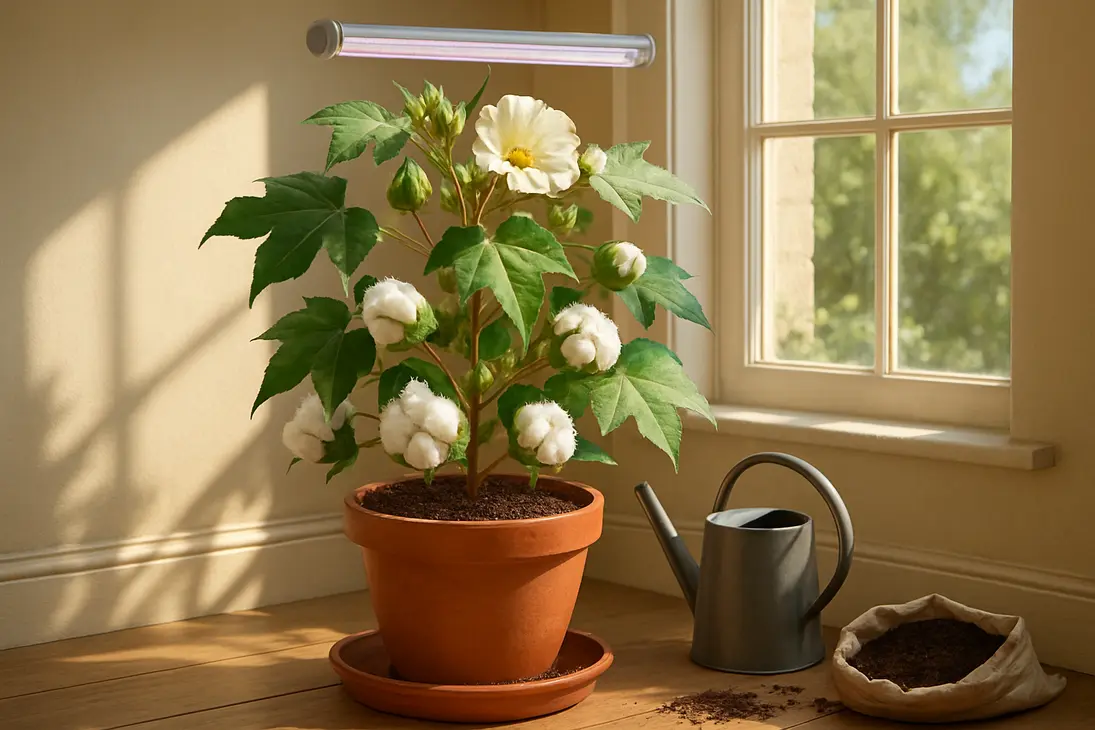
Growing cotton indoors is possible, but it is not a typical low-light houseplant project. Cotton is a warm-season crop that needs strong light, warmth, root space, and several months to mature. In return, it can be a striking container plant with maple-like leaves, hibiscus-like flowers, and fluffy white bolls.
With a sunny window or strong grow light, a warm room, and a deep container, indoor cotton can be rewarding. Keep expectations realistic: one plant may produce a handful of bolls, not a usable fiber harvest.
Can You Grow Cotton Indoors?
Yes. Cotton can grow indoors as an ornamental container plant if you provide bright light, warm temperatures, a large pot, and enough time.
Cotton often takes about five to six months from seed to open bolls, and indoor plants may take longer in weak light or cool rooms. Even in a pot, a healthy plant may reach 2 to 4 feet tall.
Before planting, check local rules. In some cotton-growing regions, home or ornamental cotton is restricted because of pest-control programs, especially boll weevil management. Ask your local extension office or agriculture department before ordering seed.
What to Expect From an Indoor Cotton Plant
An indoor cotton plant usually moves through these stages:
- Seedling stage: Sprouts and produces true leaves.
- Vegetative growth: Develops a woody stem, side branches, and broad leaves.
- Flowering: Creamy white or yellow flowers open, often turning pinkish before dropping.
- Boll development: Small green bolls form after pollination.
- Boll opening: Mature bolls split to reveal cotton fiber around the seeds.
Do not worry when flowers fall. That is normal. The key sign is whether a small green boll remains at the base. In good conditions, one plant may produce several bolls. In poor light, it may grow leaves but never flower.
Best Indoor Growing Conditions at a Glance
| Need | Best Indoor Target |
|---|---|
| Light | 6–8+ hours direct sun, or strong grow light 12–16 hours daily |
| Temperature | About 70–85°F |
| Pot size | At least 5 gallons; 7–10 gallons better |
| Soil | Loose, well-draining potting mix |
| Water | Even moisture, not waterlogged |
| Time | About 5–6+ months |
| Pollination | Usually self-fertile; hand pollination can help indoors |
Set Up the Right Light, Temperature, and Location
The most common reason indoor cotton struggles is the environment. Cotton wants the bright, warm conditions of a sunny growing season, which many homes only provide near a south-facing window or under grow lights.
How Much Light Cotton Needs Indoors
Cotton needs strong light to grow compactly, flower, and form bolls. A windowsill that works for herbs may still be too dim, especially in winter.
Good indoor options include:
- A south-facing window with direct sun for much of the day
- A warm sunroom or enclosed porch
- A strong full-spectrum grow light
- Window light plus supplemental grow light
If using a grow light, run it about 12 to 16 hours daily. Keep it close enough to prevent stretching but not so close that leaves scorch. Follow the manufacturer’s guidance and adjust based on the plant’s response.
Signs of inadequate light include long gaps between leaves, leaning, pale growth, and failure to flower.
Ideal Temperature and Humidity
Aim for daytime temperatures around 70–85°F. Growth slows if the plant regularly drops below about 60°F.
Avoid cold winter windows, drafty entryways, air-conditioning vents, unheated porches at night, and sudden temperature swings. Average indoor humidity is usually fine, but very dry air can encourage spider mites, so avoid placing cotton directly beside heat vents.
Where to Place the Plant in Your Home
Choose the brightest warm spot available. A large south-facing window is usually best in the Northern Hemisphere. East- or west-facing windows may work with supplemental light. North-facing windows are usually too dim without a grow light.
Give the plant room. Mature cotton is not a tiny windowsill plant and may need floor space near the window. Rotate the pot every few days so growth stays even.
Plant Cotton Seeds in the Right Container and Soil
Cotton does best when started in its final container or moved only once while young. It dislikes frequent root disturbance, so the right pot and soil matter from the beginning.
Choosing Cotton Seeds
Buy cotton seed from a reputable seed supplier, and choose a compact or ornamental variety if available. Some ornamental types have smaller habits or colored fiber, such as brown or green cotton. Standard field cotton can grow indoors but may become large and harder to manage.
Check local regulations before buying. In some areas, cotton seed sales or home cultivation are controlled because cotton pests can affect commercial agriculture.
Avoid planting seed from decorative cotton bolls unless you know it is legal, viable, and untreated. Craft-store cotton may have been processed or stored in a way that reduces germination.
Best Pots or Fabric Grow Bags for Cotton
Use a container that holds at least 5 gallons of mix. A 7- to 10-gallon pot gives better root space and reduces watering stress.
Good options include a deep nursery pot, sturdy plastic or resin container, glazed ceramic pot with drainage, or fabric grow bag on a waterproof tray. Fabric grow bags drain and aerate well, but they dry faster than plastic pots.
Indoors, always protect floors with a tray or saucer. Drainage is essential because cotton roots suffer in soggy soil.
Soil Mix and Drainage
Use loose, high-quality potting mix rather than garden soil, which is often too dense for containers and may bring in pests.
A simple mix is:
- 2 parts all-purpose potting mix
- 1 part perlite, pumice, or another drainage material
- 1 part compost or potting mix with slow-release organic matter, if desired
The mix should hold some moisture but drain freely. When you water, excess should move through the pot instead of pooling at the bottom. Avoid fine sand unless you know it improves your specific mix; it can make container soil heavier.
How to Sow Cotton Seeds Indoors
Cotton germinates best in warm soil. A seedling heat mat can help in cool rooms.
To sow:
- Pre-moisten the potting mix until evenly damp, not soggy.
- Plant seeds about ½ to 1 inch deep.
- Sow 2–3 seeds per container if using a final pot.
- Keep soil warm and lightly moist until sprouting.
- Provide bright light immediately after germination.
- Thin to the strongest seedling by snipping extras at soil level.
Germination may take one to two weeks, depending on seed freshness and warmth. Once seedlings emerge, avoid overwatering. Small roots in a large pot can rot if the whole container stays wet.
Care for Indoor Cotton From Seedling to Harvest
Indoor cotton care is a balance: enough water without soggy soil, enough fertilizer without excessive leaf growth, and enough light to move from foliage to flowers and bolls.
Watering Without Overwatering
Water when the top inch or two of potting mix feels dry. During the seedling stage, water lightly around the root zone. As the plant grows, water more thoroughly until a little drains from the bottom.
Do not let the pot sit in standing water. Empty saucers after watering.
Watering frequency depends on pot size, soil mix, plant size, temperature, light, and container material. Fabric grow bags in warm bright rooms dry faster than plastic pots. Check the soil instead of watering on a fixed schedule.
Avoid tiny daily sips, which keep the surface damp but may leave deeper roots dry. Also avoid repeatedly soaking a large pot before a young plant can use the moisture.
Fertilizing Indoor Cotton Plants
Cotton is a fairly hungry plant during active growth, but too much nitrogen can produce lush leaves instead of flowers. Use a balanced fertilizer according to the label once the seedling has several true leaves and is growing well.
A practical approach is diluted balanced liquid fertilizer every few weeks during active growth, or controlled-release fertilizer mixed into the potting mix as directed.
As flowering approaches, avoid heavy nitrogen. If the plant is dark green and leafy but not flowering, it probably needs stronger light, more time, or warmer conditions—not more fertilizer. Do not add Epsom salts or supplements unless there is a clear diagnosed need.
Pruning, Pinching, and Managing Plant Size
Cotton branches naturally. Indoors, light shaping can keep it compact and evenly lit.
When young and vigorous, you can pinch the growing tip to encourage branching. This may make the plant bushier, but it can slightly delay flowering.
Remove dead or yellowing leaves, weak shaded lower growth, damaged stems, and crowded shoots that reduce airflow.
Avoid heavy pruning once buds and bolls form. The plant needs leaves to support boll development. If it gets large, add support and improve light rather than cutting it back hard. A slim stake can support the main stem; tie loosely with soft plant ties.
Helping Flowers Turn Into Cotton Bolls
Cotton flowers are usually self-fertile, so one plant can produce bolls. Indoors, hand pollination can improve success because there is little air movement and no pollinators.
When a flower is open, use a small soft paintbrush or cotton swab to gently move pollen around inside the flower. Repeat with each open flower. If you have multiple plants, move pollen between flowers.
Flowers are short-lived. They may open pale yellow or creamy white, darken, then drop. If pollination succeeds, a small green boll remains and slowly enlarges.
Keep the plant warm, bright, and evenly watered while bolls mature. Stress during this stage can cause bolls to stop developing or drop.
When and How to Harvest Cotton Indoors
Cotton is ready when the boll naturally splits open and the fiber is dry, fluffy, and fully exposed. Do not pick closed green bolls and expect good cotton.
To harvest:
- Wait until the boll is open and dry.
- Pull cotton gently by hand or with small scissors.
- Wear gloves if dried bracts feel sharp.
- Keep harvested cotton dry to prevent mildew.
The fiber contains seeds. If you want to save seed, separate it from the lint and store it in a cool, dry place. Only replant if cotton is permitted where you live and the plant was healthy.
Prevent Common Indoor Cotton Problems
Most indoor cotton problems come from weak light, cool temperatures, poor drainage, or pests. The plant usually shows symptoms before it fails completely.
Yellow Leaves, Drooping, or Slow Growth
Yellow leaves have several possible causes, so inspect the whole plant and soil before reacting.
| Symptom | Likely Cause | What to Do |
|---|---|---|
| Yellow lower leaves, wet soil, limp growth | Overwatering or poor drainage | Let mix dry somewhat; improve drainage; empty saucer |
| Drooping with dry soil | Underwatering | Water thoroughly and monitor more often |
| Pale new growth | Low light or nutrient deficiency | Increase light first; fertilize only if actively growing |
| Slow winter growth | Cool temperatures or short days | Move warmer; add grow light; be patient |
| Brown leaf edges | Dry air, salt buildup, inconsistent watering | Water evenly; flush pot occasionally; avoid overfertilizing |
Do not treat every yellow leaf as a fertilizer problem. Older shaded leaves naturally age and drop. The pattern matters.
Leggy Growth or No Flowers
Leggy growth usually means insufficient light. The plant stretches toward a stronger source and may become weak.
To correct it, move the plant to the brightest window, add a strong grow light, rotate the pot regularly, avoid excess nitrogen, and pinch lightly only after light improves.
No flowers can result from low light, cool temperatures, immaturity, or too much nitrogen. A young plant may simply need time, but an older leafy plant in weak light needs stronger light above all.
Indoor Pests and Safer Control Options
Indoor cotton can attract common houseplant pests, especially in warm, dry rooms.
Watch for:
- Aphids: small soft insects on new growth and buds
- Spider mites: fine webbing and stippled leaves
- Whiteflies: tiny white insects that flutter when disturbed
- Mealybugs: white cottony clusters on stems or leaf joints
- Fungus gnats: small flies around damp soil
Start with gentle controls: isolate the plant, rinse leaves and stems, remove heavily infested leaves, and use insecticidal soap or horticultural oil only as directed. Repeat as needed, since eggs may hatch later.
Test sprays on a small area first, and avoid treating drought-stressed plants or plants in hot direct sun.
Home Remedies to Avoid
Some common home remedies can damage leaves, disrupt soil balance, or worsen pest problems.
Avoid dish soap mixtures, undiluted alcohol sprays, random Epsom salts, baking soda sprays on stressed plants, essential oils on leaves, kitchen scraps buried in pots, and heavy insecticide use “just in case.”
The safest first steps are better light, correct watering, pest inspection, and patience. If using a pest product, choose one labeled for plants and follow directions.
Conclusion
Growing cotton indoors is realistic if you treat it like a sun-loving warm-season crop. Give it strong light, warm temperatures, a deep container, loose well-draining soil, and steady care. A grow light may be the difference between a leafy plant and one that flowers and forms bolls.
Expect the process to take months and the harvest to be modest. Indoor cotton is best grown for learning, beauty, and the satisfaction of watching bolls open at home.
FAQ
How long does cotton take to grow indoors?
Cotton usually takes about five to six months from seed to open bolls, sometimes longer indoors. Warmth, strong light, and steady care help; cool rooms, weak light, and overwatering delay growth.
Can cotton grow indoors without a grow light?
Yes, but only in a very bright spot with several hours of direct sun daily. A south-facing window or sunroom gives the best chance. In many homes, especially in winter, cotton grows weakly or fails to flower without a grow light.
Can I grow cotton in a fabric grow bag?
Yes. Use at least 5 gallons, preferably 7 to 10 gallons. Place the bag on a waterproof tray and check moisture often because fabric dries faster than plastic.
Is indoor cotton grown for harvest or decoration?
Indoor cotton is usually grown for decoration and curiosity, not practical fiber production. A healthy plant may produce a few attractive bolls. Meaningful fiber harvest requires outdoor field conditions and many plants.
You Might Also Like