Why Changing Water Matters When Sprouting an Avocado Pit
Sprouting an avocado pit in a glass of water is simple, but the water does more than keep the seed wet. It affects cleanliness, oxygen, odor, and whether the bottom of the pit stays healthy enough to root.
Changing water matters because old, stagnant water can become cloudy, smelly, low in oxygen, and more likely to support bacteria, slime, mold, or rot. Fresh water does not guarantee sprouting—some pits are not viable—but it gives a healthy seed a better chance.
The goal is not constant fussing. It is to keep the bottom moist, the water reasonably clean, and the seed only partly submerged while you wait.
Why You Need to Change the Water for an Avocado Pit
An avocado pit is a living seed, but it is also plant material sitting in room-temperature water. It may crack and produce a root, or it may soften, sour, and decay. Fresh water helps tip the balance toward sprouting.
Fresh water keeps the pit healthier
When the broad bottom of an avocado pit sits in water, the seed absorbs moisture. That hydration helps the pit split and begin root growth. But the water also collects bits of seed coat, fruit residue, dust, and microorganisms from the pit, glass, and air.
Replacing the water regularly helps by:
- Diluting residue from the seed
- Reducing cloudiness and odor
- Keeping the submerged area cleaner
- Maintaining better oxygen availability
- Making it easier to spot roots or early rot
You do not need sterile conditions. Avocado pits often sprout in ordinary kitchen glasses. But the water should not become sour, slimy, or obviously stagnant.
Stale water can encourage rot, slime, and mold
If the same water sits too long, especially in a warm room, it can become cloudy or develop a film. The glass may feel slippery, the pit may smell unpleasant, or the submerged part may become soft and dark.
Watch for:
- Slime on the glass or pit: Often a sign of microbial buildup.
- Bad odor: A sour, swampy, or rotten smell usually means decay is starting.
- Mold near the waterline: Mold can grow where the pit is damp but exposed to air.
- Soft, collapsing tissue: A mushy pit is more likely rotting than sprouting.
Some discoloration is normal. The outer skin may darken, peel, or flake, and the pit often cracks before any shoot appears. But a rotten smell or mushy texture is not normal healthy sprouting.
Clean water supports root development
The first root is tender. Once it emerges, it needs moisture and oxygen. Dirty or stagnant water can make the young root more vulnerable to damage.
Clean water also lets you see what is happening. A healthy early root is usually pale, firm, and pointed. If the water is brown and cloudy, it is harder to tell whether the root is growing, browning, or breaking.
How Often Should You Change the Water?
Change the water every few days for most avocado pits, and daily if the water gets cloudy, smells bad, or the room is warm.
Daily changes can help, but they are not always necessary. The right schedule depends on the setup, temperature, amount of water, and how the water looks and smells.
Daily water changes: when they help
Daily water changes are useful when conditions favor stagnation or decay.
Change the water daily if:
- The water turns cloudy within 24 hours
- The glass develops slime quickly
- The pit has avocado flesh still attached
- The room is warm
- The pit smells sour or musty
- You are trying to rescue a questionable pit
- You are using a very small container
Small amounts of water become stale faster because there is less water to dilute residue. Daily changes can also help during the first week if the pit was not cleaned well. Before starting, wash the pit gently under running water and remove clinging fruit without cutting into the seed.
Changing water every few days: when it’s usually fine
For many home growers, changing the water every two to three days is enough. You may be able to stretch it slightly if the water stays clear and odorless, but do not ignore it for a week or two.
A practical schedule looks like this:
| Situation | Suggested water-changing routine |
|---|---|
| Clean pit, clean glass, cool room | Every 2–4 days |
| Warm room or sunny windowsill | Every 1–2 days |
| Water clouds quickly | Daily, plus rinse the glass |
| Root has emerged | Every 2–3 days, with gentle handling |
| Bad smell or slime appears | Change immediately and clean the container |
When changing the water, rinse the glass too. If the inside feels slippery, wash it with hot water and a little dish soap, rinse thoroughly, then refill.
You can rinse the pit gently if it feels slimy. Avoid scrubbing hard, scraping the crack, or damaging the root.
Signs the water is too dirty or stagnant
Do not rely only on the calendar. Change the water immediately if you notice:
- Cloudy or brownish water
- A sour, rotten, or swamp-like smell
- A slippery coating on the glass
- White, gray, green, or fuzzy growth around the waterline
- Scum or film on the surface
- A root tip turning brown and soft
- The bottom of the pit becoming mushy
Some harmless changes can look alarming. The brown seed coat may peel, and the water may discolor slightly after the pit cracks. But clean water should not smell rotten, and the pit should not feel like it is collapsing.
The Right Water Level for an Avocado Pit
Water changes matter, but water level matters just as much. One common mistake is submerging too much of the avocado pit.
An avocado seed needs moisture at the bottom, but it also needs air. Keeping the entire pit underwater can encourage rot, especially before roots develop.
Keep the bottom of the pit in water
The broad, flatter end of the avocado pit is the bottom. This end should touch the water. The slightly pointier end should face upward.
Keep only the lower third to lower half of the pit in water. The exact amount does not have to be perfect, but the bottom should stay consistently wet.
If only the tip touches water, the pit may dry out between refills. If almost the whole pit is submerged, it may soften and rot. Aim for a simple balance: bottom wet, top exposed.
Check the water level often because evaporation lowers it. Topping up between full water changes is fine, but do not use topping up as a substitute for changing dirty water.
Avoid fully submerging the seed
Fully submerging an avocado pit is a common beginner mistake. More water may seem better, but seeds also need oxygen. When the whole pit sits underwater, especially in stagnant water, decay is more likely.
Full submersion can lead to:
- Faster softening of the seed coat
- More slime on the pit surface
- Reduced oxygen around the seed
- Mold or rot near the waterline
- Difficulty seeing whether the crack is healthy
Some pits may still sprout after being mostly submerged for a short time, but it is not the safest long-term method. Keep the bottom moist and the upper part exposed to air.
Use toothpicks or a narrow container for support
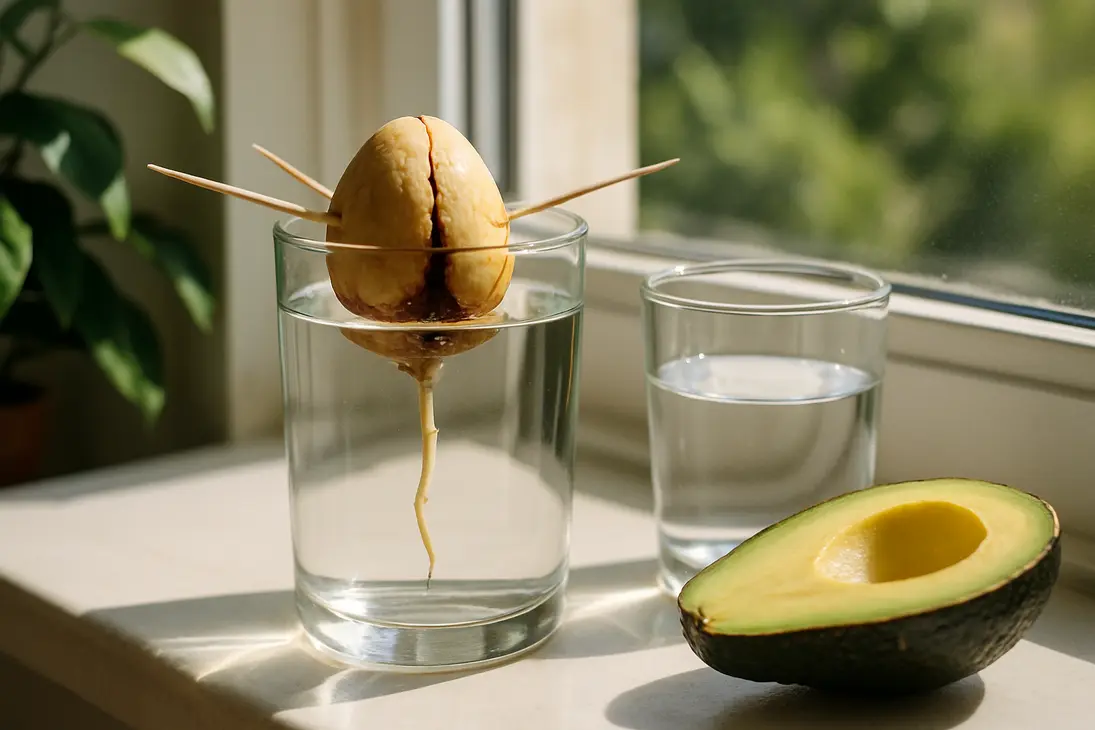
The classic method is to insert three or four toothpicks around the middle of the pit and rest them on the rim of a glass. This suspends the seed so the bottom sits in water while the top stays above it.
To set it up:
- Clean the pit gently and identify the broad bottom.
- Insert toothpicks around the sides.
- Rest the toothpicks on the rim of a glass.
- Fill the glass until the bottom third to half of the pit touches water.
- Place it in a warm, bright spot out of harsh direct heat.
- Change the water regularly and keep the bottom from drying out.
If you do not want to use toothpicks, a narrow-necked jar or small vase can hold the pit in place. Whatever support you use, make sure it is stable. A new avocado root is brittle and can snap if the pit tips over.
Common Water-Related Mistakes That Stop Sprouting
Avocado pits are easy to start, but not all of them sprout. Many failures come from water that is too dirty, too low, too deep, or neglected for too long.
Leaving the same water for too long
Old water is one of the easiest problems to avoid. If the pit sits in the same water for many days or weeks, the container can become a small stagnant pond.
This is especially likely if:
- The glass sits in a warm kitchen
- The seed still has avocado flesh on it
- The container is never rinsed
- The water level is low
- The pit is mostly submerged
If your pit has been sitting in old water, clean the setup before giving up. Wash the glass, rinse the pit gently, refill with fresh water, and reset the seed at the right height. If the pit is firm and not foul-smelling, it may still sprout.
Letting the pit dry out
The opposite problem is letting the bottom dry out. Once you begin sprouting an avocado pit in water, consistency matters. Repeated drying and rewetting can slow or interrupt the process.
This often happens when:
- The glass is placed in a hot windowsill
- The water evaporates quickly
- The pit barely touches the water
- The toothpicks are placed poorly
- You forget to top up the container
A pit does not need to be drowned, but the bottom should remain moist. If the water drops below the pit briefly, refill it and continue if the seed still looks firm. If it has dried for a long time and shriveled, starting over may be easier.
Submerging too much of the pit
Too much water contact can cause failure too. If the pit sits halfway to fully underwater and the water is not changed often, it may rot before it roots.
Signs that too much of the pit is submerged include:
- The waterline sits near the top of the seed
- The pit darkens and softens all over
- Mold appears above the waterline
- The seed smells bad even after water changes
- The crack looks wet, brown, and mushy
Adjust the pit so only the lower portion is in water. If the seed is already soft throughout, it is usually better to replace it.
Assuming every avocado pit will sprout
Not every avocado pit will grow, even with good care. Some seeds are damaged, immature, chilled, dried out, or not viable. Store-bought avocados vary, and the pit’s condition depends on fruit maturity, handling, storage, and time since harvest.
If you want an avocado plant, start two or three seeds at the same time. Give each one clean water, correct positioning, warmth, and patience, then keep the strongest seedling.
Also remember that an avocado grown from seed may not produce fruit for many years, and if it does, the fruit may not match the original avocado. Most people sprout pits for the fun of growing a houseplant.
Troubleshooting: Why Isn’t My Avocado Pit Sprouting?
If your avocado pit has not sprouted yet, the problem may be water, but it may also be timing, temperature, or seed viability. Avocado pits can be slow, and the quiet stage often lasts longer than beginners expect.
How long sprouting can take
Avocado pits commonly take several weeks to show visible change. Some crack within two or three weeks. Others take six to eight weeks or longer.
The usual sequence is:
- The outer skin dries, wrinkles, or peels.
- The pit begins to crack from top to bottom.
- A root emerges from the bottom crack.
- The root lengthens downward into the water.
- A shoot appears from the top.
- Leaves develop after the stem grows.
Cracking is not failure; it is part of normal sprouting. What matters is whether the inside looks firm and healthy rather than rotten.
Temperature also matters. Avocado pits sprout better in a warm room than a cold one. Bright light is helpful later, but before leaves appear, warmth and consistent moisture are usually more important than intense sun. Avoid a spot where the glass bakes all afternoon, because warm stagnant water can spoil faster.
What healthy early root growth looks like
A healthy avocado root usually emerges from the bottom of the pit as a pale, firm, tapered growth. It may be white, cream, or light tan. As it ages, it can darken slightly, but it should not be mushy or smell bad.
Healthy signs include:
- A firm pit that has split cleanly
- A pale root growing downward
- Clear or only slightly tinted water
- No rotten odor
- A shoot forming after the root develops
- Root growth that continues over time
Concerning signs include:
- A root that turns brown, soft, and limp
- A pit that collapses when pressed gently
- Persistent bad smell after cleaning
- Fuzzy mold spreading across the seed
- No change after many weeks in good conditions
- A crack filled with dark, mushy tissue
If the root is healthy, be careful during water changes. Pour slowly, support the pit, and avoid bumping the root against the glass.
When to replace the pit
Patience is important, but sometimes starting over saves time.
Consider replacing the pit if:
- It smells rotten after changing water and cleaning the glass
- The bottom is soft, slimy, or collapsing
- Mold keeps returning heavily
- The root has rotted and no new growth appears
- There is no cracking or swelling after eight or more weeks in warm, clean conditions
- The pit dried out completely for an extended period
- You have another fresh pit available and are tired of waiting
Before replacing it, check the basics. Is the room cold? Is the pit upside down? Is the water level too high or too low? Is the glass dirty? Correcting those issues may help the next seed.
For best odds, start with a fresh pit from a ripe avocado. Wash it gently, avoid cutting into it with a knife, and set it up soon after removing it from the fruit.
Conclusion
Changing water for avocado pit sprouting is not busywork. Fresh water keeps the setup cleaner, reduces odor and slime, helps maintain better oxygen around the seed, and gives young roots a healthier place to develop.
For most pits, changing the water every two to three days is enough. Change it daily if the water clouds quickly, smells bad, or the room is warm. Rinse the glass when it feels slippery, keep only the bottom third to half of the pit in water, and never let the bottom dry out completely.
Even with perfect care, not every avocado pit will sprout. But clean water, correct water level, warmth, and patience give a viable pit its best chance.
FAQ
Do I really need to change avocado pit water every day?
Not always. Daily water changes are helpful if the water becomes cloudy, smells bad, or develops slime quickly. In a clean glass with a clean pit, changing the water every two to three days is usually fine.
Watch the water. If it looks clear and smells fresh, missing a day is not a crisis. If it smells sour or feels slippery, change it immediately and rinse the container.
Can an avocado pit grow in dirty water?
It might, but dirty water increases the risk of rot, odor, mold, and root damage. Some pits are tough enough to sprout in less-than-ideal conditions, but stagnant water makes failure more likely.
If the water is cloudy or smelly, replace it. A viable avocado pit has a much better chance in clean, fresh water with the bottom kept consistently moist.
Should the avocado pit be fully underwater?
No. The avocado pit should not be fully submerged for long-term sprouting. Keep the broad bottom of the pit in water and leave the upper part exposed to air.
A good target is the lower third to lower half of the seed in water. Full submersion can encourage softening and rot, especially if the water is not changed often.
Why does my avocado pit smell bad in water?
A bad smell usually means the water is stagnant or the pit has started to decay. Old water, leftover avocado flesh, too much submersion, and warm conditions can all contribute.
Change the water, wash the glass, and rinse the pit gently. If the pit is still firm and the smell disappears, you can keep trying. If it remains sour-smelling, slimy, or mushy, start with a fresh pit.
You Might Also Like