Why Do Trees Need Sunlight?
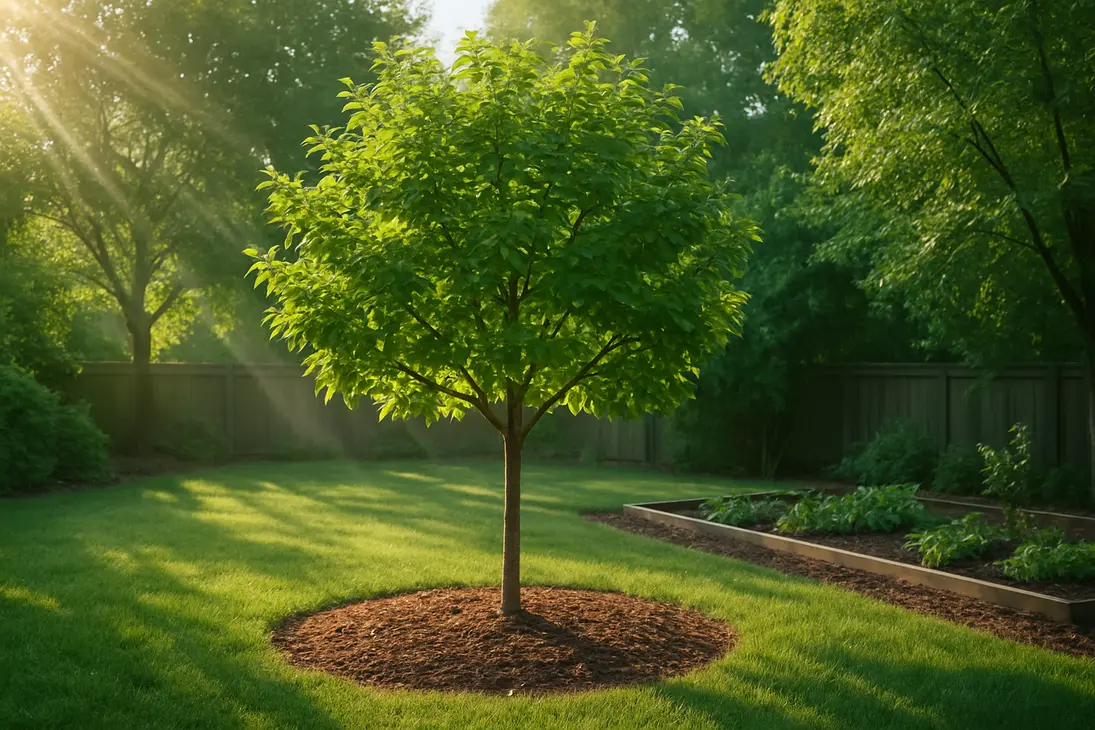
Trees need sunlight because light is the energy source that lets them make food. A tree may look still, but it is constantly growing leaves, repairing tissues, feeding roots, storing reserves, defending itself, flowering, fruiting, and preparing for the next season.
Without enough light, even a well-watered tree in good soil can weaken over time. With the right amount of light for its species, a tree can grow steadily, build a strong canopy, and recover better from heat, cold, pests, pruning, drought, and seasonal stress.
Why Sunlight Is Essential for Tree Growth
Trees use sunlight through photosynthesis. Leaves take in carbon dioxide from the air, pull water up from the roots, and use light energy to turn those ingredients into sugars. The tree uses those sugars as fuel and building material.
Those sugars support almost everything a tree does:
- Leaves expand and replace older foliage.
- Branches and trunks build new wood.
- Roots grow deeper and form fine feeder roots.
- Flowers and fruit require major energy.
- Stored reserves help the tree survive winter, drought, transplant shock, pruning, and spring growth.
Sunlight also affects tree shape. A tree in adequate light usually develops denser foliage, stronger branches, and a balanced canopy. A tree in too little light often stretches toward the brightest direction, makes larger but thinner leaves, and drops shaded interior branches that cost more energy than they produce.
That is why two trees of the same species can behave differently. An apple tree in open sun may grow and fruit well, while the same type planted beside a tall fence or under evergreens may stay thin, flower poorly, and become more vulnerable to disease.
Do Trees Still Need Sunlight If They Already Had It Before?
Yes. Sunlight is an ongoing need, not a one-time charge. A tree can store energy as starches and sugars in roots, stems, and branches, but those reserves are limited. If it spends too long in poor light during the growing season, it uses stored energy faster than it can replace it.
That is why a tree may look fine for a while after being moved into shade, planted too close to a building, or kept indoors near a dim window. Decline is often gradual: smaller leaves, fewer flowers, slower growth, or a thinner canopy may appear before serious dieback.
Sunlight During Active Growth
During active growth, sunlight is especially important. This is when deciduous trees are in leaf and evergreen trees are producing new foliage, roots, cones, flowers, or fruit.
For many outdoor trees in temperate climates, active growth is strongest from spring through summer, though roots may keep growing in mild fall weather. Tropical and subtropical trees may grow whenever warmth, water, and light are available.
During this time, light exposure helps determine how much energy the tree can make each day. That energy supports new leaves and shoots, trunk and branch thickening, root growth, healing, flowers, seeds, fruit, and stored reserves.
A tree that receives less light than it needs may survive, but it usually grows slowly and becomes less productive. Fruit trees are a clear example: they may leaf out in partial shade, but flowering and fruiting usually suffer when light is limited.
Sunlight During Dormancy
Dormancy can be confusing because a dormant tree may not have leaves or visible growth. For fully dormant deciduous trees, the need for sunlight is much lower because there are no leaves to photosynthesize. The tree is living off stored reserves and keeping tissues alive at a slower pace.
Still, dormancy does not mean the tree is “off.” Roots may remain active when soil temperatures are mild, buds are protected for spring, and stored energy is being conserved.
Evergreen trees are different. They keep needles or leaves through winter and may photosynthesize during mild, bright periods when water is available. They still need light, even if growth is slow. This is one reason evergreens kept in dark garages, sheds, or indoor corners for long periods can decline.
Dormant saplings can also worry gardeners because they show little visible change. The goal is not to force growth with warmth and fertilizer. It is to keep the tree appropriately cool, watered but not waterlogged, and ready for light when growth resumes.
How Much Sunlight Do Different Trees Need?
Not all trees need the same amount of sunlight. Some are adapted to open fields, orchards, and forest edges. Others naturally grow under a canopy and tolerate filtered light. A tree’s light needs also depend on age, climate, soil moisture, container size, and whether it is grown indoors or outdoors.
“Full sun” usually means at least six hours of direct sun per day. “Partial sun” or “partial shade” often means about three to six hours of direct sun, or bright filtered light for much of the day. “Shade tolerant” does not mean “no light.” It means the tree can function with less direct sun than a high-light species.
| Tree situation | Typical light need | What to watch for |
|---|---|---|
| Full-sun ornamental trees | 6+ hours direct sun | Thin canopy or leaning if shaded |
| Most fruit trees | 6–8+ hours direct sun | Poor flowering, small or sparse fruit |
| Shade-tolerant understory trees | Bright shade to partial sun | Leaf scorch if moved suddenly into hot sun |
| Young saplings | Species-dependent | Drying, sunscald, or stretched growth |
| Potted outdoor trees | Same species needs | Uneven growth if one side faces light |
| Indoor trees | Bright window or grow light | Leaf drop, leggy growth, slow decline |
Full-Sun Trees
Full-sun trees grow best in open light. Many shade trees, flowering trees, conifers, orchard trees, and drought-tolerant landscape trees fall into this group. Strong light helps them build dense canopies and sturdy branch structure.
Examples often grown in sunny sites include many oaks, maples, pines, crape myrtles, olives, citrus, apples, peaches, and magnolias, though exact needs vary by species and climate.
Full sun does not mean harsh conditions are harmless. A newly planted tree in hot afternoon sun may still struggle if roots are not established, soil is dry, mulch is missing, or reflected heat from pavement is intense. Light works together with water, soil, temperature, and root health.
Partial-Sun or Shade-Tolerant Trees
Shade-tolerant trees can grow with less direct sun, especially if the shade is bright and open rather than deep and gloomy. These trees are often adapted to woodland edges or understory conditions.
Examples may include dogwood, redbud, Japanese maple, serviceberry, pawpaw, hornbeam, and some hollies, depending on region. Many still flower and grow better with morning sun or dappled light than with dense shade.
The key distinction is between tolerating shade and thriving in shade. A shade-tolerant tree may survive under a larger canopy, but it may grow slowly and form fewer flowers. Deep shade from buildings or dense evergreens is much harder than shifting shade under high deciduous branches.
Shade-tolerant trees can also be damaged by abrupt exposure to intense sun. Leaves that developed in shade are often thinner and less prepared for heat and strong light. Move potted or young understory trees into brighter light gradually.
Fruit Trees and High-Light Needs
Fruit trees usually need more sun than gardeners expect. Most common fruiting trees perform best with at least six hours of direct sun, and many crop better with eight or more hours, especially in cooler climates.
Fruit production is energy expensive. A tree must grow leaves, support roots, form flower buds, bloom, set fruit, ripen the crop, and store energy for the next season. Limited sunlight often causes fewer flower buds, weak bloom, smaller fruit, poorer ripening, slower-drying foliage, and more leafy growth with less productive fruiting.
Apples, peaches, pears, plums, cherries, apricots, figs, citrus, and mangoes generally need bright, direct sun for good production. Some may survive in partial sun, but “survive” is not the same as “bear well.”
If fruit is the goal, give the tree the sunniest practical location. If your garden only has partial light, choose more forgiving fruiting plants and keep expectations realistic.
Potted or Indoor Trees
Potted and indoor trees need extra attention because containers and rooms change the light environment.
A potted tree outdoors may receive sun from one direction only, especially on a patio or balcony. Rotating the pot every week or two during active growth can help the canopy develop evenly. Containers also heat up and dry out faster in strong sun, so watering must match the exposure.
Indoor trees face a bigger challenge: even a bright room is often much dimmer than outdoor shade. A tree placed several feet from a window may receive far less usable light than it appears to human eyes. Citrus, olive, fig, avocado, and many tropical fruiting trees usually need a very bright window and may need supplemental grow lights indoors.
Watch the plant, not only the label. Long, pale, widely spaced growth or strong leaning toward a window usually means inadequate light. Leaves scorching against hot glass may mean the tree needs slight repositioning, not a much darker spot.
What Happens When a Tree Does Not Get Enough Sunlight?
A tree in low light rarely fails all at once. More often, it shows gradual signs of energy shortage. Some symptoms overlap with water stress, root damage, pests, or nutrient problems, so consider the whole site before blaming sunlight alone.
Common signs a tree is not getting enough sunlight include:
- Weak, stretched growth. Shoots become long and thin as the tree reaches for light.
- Sparse foliage. Leaves appear mostly at branch tips or on the sunny side.
- Slow growth. The tree adds little height or trunk thickness.
- Leaning. The tree grows toward the strongest available light.
- Poor flowering or fruiting. Blooms and crops are sparse or low quality.
- Interior branch dieback. Shaded branches are abandoned by the tree.
- Larger, thinner leaves. Some trees broaden leaves to capture more light.
- More disease risk. Shaded foliage often stays wet longer.
- Reduced resilience. A low-energy tree recovers poorly from stress.
One useful test is to compare different sides of the same tree. If the open side is leafy and the shaded side is thin, light is likely part of the problem. If the whole tree is weak despite good sun, investigate watering, planting depth, root health, soil compaction, pests, or disease.
Low light also affects pruning decisions. Removing too much live foliage from an already shaded tree can worsen the energy shortage. Improving light around the tree may be more helpful than cutting the tree harder.
How to Make Sure a Tree Gets the Right Amount of Light
The best time to solve a light problem is before planting. Once a tree is established, moving it can be difficult, and removing shade may require pruning large plants or changing the surrounding landscape.
Match the tree to the site. A full-sun fruit tree belongs in the brightest part of the garden. A delicate understory tree may do better with morning sun and afternoon shade. A tree that naturally grows large should not be planted where it will soon be crowded by buildings, fences, or other trees.
Before planting, check sun exposure through the day:
- Observe morning, midday, and late afternoon. A spot sunny at noon may be shaded most of the morning.
- Count direct sun hours. For full-sun trees, aim for six or more hours.
- Consider seasonal changes. A winter-sunny area may become shaded once nearby trees leaf out.
- Watch reflected heat. Walls, pavement, gravel, and glass can intensify sun and heat.
- Think long term. Small nearby plants may cast heavy shade in a few years.
If an existing tree is struggling in shade, you can:
- Prune nearby plants carefully to let in more light. Avoid topping trees.
- Remove competing growth if an overgrown hedge or volunteer tree is the issue.
- Move or rotate containers as light changes through the season.
- Use grow lights indoors for high-light trees when windows are not enough.
- Increase light gradually so shade-grown leaves do not scorch.
When moving a potted tree from indoors to outdoors, harden it off. Start with bright shade, then morning sun, then longer sun exposure. Leaves produced indoors are not prepared for outdoor light, wind, and heat.
For newly planted outdoor trees, do not confuse “needs sunlight” with “can tolerate neglect.” A young full-sun tree still needs consistent watering while roots establish. Mulch helps conserve moisture and moderate soil temperature, but keep it away from direct contact with the trunk.
Conclusion
Trees need sunlight because sunlight powers photosynthesis, and photosynthesis supplies the sugars trees use to grow, repair, fruit, root, and store energy. Past sunlight helps only as stored reserves; it does not remove the tree’s ongoing need for light during active growth.
The right amount depends on the tree. Many fruit trees and open-grown landscape trees need full sun. Some understory trees can handle partial shade. Indoor and potted trees need careful placement because light is often limited or uneven.
If a tree is weak, sparse, leaning, flowering poorly, or slowly losing branches, low light may be part of the problem. Match the tree to the site, measure real sun exposure, reduce unnecessary shade where possible, and make changes gradually.
FAQ
Do all trees need direct sunlight?
No. All trees need light, but not all need strong direct sun all day. Some require full sun to grow and flower well, while others tolerate partial sun or filtered shade. Shade-tolerant trees still cannot thrive indefinitely in complete darkness or a dim indoor corner.
Can a tree survive in shade?
Some trees can survive in shade, especially woodland or understory species. Bright dappled shade is very different from dense shade under evergreens or beside a building. In deep shade, many trees grow slowly, flower poorly, and gradually lose branches.
How many hours of sunlight do fruit trees need?
Most fruit trees need at least six hours of direct sun per day, and many produce better with eight or more hours. Apples, peaches, cherries, citrus, figs, mangoes, and similar fruiting trees generally need high light for flowering, fruit set, ripening, and sweetness.
Do young trees need the same amount of sunlight as mature trees?
Young trees need the right light for their species, but they may need gentler conditions while establishing. A full-sun species usually still belongs in a sunny site, but a new sapling may need careful watering, mulch, and temporary protection from extreme afternoon heat.
Sources
- Reddit gardening discussion on dormant potted magnolia saplings: https://www.reddit.com/r/gardening/comments/1hiv5z8/potted_magnolia_trees_advice_needed
You Might Also Like