Can You Keep a Tulsi Plant Indoors in Winter?
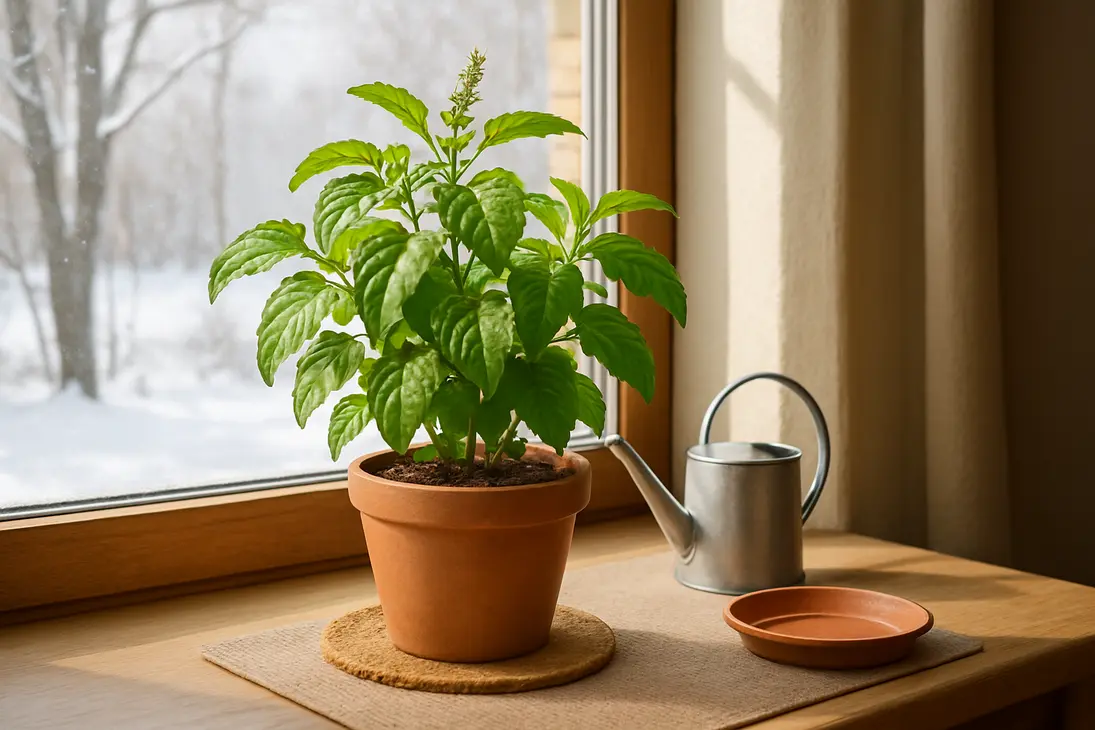
Yes, you can keep a Tulsi plant indoors in winter. In cold climates, it is often the safest way to protect it. Tulsi, or holy basil, is a warm-climate basil that dislikes frost, cold soil, cold wind, and long periods of weak light.
Winter care is different from summer care. Indoors, Tulsi grows more slowly, uses less water, and receives less light. Focus on warmth, bright light, good drainage, and careful watering.
Can Tulsi Survive Indoors During Winter?
Tulsi can survive indoors during winter, but it may not stay as full as it is in summer. Older leaves may yellow or drop, and new growth may be smaller until days lengthen.
Think of winter care as protection, not peak growth. Your goal is to keep the roots healthy, prevent cold damage, and maintain enough living growth for spring recovery.
Tulsi is not a true low-light houseplant. A dark room, wet soil, and a cold windowsill are common reasons it fails indoors.
When to Bring Tulsi Indoors
Bring Tulsi indoors before frost or cold nights shock the plant. Potted roots chill quickly because the container is exposed on all sides.
Move Tulsi indoors when:
- Night temperatures regularly fall below about 10°C / 50°F.
- Frost is forecast.
- Cold winds damage leaves.
- The pot stays cold and wet.
- Leaves droop after chilly nights.
If the plant spent summer outdoors, transition it gradually if possible. Move it to a sheltered porch, balcony, or bright protected spot for a few days, then indoors.
Before bringing it in, inspect leaves, stems, and soil for pests such as aphids, whiteflies, mites, or sticky residue. Treat pests before placing Tulsi near other houseplants.
What Temperature Is Too Cold for Tulsi?
Tulsi prefers warmth and does not tolerate freezing. Around 0°C / 32°F, it is at serious risk, and frost can quickly kill leaves or damage stems and roots.
Indoors, aim for about 18–27°C / 65–80°F. It may survive slightly cooler rooms, but growth slows and wet soil becomes more dangerous.
Be careful with windowsills. A sunny window may be warm in the day but cold at night. Leaves touching cold glass can blacken, and pots on stone or tile may keep roots chilled.
Indoor vs. Outdoor Winter Care
In frost-free mild climates, Tulsi may survive outdoors in a sheltered sunny spot. In areas with frost, snow, freezing rain, or consistently cold nights, indoor care is safer.
| Winter condition | Best approach |
|---|---|
| Frost or freezing temperatures | Bring indoors before frost |
| Mild winter, no frost | Keep outside only if sunny and sheltered |
| Cold wind above freezing | Protect or bring indoors |
| Snow or hard freezes | Keep indoors |
| Very low indoor light | Use the brightest window or a grow light |
Outdoor Tulsi needs protection from cold wind and excess rain. Indoor Tulsi needs protection from low light, dry heated air, and overwatering.
Choose the Best Indoor Spot for Light and Warmth
The best indoor place for Tulsi in winter is your brightest warm spot. Most problems begin when the plant is placed in a dim corner for convenience rather than plant health.
Tulsi needs several hours of strong light daily. Direct morning sun is especially useful in winter. If direct sun is limited, choose the brightest indirect light available. Rotate the pot every few days so the plant does not lean heavily toward the window.
Best Window Direction for Tulsi
General window guidance:
- South-facing window: Usually best in the Northern Hemisphere for winter light.
- East-facing window: Good for gentle morning sun.
- West-facing window: Can work, especially in winter.
- North-facing window: Usually too dim unless supported by a grow light.
In the Southern Hemisphere, reverse the north/south guidance.
If Tulsi becomes pale, leggy, or drops lower leaves, it likely needs more light. Move it closer to the window, open curtains, clean the glass, or use a grow light.
Avoid Cold Drafts, Heaters, and Dark Corners
Tulsi dislikes sudden temperature swings. Keep it away from frequently opened doors, drafty windows, air-conditioning vents, heaters, radiators, fireplaces, dark shelves, hallways, and interior rooms.
Direct heater air can dry leaves quickly and cause wilting even when the soil is damp. If the only sunny window is cold at night, move the pot slightly back from the glass after sunset or place an insulating mat under it.
Can Tulsi Be Kept in a Prayer Room?
Tulsi can be kept in a prayer room if the room is bright, warm, and ventilated. The plant still needs proper growing conditions, not just a meaningful location.
A prayer room can work if it has bright natural light, stable warmth, airflow, a pot with drainage holes, and space around the foliage. A dark, closed room far from a window is not suitable for long-term winter care. If needed, keep Tulsi near a bright window most of the day and move it briefly for prayer.
Be careful with ritual watering. Tulsi should not be watered daily in winter unless the soil is truly drying that fast, which is uncommon indoors. If offering water, use a small amount and never let the pot sit in standing water.
Adjust Watering, Drainage, and Humidity in Winter
Watering is where many indoor Tulsi plants decline. Indoors in winter, soil can stay moist for days because growth and evaporation slow down.
Water by soil condition, not by calendar. Tulsi likes moisture but not soggy, stagnant soil.
How Often to Water Tulsi Indoors in Winter
Water when the top inch of soil feels dry. Push a finger into the soil near the pot edge. If the top inch is dry and the lower soil is slightly moist, it is usually time to water. If it still feels damp, wait.
In many homes, this may mean every 5–10 days, but conditions vary. A small terracotta pot in a sunny window dries faster than a large plastic pot in a cool room.
When watering, water thoroughly until excess drains out, then empty the saucer. Avoid frequent tiny sips, which can keep the surface damp while deeper roots remain unevenly watered.
Signs Tulsi may need water:
- Soil is dry at least one inch down.
- Pot feels light.
- Leaves look dull or slightly soft.
- Leaf tips are crisp and soil is dry.
Signs to wait:
- Soil is still damp.
- Pot feels heavy.
- Leaves yellow while soil is wet.
- Soil smells sour or swampy.
Preventing Overwatering and Root Rot
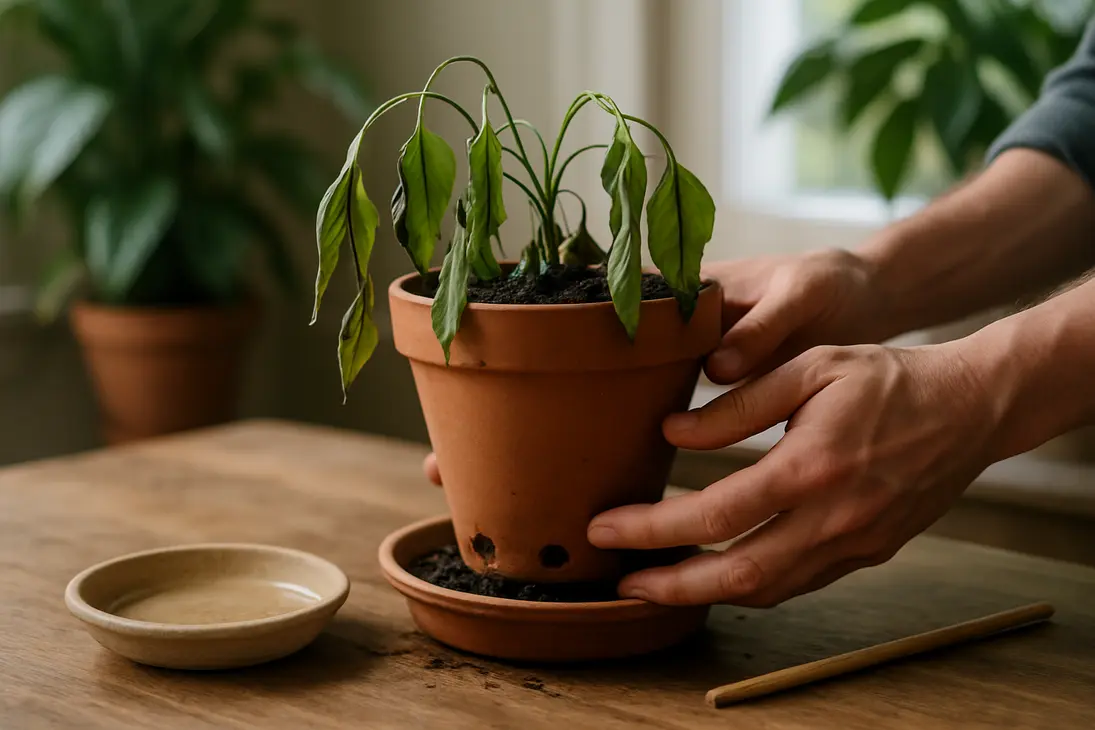
Root rot is common in winter because Tulsi uses less water. A plant with rotting roots may wilt even when the soil is wet because damaged roots cannot absorb water properly.
To reduce the risk, use a pot with drainage holes, empty the saucer after watering, avoid dense garden soil, keep the plant in bright light, and do not water daily out of habit.
If soil stays wet for a week or more, it is risky. A well-draining potting mix with aerating ingredients such as perlite, coarse sand, coco coir, composted bark, or similar materials is better for containers.
Avoid repotting in midwinter unless the current soil is clearly causing decline. If root rot is suspected, stop watering until the upper soil dries, move the plant to brighter warmth, and remove dead leaves from the soil surface. If healthy stems remain, cuttings may be easier to save than badly rotted roots.
Simple Ways to Increase Humidity Indoors
Tulsi appreciates moderate humidity, but humidity should not mean wet soil. Dry heated air can cause crisp edges, curled leaves, and wilting.
Try grouping plants together with space for airflow, using a pebble tray with water below the pebble tops, running a room humidifier, keeping Tulsi away from heater vents, or misting only lightly in a warm, airy room.
Do not keep leaves constantly wet in a cool room, as this can encourage fungal spots.
Winter Pruning, Feeding, and Pot Care
In winter, Tulsi needs gentle maintenance. Avoid forcing new growth the plant cannot support in weak light. Your goal is to remove damaged growth and maintain shape without stressing the plant.
Should You Prune Tulsi in Winter?
Yes, but lightly. Pinching and small trims can keep Tulsi bushy, but heavy pruning can weaken it in winter.
You can pinch off flower spikes, remove yellow or diseased leaves, trim leggy tips above a leaf node, and harvest lightly from healthy stems.
Avoid cutting back more than about one-third of the plant at once. If the plant is weak, wait until it stabilizes. Use clean scissors or clean fingers, and do not strip too much healthy foliage.
Should You Fertilize Tulsi Indoors in Winter?
Usually, reduce or pause fertilizer in winter. When light is low and growth is slow, fertilizer can build up in the soil and stress roots.
If Tulsi is actively producing healthy new leaves in a bright, warm spot, you can feed lightly with diluted balanced liquid fertilizer. If it is stressed, cold, or barely growing, do not fertilize.
Fertilizer will not fix low light, cold damage, or root rot. Correct the growing conditions first.
Repotting Tulsi During Winter: When to Avoid It
Avoid unnecessary repotting in winter because root disturbance is harder for Tulsi to recover from in low light. Do not repot just because growth slowed, a few leaves dropped, or you want a decorative pot.
Repot only if:
- The pot has no drainage hole.
- Soil stays soggy too long.
- Roots are badly crowded.
- Soil smells sour or is breaking down.
- The pot is too small to support the plant.
If repotting is necessary, choose a pot only slightly larger. Oversized pots hold extra wet soil, which increases winter root problems.
How to Save a Weak or Withering Tulsi Plant in Winter
A weak Tulsi can often recover if stems are still alive and roots are not completely rotten. First identify the main stress: low light, too much water, cold exposure, dry heated air, or shock after moving indoors.
| Symptom | Likely cause | What to do first |
|---|---|---|
| Yellow leaves and wet soil | Overwatering, poor drainage | Let soil dry, improve light, empty saucer |
| Long weak stems | Low light | Move to brighter light or add grow light |
| Drooping with dry soil | Underwatering | Water thoroughly |
| Drooping with wet soil | Root stress or rot | Stop watering, add warmth and light |
| Blackened leaves | Cold damage | Move warmer, remove dead growth |
| Sudden leaf drop | Environmental shock | Keep conditions stable |
Do not try to fix everything at once. Avoid pruning, repotting, fertilizing, and relocating on the same day. Correct the biggest problem and give the plant time.
Yellow Leaves
A few yellow older leaves are common in winter, especially after moving indoors. Many yellow leaves usually mean overwatering, low light, cold roots, poor drainage, or natural shedding.
Check the soil first. If it is wet, reduce watering and increase light. Remove yellow leaves once they are fully spent. Do not fertilize unless the plant is actively growing and care conditions are already good.
If new leaves are pale and stems are stretching, the main problem is likely low light.
Drooping or Wilting
Drooping can mean either underwatering or overwatering, so always check the soil.
If the soil is dry, water thoroughly and drain the excess. If the soil is wet, do not add more water. Move the plant to a brighter, warmer place and allow the soil to dry partly. Make sure drainage holes are open and the saucer is empty.
Temporary drooping can also happen after moving indoors. Keep conditions stable and avoid moving the plant from room to room.
Leaf Drop After Moving Indoors
Leaf drop after moving Tulsi indoors is common because outdoor light is much stronger than indoor light. The plant may shed leaves it can no longer support.
To reduce leaf drop, bring it in before severe cold, place it in the brightest spot immediately, avoid overwatering, keep it away from heaters and drafts, and remove fallen leaves from the soil.
Some leaf loss does not mean the plant is dying. Firm stems and new buds are good signs.
Signs of Cold Damage
Cold damage may appear as dark, limp, water-soaked, curled, or blackened leaves. Tender tips are usually affected first.
If you see cold damage:
- Move Tulsi to a warm, bright indoor spot.
- Keep it away from direct heater air.
- Water only if the soil is dry.
- Wait a few days before major pruning.
- Remove clearly dead, mushy, or blackened growth.
Waiting helps you see what is truly dead. If stems remain green or firm, Tulsi may resprout. If the whole plant froze solid, recovery is unlikely.
Conclusion
Keeping Tulsi plant indoors in winter is possible and often necessary in cold climates. It cannot handle frost or freezing temperatures, but it can survive indoors with warmth, strong light, careful watering, and good drainage.
Expect slower growth and some leaf drop. Place it in your brightest warm window, protect it from drafts and heaters, water only when the top inch of soil is dry, and avoid soggy soil. Save heavy pruning and repotting for active growth.
With steady care, Tulsi can get through winter and grow more strongly when days become warmer and brighter.
FAQ
Can Tulsi survive at 0°C?
No, not reliably. Tulsi can be badly damaged or killed around 0°C / 32°F, especially with frost. Bring it indoors before temperatures get that low.
How many hours of sunlight does Tulsi need indoors in winter?
Aim for at least 4–6 hours of direct or very bright light daily. More is helpful in winter if the plant is not overheated or dried by a heater.
Should I water Tulsi daily in winter?
No. Daily watering is usually too much indoors in winter. Water only when the top inch of soil feels dry, then let excess drain away.
Can Tulsi survive winter in the USA?
Yes, but care depends on the region. In much of the USA, Tulsi should be brought indoors before frost or grown as an annual. In very mild frost-free areas, it may survive outdoors in a protected sunny spot.
You Might Also Like