What Pot Size Is Best for Three ZZ Plants?
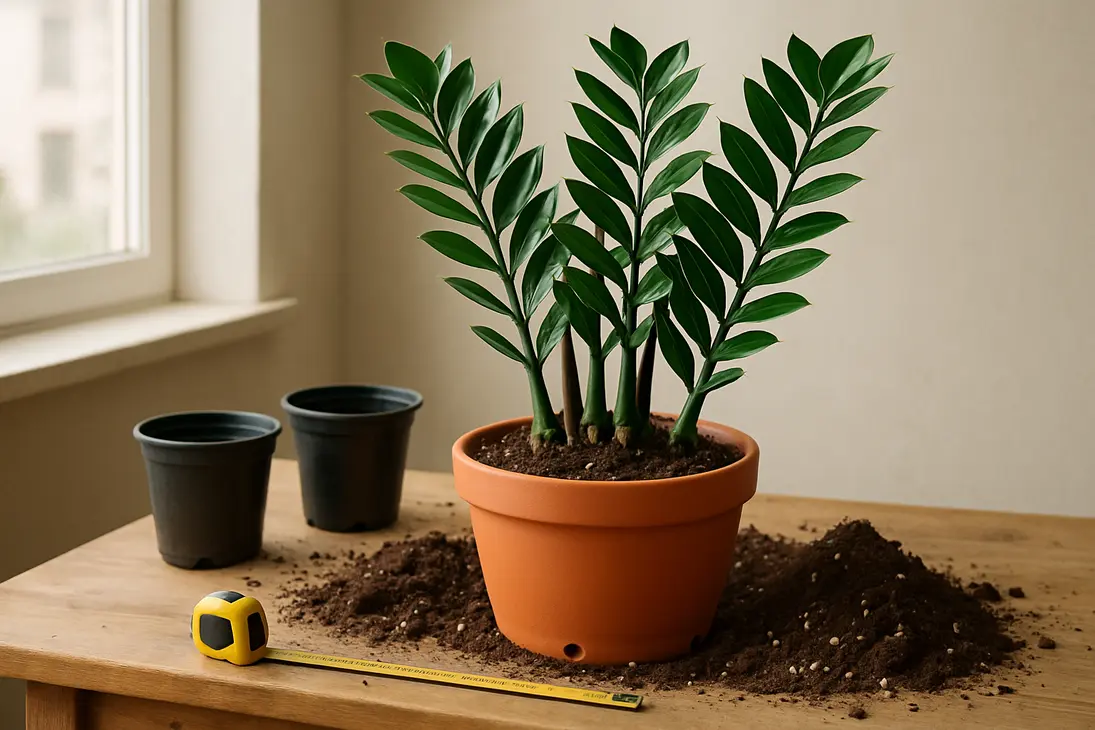
The best pot size for three ZZ plants is one that is only 2–4 inches wider than the three root balls arranged together. For many small ZZ plants sold in 4-inch nursery pots, that usually means a container with an inside diameter of about 10–12 inches.
The exact answer depends on the actual size of the root systems—not simply the size printed on the nursery pots. ZZ plants grow from thick, water-storing rhizomes, and they are much safer in a pot that is slightly snug than one surrounded by a large volume of damp soil.
Choose a pot with drainage holes, use a quick-draining mix, and avoid jumping straight to a very large decorative planter just to create a fuller display.
Choose a Pot Based on the Combined Root Balls
Before buying a new container, slide each ZZ plant from its nursery pot and look at the root ball. You do not need to loosen healthy roots aggressively; the goal is simply to see how much space the three plants occupy when grouped together.
Set the plants upright on a table or in an empty pot and arrange them as you plan to plant them—usually in a loose triangle. Measure the widest point across the group. Then choose a container that provides a modest margin around that combined footprint.
The measurement that matters is the inside width of the pot. A decorative pot may have thick walls, so its outside diameter can be noticeably larger than the planting space inside.
Use 2–4 Inches of Extra Width
Give the combined group of root balls approximately 2–4 inches of extra width in total. That means the gap is shared around the outside of the arrangement; it does not mean adding 2–4 inches around each individual ZZ plant.
For example, if the three root balls fit into a cluster about 8 inches across:
- An approximately 10-inch pot is a snug, sensible choice.
- A 12-inch pot offers a little more growing room and is useful if the plants are vigorous or their rhizomes are already pressing against their nursery pots.
- A 14-inch or larger pot is usually excessive for small plants, unless their combined root mass genuinely fills most of that space.
A small amount of open soil around the plants is normal. Large empty areas are not helpful. ZZ roots and rhizomes do not rapidly use a big volume of potting mix, so that unused mix can remain wet long after the root zone has had enough water.
Match Pot Depth to the Existing Root Balls
Pot depth should be close to the depth of the existing root balls. In most cases, choose a new pot that is only 1–2 inches deeper, if it is deeper at all.
A tall pot can look elegant, but it is not always practical for ZZ plants. Extra depth holds extra soil below the rhizomes, where it may stay damp for a long time. This is especially risky in low-light rooms, during winter, or when the pot is made from nonporous glazed ceramic.
Aim to keep each plant at the same soil level it had previously. The stems should emerge from the soil at their former height, with the rhizomes covered but not buried unusually deeply.
If you want the look of a tall planter, consider placing a correctly sized nursery pot inside it rather than filling a deep decorative vessel with unnecessary potting soil.
Quick Pot-Size Guide for Three ZZ Plants
Use this as a starting point, then confirm by dry-fitting the plants in the new pot before adding soil.
| Size of each ZZ plant’s root ball | Typical pot size for three plants together | Best use |
|---|---|---|
| About 2–3 inches wide | 8–10 inches wide | Small starter plants or recently propagated divisions |
| About 3–4 inches wide | 10–12 inches wide | Common size for three plants from 4-inch nursery pots |
| About 4–5 inches wide | 12–14 inches wide | More established plants with thicker rhizomes |
| Larger, dense, or irregular root balls | Measure the grouped plants first | Mature plants should be sized individually rather than guessed |
A round pot works well when the three plants can be arranged in a triangle. A wide oval, trough, or square planter can be easier when the root balls are uneven in size or when you want a more linear arrangement.
Why ZZ Plants Should Not Go in an Oversized Pot
ZZ plants are unusually tolerant of missed watering because their thick rhizomes store moisture. That resilience can be misleading: they are far less tolerant of potting mix that stays consistently wet.
An oversized pot increases the amount of soil holding moisture around the roots. Since the plant has relatively few roots in that extra soil, it cannot use the water quickly. The result can be a persistently damp root zone, declining roots, and eventually rhizome rot.
A somewhat snug container is usually beneficial for ZZ plants. It helps the potting mix dry at a more manageable pace and supports the plant’s naturally slow, steady growth habit.
This does not mean the plants should be severely compressed or forced into a pot that distorts their rhizomes. The goal is a pot that fits the group comfortably, not a pot packed to the point of cracking.
Signs the Pot Is Too Large
A pot may be too large for your three ZZ plants if you notice several of these conditions:
- The potting mix remains wet for a long time after watering, particularly deep in the pot.
- The plants are sitting in a large expanse of soil with little root growth through it.
- New stems are slow to appear while older stems begin yellowing from the base.
- The rhizomes feel soft, dark, or mushy when inspected.
- The container is difficult to lift or dry out because it holds far more mix than the plants need.
- You are watering on a schedule because the surface looks dry, while the lower half of the pot is still damp.
Yellow leaves can have several causes, including aging foliage or inadequate light, so do not assume every yellow stem indicates rot. Check the soil moisture and inspect the roots if decline is widespread or the plant feels loose in the pot.
Signs the Plants Need More Room
Your grouped ZZ plants may be ready for a larger container when:
- Rhizomes are pushing upward above the soil.
- The nursery pot bulges, cracks, or becomes noticeably distorted.
- Roots and rhizomes fill the pot so tightly that little potting mix remains.
- The plants dry out much faster than usual despite receiving similar light and temperatures.
- Growth is crowded enough that the plants cannot be positioned upright without pressing hard against one another.
ZZ plants do not need annual repotting. If the soil is still draining well and the rhizomes have room, it is fine to leave them in the same container for another season.
Pick a Pot With Drainage and a Fast-Draining Soil Mix
Drainage is more important than the pot’s color, shape, or decorative style. Use a container with at least one unobstructed drainage hole, and ideally several holes for larger planters.
Avoid planting directly into a container with no drainage, even if you promise yourself to water carefully. Water collects at the bottom, where it is difficult to judge and easy for thick ZZ rhizomes to encounter. A cachepot is a safer alternative: keep the plants in a draining inner pot, then place that pot inside the decorative outer vessel.
Use a potting mix that retains some moisture but includes enough coarse material to stay airy around the roots and rhizomes.
Best Pot Materials for Grouped ZZ Plants
Different pot materials change how quickly the soil dries.
| Pot material | Advantages for three ZZ plants | Considerations |
|---|---|---|
| Terracotta | Porous sides help soil dry more quickly; good for growers prone to overwatering | Can become heavy in larger sizes and may require slightly more frequent watering |
| Unglazed clay | Similar drying benefits to terracotta; stable for taller plants | Can leave mineral marks and may crack in freezing conditions |
| Glazed ceramic | Attractive, heavy, and stable for an indoor grouping | Holds moisture longer; drainage holes are essential |
| Plastic nursery pot | Lightweight, inexpensive, and practical inside a decorative cachepot | Soil dries slowly and the pot may tip if the plants become tall |
| Fiberglass or resin | Often lighter than ceramic while offering a polished look | Check carefully for proper drainage holes |
For many indoor homes, a terracotta pot with drainage is forgiving because it allows moisture to evaporate through the pot walls. However, glazed ceramic is also suitable when paired with a fast-draining mix and restrained watering.
Soil Mix Considerations When Combining Plants
When three plants share a pot, the center of the container can stay wetter than the outer edges. A dense, peat-heavy mix may compact around the rhizomes and slow drying even further.
A practical mix for ZZ plants is:
- A quality indoor potting mix as the base
- Perlite, pumice, or another coarse mineral amendment for air space
- Orchid bark or a similar chunky material in a moderate amount, if the base mix is especially fine or water-retentive
You do not need to create a completely gritty cactus mix, particularly if your home is warm and dry. The aim is a mix that moistens evenly, drains freely, and does not remain saturated.
Do not place a layer of rocks, gravel, or broken pottery in the bottom of the pot. This reduces the amount of usable soil and does not replace drainage holes. Use the same well-draining mix from top to bottom.
How to Plant Three ZZ Plants in One Container
Combining three ZZ plants is straightforward, provided the roots are handled gently and the new pot is not oversized.
- Choose a clean pot with drainage holes and confirm that all three plants fit before adding soil.
- Water the plants a few days beforehand if the mix is extremely dry. Slightly moist soil is easier to remove than bone-dry soil, but avoid repotting immediately after heavy watering.
- Remove each plant from its nursery pot. Support the root ball rather than pulling on the stems.
- Check for soft, blackened, or foul-smelling rhizomes. Remove only clearly rotted material with clean scissors or pruners.
- Add a shallow layer of potting mix to the new container.
- Arrange the three plants, keeping their original soil lines at approximately the same height.
- Fill the gaps around the root balls with fresh mix, working it gently between them.
- Firm lightly to stabilize the plants, but do not compress the soil hard.
- Add a thin final layer of mix only if needed to cover exposed rhizomes.
Leave about ½–1 inch of space below the pot rim. This watering margin helps prevent spills and makes it easier to soak the soil evenly when the plants eventually need water.
Space the Plants Evenly
For a balanced arrangement in a round pot, place the three ZZ plants in a loose triangle. Keep enough space between their stems that each clump can be seen and has room to produce new shoots.
If one plant is taller or fuller, position it toward the back if the pot will sit against a wall. For a planter viewed from all sides, put the tallest plant slightly off-center rather than directly in the middle. This creates a more natural look while leaving room for the smaller plants to grow.
Do not force the root balls tightly together just to eliminate every gap. The plants should be secure, but their rhizomes need space to expand gradually.
When to Water After Repotting
If you repotted healthy ZZ plants into only a slightly larger pot, water lightly enough to settle the fresh mix around the root balls. Let all excess water drain away completely.
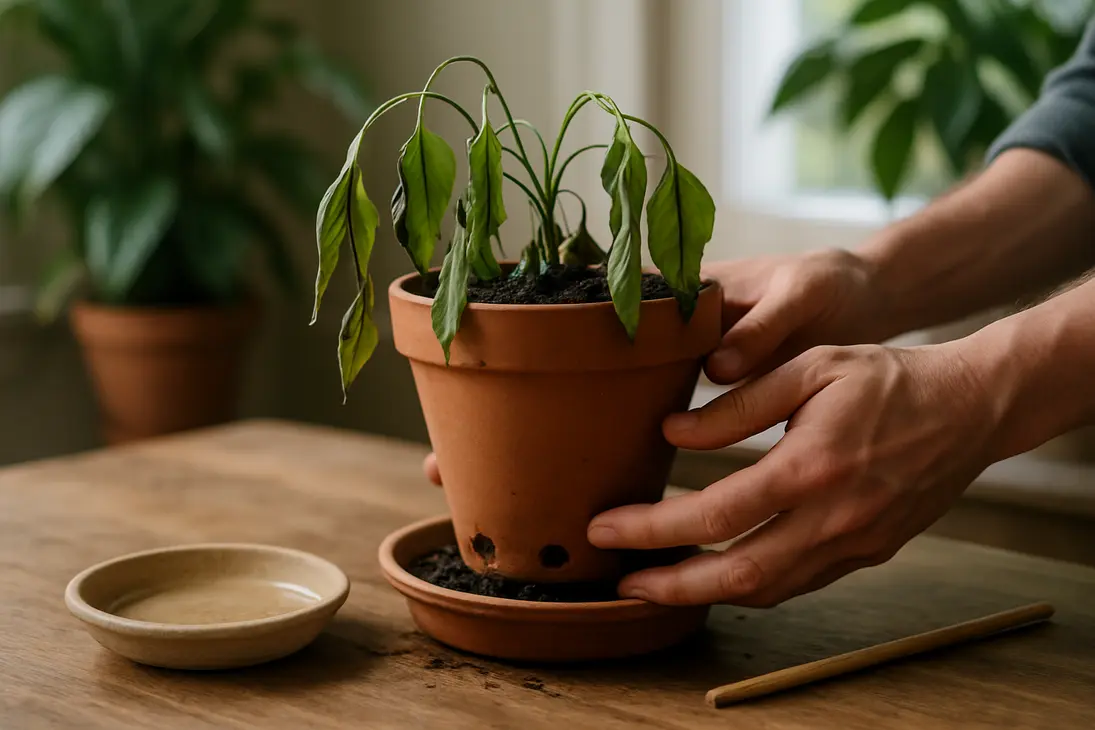
If you removed damaged or rotted roots, wait several days before watering. This gives cut surfaces time to dry and reduces the chance of further rot.
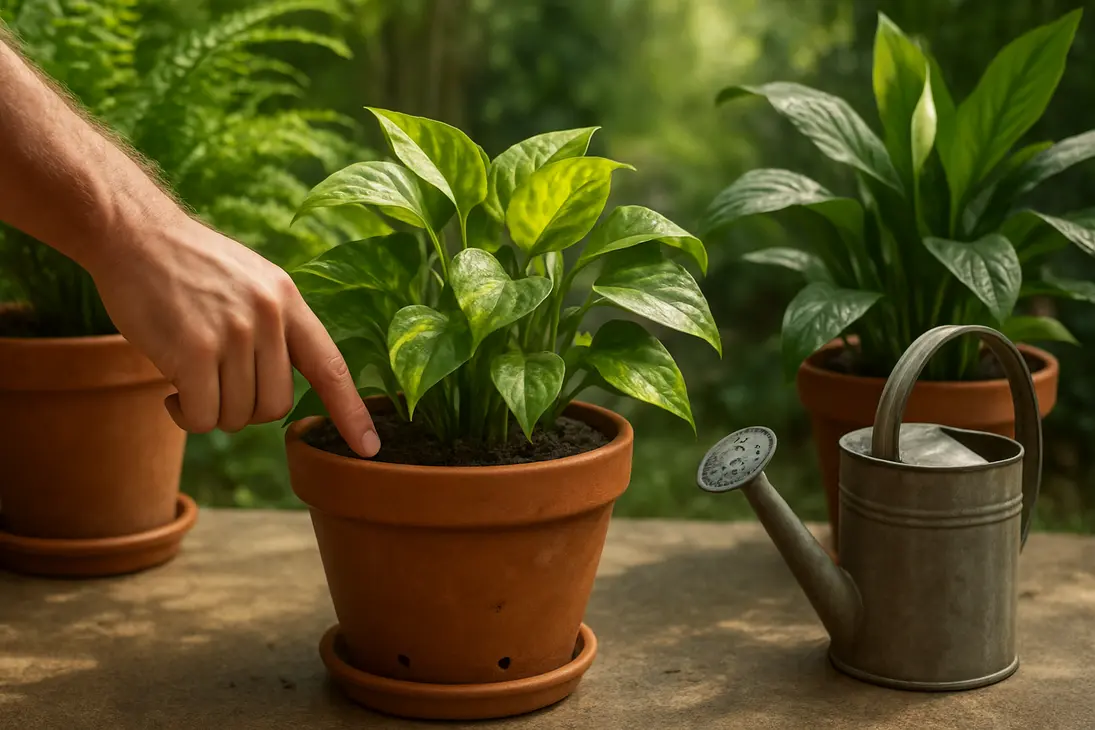
After that, allow the mix to dry substantially before watering again. Test below the surface with a finger, wooden chopstick, or moisture probe rather than relying only on the dry top layer. ZZ plants generally prefer a thorough watering followed by a meaningful drying period, not frequent small drinks.
Conclusion
For three ZZ plants, choose a pot that is just 2–4 inches wider than their combined root balls, with depth close to the existing root systems. Three small plants from 4-inch nursery pots commonly fit well in a 10–12 inch container, but dry-fit them first because root-ball sizes vary.
A pot with drainage holes and a fast-draining soil mix matters as much as the diameter. Keeping the container reasonably snug helps prevent excess moisture around the thick ZZ rhizomes and gives the plants the best chance to settle in and grow steadily.
FAQ
Can three ZZ plants grow together in one pot?
Yes. Three ZZ plants can grow well together in one pot as long as the container has drainage, the plants are not overcrowded, and the potting mix dries reasonably well between waterings.
Grouping plants is a useful way to create a fuller-looking display quickly. Over time, each plant will produce new rhizomes and shoots, so the arrangement may eventually need to be divided or moved into a slightly larger container.
What size pot do I need for three 4-inch ZZ plants?
For three ZZ plants currently in 4-inch nursery pots, start by considering a 10–12 inch pot with drainage holes.
A 10-inch pot is often enough when the individual root balls are compact. Choose a 12-inch pot if the root balls are closer to 4 inches wide, the plants are already root-bound, or you need a little extra room to arrange them without crowding. Avoid choosing based on the nursery-pot diameter alone; remove the pots and measure the actual root-ball cluster first.
Should ZZ plants be root-bound?
ZZ plants tolerate being somewhat root-bound and often do well in a fairly snug pot. They do not need frequent upsizing, and a slightly crowded root zone is generally safer than a large volume of wet soil.
However, they should not be left so confined that rhizomes are cracking the pot, pushing strongly above the soil, or preventing normal growth. When those signs appear, move the group up only one modest pot size.
How often should I repot ZZ plants planted together?
Repot grouped ZZ plants only when they have clearly filled their container, which may be every two to three years or longer in average indoor conditions. Growth is often slower in lower light, so some arrangements can remain comfortably in the same pot for several years.
Check the plants annually rather than repotting automatically. If the mix is draining well, the rhizomes are healthy, and there is no crowding or pot distortion, there is no need to disturb them.
You Might Also Like