How to Care for Mandevilla in Fall as Temperatures Drop
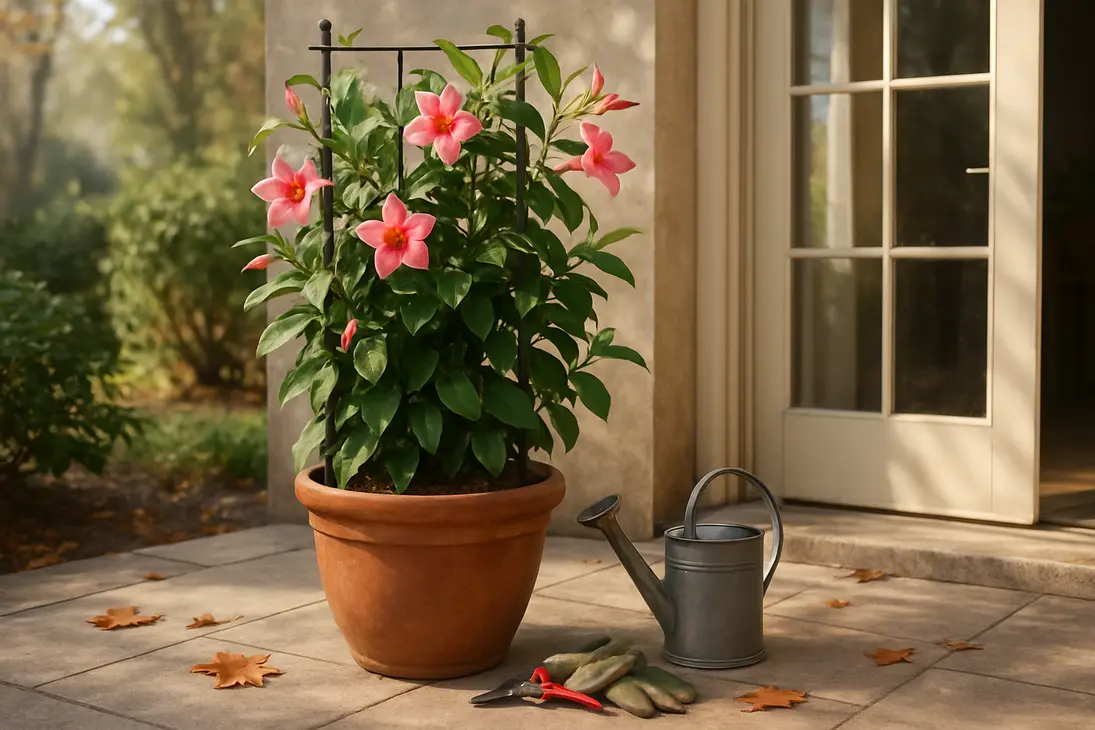
Mandevilla care in fall is mostly about timing: protect the plant before cold damages it, then reduce water, fertilizer, and expectations as light and temperatures drop. Mandevilla is a tropical vine grown for glossy leaves and trumpet-shaped flowers, so it should not be left outside through frost.
In warm climates, fall care may mean watering less and watching night temperatures. In colder regions, you’ll need to bring it indoors, store it semi-dormant, or treat it as a seasonal annual.
Know When Mandevilla Needs Fall Protection
Mandevilla grows best with warm days, mild nights, and strong light. As fall nights cool, growth slows. That is your cue to water less and choose a protection plan.
Do not wait for the first frost warning if you plan to save it. A large potted mandevilla is easier to inspect, prune, and move while weather is still mild. Once chilled, it may drop leaves heavily or decline from cold injury.
What temperatures are too cold for mandevilla?
Start paying close attention when night temperatures fall below 55°F. Mandevilla may tolerate brief nights in the low 50s, but it will not grow well there for long.
| Temperature | What it means for mandevilla |
|---|---|
| 60°F and above | Comfortable for active growth |
| 50–55°F | Growth slows; prepare to move or protect |
| 45–50°F | Stress, yellowing, and leaf drop become more likely |
| Below 40–45°F | Too cold for reliable outdoor care |
| Frost or freeze | Likely to damage or kill exposed foliage and stems |
In warm zones, in-ground mandevilla may act as a tender perennial. In colder climates, it is usually grown in a container so it can be moved before cold weather arrives.
Signs cold weather is stressing the plant
Cold stress can resemble watering or transplant stress, so consider recent weather. Common signs include:
- Yellowing lower leaves
- Sudden leaf drop after chilly nights
- Limp or curled leaves when soil is not dry
- Dropping buds
- Slowed or stopped flowering
- Soft or damaged stems after cold exposure
One cool night may not ruin the plant, but repeated cold weakens it. Cool soil also stays wet longer, raising the risk of root problems if you keep watering as you did in summer.
Should mandevilla stay outside, move indoors, or be treated as an annual?
You have three practical choices.
Keep it outside only if your climate stays frost-free and nights remain mild. Place it in sun with good air movement and protection from cold wind.
Move it indoors if you want to save it and can provide bright light, moderate warmth, and careful watering.
Treat it as an annual if it is very large, pest-ridden, inexpensive to replace, or you lack indoor space and light. Overwintering takes attention, and not every plant is worth saving.
Adjust Fall Watering, Light, and Fertilizer
Fall care changes because growth slows. In summer, mandevilla may drink quickly and bloom heavily. In fall and winter, cooler temperatures, shorter days, and indoor conditions reduce water use dramatically.
Reduce watering as growth slows
The most common fall mistake is watering on a summer schedule. A pot that dried quickly in July may stay damp for many days in fall or indoors.
Check the soil before watering. For an actively growing indoor mandevilla, water when the top 1 to 2 inches of potting mix feel dry. Water thoroughly, then let excess drain away. Never let the pot sit in a saucer of water.
For a semi-dormant plant kept cool, water much less. The goal is to keep roots alive, not support lush growth. Depending on pot size and temperature, that may mean a light watering every few weeks.
Signs of overwatering include yellow leaves, soft stems, fungus gnats, sour-smelling soil, or a pot that remains heavy long after watering.
Stop or cut back fertilizer in fall
Mandevilla benefits from feeding during active spring and summer growth, but fall is the time to taper off. Heavy fertilizer late in the season encourages soft growth that struggles in weak winter light.
If the plant is still outdoors, warm, and blooming strongly, reduce feeding gradually. Once nights cool or the plant comes indoors, stop fertilizing or cut back sharply. Resume regular feeding in spring when light improves and new growth is strong.
Do not use fertilizer to “fix” winter yellowing unless the plant is actively growing and not stressed by soggy soil, low light, or cold.
Give indoor mandevilla the brightest window available
Indoors, give mandevilla the brightest light you can. A sunny south- or west-facing window is usually best. East-facing light may keep it alive, but flowering is less likely. A dark corner is not suitable for active growth.
Expect some adjustment after moving the plant inside. Indoor light is much weaker than outdoor sun, and the plant may shed leaves while adapting.
If you have no bright window, consider semi-dormant storage instead of trying to keep the plant leafy. Warm, low-light conditions often lead to weak growth and pest problems.
Avoid drafts, cold glass, and sudden temperature swings
Mandevilla dislikes abrupt changes. Indoors, avoid placing it:
- Against cold window glass
- Beside exterior doors
- Near hot, dry heating vents
- In unheated rooms that drop sharply at night
- In garages that may approach freezing
Keep foliage slightly back from cold glass while still giving the plant as much light as possible.
Prepare Mandevilla for Indoor Overwintering
Good preparation helps prevent a messy, pest-prone indoor plant. Before nights become truly cold, inspect, clean, prune, and move the plant on a mild fall day.
Inspect for pests before bringing it indoors
Outdoor mandevilla can carry pests that multiply quickly inside. Check leaf undersides, new growth, leaf joints, stems, pot rims, soil surfaces, trellis ties, and supports.
Common pests include aphids, whiteflies, spider mites, mealybugs, and scale. Sticky residue, fine webbing, cottony clusters, stem bumps, or tiny flying insects are warning signs.
A strong spray of water can remove many soft-bodied pests. Prune badly infested growth. If needed, use insecticidal soap or horticultural oil according to the label, covering leaf undersides. Keep the plant separate from houseplants for a couple of weeks if possible.
Prune lightly to manage size
Mandevilla can be pruned before coming indoors, especially if vines are too long. Light pruning also removes tangled, damaged, or pest-infested growth.
Use clean pruners and wear gloves if the milky sap irritates your skin. Trim long vines to fit the support or indoor location, and remove dead, broken, or weak stems.
Avoid severe pruning in early fall unless necessary. A moderate fall trim, followed by shaping in late winter or early spring, usually works well.
Overwintering as a houseplant
This method works best with bright light and a warm indoor spot. The plant may stay leafy and may occasionally bloom, though it usually will not perform like it does outdoors in summer.
For active indoor overwintering:
- Place it in your brightest window.
- Keep it warm and away from cold drafts.
- Water when the top inch or two of soil dries.
- Stop or greatly reduce fertilizer until spring.
- Rotate the pot occasionally.
- Watch for spider mites and whiteflies.
Do not worry if flowering slows or stops. Healthy survival and spring regrowth are the main goals.
Overwintering semi-dormant in a cool, protected spot
Semi-dormant storage is useful when you lack bright indoor light or the plant is too large to maintain as a houseplant. Keep it cool, frost-free, and barely watered.
A suitable spot might be a cool basement, insulated garage, enclosed porch, or spare room that stays above freezing. Temperatures in the 50s°F are often useful. The plant may lose many or most leaves, which can be normal.
Before storage, prune it enough to fit and inspect for pests. During winter, check every few weeks. Water sparingly only when the mix is very dry, using just enough to keep roots from shriveling. Do not fertilize.
In spring, move it gradually into brighter light and warmer conditions. Increase watering only as new growth begins, and reintroduce outdoor sun slowly after frost danger has passed.
Common Fall and Winter Mandevilla Problems
Most fall and winter problems come from too much water, not enough light, cold exposure, or pests. Symptoms overlap, so look at the whole situation before acting.
Yellow leaves from overwatering or stress
Yellow leaves are common in fall because the plant uses less water while many gardeners keep watering as if it were summer.
Check the soil first. If it is damp several inches down, wait. Make sure the container has drainage holes and water is not trapped in a decorative outer pot.
Yellowing can also follow a sudden move indoors, cold nights, or low light. A few yellow leaves during transition are normal. Widespread yellowing, soft stems, or musty soil points more strongly to overwatering or root stress.
Leaf drop after moving indoors
Leaf drop after moving mandevilla indoors is common. The plant has gone from bright outdoor light, humidity, and airflow to a dimmer, drier space.
To reduce leaf drop, move the plant before it is chilled, place it in bright light immediately, avoid overwatering, keep it away from vents and drafts, and inspect weekly for pests.
Do not respond by soaking the plant repeatedly. If stems are firm and soil moisture is reasonable, give it time.
Why mandevilla may stop blooming in winter
Mandevilla blooms best with warmth, strong light, and active growth. Winter indoors rarely provides all three. Short days, weak sunlight, and cooler rooms often pause flowering.
A semi-dormant plant should not be expected to bloom. A houseplant mandevilla may bloom with excellent light and warmth, but sparse or no flowers are normal. Indoor winter blooms are a bonus, not a guarantee.
Mistakes to avoid during winter care
Avoid these common errors:
- Watering on a fixed schedule. Check the soil instead.
- Fertilizing a stressed plant. Correct light, temperature, or water problems first.
- Keeping it too dark and too warm. This encourages weak growth.
- Leaving it outside until frost. Cold damage can happen quickly.
- Bringing pests indoors. Inspect and isolate if possible.
- Letting the pot sit in water. Drainage is especially important in winter.
- Expecting summer-level bloom indoors. Reduced flowering is normal.
A lean winter routine is usually safer than too much attention. Bright light, careful watering, and patience matter most.
Mandevilla vs. Dipladenia in Fall Care
Mandevilla and dipladenia are often sold side by side. In the plant trade, “mandevilla” usually refers to vigorous vining types, while “dipladenia” often refers to bushier, compact forms. They are closely related and may be grouped botanically within Mandevilla.
For fall care, the difference is less important than their shared tropical nature.
Similar cold sensitivity and overwintering needs
Both mandevilla and dipladenia dislike frost, cold soil, and chilly drafts. Both need protection before freezing weather and reduced watering in fall and winter.
The same overwintering choices apply:
- Keep actively growing in bright indoor light
- Store semi-dormant in a cool, frost-free place
- Treat as an annual in cold climates
Both can suffer yellow leaves from overwatering, leaf drop from indoor transition, and pest problems in dry indoor air.
Vining mandevilla vs. bushier dipladenia
The main practical difference is shape.
Vining mandevilla usually needs a trellis, obelisk, railing, or other support. In fall, you may need to unwind or trim long vines before moving the pot indoors. It can take up more vertical space near a window.
Dipladenia is typically more compact and shrubby, so it is often easier to overwinter on a windowsill, plant stand, or in a smaller indoor space. It may still need light pruning but usually requires less untangling.
Care for both the same way: protect from cold, reduce water, pause feeding, and provide the brightest light available.
Conclusion
Mandevilla care in fall is a shift from pushing growth to protecting the plant. Watch night temperatures, and move or protect it before frost or repeated chilly nights arrive. Once growth slows, water less often, stop heavy feeding, and give indoor plants as much bright light as possible.
Before bringing mandevilla indoors, inspect for pests, clean it up, and prune only as much as needed. Then choose active overwintering in a bright warm window or semi-dormant storage in a cool, frost-free place.
With simple seasonal adjustments, mandevilla can survive winter and return to strong growth when warmth and longer days come back.
FAQ
How often should I water mandevilla in winter?
Water only when the soil has dried enough for the plant’s conditions. For a mandevilla kept as a houseplant in bright light, water when the top 1 to 2 inches of soil feel dry. For a semi-dormant plant in a cool space, watering may be needed only every few weeks.
Always check the soil rather than following a calendar. Cool temperatures, low light, and large pots slow drying.
Can mandevilla survive frost?
Mandevilla generally cannot survive frost on exposed foliage. Frost can damage or kill leaves and stems quickly. In warm climates, roots may survive mild cold if the plant is in the ground and protected, but in cold-winter regions, move it indoors or treat it as an annual before frost.
If lightly frosted, move it to protection and wait before pruning heavily. Firm green stems may still recover.
Should I cut back mandevilla before bringing it inside?
Yes. Cut it back lightly to manage size, remove damaged growth, and make indoor placement easier. Avoid removing more than necessary unless space is limited. A moderate fall trim and a more thorough shaping in late winter or spring is often best.
Use clean pruners, and wear gloves if the sap irritates your skin.
Will mandevilla bloom indoors during winter?
It might, but often will not. Mandevilla needs strong light, warmth, and active growth to bloom well. Indoor winter conditions are usually too dim for heavy flowering. If the plant stays healthy but does not bloom until spring or summer, that is normal.
You Might Also Like