How Often Should You Water Portulaca?
The Short Answer: Water Portulaca When the Soil Has Dried Out
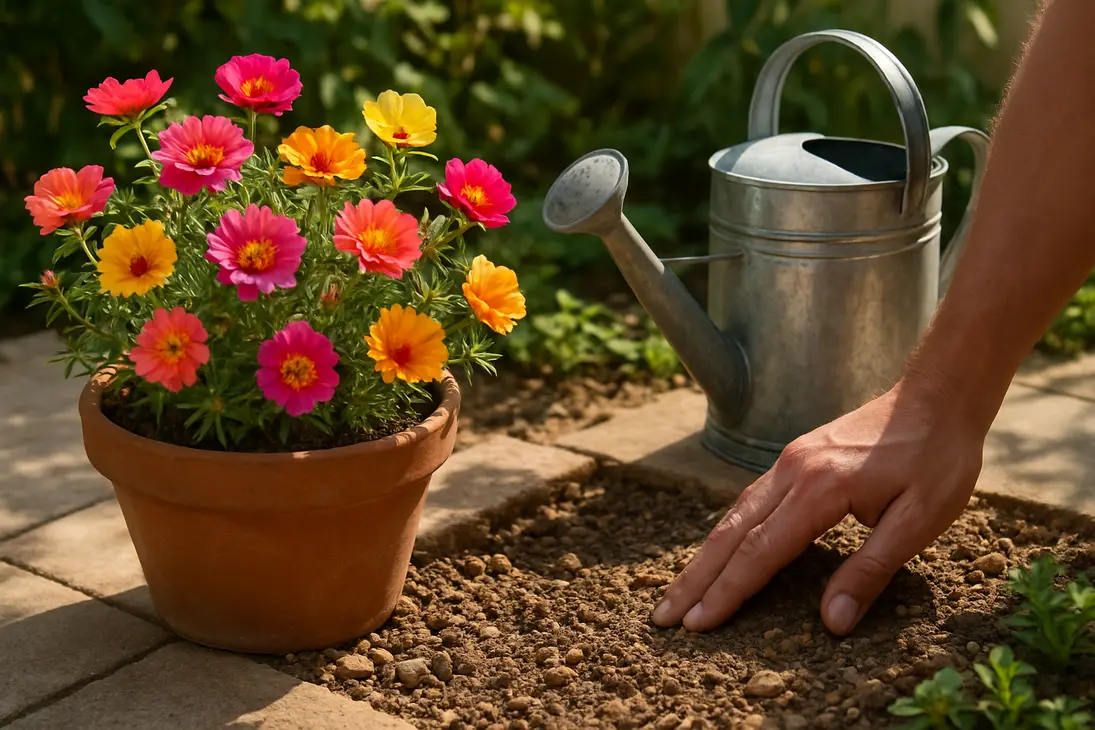
The best watering frequency for Portulaca is not “every day” or “twice a week.” It is: water when the soil has dried out, then water thoroughly.
Portulaca, often sold as moss rose, is a succulent-like flowering plant with fleshy leaves and stems that store moisture. It is much more drought-tolerant than many bedding annuals and usually suffers more from too much water than from a short dry spell.
As a practical baseline:
| Growing situation | Typical watering rhythm once established | What matters most |
|---|---|---|
| In-ground garden beds | About every 7–14 days in dry weather | Soil should dry between waterings |
| Raised beds or sandy soil | About every 5–10 days in hot, dry weather | Faster drainage means faster dry-down |
| Containers | Often every 2–5 days in summer | Pot size, drainage, and heat matter greatly |
| Hanging baskets | Sometimes every 1–3 days in hot wind | Check basket weight and soil depth |
| Indoors | Usually less often than outdoors | Bright light and dry soil are essential |
These are starting points, not rules. A Portulaca in a small terracotta pot on a sunny patio may need water much sooner than one planted in the ground. A plant in clay soil after rain may not need water for a long time.
Newly planted Portulaca is the main exception. For the first week or two after planting, check it more often while roots settle in. Keep the soil lightly moist but never soggy. Once established, let the soil dry out between waterings.
How to Check Whether Portulaca Needs Water
The simplest way to decide whether to water Portulaca is to check the soil, not the calendar.
For garden beds, push your finger into the soil near the plant. If the top 1–2 inches are dry and the soil below is also starting to feel dry, water. If the surface looks dry but the soil underneath is still cool and damp, wait.
For containers, check a little deeper. A pot can have a dry-looking surface while the lower half remains wet, especially in plastic pots, glazed ceramic containers, or dense potting mixes. Stick your finger down 2 inches if possible, or use a wooden skewer: push it into the soil, wait a moment, then pull it out. If damp soil clings to it, the pot does not need water yet.
You can also learn the weight of the pot. A freshly watered container feels heavy; a dry container feels light. This is especially useful for hanging baskets, where sun and wind dry the top quickly.
Do not water Portulaca just because:
- The soil surface looks dry in afternoon sun.
- Neighboring plants are wilting.
- It is your usual watering day.
- The flowers are closed early or late in the day.
Portulaca flowers often open and close with light, so closed blooms are not automatically a drought sign. Look at the stems, leaves, and soil together.
What Changes Portulaca Watering Frequency
Portulaca’s drought tolerance is real, but drying speed varies.
Sun and heat: Full sun helps Portulaca bloom, but it also dries soil faster. Containers and shallow beds need more frequent checks during hot, dry weather.
Rainfall: A brief shower may wet only the surface, while several rainy days can keep roots too wet. Check the soil before assuming rain was enough—or before watering after rain.
Soil drainage: Portulaca prefers fast-draining soil. Sandy or gritty soil dries quickly; heavy clay holds water and raises the risk of root problems. In heavy ground, raised beds or containers are often safer.
Pot size and material: Small pots dry faster than large pots. Terracotta dries faster than plastic or glazed ceramic. Dark or metal containers in direct sun can heat up and lose water quickly.
Hanging baskets: Baskets are exposed to sun and wind on all sides and often contain lightweight mixes. They may dry very quickly in summer.
Indoor growing: Indoors, evaporation is slower and light is usually weaker. A Portulaca in low light uses less water and is easier to overwater.
Plant size and season: A large, full plant in active summer bloom uses more water than a small transplant or a plant growing slowly in cool weather.
Portulaca in Containers and Hanging Baskets
Potted Portulaca needs closer attention than in-ground Portulaca because containers hold limited soil. Even so, the goal is the same: water thoroughly, then let the potting mix dry down before watering again.
Use a container with drainage holes. This is not optional. A decorative pot without drainage can trap water around the roots and cause decline even if you water lightly. If using a cachepot, keep the plant in a nursery pot, remove it to water, and let it drain fully before putting it back.
Choose a fast-draining potting mix. A standard mix can work if it drains freely, but very moisture-retentive mixes are not ideal. If the mix stays wet for many days, consider adding perlite, coarse sand, or using a cactus-style mix.
When watering a pot, add water until it runs from the drainage holes. Then empty any saucer. Do not let the pot sit in collected water.
For hanging baskets, check moisture often during hot weather. A full basket in a heat wave may need water daily, but that does not mean it should be watered daily all season. Lift the basket, feel the soil, and water only when it has dried enough.
If a very dry basket repels water, water slowly in stages: add a little water, wait a few minutes, then water again until the root ball is evenly moistened and excess drains away.
Portulaca Indoors
Portulaca is primarily an outdoor, sun-loving plant, but it can be grown indoors with enough light. The challenge is that a bright room is often not bright enough for strong growth and flowering.
Indoors, Portulaca needs:
- The brightest window you have, ideally with several hours of direct sun.
- Warm temperatures.
- A pot with drainage holes.
- A fast-draining mix.
- Careful watering after the soil dries.
If indoor light is weak, the plant may stretch, bloom poorly, and stay damp too long after watering. Watering less helps prevent rot, but the real fix is often more light. A grow light can help, but the plant still should not be kept wet.
Indoor Portulaca often needs water less frequently than outdoor Portulaca because there is less wind, less intense sun, and slower evaporation. Check the soil deeply before watering.
Avoid misting Portulaca as routine care. It does not need high humidity, and extra moisture around crowded stems can encourage problems. Treat it more like a sun-loving succulent than a tropical houseplant.
How to Water Portulaca the Right Way
Portulaca does best with deep, occasional watering rather than shallow, frequent sprinkling.
For plants in the ground, water slowly enough that moisture soaks into the root zone instead of running off. A quick splash may wet the surface but leave roots dry. After watering, the soil should be moistened several inches down. Then allow it to dry before watering again.
For containers, water until excess drains from the bottom. This moistens the whole root ball and helps prevent dry pockets in the potting mix. Afterward, let the container drain fully and empty any saucer.
Water at the base of the plant rather than repeatedly soaking the foliage. Portulaca can handle rain, but routine overhead watering can keep dense growth wet longer than necessary. Morning watering is usually best because splashed leaves and stems dry quickly.
Shallow frequent watering creates two problems. It encourages roots to stay near the surface, where they dry quickly and heat up, and it keeps the upper soil damp without giving the plant a proper wet-dry cycle. Portulaca is adapted to drying; it is not adapted to sit in stale, wet soil.
Soggy soil is the bigger danger. When soil stays saturated, roots cannot get enough oxygen. Damaged roots absorb water poorly, so an overwatered Portulaca can look wilted even when the soil is wet.
If you are unsure whether the plant is dry or overwatered, check the soil before adding more water. Wilting plus wet soil is a warning sign. Wilting plus dry soil means the plant likely needs a deep watering.
Signs You’re Overwatering or Underwatering Portulaca
Overwatering and underwatering can both cause limp growth. Soil condition and stem texture usually tell the difference.
| Symptom | More likely overwatering | More likely underwatering |
|---|---|---|
| Soil condition | Damp, wet, sour-smelling, or slow to dry | Dry several inches down or throughout pot |
| Stems | Soft, mushy, translucent, or collapsing | Wrinkled, thin, or limp but not mushy |
| Leaves | Yellowing, dropping, or swollen-looking | Shriveling, curling, or losing plumpness |
| Blooms | Fewer flowers, buds dropping, general decline | Fewer flowers during drought stress |
| Roots/base | Rot, darkened crown, plant loose at soil line | Roots dry but not rotten |
| Best first response | Stop watering and improve drainage | Water deeply and reassess |
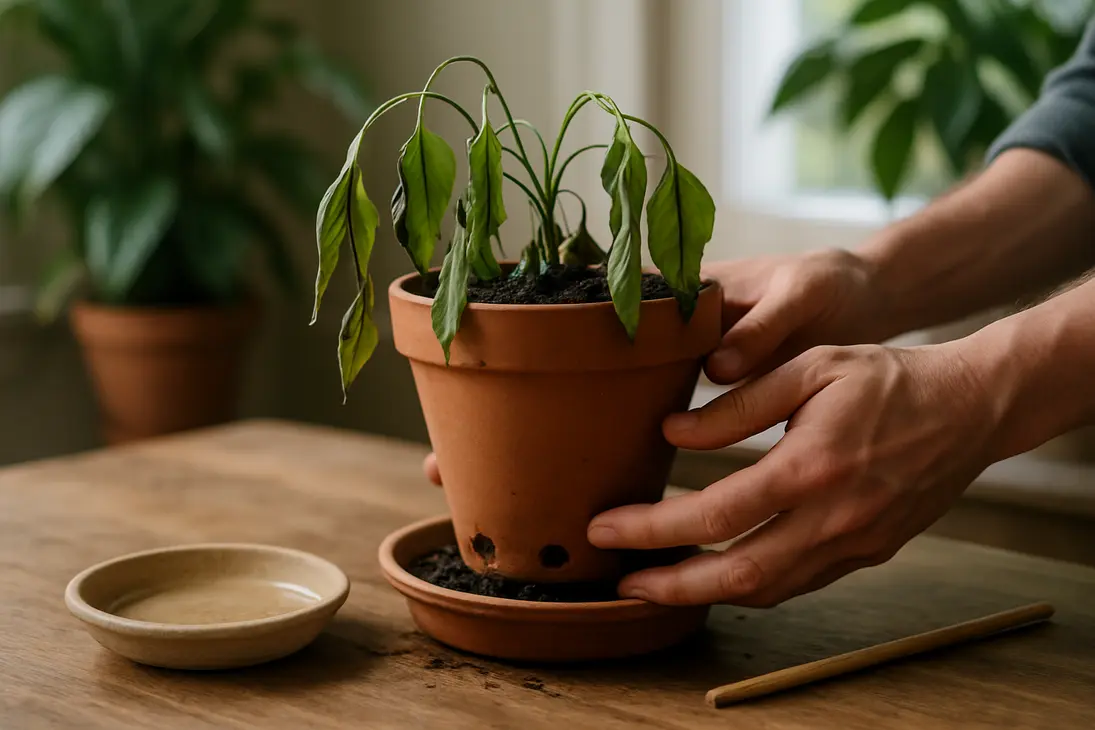
Overwatered Portulaca may develop yellow leaves, mushy stems, poor flowering, or sudden collapse. The base may turn dark or soft. In pots, the soil may stay damp for days. Stop watering, improve airflow, move the pot out of heavy rain, and remove rotting growth. If the container has no drainage, repotting into a draining pot is usually necessary.
Underwatered Portulaca tends to look shriveled or limp, with leaves and stems losing their plumpness. The soil will be dry. After a deep watering, mildly drought-stressed Portulaca often perks up, though severely dried stems may not recover.
One common mistake is to see wilting and immediately water again even though the soil is still wet. Always check the soil first.
Poor blooming can also be confusing. Portulaca may bloom less from overwatering, but also from too little sun, cool weather, heavy feeding, or old flowers in some varieties. If the plant is green and healthy but not flowering, look at light first.
Portulaca, Moss Rose, and Purslane: Do They Need the Same Watering?
“Portulaca” can refer to several related plants, and common names are not always used consistently.
The ornamental plant most gardeners mean is moss rose, usually Portulaca grandiflora. It is grown for bright, rose-like flowers and low, spreading growth. It is drought-tolerant and prefers full sun and well-drained soil.
Purslane often refers to Portulaca oleracea, a related species known as an edible leafy plant in some cultures and as a common garden weed in others. It also has fleshy leaves and good drought tolerance.
Their watering preferences overlap: both dislike soggy soil and handle dry conditions better than many soft annuals. However, a leafy purslane grown for harvest may be watered a bit more consistently to encourage tender growth, while ornamental moss rose is usually happiest with a stronger dry-down between waterings.
Do not assume every plant labeled “Portulaca” is identical. Also, do not assume ornamental moss rose is the same as edible purslane. If you plan to eat purslane, identify the plant confidently and make sure it has not been treated with ornamental pesticides or grown in contaminated conditions.
For watering, the practical rule remains: give Portulaca excellent drainage, water thoroughly when dry, and avoid keeping it constantly moist.
Conclusion
Portulaca should be watered less often than many flowering annuals. The right watering frequency depends on soil dryness, not a fixed daily schedule.
In garden beds, established plants may go a week or more between waterings in dry weather. In containers and hanging baskets, they may need water more often, especially in heat, but they still need a dry-down period. Indoors, be even more cautious because lower light and slower evaporation can keep soil wet too long.
If you remember only one rule, make it this: water Portulaca deeply after the soil has dried out, then let it dry again before the next watering.
FAQ
Should I water Portulaca every day?
Usually, no. Daily watering is too frequent for most Portulaca and can lead to soggy soil, weak roots, and rot. The exception might be a small container or hanging basket in extreme heat that dries out completely each day. Even then, water because the soil is dry, not because of the calendar.
How often should I water Portulaca in a pot?
In warm summer weather, potted Portulaca may need water every 2–5 days, but timing depends on pot size, drainage, sun, wind, and temperature. Check the soil a couple of inches down and water thoroughly only when the mix has dried.
Can Portulaca survive if I forget to water it?
Yes. Portulaca can usually survive short dry periods better than many flowering plants because its fleshy leaves and stems store moisture. Prolonged drought can reduce flowering and cause shriveling, so water deeply once the soil is dry.
Why is my Portulaca dying after watering?
The soil may be staying too wet or the pot may not drain well. Mushy stems, yellowing, collapse, or a darkened base can point to overwatering or rot. Check for drainage holes, empty saucers after watering, and let the soil dry before watering again.
You Might Also Like