How Often Should You Water a Ficus Tree?
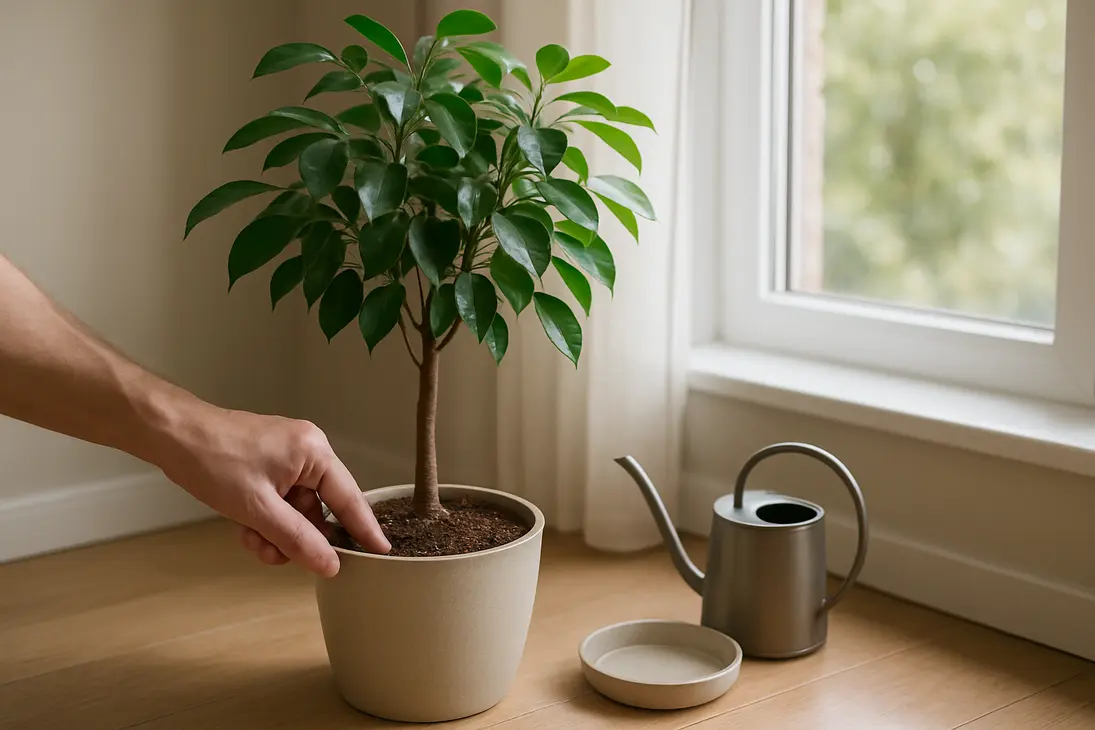
Most indoor ficus trees should be watered when the top few inches of soil have dried and the deeper root zone is only lightly damp. In many homes, that means about every 7–14 days during brighter, warmer months and less often in winter, but the calendar is only a starting point.
Good watering ficus tree care is based on soil moisture, not habit. Ficus trees dislike soggy soil, which can lead to root rot, and they also dislike staying bone dry for long periods, which can cause wilting, crispy leaves, and leaf drop. The goal is simple: let the pot partially dry, then water deeply and drain well.
Start With Soil Moisture, Not a Fixed Schedule
There is no reliable “water every Saturday” rule for ficus trees. A plant in bright indirect light, a warm room, and a fast-draining mix may dry much faster than one in low light, a cool room, or a large glazed pot.
As a general guide:
- Small ficus in bright light: check every few days.
- Medium indoor ficus: often needs water weekly to every two weeks.
- Large ficus in a big pot: may go longer.
- Winter or low light: watering usually slows down.
Water when the upper soil has dried but the root ball is not completely parched.
The simple finger test
Push your finger about 2 inches into the soil. In large pots, check deeper if possible because the surface may dry while the root zone stays wet.
Use this guide:
- Wet, cool, sticky soil: wait.
- Damp soil: wait a few more days.
- Mostly dry top with faint coolness deeper down: usually ready to water.
- Dry, dusty soil pulling from the pot edge: overdue.
For wide pots, check more than one spot because water can move unevenly through compacted soil or a crowded root ball.
When to use a moisture meter or wooden skewer
A moisture meter can help with deep pots or large ficus trees. Insert the probe into the root zone, not just the surface, and do not rely on one reading alone. Meters can be inaccurate in chunky, salty, or compacted mixes.
A wooden skewer or chopstick also works. Push it deep into the soil, wait a minute, and pull it out.
- Damp soil clinging to it means wait.
- Slight coolness with little soil means water soon.
- Dry dust means water now.
What “slightly dry” or “lightly damp” should feel like
For ficus watering, these terms are useful:
- Soggy: wet sponge, heavy pot, possible sour smell. Too wet.
- Moist: cool, damp, sticks to your finger. Usually wait.
- Lightly damp: barely cool, not sticky. Often close to watering time.
- Dry: crumbly, lighter color, little coolness. Time to water.
- Bone dry: shrunken soil, water runs through. Too dry.
Most ficus trees prefer the middle ground: not constantly moist, but not left hard and dry.
How to Water a Ficus Tree the Right Way
How you water matters as much as how often. Avoid small, frequent splashes. They can keep the surface damp while deeper roots stay dry, creating uneven moisture and weak root growth.
When the plant is ready, water thoroughly enough to moisten the whole root ball, then let the pot drain completely.
Water deeply, then drain completely
Use room-temperature water and pour slowly around the soil surface, not in just one spot. Continue until water flows from the drainage holes.
If the mix was very dry, water may run through channels instead of soaking in. Wait a few minutes, then water again slowly until it drains properly.
After watering:
- Let the pot drain fully.
- Empty water from the saucer or cachepot.
- Do not let the pot sit in standing water.
For large plants that cannot be moved, remove excess saucer water with a sponge, cup, or turkey baster after 15–30 minutes.
Why drainage holes matter
A ficus should be in a pot with drainage holes. Without them, water can collect at the bottom while the top looks fine, leaving roots in stale, oxygen-poor soil.
Decorative pots without holes are best used as outer covers. Keep the ficus in a nursery pot inside the decorative container, then lift it out to water and drain. If that is not possible, water very cautiously, but know that careful watering does not replace true drainage.
The potting mix matters too. Dense, fine mixes hold moisture longer. Chunkier mixes with bark, perlite, pumice, or similar ingredients drain more predictably and allow more oxygen around roots.
Avoid small “sips” of water
Small sips seem safer, but they often cause problems. In a large pot, a small amount of water may dampen only the top layer while the lower root ball stays dry. Meanwhile, the damp surface can encourage fungus gnats or mold.
Use this cycle instead:
- Check the soil.
- Wait until it has dried enough.
- Water deeply.
- Drain completely.
- Do not water again until the soil is ready.
What Changes Your Ficus Watering Frequency?
Two ficus trees of the same type can need different watering routines. Light, temperature, pot size, soil, plant size, and season all affect drying time.
Light and temperature
A ficus in bright indirect light uses water faster because it grows more actively. A ficus in low light uses water slowly, so the soil stays wet longer.
Warm rooms, sunny windows, and active growth increase water use. Cool rooms and short winter days slow it down. Heating and air conditioning can also change drying patterns: forced air may dry the surface while the deeper soil stays damp, so always check below the top layer.
Pot size and soil type
Large pots usually dry more slowly than small pots, especially if the roots have not filled the container. Overpotting is a common cause of wet soil because a small root system cannot use all the moisture in a large volume of mix.
| Potting situation | How it affects watering |
|---|---|
| Dense, fine mix | Holds water longer |
| Chunky, airy mix | Dries faster |
| Terracotta pot | Dries faster |
| Plastic or glazed pot | Holds moisture longer |
| Root-bound plant | May dry quickly or repel water |
| Oversized pot | Stays wet longer |
If your ficus dries within a day or two, it may be root-bound, in a small pot, or in a very fast-draining mix. If it stays wet for weeks, the pot may be too large, the mix too dense, or the light too low.
Plant size and ficus variety
A large ficus with many leaves often uses more water than a small plant, but the container and light still matter. Fiddle leaf figs, rubber plants, weeping figs, and ginseng ficus bonsai are all ficus, yet their watering needs can differ.
A ficus bonsai in a shallow, gritty mix may dry quickly. A rubber plant in a deep pot may stay damp longer. Variegated ficus plants often grow more slowly than green forms and may use water more slowly, especially in lower light.
Seasonal changes indoors
Indoor ficus trees usually need more water during active spring and summer growth and less in fall and winter. Winter problems often happen when people keep watering on a summer schedule even though light is lower and growth has slowed.
Still, do not assume winter always means the soil is wet. Heated homes can be dry, and small pots may dry quickly. Check the soil and expect the interval to change.
Signs Your Ficus Is Overwatered or Underwatered
Ficus trees commonly drop leaves when stressed. Watering may be the cause, but light changes, drafts, pests, repotting, and moving the plant can also trigger leaf drop.
Always compare leaf symptoms with soil moisture before deciding what to do.
Signs of overwatering
Overwatering means the soil stays wet too long, not that you used a lot of water once. Deep watering is healthy if the pot drains and the plant was ready.
Common signs include:
- Yellowing leaves, often lower on the plant
- Soft leaves dropping while yellow-green
- Soil that stays wet for many days or weeks
- Heavy pot long after watering
- Sour or swampy smell
- Fungus gnats
- Wilting even though soil is wet
- Mushy stems near the soil line in severe cases
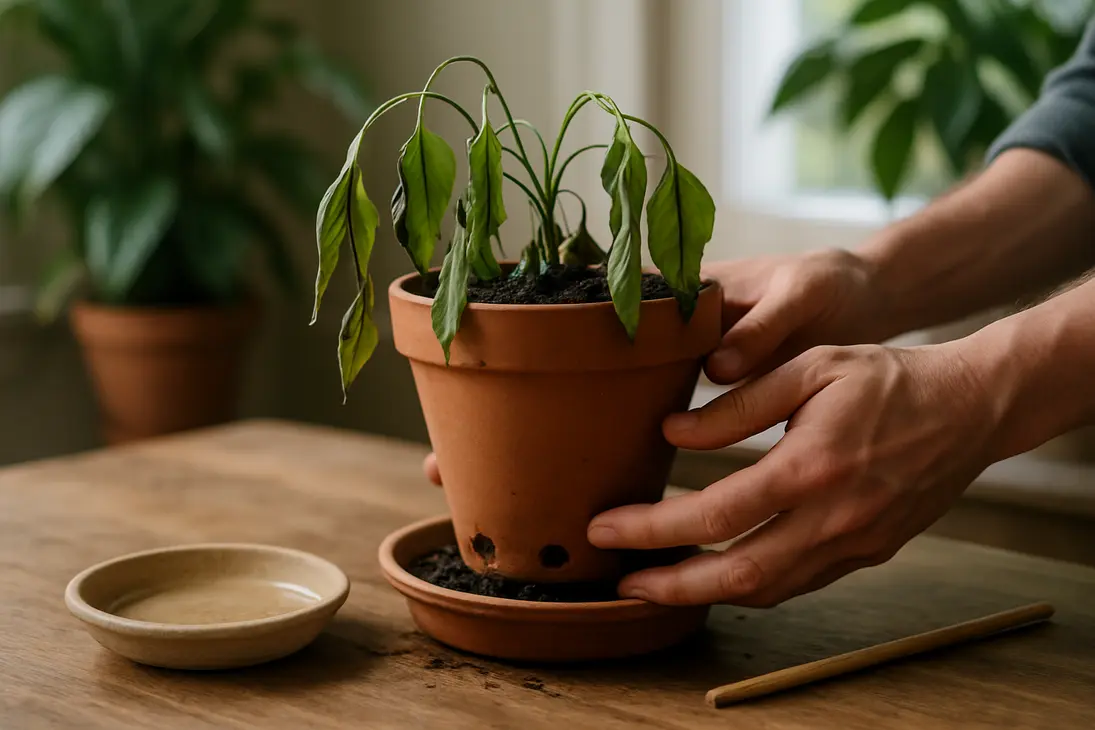
Wilting in wet soil can mean damaged roots cannot take up water. If you suspect root rot, slide the plant from the pot. Healthy roots are firm and light-colored to tan; rotten roots are dark, mushy, and may smell bad.
For mild overwatering, let the soil dry to the proper level and move the plant to brighter indirect light if possible. If rot is present, trim mushy roots, remove sour soil, and repot in fresh, well-draining mix in a pot with drainage.
Signs of underwatering
Underwatering means the root ball has become too dry or water is not reaching it evenly.
Signs include:
- Dry, crispy leaf tips or edges
- Curling or drooping leaves
- Soil pulling away from the pot
- Very light pot weight
- Dry, crispy leaf drop
- Water running straight through the pot
- Brown dry patches after repeated drought stress
If the soil is so dry that it repels water, set the pot in a basin with a few inches of water for 20–30 minutes so moisture can wick upward through the drainage holes. Then let it drain fully.
What to do if your ficus is dropping leaves
Leaf drop can follow overwatering, underwatering, moving, repotting, drafts, or sudden light changes.
Use this quick diagnosis:
- Check soil deeply. Is it wet, lightly damp, dry, or bone dry?
- Look at dropped leaves. Yellow and soft often suggests excess moisture; crispy and dry suggests drought.
- Consider recent changes. Did you move, repot, or bring the plant home?
- Inspect for pests. Look for sticky leaves, webbing, bumps, or speckling.
- Avoid panic watering. Water only if the soil says it is time.
If the stems are healthy and conditions stabilize, a ficus can recover and produce new growth.
A Practical Watering Routine for Indoor Ficus Trees
A good routine is flexible. You are not trying to memorize an exact number of days; you are learning how fast your ficus dries in your home.
Weekly check-in routine
Start with a weekly check.
Once a week:
- Feel the soil 2 inches deep, or deeper for large pots.
- Lift the pot if possible; dry pots feel lighter.
- Look for yellowing, drooping, curling, or crispy leaves.
- Check the saucer or cachepot for standing water.
- Notice whether the plant is drying faster or slower than before.
If the soil is still damp, do not water. Check again in a few days. If it is lightly dry, water deeply and drain completely.
After a month, you may see a pattern, such as every 9 days in summer and every 3 weeks in winter. Use that pattern as a reminder to check, not as an automatic schedule.
After moving your ficus to a new spot
Moving a ficus can change its watering needs quickly. A brighter spot may dry the pot faster; a lower-light corner may keep it wet longer. Drafts, heating vents, and air conditioners can also affect moisture loss.
After moving your ficus:
- Check the soil more often for 2–3 weeks.
- Expect possible leaf drop, especially with weeping figs.
- Do not respond to leaf drop by watering more.
- Keep it away from cold drafts and direct hot or cold air.
- Provide stable bright indirect light if possible.
After repotting or buying a new ficus
A new ficus may be in a moisture-retentive nursery mix, a tight root ball, or a pot hidden inside a decorative sleeve. Inspect it before watering.
When you bring one home:
- Check for drainage holes.
- Remove plastic wrap or sleeves that trap water.
- Feel the soil first.
- Watch for pests.
- Avoid repotting and heavy pruning at the same time unless necessary.
After repotting, drying time may change. Fresh mix can hold water differently, and a larger pot may stay wet longer. Water after repotting if the mix is dry or only lightly damp, let it drain fully, then return to soil checks.
Conclusion
The best ficus watering schedule is responsive, not rigid. Check the soil regularly, wait until the upper soil has dried and the deeper root zone is only lightly damp, then water thoroughly until excess drains away.
Many indoor ficus trees need water every one to two weeks during active growth and less often in winter, but your plant may differ. If you remember one rule, make it this: do not water a ficus because the calendar says so—water when the soil says it is ready.
FAQ
How often should I water an indoor ficus tree?
Many indoor ficus trees need water about every 7–14 days in bright, warm conditions. In low light, cool rooms, winter, or large pots, they may need water much less often. Check weekly and water only when the top few inches are dry and the deeper soil is lightly damp.
Should ficus soil dry out completely between waterings?
Usually no. Let the soil dry partway, especially the top few inches, but try to water before the entire root ball becomes hard, shrunken, and dusty. Repeated severe drying can cause leaf drop and stress.
Why is my ficus losing leaves after watering?
The plant may have been stressed already, the soil may be staying too wet, or the root ball may have become extremely dry before watering. Leaf loss can also follow moving, repotting, drafts, or light changes. Check the soil deeply before watering again.
Do ficus trees need less water in winter?
Usually, yes. Lower light and shorter days slow growth, so soil often dries more slowly. Check before watering and expect longer intervals, but remember that small pots in warm, dry rooms can still dry quickly.
You Might Also Like