How Long to Let a Plant Sit in Water When Bottom Watering
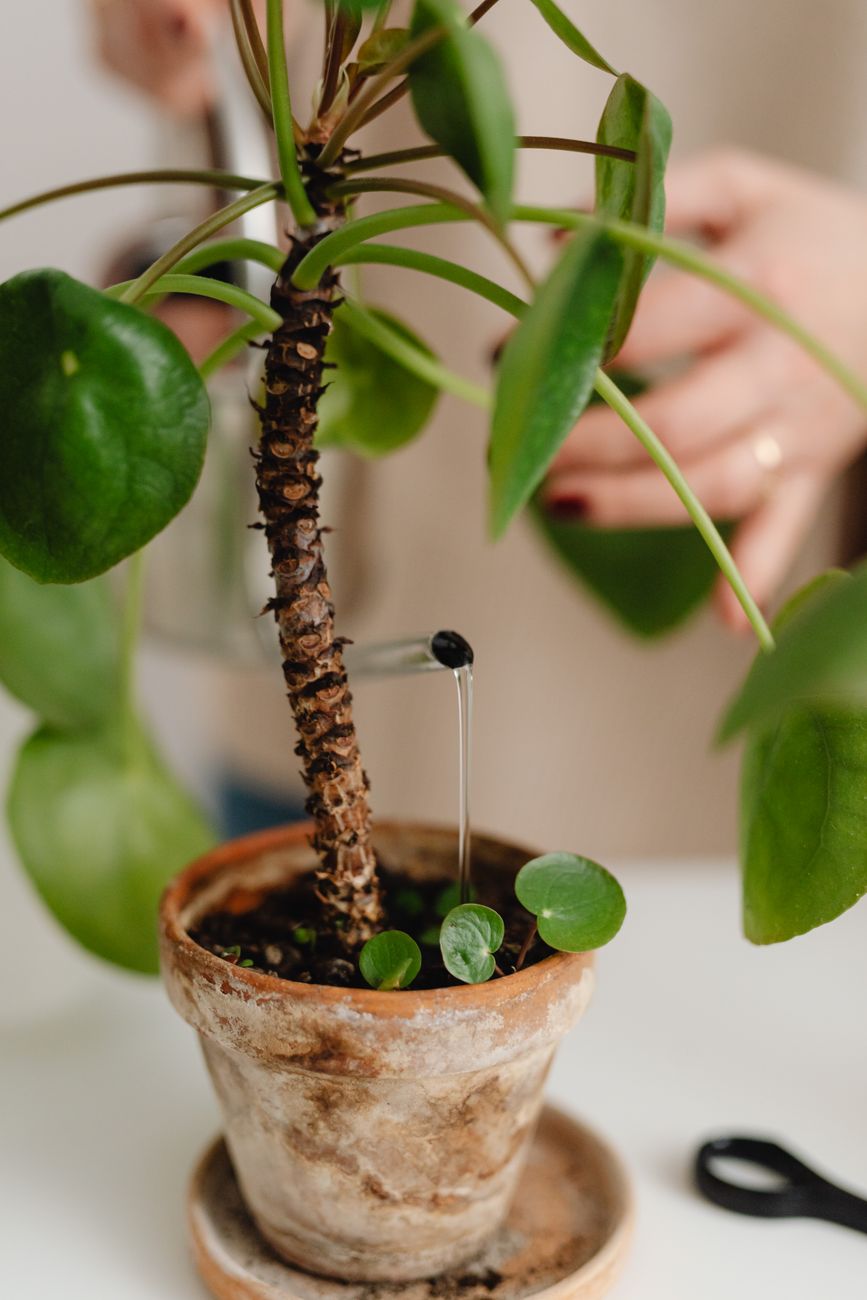
For most small to medium houseplant pots in a standard moisture-retentive mix, 15–30 minutes is a reliable first checkpoint when bottom watering — not a universal finish line. Remove the pot once the root zone is adequately rewetted; some shallow pots finish sooner, while deep, very dry, or hydrophobic containers may need a different rehydration method. Let the pot drain fully afterward, and don’t leave an ordinary soil-grown houseplant standing in water as its normal condition.
Bottom watering works through capillary action: the medium draws water upward through the drainage holes. That’s why “the plant drinks only what it needs” is misleading. The substrate absorbs water according to its physical properties, and a pot left in standing water can stay saturated long after the plant has had enough.
Three questions matter more than any timer: Was the plant ready to be watered? Did water actually reach the root zone? And can the pot drain and pull air back in afterward? That’s why the answer to how long to let a plant sit in water is rarely a single number.
Key Takeaways
- Treat 15–30 minutes as a first checkpoint, not a finish line: Many small to medium houseplant pots rehydrate within this window, but the soak ends when the root zone is rewetted, not when a timer hits a number. Shallow pots often finish sooner, while deep, very dry, or hydrophobic pots need a different rehydration approach rather than a longer soak.
- Judge completion by the root zone, not the topsoil: Combine pot weight, a finger or skewer check, visible moisture in a clear pot, and slowing water uptake. The surface can stay dry while lower roots are hydrated, so don’t add another hour just because the top looks dry.
- If little water moves in 30 minutes, diagnose the setup: Check water depth and drainage-hole contact, blocked holes, gaps around the root ball, hydrophobic peat or coir, chunky mixes, and pot height. Fix the wicking problem instead of waiting all day for capillary action to appear.
- Bottom watering doesn’t erase overwatering, salts, or pests: Chronic saturation can still harm roots, salts accumulate and need periodic top-water leaching, and bottom watering only helps with fungus gnats when it keeps the surface drier. Treat moisture meters as secondary signals.
- Adapt the method to the situation: Seedling trays hydrate quickly, severely dry root balls need staged rewetting, chunky mixes may respond better to top watering, and sick plants shouldn’t share bath water. If a plant is accidentally soaked overnight, drain it, monitor dry-down, and skip panicked repotting.
How Long Should a Plant Sit in Water? Use the Clock as a Checkpoint
The 15–30-minute window allows for prompt checks and prevents leaving pots unattended for hours. Small or shallow pots often hydrate sooner; larger, drier, or deeper pots may take longer. The clock tells you when to check, not when the soak is complete.
Start Checking Around 15–30 Minutes
For a small or medium pot in a typical peat-, coir-, or fine-bark-based mix, begin checking in this window. Remove the pot sooner if the root zone is already moist or the pot has gained water weight. Extend cautiously only if the root zone is still dry and the medium is demonstrably wicking upward.
Know When the Root Zone Is Actually Rehydrated
Use several cues: pot weight before and after watering, a finger or wooden-skewer check at root depth, moisture visible through a clear nursery pot, and slowing water uptake. The top surface doesn’t have to become wet; deep or coarse mixes often stay dry at the top even when lower roots are watered.
Why There Is No Universal Maximum Soak Time
Root injury depends on how long the medium stays saturated, not on one exact minute. Air-filled pore space, plant tolerance, root health, drainage, and post-watering dry-down all play a role. Routine bottom watering should end once hydration is complete.
If the Pot Still Is Not Wet After 30 Minutes, Diagnose the Wicking Problem
If little water has moved after 30 minutes, don’t just wait longer. Check water coverage of the drainage holes, blocked holes, gaps between the root ball and pot wall, chunky mix, hydrophobic peat or coir, tall pots, and dense root-bound balls. Fix the wicking problem rather than extending the soak.
What Changes How Quickly Bottom Watering Works
Water movement depends on container geometry, water depth, drainage-hole contact, growing-medium pore structure, starting moisture, and root occupancy. Some factors change how quickly water moves during the soak; others change how quickly the pot dries afterward.
| Condition | What may happen | Better response |
|---|---|---|
| Small, shallow pot with standard mix | Moisture may wick quickly | Check earlier and remove once evenly moist |
| Deep pot | Lower layers may wet before upper root zone | Check moisture at several depths |
| Very dry peat- or coir-based mix | Root ball may repel water unevenly | Rehydrate gradually with repeated top/bottom passes |
| Very chunky bark or aroid mix | Large pores weaken capillary rise | Use top watering or a hybrid method |
| Root-bound pot | Water movement may be uneven | Check the centre of the root ball |
| Terracotta pot | Pot wall absorbs and later loses water | Expect faster dry-down afterward |
| Plastic or glazed pot | Little water lost through the wall | Judge completion from the medium |
| Seedling cells or shallow trays | Small media volume hydrates quickly | Remove once evenly hydrated and empty the tray |
Pot Height and Drainage-Hole Contact Matter More Than Diameter Alone
Water must contact the drainage holes and climb upward, so pot height changes the distance water travels. Choose a depth that makes good contact without submerging the pot, and skip fixed rules like “4 inches equals 10 minutes” — diameter alone ignores height, medium, and root density.
The Growing Medium Controls Capillary Movement
“Well-draining” and “good at bottom wicking” are not the same thing. Fine pores promote capillary rise; large pores improve drainage and air space but can interrupt upward wicking. A mix must balance retention, continuity, drainage, and aeration. Dense compacted media can stay too wet, and very chunky media may not wick far above the water line.
Starting Moisture Changes the Way a Dry Pot Rewets
A normally dry pot usually resumes wicking on contact with water. A severely desiccated root ball can shrink from the pot wall, repel water, and leave dry pockets in the center. Fix this with slow repeated watering, a temporary controlled soak, or a hybrid top-and-bottom rewet. Don’t use household dish soap as a wetting agent.
Terracotta Changes Dry-Down More Reliably Than It Predicts Soak Time
Unglazed clay is porous, so water moves through the pot wall and evaporates. Plants in terracotta usually need checking more often because the pot loses moisture afterward. Plastic and glazed pots retain water longer, but pot material is a dry-down clue, not a fixed soak-time correction.
Season Changes When You Water More Than How You Define “Done”
Seasonal changes affect light, growth, transpiration, and humidity, which change how often a pot needs water. The completion criterion stays the same: rehydrate the root zone, remove, and drain. Don’t extend the soak just because it’s winter.
When Standard Bottom-Watering Advice Breaks Down
These situations change the method more than they change a universal timer.
Seedlings and Cell Trays: Stop When the Mix Is Evenly Hydrated
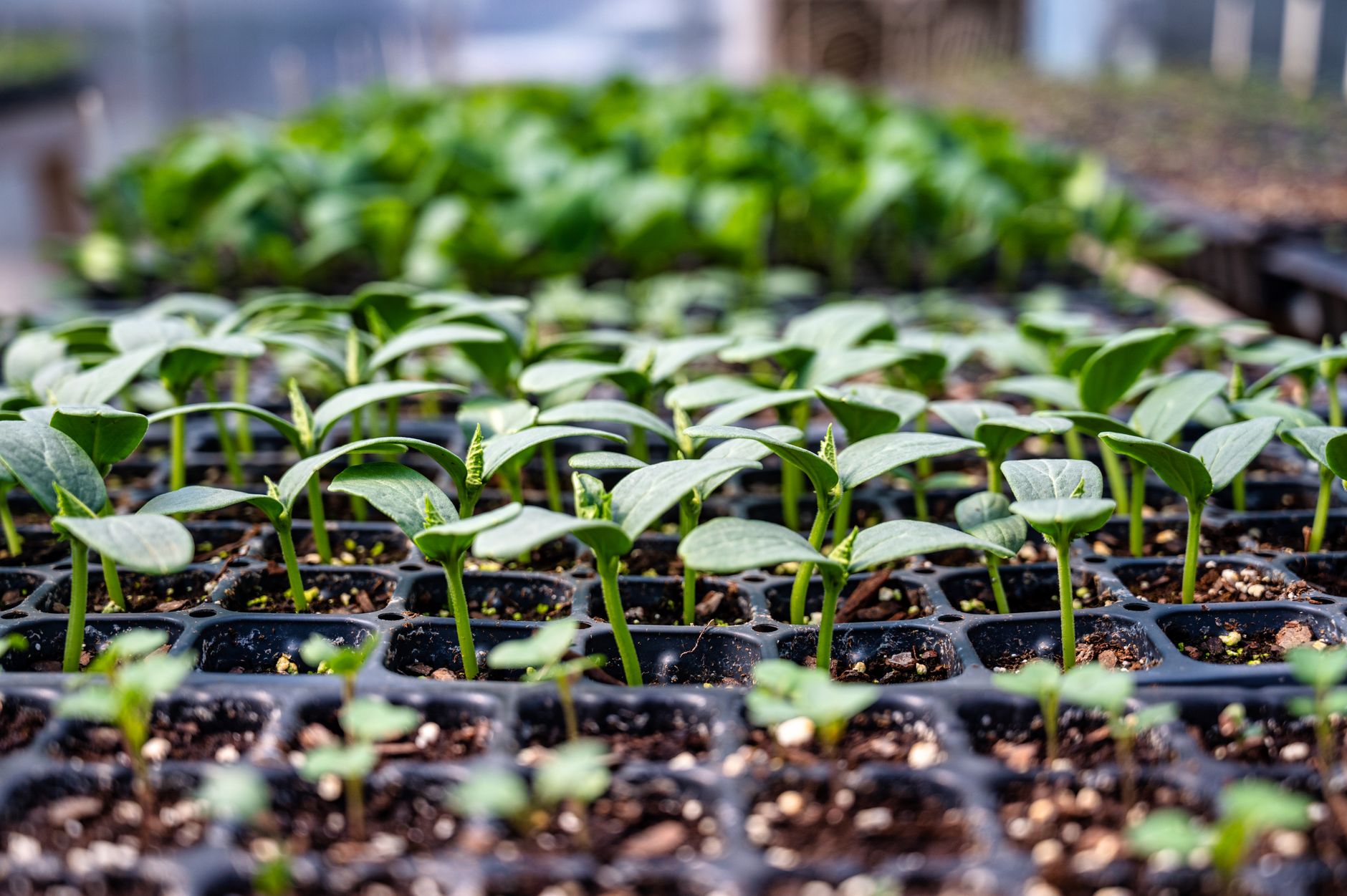
Seedling trays hold shallow media, wick relatively quickly, and shouldn’t remain in standing water between waterings. Use about one inch of water and roughly 30 minutes, or until the mix is fully hydrated, then remove and empty the excess. Another tray may finish sooner; watch for algae and constant saturation.
Hydrophobic Pots Need Rehydration, Not an All-Day Soak
- Apply modest water from the top and let it penetrate.
- Place the pot in an appropriate bottom-water bath.
- Check the center of the root ball.
- Repeat only until the root zone is uniformly moist, then drain completely.
Avoid fertilizing an extremely dry root ball during rescue, and don’t leave the pot in water overnight just because the surface stays dry.
Very Chunky Mixes, Orchids, and Deep Pots May Be Better Top-Watered
Orchid bark and coarse aroid mixes have limited capillary rise, and deep pots can develop strong moisture gradients. When bottom watering fails to wet the root zone, thorough top watering, repeated slow passes, or species-specific immersion may work better. Don’t keep extending the soak just to wet the top surface.
Batch or Bathtub Watering: Group by Need and Isolate Sick Plants
Water only pots that are actually dry enough, group similar sizes or media, and remove each pot when its root zone is ready. Don’t batch-soak plants with suspected root rot or soilborne disease. Use separate water and clean the container afterward.
If You Accidentally Left a Plant in Water Overnight
Remove the plant, let it drain completely, and empty the saucer or cachepot. Restore appropriate light, warmth, and airflow, and don’t water again until the plant’s normal dry-down threshold is reached. Watch for a mix that stays saturated for many days, a sour smell, worsening yellowing, or soft decaying roots. Don’t emergency-repot every plant, don’t fertilize to “help it recover,” and don’t move it into intense sun.
Use Bottom Watering Without Creating New Problems
Bottom watering is one irrigation tool, not an inherently superior method.
Bottom Watering Can Still Overwater a Plant
Overwatering usually comes from watering again before adequate dry-down, slow-draining media, oversized containers, low light, poor root health, or leaving the pot standing in water. The direction water enters doesn’t protect roots from chronic saturation. Skip “the plant only takes what it needs” — roots in saturated media can suffer even when all the water came from below.
Periodically Top-Water to Move Soluble Salts Out of the Pot
Bottom watering moves water upward, so dissolved fertilizer and mineral salts accumulate in the medium. Watch for white crust, brown leaf margins or tips, and reduced growth. The fix is periodic leaching: apply clear water from the top, let substantial runoff drain through, and discard it. A light top sprinkle isn’t leaching.
Bottom Watering May Help With Fungus Gnats, but It Is Not a Treatment
Fungus gnat females favor moist organic media, so bottom watering can help when it leaves the upper layer drier. It may not help when water wicks to the surface or the medium stays persistently wet. Pair it with drainage, monitoring, and targeted larval treatment — and don’t change soak duration just to keep the surface dry.
Treat a Moisture Meter as a Secondary Signal
Household moisture meters can read “dry” after a thorough bottom watering. Readings are influenced by medium composition, probe contact, electrical conductivity, salts, temperature, roots, and calibration. Combine the meter with pot weight, finger or skewer checks, clear-pot observation, and your own dry-down experience.
Choose Bottom, Top, or Hybrid Watering Based on the Problem
Bottom watering suits foliage- or crown-sensitive plants, evenly wicking media, moderately dry root balls needing gradual rehydration, and seedling trays. Top watering is better for very large pots, chunky substrates, salt leaching, immovable containers, or confirming water moves through the whole pot. A hybrid approach works for hydrophobic pots needing both top rewetting and bottom contact.
Conclusion
Bottom watering doesn’t run on a fixed timer. For most ordinary houseplant pots, 15–30 minutes is the moment to start checking, and the soak ends when the root zone is properly rewetted — not when the clock hits a number. Let the pot drain fully, allow the medium to dry down, and never leave a soil-grown houseplant standing in water as its normal condition.
If water hasn’t wicked after half an hour, diagnose the medium, pot height, drainage contact, and root ball rather than waiting longer. Combine bottom watering with occasional top watering to leach salts, and stay alert to fungus gnats, moisture-meter limits, and plant-specific needs. Done well, bottom watering is one of the most dependable ways to water a houseplant.
FAQ
How Long Can You Leave Plants Sitting in Water?
There’s no universal physiological maximum, but routine bottom watering should end once the root zone is wet. For many ordinary pots, begin checking around 15–30 minutes, remove and drain as soon as the target root zone is hydrated, and don’t deliberately leave soil-grown houseplants standing in water for hours. Long-term saturation — not one exact minute — drives root-oxygen risk.
Is 30 Minutes Enough for Bottom Watering?
Often, but not always. Thirty minutes is usually enough for many small or medium pots in standard wicking media. It may not be enough when the mix is hydrophobic, the pot is unusually deep, or the root ball is dense. If little moisture has moved after 30 minutes, diagnose the setup instead of automatically extending the soak.
Can I Leave a Plant Bottom Watering Overnight?
Overnight soaking shouldn’t be the normal method; remove the plant once the root zone is hydrated. If it was accidentally left overnight, take it out, drain thoroughly, allow appropriate dry-down, and monitor rather than repotting immediately. Risk depends on species, medium, drainage, root health, and how long saturation persists. One accidental overnight soak doesn’t automatically cause root rot.
How Deep Should the Water Be for Bottom Watering?
The water must reach the drainage-hole area and contact the wicking medium. A shallow tray may work for seedling cells and small pots; a deeper container may be necessary for tall pots or very dry root balls. Don’t submerge foliage, crowns, or the entire potting surface as a default.
You Might Also Like