Why Houseplants May Seem to Need Less Water Outdoors in Summer
Moving houseplants outdoors for summer can make their watering needs seem surprisingly different. A plant that needed attention every few days indoors may seem to go longer on a covered porch or shaded patio.
That does not mean outdoor conditions automatically reduce water needs. In full sun, heat, and wind, the same plant may dry out much faster than it did inside. The difference depends on rain, location, container, and how thoroughly the root zone is checked.
For successful houseplant watering outdoors in summer, use the soil and conditions around the pot—not a fixed schedule—as your guide.
Why Outdoor Houseplants Can Appear to Need Less Water
Outdoor conditions vary more than indoor ones. Rain may replace some manual watering, nights may be cooler, and a sheltered spot may receive less heat than an indoor sunny window. Larger pots or more moisture-retentive potting mix can also slow drying.
The important distinction is between watering less often and a plant actually needing less water.
Rainfall May Replace Some Manual Watering
Summer rain can keep containers moist enough that you do not need to water manually as often. A steady soaking rain may reach much of the root system.
But light showers often wet only the surface, especially beneath dense foliage. Pots under roof overhangs, balconies, umbrellas, or trees may receive little rain even when the garden is wet.
After rain, check below the surface or lift the container. If the lower root zone is dry, water it yourself.
Shade, Humidity, and Cooler Nights Can Slow Soil Drying
Many houseplants are moved into bright shade rather than direct summer sun. A covered patio, east-facing porch, or shaded spot may stay cooler than a bright indoor room with afternoon sun.
Higher humidity after rain and cooler nights can also slow evaporation. This is often noticeable with pothos, philodendrons, ferns, calatheas, and peace lilies.
Shade is not a guarantee, however. A shaded pot exposed to drying wind can still lose water quickly.
Larger Pots and Better Drainage Change Moisture Retention
Plants may go outdoors in larger or heavier containers that hold more potting mix. More soil volume provides a larger moisture reserve and usually dries more slowly.
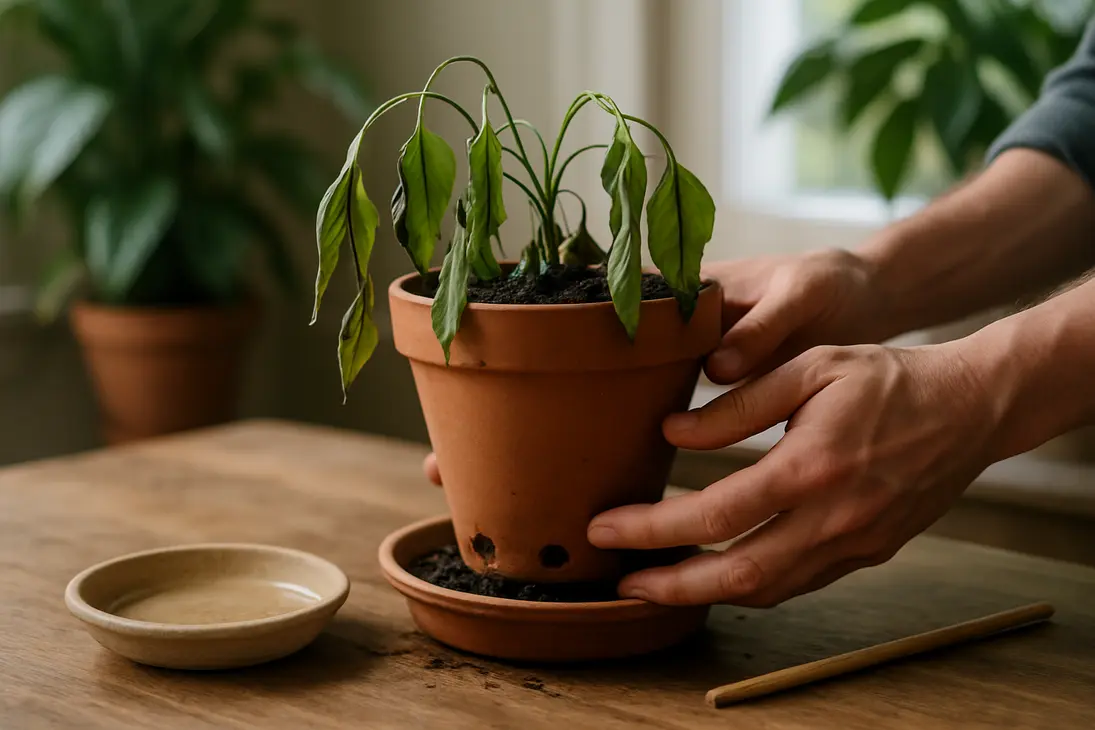
Fresh, evenly moist mix can also absorb water better than a repeatedly dried root ball. When mix dries severely, it may shrink from the pot sides and channel water around dry pockets. Slow, thorough watering can help rehydrate it.
Drainage matters as much as water retention. A pot without drainage can remain dangerously wet after one storm.
Outdoor Growing Conditions Can Also Increase Water Use
Outdoor placement can increase water demand dramatically. Direct sun heats pots and leaves, wind pulls moisture from foliage and soil, and actively growing plants use more water than they did indoors.
A small dark plastic pot on a hot patio may dry in a day. Hanging baskets dry especially quickly because air moves around all sides, and terracotta loses moisture through its porous walls.
A plant may need less manual water during a mild rainy week but much more during a hot, windy one.
What Determines How Often Outdoor Houseplants Need Water
There is no universal schedule for outdoor containers. Daily watering may be excessive for a peace lily in deep shade and insufficient for a sun-exposed plant in a small hanging basket.
Instead, judge the conditions that affect drying.
Sun Exposure, Heat, Wind, and Humidity
Direct sun is a major driver of water loss. Morning sun is usually gentler than intense afternoon sun, but even a few hours of midday exposure can dry a small container quickly.
Heat, wind, and low humidity all speed moisture loss. During a heat wave, a plant that normally needs water twice weekly may need checking daily and sometimes watering daily.
Humid, cloudy, or rainy weather can slow drying substantially. Adjust based on the soil, not simply because it is summer.
Pot Size, Pot Material, and Drainage Holes
The pot determines how much water can remain around the roots.
| Container feature | Likely effect on watering |
|---|---|
| Small pot | Dries quickly; needs frequent checks |
| Large pot | Holds moisture longer; can stay wet too long if overwatered |
| Terracotta | Often dries faster through porous sides |
| Plastic or glazed ceramic | Retains moisture longer |
| Hanging basket | Often dries rapidly because of air exposure |
| Pot without drainage holes | High risk of waterlogged roots after watering or rain |
| Pot with open drainage holes | Lets excess water escape and allows more reliable watering |
Drainage holes are essential outdoors. Do not leave a nursery pot inside an outer container where rainwater can collect around the roots. Empty saucers and cachepots after heavy rain.
Plant Type, Root System, and Growth Stage
Species matter. Succulents, snake plants, and jade plants generally prefer more drying between waterings. Ferns, prayer plants, peace lilies, and many tropical foliage plants usually prefer more consistent moisture, though none should sit in waterlogged soil.
A dense, established root system may use water quickly. A newly repotted plant with a smaller root system may leave much of the pot wet for a long time. Plants producing vigorous new growth may also need more water than they did indoors.
Potting Mix and How Much Moisture It Holds
Potting mix affects water retention and root airflow. A peat- or coir-heavy mix may remain moist longer, while a chunky mix with bark, perlite, or mineral material can dry faster.
If water rushes through immediately, the mix may be very dry or hydrophobic. Water slowly, pause for a few minutes, then water again so the root ball can absorb moisture.
Recent Rainfall and Sheltered Outdoor Locations
Check where the pot actually sits. A plant near the edge of a patio may receive a full soaking in a storm, while one against the house wall may stay dry.
Rain can also create the opposite problem: prolonged wet weather may keep containers damp too long. This is especially risky for large pots, heavy mixes, slow-growing plants, and plants that prefer a dry interval.
During rainy periods, move sensitive plants under cover if practical, especially succulents and plants in poorly draining containers.
Check the Soil Before Watering Instead of Following a Fixed Schedule
A schedule can remind you to inspect plants, but it should not dictate watering. Check small, exposed containers daily in summer if needed, but do not water automatically.
Use a simple process:
- Check below the dry soil surface.
- Consider the plant’s moisture preference.
- Account for recent weather and exposure.
- Water thoroughly only when the root zone needs it.
Use a Finger Test, Moisture Meter, or Pot-Weight Check
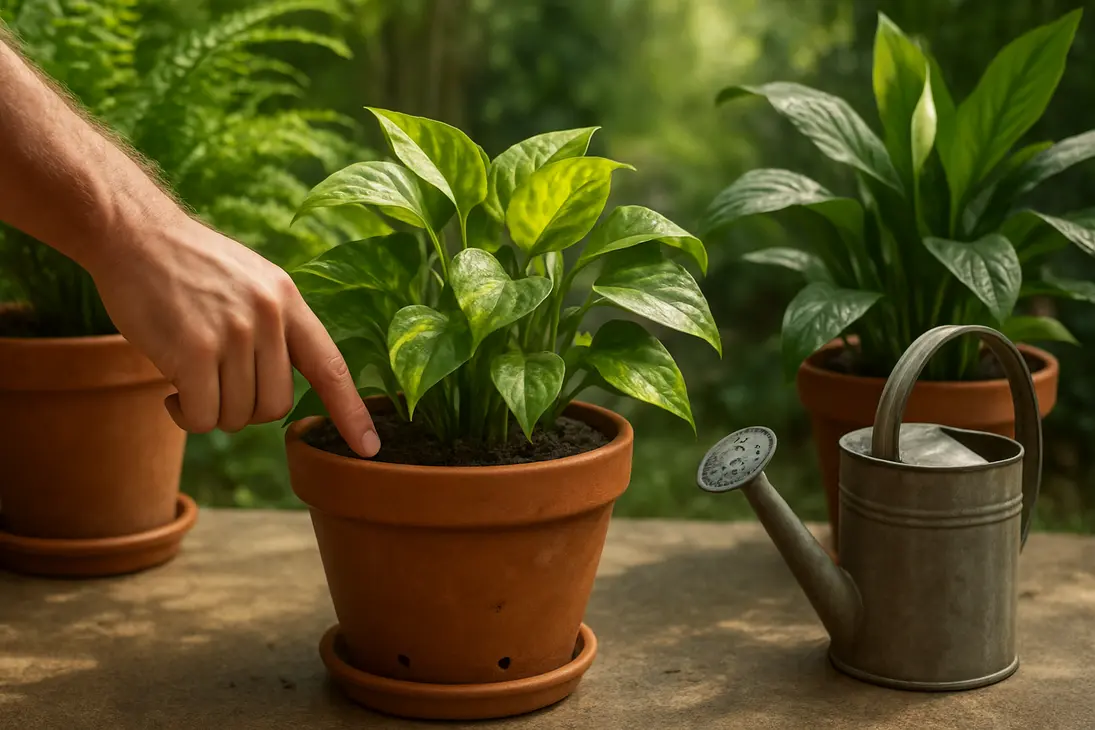
For many potted houseplants, push a finger one to two inches into the mix. If it is dry at that depth, the plant may be ready for water. For larger pots, use a chopstick or narrow dowel to check deeper.
A moisture meter can help in deep pots, but it should not replace observation. Readings vary depending on where the probe touches roots, perlite, or dry pockets.
Lifting a pot is also useful. A freshly watered container feels noticeably heavier than a dry one, particularly with hanging baskets and smaller pots.
Water When the Root Zone Needs It, Not Just the Surface
The soil surface dries first, which does not necessarily mean the roots need water.
For moisture-loving tropical plants, water when the upper layer begins to dry but deeper mix remains lightly moist. For drought-tolerant plants, wait until the mix is mostly dry or dry throughout, depending on the species.
Avoid repeatedly waiting for plants to wilt. Repeated drought stress can damage roots, scorch leaves, and reduce growth.
Watch for Signs of Underwatering and Overwatering
Leaf symptoms can overlap, so check the soil before deciding what is wrong.
| Possible issue | Common signs | What to check first |
|---|---|---|
| Underwatering | Dry mix, drooping leaves, crisp brown edges, lightweight pot | Soil depth and pot weight |
| Overwatering | Persistently wet mix, yellowing lower leaves, limp growth, sour smell | Drainage holes, standing water, root health |
| Heat stress | Wilting in midday sun that improves by evening | Soil moisture before watering |
| Root-bound drying | Pot dries very quickly; roots fill the pot | Root mass and need for repotting |
Midday drooping does not always mean thirst. If the soil is still moist, move the plant into brighter shade rather than adding water.
Check More Often During Hot, Windy, or Very Sunny Weather
During heat waves, inspect small, hanging, dark-colored, or full-sun pots in the morning and again later if needed. This does not mean every plant should be watered twice daily; it means moisture can change quickly.
Newly moved plants also need closer checks for the first week or two. Gradual acclimation to outdoor light helps prevent leaf scorch.
How to Water Outdoor Potted Houseplants in Summer
When a plant needs water, moisten the root ball deeply rather than giving frequent shallow splashes. Shallow watering keeps roots near the surface, where mix dries fastest.
Water Slowly Until Excess Drains From the Pot
Use a watering can, gentle shower setting, or low-pressure hose. Aim at the soil and apply water slowly around the pot.
Continue until a small amount drains from the bottom holes, then let the pot drain freely. For very dry soil:
- Moisten the surface lightly and wait a few minutes.
- Water again slowly until drainage begins.
This helps dry mix absorb water instead of channeling it down the pot edges.
Why Hose Time Is Not a Reliable Measure of Water Volume
There is no useful universal number of seconds for watering a pot. Hose pressure, nozzle setting, pot size, soil dryness, and drainage all affect how much water reaches the roots.
A hard stream can erode potting mix and send water through before it is absorbed. Use drainage and soil moisture as the endpoint, not the clock.
Water Early in the Morning When Possible
Early morning is usually best. Plants have moisture available before heat increases demand, and wet leaves can dry.
If a plant is genuinely dry in the afternoon, water it rather than waiting until morning. Focus water on the soil and avoid soaking foliage late in the evening.
Keep Soil Moisture More Stable With Shade, Mulch, and Suitable Containers
If pots dry too quickly, adjust the setup instead of simply watering more often.
- Move suitable plants out of harsh afternoon sun.
- Group plants to create a more sheltered pocket of air.
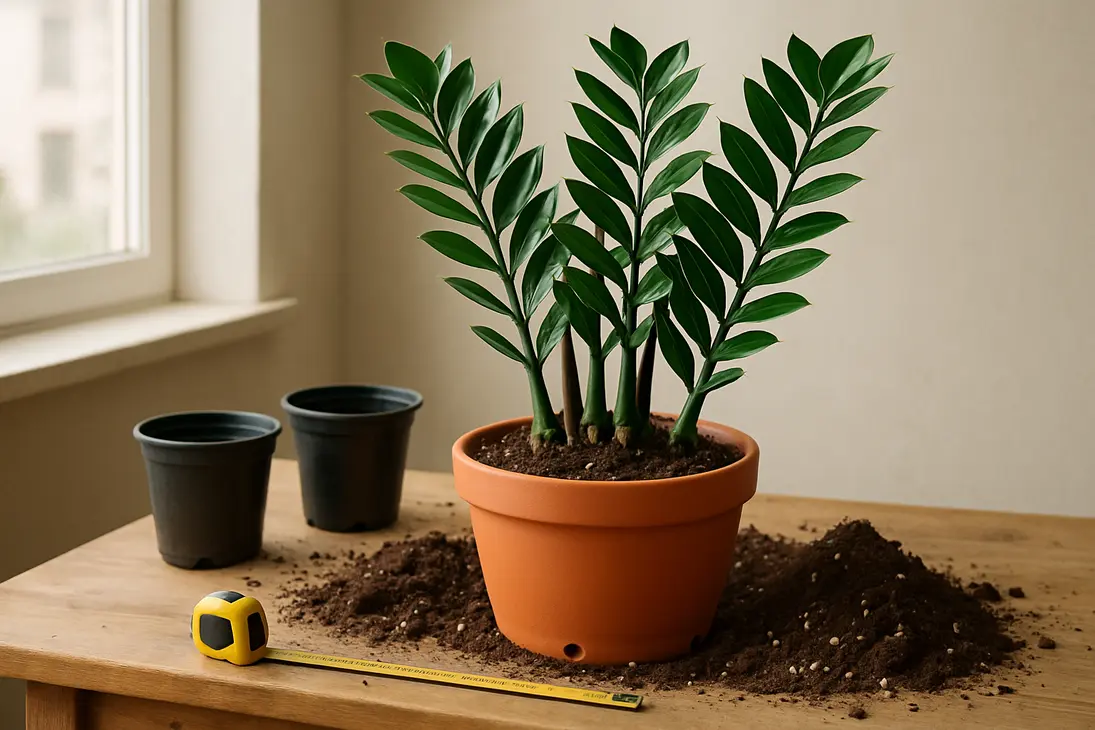
- Use a larger pot when a root-bound plant dries rapidly.
- Add a thin mulch layer, keeping it away from stems.
- Shade dark pots or place them inside lighter outer containers.
- Protect plants from strong wind.
Do not use mulch to compensate for a pot without drainage holes.
Adjust Watering During Rainy Weeks and Prevent Waterlogged Pots
Rainy weather calls for observation, not automatic watering. Skip manual watering when the mix remains adequately moist.
If a container stays saturated for several days:
- Move it to a covered but bright location.
- Empty saucers or outer pots holding water.
- Check that drainage holes are not blocked.
- Raise pots slightly so holes are not sealed against the patio.
- Avoid fertilizing a stressed, waterlogged plant until it recovers.
Rain helps only when the pot drains and roots receive enough oxygen between wet periods.
Conclusion
Houseplants may seem to need less water outdoors because rain, shade, humidity, cooler nights, larger containers, or slower soil drying reduce how often you need to intervene. But direct sun, heat, wind, and small pots can sharply increase water use.
Check the root zone before watering, then adjust for weather, container, potting mix, and plant type. Water deeply when needed, let excess drain away, and do not rely on either a fixed routine or rainfall alone.
FAQ
Do houseplants usually need more water outside in summer?
Not always. Plants in direct sun, heat, wind, or small containers often need water more often outdoors. Plants on a shaded, humid, rain-exposed porch may need less manual watering. Check the soil rather than assuming summer conditions always mean more water.
Should I water outdoor potted plants once or twice a day?
Water only when the root zone needs it. Small pots and hanging baskets may need daily watering during hot, windy weather, while larger shaded containers may stay moist for several days. Twice-daily watering is occasionally necessary in extreme heat but should not be standard.
How do I know whether rain has watered my container deeply enough?
Check below the surface with a finger, chopstick, or moisture meter, and lift the pot if possible. A deeply soaked container feels heavier and is moist below the top layer. Pots under eaves or dense foliage may receive far less rain than expected.
Can outdoor houseplants be overwatered during rainy weather?
Yes. Overwatering occurs when mix remains saturated and roots lack oxygen. It is most likely in pots without drainage, large slow-drying containers, water-filled saucers, and plants that prefer dry conditions. During prolonged rain, shelter vulnerable plants and ensure excess water drains freely.
You Might Also Like