How to Care for Euphorbia obesa Safely
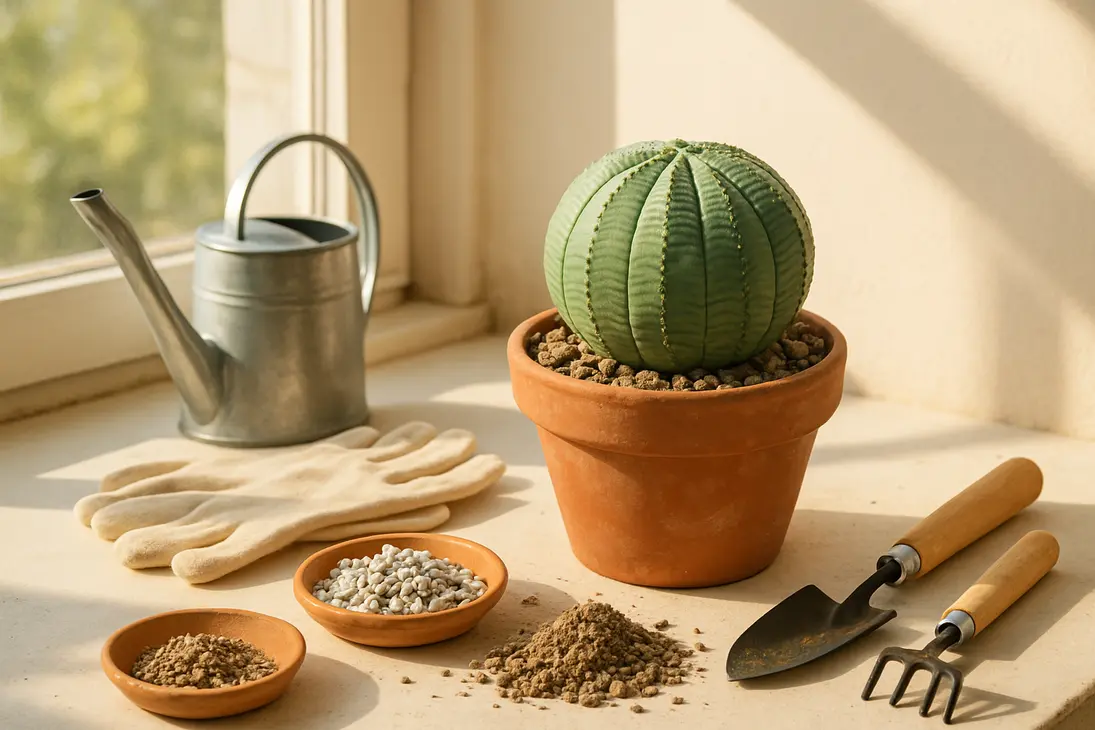
Euphorbia obesa care is mostly about restraint: bright light, gritty soil, a pot with drainage, and watering only after the mix has dried. This small succulent is not difficult, but it is easy to damage with too much water, too little light, or careless handling of its irritating milky sap.
Below is a practical guide to keeping the “baseball plant” healthy indoors or outdoors, with safety notes throughout.
What Is Euphorbia obesa?
Euphorbia obesa is a slow-growing succulent from South Africa, commonly called the baseball plant. Young plants are round, ribbed, and patterned with green, gray-green, reddish, or purplish bands. Its compact, geometric shape makes it popular with succulent collectors.
Despite its cactus-like appearance, Euphorbia obesa is not a cactus. It belongs to the genus Euphorbia, which also includes poinsettias and many desert shrubs. Like many euphorbias, it stores water in its stem and releases white latex sap when damaged. That sap can irritate skin and is especially risky around eyes and mucous membranes, so safe handling is part of basic care.
It grows slowly and may stay in the same pot for years. Do not force growth with frequent watering or heavy fertilizer.
Euphorbia obesa vs. cactus lookalikes
The baseball plant is often mistaken for a cactus because it is round, ribbed, drought-tolerant, and commonly sold near cacti. The key difference is the sap: Euphorbia obesa releases white, milky latex when cut or cracked, while cacti usually do not.
| Feature | Euphorbia obesa | Many cactus lookalikes |
|---|---|---|
| Plant family | Euphorbiaceae | Cactaceae |
| Spines | Usually spineless | Often spiny |
| Sap | White latex; irritating | Usually clear sap or mucilage |
| Flowers | Small cyathia | Often larger cactus flowers |
| Main hazard | Toxic sap | Spines |
It can also be confused with round Astrophytum cacti and other compact euphorbias. If you are unsure what you have, avoid bare-handed handling or cutting until it is identified.
How the plant changes as it matures
Young Euphorbia obesa plants are usually squat and spherical. With age, many become taller and more barrel-shaped. This is normal.
A plant that slowly elongates over years may simply be maturing. A plant that rapidly stretches, leans toward a window, or produces narrow pale growth usually needs more light.
Color also shifts with conditions. Stronger light may bring out reddish, bronze, or purple tones; lower light often makes the plant greener. Bleached patches, sudden corking, sunken areas, or soft spots are warning signs.
Light, Temperature, and Placement
Euphorbia obesa grows best with bright light, warmth, and airflow. Indoors, give it your brightest suitable window or a grow light. Outdoors, it can take some direct sun after gradual acclimation, but it should be protected from frost, prolonged rain, and extreme heat.
The goal is strong light without sudden stress. A plant kept indoors all winter can sunburn if moved straight into harsh midday sun, while a plant kept too dim may survive but lose its compact form.
Indoor care: windows, grow lights, and rotation
Indoors, place Euphorbia obesa near a bright east, south, or west window. East light is often ideal because it provides morning sun without the hottest afternoon exposure. South- or west-facing windows can also work, especially with a sheer curtain if the glass gets hot.
Signs of good light include compact, even growth; a firm body; clear ribbing; and stable color or mild bronzing. Signs of low light include leaning, taller and narrower new growth, dull green color, and soil that stays damp too long.
Rotate the pot every week or two during active growth to reduce one-sided leaning. If using a grow light, increase exposure gradually, especially for a plant previously grown in low light.
Avoid closed terrariums. Bright light plus stagnant, humid air and slow-drying soil creates rot risk.
Outdoor care: sun exposure and weather limits
Outdoors, morning sun with afternoon shade is often best, especially in hot climates. In mild coastal or temperate areas, acclimated plants may tolerate more direct sun.
Acclimate slowly: start in bright shade, move to short periods of morning sun, then increase exposure over one to two weeks. Watch for bleaching, tan patches, or sudden stress color.
Euphorbia obesa is not frost-hardy. Bring potted plants indoors or into shelter before freezing weather. Many growers treat about 50°F / 10°C as a cautious lower comfort limit, especially for routine care. Cold, wet soil is much more dangerous than cool, dry conditions.
Protect outdoor plants from repeated rain unless the potting mix dries quickly. One shower may be harmless in a gritty pot; several wet days can lead to root rot.
Watering, Soil, Pots, and Feeding
The core routine is simple: use a fast-draining mix, choose a pot with drainage holes, water thoroughly, then let the soil dry before watering again.
This plant stores water in its body and tolerates dry periods far better than constantly damp roots. Water should come in clear wet-dry cycles, not frequent small sips.
How often to water Euphorbia obesa
There is no universal watering schedule. A small plant in terracotta near a sunny window dries faster than a large plant in plastic in a cool room. Check the soil instead of watering by the calendar.
Water when the mix is dry through most or all of the pot. Then water deeply until excess runs from the drainage hole, and empty the saucer.
| Season | Typical watering approach |
|---|---|
| Spring | Resume watering as light and warmth increase |
| Summer | Water when dry; avoid prolonged wet soil |
| Autumn | Reduce watering as days shorten |
| Winter | Water sparingly, especially if cool |
In warm, bright indoor conditions, watering may be needed every couple of weeks. In winter, it may be much less frequent. Pot size, soil type, light, and temperature matter more than the date.
Before watering, check pot weight, use a wooden skewer, or feel through the drainage hole if possible. If unsure, wait a few days. A slightly thirsty plant is easier to recover than one with rotting roots.
Best soil mix and pot type
Use a gritty, fast-draining succulent mix. Many commercial cactus mixes are too peat-heavy by themselves, especially indoors, so add mineral material such as pumice, perlite, coarse sand, lava rock, or fine gravel.
A simple blend is 1 part cactus/succulent potting mix and 1 part pumice, perlite, or similar mineral aggregate. Add extra coarse grit if your climate or home is humid.
Avoid dense garden soil, moisture-retentive tropical houseplant mix, and decorative pots without drainage. A drainage hole is essential.
Terracotta pots help the mix dry faster. Plastic can work in hot, dry homes, but watering must be more cautious. Choose a pot only slightly larger than the root ball; oversized pots hold too much wet soil around small roots.
Top-dressing with gravel is optional. Keep it thin so you can still judge moisture and allow the mix to dry.
Fertilizing without forcing weak growth
Euphorbia obesa is not a heavy feeder. Too much fertilizer can cause soft, stretched growth, especially in weak light.
Feed lightly during active growth in spring or summer only. Use a balanced or succulent fertilizer diluted below label strength. One or two light feedings per growing season is usually enough for a potted plant in fresh mix.
Do not fertilize a stressed, newly repotted, rotting, sunburned, or winter-dormant plant. If your plant is firm, compact, and slowly growing, it probably does not need more food.
Safe Handling, Repotting, and Propagation
Safety matters with Euphorbia obesa. Its smooth, spineless body can look harmless, but damaged tissue releases irritating milky latex. Keep it away from pets and children, and handle it carefully.
Repotting is infrequent because growth is slow. Propagation is usually by seed rather than cuttings.
Handling the toxic milky sap
Euphorbia obesa sap can irritate skin and is especially dangerous if it reaches the eyes or mouth. Sensitivity varies, so treat all sap contact seriously.
When handling, repotting, or cleaning damaged tissue:
- Wear gloves.
- Consider eye protection.
- Avoid touching your face.
- Keep pets and children away.
- Wash tools, surfaces, and hands afterward.
- Wash skin with soap and water if contact occurs.
- Seek medical advice promptly if sap gets in the eyes or is ingested.
Do not burn plant material, and do not leave cut pieces where pets might investigate them. Let damaged areas dry in a safe place.
Repotting without damaging roots
Repot only when the pot is crowded, the soil has broken down, drainage has worsened, or you need to inspect roots after a problem. A healthy plant may need repotting only every few years.
Let the soil dry first, put on gloves, support the plant without squeezing, and slide it from the pot. Loosen old soil gently and inspect roots for mushy, blackened, or foul-smelling areas. Repot into a slightly larger container with drainage and fresh gritty mix, keeping the plant at the same depth.
Wait several days before watering. That dry rest helps small root injuries callus before water is reintroduced. If you find rot, trim only clearly dead or mushy roots with clean tools. Severe rot in the main body is difficult to reverse.
Growing Euphorbia obesa from seed
Euphorbia obesa is commonly propagated from seed. Many plants are dioecious, meaning individual plants may be male or female, so seed production often requires both sexes flowering at the same time. A single plant may flower but never set seed.
Fresh seed usually performs best. Sow on the surface of a fine, well-draining seed mix with added mineral material. Keep it lightly moist, not waterlogged, and provide warmth, bright light, and airflow. Seedlings are small and vulnerable to damping off, so careful moisture control matters.
Buy seed or plants from reputable growers. Hybrids and related species are common, and wild collection has historically pressured unusual succulents.
Common Problems and How to Fix Them
Most problems come from too much water, too little light, sudden sun exposure, or pests. Soft spots, leaning growth, and uncertainty about cactus versus euphorbia identity are common concerns, but early fixes are usually straightforward.
Root rot and soft spots
Root rot is the most serious common problem. It usually follows wet soil, poor drainage, cold conditions, or an oversized pot. Early signs include loss of firmness, darkening near the base, or softness at the soil line.
Possible signs of rot include soft or sunken areas, black or brown tissue at the base, sour-smelling soil, instability, or sudden collapse after wet conditions.
If you suspect rot, stop watering and remove the plant from its pot. Healthy roots are firm; rotten roots are dark, mushy, and may pull away easily. Trim dead roots, let the plant dry, and repot into fresh gritty mix. Do not water immediately.
If rot has spread into the main body, recovery is uncertain because Euphorbia obesa does not usually provide easy healthy cuttings to restart from.
Stretching, leaning, or uneven growth
Stretching is usually caused by insufficient light. The plant may grow taller, narrower, paler, or lean toward the brightest side. Some age-related height increase is normal, but thin, directional growth is not.
To correct the cause, move it to a brighter window, add a grow light if needed, rotate the pot regularly, acclimate gradually to stronger sun, and avoid fertilizing in poor light.
Existing stretched growth will not become round again. The goal is to improve future growth and prevent further distortion.
Mealybugs and other pests
Mealybugs are common on indoor succulents. They look like tiny white cottony clusters and may hide in rib grooves, near flowers, around the base, or in the roots. Scale insects and spider mites are also possible.
For a small infestation, isolate the plant and dab visible pests with a cotton swab lightly moistened with isopropyl alcohol. Avoid letting alcohol pool in crevices. Repeat weekly checks and inspect nearby plants.
If pests return, unpot the plant and check for root mealybugs. Replace the soil if needed and clean the pot before reuse. Avoid aggressive scrubbing or unnecessary wounds.
Sunburn or scarring
Sunburn appears as pale, tan, brown, or corky patches, usually on the side exposed to intense light. It often happens when an indoor or shaded plant is moved into direct sun too quickly.
Scarred tissue will not turn green again, though the plant can continue growing if damage is not severe.
To prevent sunburn, increase sun exposure slowly, prefer morning sun over harsh midday sun, provide shade during heatwaves, be cautious behind hot glass, and do not move a stressed plant straight into intense sun.
Mild red or bronze coloring can be normal. Bleached, dry, sharply defined patches are more concerning.
Conclusion
Good Euphorbia obesa care is simple: bright light, warmth, excellent drainage, and careful watering. Let the mix dry before watering again, feed lightly if at all, and avoid pushing the plant to grow faster than it naturally wants to.
Handle it safely, too. The baseball plant may be smooth and spineless, but its milky sap is irritating and should be kept away from skin, eyes, pets, and children.
FAQ
Is Euphorbia obesa poisonous?
Yes. Euphorbia obesa produces white latex sap that can irritate skin and is especially risky in the eyes or mouth. Keep it away from pets and children, wear gloves when handling damaged plants, and wash hands and tools afterward.
How often should I water Euphorbia obesa?
Water only after the soil has dried thoroughly. In warm, bright conditions this may be every couple of weeks; in winter or cool rooms, much less often. Water deeply, let excess drain, and never leave the pot sitting in water.
Can Euphorbia obesa grow indoors?
Yes. It can grow well indoors if it receives enough light. Use a bright east, south, or west window, or add a grow light in dim homes. Rotate the pot and use a gritty mix that dries between waterings.
Why is my Euphorbia obesa losing its round shape?
Some shape change is normal with age; older plants often become taller and barrel-like. Rapid stretching, leaning, or narrow pale growth usually means it needs more light. Move it gradually into brighter conditions and avoid heavy fertilizer.
You Might Also Like