Which Easy-Care Indoor Palms Help Purify the Air?
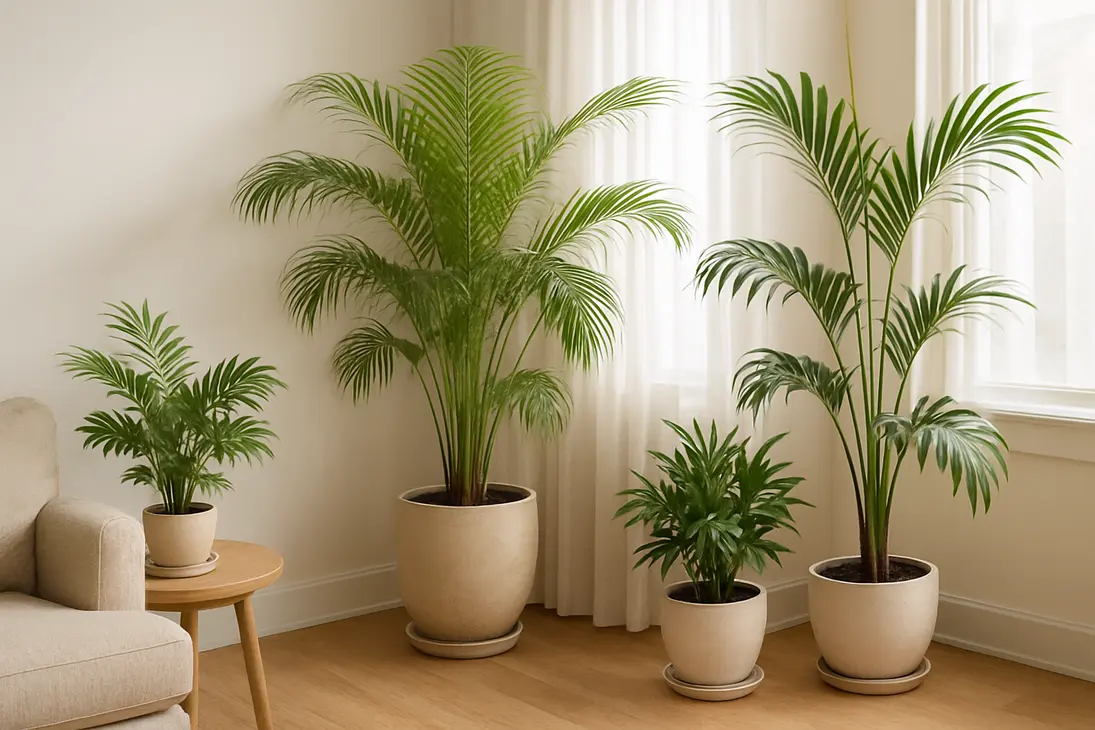
Indoor palms are a good choice if you want lush greenery that may help rooms feel fresher without demanding daily care. The most useful palm is one that stays healthy in your actual light, humidity, and watering routine.
The best easy care indoor palms for cleaner-feeling indoor air are areca palm, parlor palm, lady palm, bamboo palm, and kentia palm. Majesty palm is attractive, but it is less forgiving indoors.
Indoor palms should not replace ventilation, filtration, or reducing pollutants at the source. Their benefit is modest: healthy leaves can trap some dust, support humidity, and make indoor spaces feel calmer and more comfortable.
Best Easy-Care Indoor Palms for Cleaner Indoor Air
Choose by light, space, and care habits. A smaller healthy palm is better than a large stressed palm with dusty or browning leaves.
| Indoor palm | Best for | Light tolerance | Care level | Notes |
|---|---|---|---|---|
| Areca palm | Bright rooms, tropical fullness | Bright indirect light | Moderate-easy | Full and feathery; dislikes repeated dryness |
| Parlor palm | Beginners, lower light | Low to medium indirect light | Easy | Compact, slow-growing, forgiving |
| Lady palm | Tidy homes and offices | Medium to bright indirect light | Easy-moderate | Upright, structured, fairly tough |
| Bamboo palm | Fuller floor plant | Medium to bright indirect light | Moderate | Lush, moisture-loving |
| Kentia palm | Elegant larger rooms | Low to bright indirect light | Easy-moderate | Durable, graceful, slow-growing |
| Majesty palm | Bold tropical look | Bright indirect light | Moderate-difficult | Beautiful but demanding indoors |
Areca Palm
Areca palm has arching, feathery fronds that quickly soften a bright room. It prefers bright indirect light and evenly moist soil.
Avoid soggy compost, but do not let it dry out completely again and again. Repeated dryness often causes brown tips and thinning fronds.
Parlor Palm
Parlor palm is one of the easiest indoor palms. It tolerates lower light, average temperatures, and occasional missed watering better than many tropical palms.
Its compact, slow-growing habit suits desks, shelves, bedrooms, apartments, and small corners. It is not the largest palm for leaf area, but it is often the easiest to keep healthy.
Lady Palm
Lady palm has fan-shaped leaves and upright stems, giving it a tidy, architectural look. It works well in living rooms, offices, entryways, and bright bedrooms.
It prefers medium to bright indirect light but adapts well to ordinary indoor conditions. It also tolerates brief dryness, and its broad leaf fans are easy to wipe clean.
Bamboo Palm
Bamboo palm is a clumping palm with cane-like stems and soft green fronds. It works well as a floor plant in medium to bright indirect light.
It likes consistent moisture and moderate humidity, so it is less forgiving than parlor palm. Avoid standing water, but do not leave the soil bone dry for long periods.
Kentia Palm
Kentia palm is graceful, durable, and relatively low-fuss. Its long arching fronds give larger rooms an elegant look without becoming visually messy.
It grows best in bright indirect light but tolerates lower light better than many palms. It also handles occasional missed watering. The main drawback is price, since kentias grow slowly and are often more expensive.
Majesty Palm: Beautiful, but Less Beginner-Friendly
Majesty palm is widely sold as a dramatic indoor tropical plant, but it often wants more light, humidity, and steady moisture than average homes provide.
Indoors, it may develop brown tips, yellowing leaves, spider mites, or general decline in dry air or weak light. Choose it only if you have a bright room, enough space, and time to monitor care.
How Indoor Palms Help Improve Air Quality
Indoor palms are often described as air-purifying plants, but expectations should stay realistic. Plants interact with indoor air through leaves, roots, potting mix, and soil microorganisms. They may absorb small amounts of some airborne compounds, release water vapor, and collect dust on foliage.
In a real home, palms cannot clean air as effectively as source control, ventilation, exhaust fans, or a properly sized air purifier. Think of them as one small part of a healthier indoor environment.
What Palms Can and Can’t Remove From Indoor Air
Indoor palms may help with small amounts of some volatile organic compounds, or VOCs, under certain conditions. VOCs can come from paints, furnishings, cleaning products, adhesives, fragrances, and similar sources. Palms can also hold dust on their leaves until you wipe it away.
They cannot reliably remove large amounts of smoke, mold spores, carbon monoxide, radon, cooking particles, or heavy chemical exposure. For serious air-quality problems, reduce the pollutant, ventilate, repair moisture issues, clean safely, and use suitable filtration.
Why More Leaves Usually Means More Air-Cleaning Potential
More healthy leaf area means more surface for air contact, transpiration, and dust capture. Full palms such as areca, bamboo, and kentia can feel more impactful than a tiny plant.
Health matters as much as size. A smaller parlor palm in suitable light may be more useful than a large areca palm declining in a dark corner.
Plants Plus Ventilation: The Best Combination
Use palms alongside good indoor-air habits:
- Open windows when outdoor air is suitable.
- Use kitchen and bathroom exhaust fans.
- Reduce unnecessary fragrances, sprays, solvents, and harsh cleaners.
- Keep humidity balanced.
- Dust and vacuum regularly.
- Consider mechanical filtration for smoke, allergies, or fine particles.
Palms make rooms feel more alive, but they should not replace ventilation or filtration.
Basic Indoor Palm Care: Light, Water, Soil, and Feeding
Healthy palms look better and contribute more indoors. Most easy-care palms need filtered light, careful watering, drainage, light feeding, and protection from very dry air.
Bright, Indirect Light Is Usually Best
Most indoor palms prefer bright, indirect light: a bright room without hours of harsh sun hitting the leaves.
Good locations include an east-facing window, a few feet back from a bright south or west window, or beside a sheer-curtained window. Parlor and kentia palms tolerate lower light best. Areca, bamboo, and majesty palms usually need brighter conditions to stay full.
If a palm leans strongly, produces weak growth, or drops older fronds quickly, it may need more light.
How Often to Water Indoor Palms
Do not water by a fixed calendar. Pot size, light, temperature, season, and soil mix all affect drying time.
Water when the top 1–2 inches feel dry. Water thoroughly, let excess drain, and empty saucers or cachepots. Parlor and kentia palms can dry slightly between waterings. Areca, bamboo, and majesty palms prefer steadier moisture but not soggy soil. In winter, most palms need less water.
Use Well-Draining Soil and Pots With Drainage
Indoor palms need oxygen around their roots. Heavy, compacted, constantly wet soil can cause root decline.
Use a quality indoor potting mix that drains well. If it stays wet too long, improve aeration at repotting with perlite or bark-based components. Avoid garden soil in containers.
A drainage hole is strongly recommended. If using a decorative pot without drainage, keep the palm in a nursery pot inside it, let it drain after watering, and never leave water pooled around the roots.
Humidity and Temperature Needs
Most indoor palms like warm, stable rooms. Avoid cold drafts, heating vents, and sudden temperature swings.
Dry air is common in winter. Areca, bamboo, and majesty palms are more sensitive; parlor, lady, and kentia palms are more tolerant. To help, group plants, keep palms away from radiators and forced-air vents, use a humidifier in very dry rooms, or place palms in bright bathrooms if light is adequate.
Misting is brief and does not replace consistent humidity.
Fertilizing Without Overdoing It
Indoor palms do not need constant feeding. Too much fertilizer can cause brown tips, root damage, and salt buildup.
Feed only during active growth, usually spring through early autumn, using a balanced houseplant or palm fertilizer at conservative strength. Do not feed a stressed, dry, newly repotted, or pest-infested palm. If white crust appears on the soil or pot rim, salts may be accumulating.
Common Indoor Palm Care Mistakes to Avoid
Most palm problems come from repeated care errors: watering by the calendar, fertilizing too often, placing palms in harsh sun, or ignoring dry indoor air.
Watering Too Often or Too Little
Overwatering and underwatering can both cause yellowing, brown tips, or wilting.
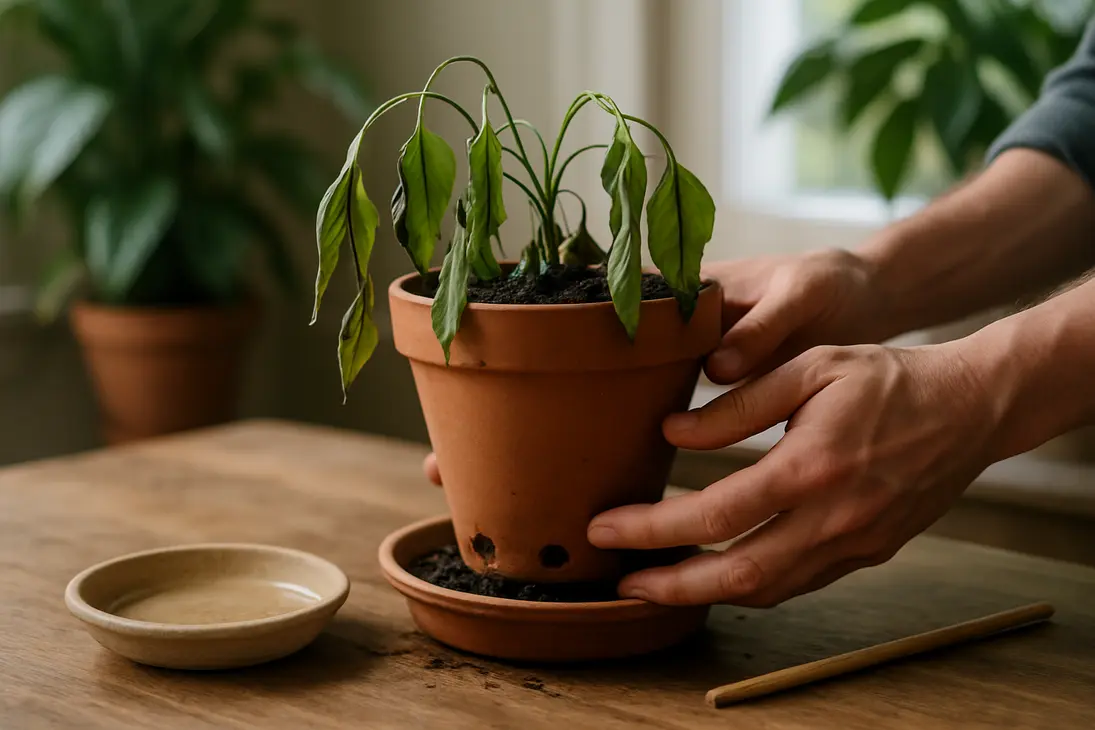
Overwatered palms may have soil that stays wet for days, a sour smell, yellowing lower fronds, or soft stems. Underwatered palms often have dry, shrinking soil, crispy edges, and drooping fronds. Check the soil before watering, and lift the pot if unsure; a dry pot feels much lighter than a freshly watered one.
Using Too Much Fertilizer
More fertilizer does not mean faster growth indoors. Palms grow slowly inside and need less food than many people expect.
Excess fertilizer can burn roots and brown leaf edges. If you suspect overfeeding, stop fertilizing, rinse the soil thoroughly if the pot drains, and let the plant recover. When in doubt, underfeed.
Placing Palms in Direct Sunlight
Many indoor palms are grown under filtered light and can burn behind hot glass. Sunburn appears as pale, tan, or crispy patches, often on the window-facing side.
Move palms into brighter spots gradually. For strong afternoon sun, use a sheer curtain or place the palm slightly back from the window.
Ignoring Dry Indoor Air
Brown tips are not always a watering issue. Dry air, heat vents, low humidity, mineral buildup, and dusty leaves can all contribute.
If soil moisture seems right but tips keep crisping, move the palm away from hot airflow, group it with other plants, or use a humidifier in dry months.
Letting Dust Build Up on Leaves
Dust blocks light and reduces the leaf surface that can interact with indoor air. It also makes palms look dull.
Wipe broad leaves with a damp cloth. Rinse fine, feathery fronds gently in the shower if practical, then let them dry with good air circulation.
How to Choose the Right Indoor Palm for Your Home
The best palm is the one that suits your room and care style. Consider light first, then space, then how often you realistically want to water and groom the plant.
Best Palm for Low Light
Parlor palm is the best low-light choice for most homes. It tolerates lower light better than areca, bamboo, or majesty palm.
Kentia palm is another strong option if you want a larger, elegant plant. It still prefers brightness but adapts better than many palms. Low light does not mean no light; if the room is too dim to read comfortably during the day without a lamp, it is probably too dark long term.
Best Palm for Beginners
Parlor palm is usually the easiest indoor palm. It stays manageable, tolerates average home conditions, and forgives occasional missed watering.
Lady palm and kentia palm are also good beginner choices if you avoid overwatering. Areca can work for beginners in bright rooms. Majesty palm is better for people who enjoy close plant monitoring.
Best Palm for Large Rooms
Kentia palm is excellent for large rooms because it has graceful height and slow, steady growth.
Areca and bamboo palms also work well where you want a fuller screen of greenery. Majesty palm can be striking in a large, bright room, but only with consistent moisture and humidity.
Best Palm for Small Spaces
Parlor palm is the best palm for small spaces. It grows slowly, stays compact, and works on plant stands, side tables, and shelves when young.
Lady palm can also work if you choose a compact plant. Its upright habit takes less visual space than wide, arching palms.
Best Palm If You Want a Tropical Look
Areca palm gives one of the easiest tropical looks indoors, with bright, feathery, relaxed fronds. Bamboo palm is another good choice for a lush, layered effect.
Majesty palm has the boldest resort-style look, but it is more demanding. For tropical style with fewer problems, choose areca or bamboo in bright light, or kentia for a more elegant look.
Conclusion
The best easy care indoor palms for cleaner-feeling indoor air are parlor palm, kentia palm, lady palm, areca palm, and bamboo palm. Parlor palm is best for beginners and lower light. Kentia is graceful and durable. Lady palm is tidy and adaptable. Areca and bamboo palms give fuller tropical foliage when you can provide bright indirect light and steady moisture.
Majesty palm is beautiful but less beginner-friendly because it needs brighter light, higher humidity, and more consistent care.
Indoor palms can support a healthier-feeling room, but they do not replace ventilation, source control, cleaning, or filtration. Choose a palm that fits your home, keep its leaves clean, water thoughtfully, avoid fertilizer overload, and give it the right light.
FAQ
What is the easiest indoor palm to care for?
Parlor palm is usually the easiest indoor palm. It tolerates lower light, grows slowly, stays compact, and does not need constant attention. Kentia palm is another easy-care option for larger rooms.
How often should I water an indoor palm?
Water when the top 1–2 inches of soil feel dry. Water thoroughly, let excess drain away, and empty the saucer. Palms in bright, warm rooms dry faster; palms in low light or winter conditions need less water.
Do indoor palms really purify the air?
Indoor palms can modestly support indoor air by interacting with small amounts of airborne compounds, adding humidity through transpiration, and collecting dust on leaves. They cannot replace ventilation, exhaust fans, air purifiers, or removing pollutant sources.
Why are the tips of my indoor palm turning brown?
Brown tips are commonly caused by dry air, inconsistent watering, fertilizer salt buildup, mineral-heavy water, heat vents, or natural aging. Check soil moisture, reduce excess fertilizer, keep the palm away from hot drafts, and improve humidity if the room is very dry.
You Might Also Like