How to Care for Variegated Plants
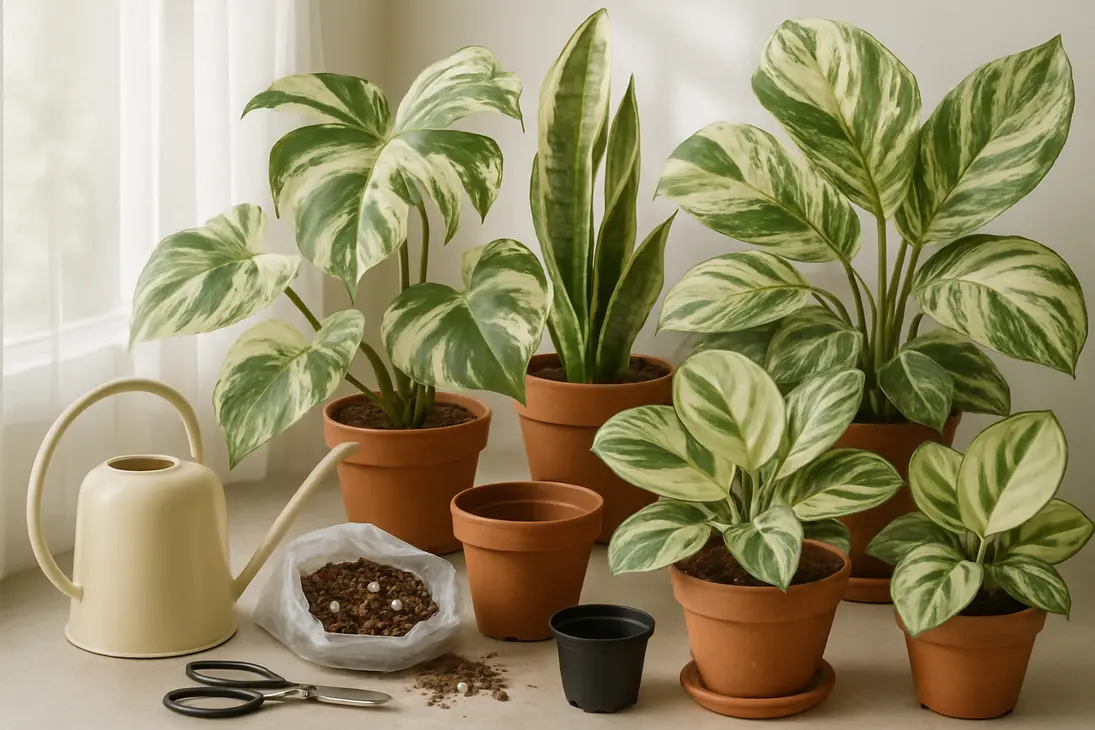
Variegated plants are loved for their white, cream, yellow, silver, or pale green patterns, but those patterns affect how the plant grows. Because pale leaf sections contain less chlorophyll, many variegated plants grow more slowly, need brighter indirect light, and are less forgiving of soggy soil, harsh sun, or heavy feeding.
The basics are still familiar: good light, careful watering, airy soil, moderate fertilizer, and stable conditions. The difference is that a variegated pothos, monstera, philodendron, rubber plant, hoya, snake plant, or calathea often has a smaller margin for error than its greener version.
Why Variegated Plants Need Slightly Different Care
Variegated leaves have areas with reduced chlorophyll. White sections may have very little. Since chlorophyll helps plants capture light for photosynthesis, a heavily variegated plant has less energy-producing leaf surface than a fully green plant of the same size.
As a result, variegated plants often:
- Grow more slowly.
- Need brighter indirect light.
- Use water more slowly in cool or dim conditions.
- React quickly to soggy soil, dry soil, sunburn, pests, or fertilizer excess.
- Produce greener leaves when trying to increase energy production.
The amount of variegation matters. A marble pothos with green-and-cream leaves is usually easier than a mostly white variegated monstera. Plants with light splashing may behave much like standard green plants, while highly variegated specimens need more careful light and watering.
Variegation also varies in stability. Some plants keep consistent patterns, while others can produce greener or whiter growth from certain stems. This is why one vine may stay patterned while another shoot turns mostly green.
Give Them Bright, Indirect Light
Bright, indirect light is usually the most important part of variegated plant care. Pale leaf sections produce less energy, so the plant benefits from strong ambient light without the damage of intense direct sun.
Good indoor positions include:
- Near an east-facing window.
- A few feet back from a bright south- or west-facing window.
- Behind a sheer curtain.
- Under a quality grow light in a dim home.
- In the brightest part of a room, away from hot afternoon sun.
“Bright indirect light” means the plant receives strong reflected light or can see the sky, but the sun is not beating directly on the leaves for long periods. A soft but visible shadow is often a good sign. A hard, sharp shadow may mean the light is too intense.
Too little light can cause faded variegation, smaller leaves, long gaps between leaves, and more green growth. The plant is not misbehaving; it is trying to produce more chlorophyll-rich tissue.
Too much sun causes the opposite problem. White, cream, and yellow areas can scorch faster than green tissue, especially against hot glass or in strong afternoon exposure.
Signs Your Plant Needs More Light
Watch the newest growth. It shows how the plant is responding now.
Common signs include:
| Sign | What it may mean |
|---|---|
| Smaller new leaves | Not enough energy |
| Long gaps between leaves | Stretching toward light |
| Fading variegation | Low light response |
| Mostly green new growth | Reversion or low light |
| Soil stays wet too long | Light is too weak for water use |
| No growth in the growing season | Light may be inadequate |
Increase light gradually. Move the plant closer to a window over a week or two, or add a grow light for limited hours and adjust. Sudden changes can scorch leaves that formed in lower light.
Signs It’s Getting Too Much Sun
Sun damage often appears quickly, especially on pale tissue.
Look for:
- Tan, brown, or bleached patches.
- Crispy edges on leaves closest to the window.
- Leaves that feel hot in the afternoon.
- Wilting in bright sun even when soil is not dry.
- Scorched areas that stay as dead, papery tissue.
Move the plant back from the glass, filter the light, or switch to a gentler exposure. Damaged tissue will not recover, but new leaves can grow normally once conditions improve.
Water Carefully and Use a Well-Draining Mix
Water variegated plants by checking the pot, not by following a strict calendar. A schedule may work briefly, but watering needs change with season, light, temperature, root growth, and potting mix.
Many variegated plants grow more slowly and use water more slowly than greener plants, especially in low light. If the mix stays wet too long, roots lose oxygen, which can lead to yellowing leaves, mushy stems, and root rot.
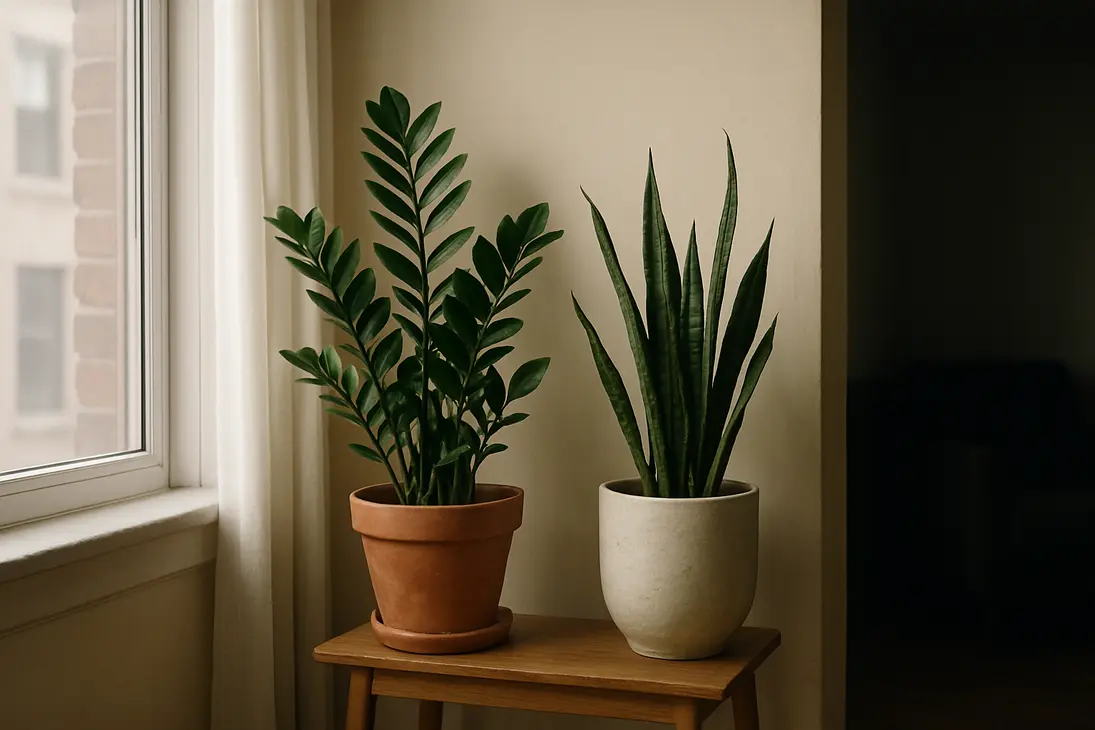
Do not keep every variegated plant dry, though. A pothos or monstera usually likes to dry partly between waterings. A calathea prefers more even moisture. A snake plant or ZZ plant needs a much drier approach. Match watering to the plant and the conditions.
How to Check When to Water
Use more than one clue when possible:
- Finger test: For many tropical houseplants, water when the top 1–2 inches feel dry. For snake plants and other drought-tolerant plants, wait longer.
- Lift the pot: Wet pots feel heavier; dry pots feel lighter.
- Wooden skewer or chopstick: If it comes out damp with soil clinging to it, wait.
- Moisture meter: Useful as a second opinion, but not always accurate.
- Leaf feel: Some plants soften or droop when thirsty, but severe wilting should not be your main guide.
When you water, soak the root ball evenly until excess drains out, then empty the saucer. Small sips can leave dry pockets, while frequent top-ups can keep the lower soil too wet.
The same plant may need water every few days in bright summer conditions and only every few weeks in a cool, dim winter room.
Potting Mix and Drainage Tips
A good mix holds some moisture but still lets air reach the roots. Many variegated plants struggle because the soil stays wet too long, not because they were watered once.
For many tropical variegated houseplants, use a base indoor potting mix amended with perlite, pumice, orchid bark, or coco chips. Aroids such as variegated monstera, philodendron, pothos, and syngonium usually do well in a chunky mix. Snake plants, succulents, and ZZ plants need a grittier, faster-drying blend. Moisture-loving plants such as calatheas need an airy mix that does not dry too sharply.
Drainage holes are important. If you use a decorative cachepot, keep the plant in a nursery pot with holes and remove standing water after watering. Avoid oversized pots, which hold excess moisture around a small root system.
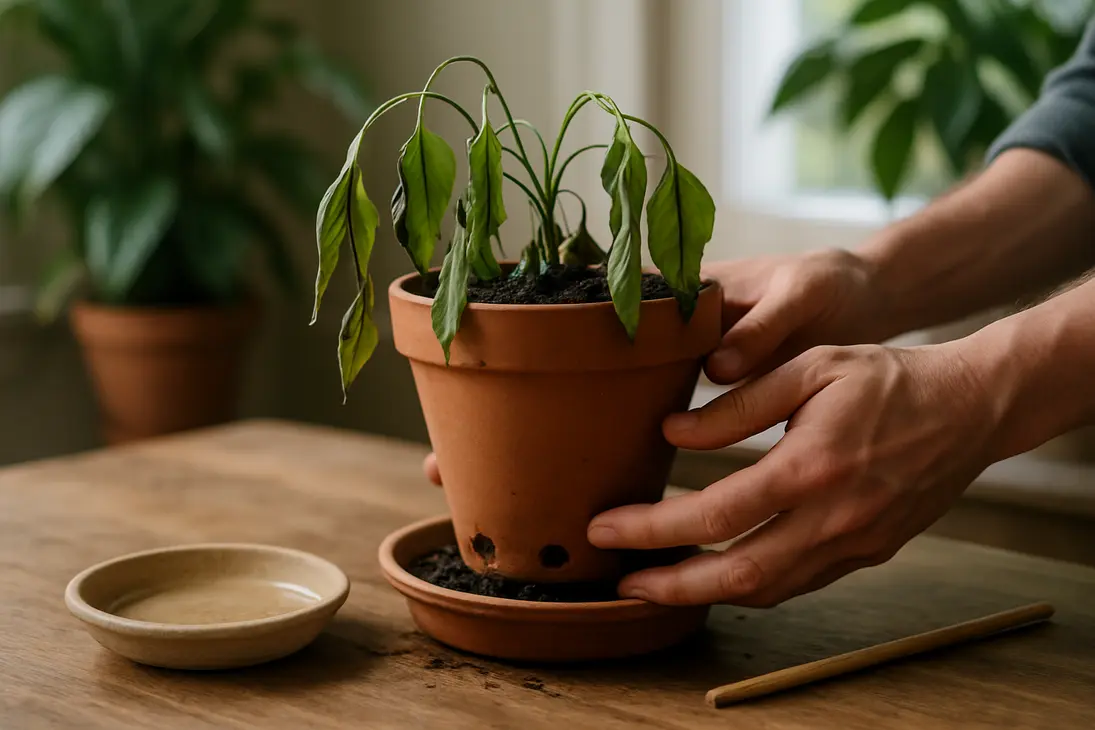
What to Do If You Suspect Root Rot
Suspect root rot if leaves yellow, the plant wilts in wet soil, the pot smells sour, stems soften near the soil, or roots look black, mushy, hollow, or slimy.
Take action quickly:
- Stop watering.
- Remove the plant from the pot.
- Trim dead or mushy roots.
- Remove wet, compacted soil.
- Repot into fresh, airy mix in a pot with drainage.
- Skip fertilizer while the roots recover.
- Water cautiously afterward.
If most roots are gone, take healthy cuttings if possible. Vining plants such as pothos, philodendron, and monstera often recover more reliably from propagation than from a badly rotted root system.
Feed Lightly and Avoid Overfertilizing
Variegated plants need nutrients, but heavy feeding is a common mistake. Fertilizer will not force better variegation or make a slow, highly variegated plant grow like a green one. Too much can burn roots, brown leaf tips, and stress a plant that is already growing slowly.
Feed during active growth, usually spring through summer for many houseplants. Use a balanced houseplant fertilizer at a gentle strength and follow the label. A plant in bright light that is actively producing leaves can use more nutrients than one sitting nearly dormant in a cool winter room.
Reduce or stop feeding when:
- Growth has slowed.
- The plant is stressed, newly repotted, pest-damaged, sunburned, or recovering from rot.
- Winter light is low.
- Soil stays wet longer than usual.
- The plant has recently been moved.
Signs of excess fertilizer include brown tips, white crust on the soil or pot rim, sudden yellowing after feeding, stalled growth, or limpness after a strong dose.
If you suspect overfertilizing, pause feeding. If the pot drains well and roots are not rotting, flush the mix thoroughly and let it drain. In worse cases, repot into fresh mix. Gentle, consistent feeding is safer than occasional heavy doses.
Support Healthy Variegation and Steady Growth
Healthy variegation comes from the whole care routine. Light matters most, but pruning, rotation, humidity, temperature, and pest prevention also help.
Rotate the plant every week or two so all sides receive light. This helps reduce leaning and encourages more even growth. Keep conditions stable, especially for tropical variegated plants. Avoid cold drafts, heat vents, hot windows, and sudden temperature swings.
Humidity can help thin-leaved tropical plants, but it is not the only answer to crispy edges. Browning can also come from overwatering, underwatering, sun scorch, mineral buildup, fertilizer excess, or root stress. If your home is very dry, group plants, use a humidifier, or place suitable plants in a bright bathroom or kitchen.
Inspect regularly for pests such as spider mites, thrips, scale, and mealybugs. Check leaf undersides, petioles, stems, and new growth. Variegated leaves can make some pest damage easier to notice, but they can also make normal markings harder to interpret.
Should You Cut Off Fully Green Leaves?
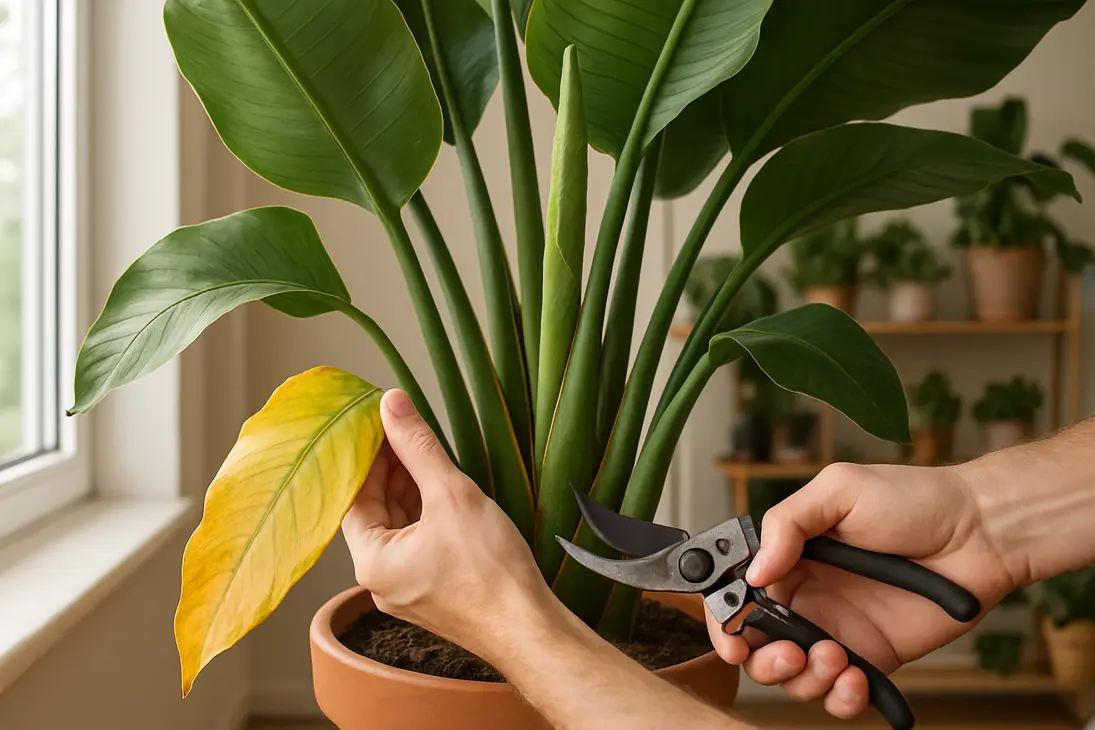
Sometimes. Fully green shoots contain more chlorophyll and may grow faster than variegated growth. If they are allowed to continue, they can dominate the plant and reduce the patterned growth you want.
If a whole stem or runner keeps producing only green leaves, prune it back to the last node that produced good variegation. This is common with plants such as variegated pothos, philodendron, and syngonium.
Keep these cautions in mind:
- Do not remove every green leaf from a weak plant.
- Do not panic over one greener leaf.
- Do not strip a tiny plant of most of its leaf area.
- Use clean pruners or scissors.
- Know your plant’s normal pattern, since some are naturally variable.
Fully white leaves are different. They may look beautiful, but they contribute little energy and often do not last long. You do not need to remove one fresh white leaf from a strong plant, but repeated all-white growth can weaken the plant. Pruning back to a node with more balanced variegation may help.
What Slow Growth Means for Variegated Plants
Slow growth is often normal. Variegated plants usually produce less energy than green plants, so they may not grow as quickly.
Before changing care, ask:
- Are the leaves firm and healthy?
- Is the plant producing roots or occasional new leaves?
- Is the variegation stable?
- Is the soil drying at a reasonable pace?
- Are there no signs of pests, rot, scorch, or fertilizer stress?
If so, the plant may simply be growing at its natural speed. Highly variegated plants may also pause after shipping, repotting, moving, division, or during winter.
Do not try to fix slow growth with extra water, heavy fertilizer, or repeated repotting. Improve the basics gradually: brighter indirect light, suitable soil, careful watering, and steady warmth. If a slow plant also looks unhappy and the soil stays damp, reassess light and roots first.
Conclusion
Variegated plants need the same fundamentals as other plants, but with more attention to balance. Their pale leaf sections contain less chlorophyll, so they often grow more slowly, prefer brighter indirect light, and are less tolerant of soggy soil, harsh sun, and heavy fertilizer.
For most variegated houseplants, the best routine is simple: provide bright indirect light, water according to soil moisture and species needs, use a well-draining mix, feed lightly during active growth, prune reverted green shoots when appropriate, and watch new leaves for clues.
Good care is observant rather than fussy. Respond to what the plant is doing, and it has a better chance of staying both healthy and beautifully patterned.
FAQ
Do variegated plants need more light than regular green plants?
Usually, yes. Variegated plants often need brighter indirect light because their pale sections have less chlorophyll and cannot use low light as efficiently.
Avoid harsh afternoon sun, which can scorch white, cream, or yellow areas. Aim for bright indirect light, filtered light, or gentle morning sun for plants that tolerate it.
Why is my variegated plant turning green?
It may be getting too little light, producing a reverted green shoot, or simply making naturally variable leaves. Greener leaves contain more chlorophyll, so low light can encourage more green tissue.
Move the plant to brighter indirect light and watch the next few leaves. If an entire stem stays green, prune it back to the last variegated node if the plant is healthy enough.
How often should I water a variegated plant?
Water based on soil moisture, not a fixed schedule. Many tropical variegated houseplants can be watered when the top 1–2 inches are dry, while snake plants and ZZ plants should dry more thoroughly. Moisture-loving plants may need more even moisture in an airy mix.
Light, season, pot size, soil type, humidity, and root health all affect timing.
Are variegated plants harder to care for?
They can be less forgiving, but they are not necessarily difficult. Highly variegated plants grow more slowly and show stress faster when light is too low, soil is too wet, or fertilizer is too strong.
If you are new to them, choose a plant with moderate variegation. Give it bright indirect light, drainage, careful watering, and light feeding.
You Might Also Like