How to Choose the Right Pot Size for Your Plant Without Causing Root Rot
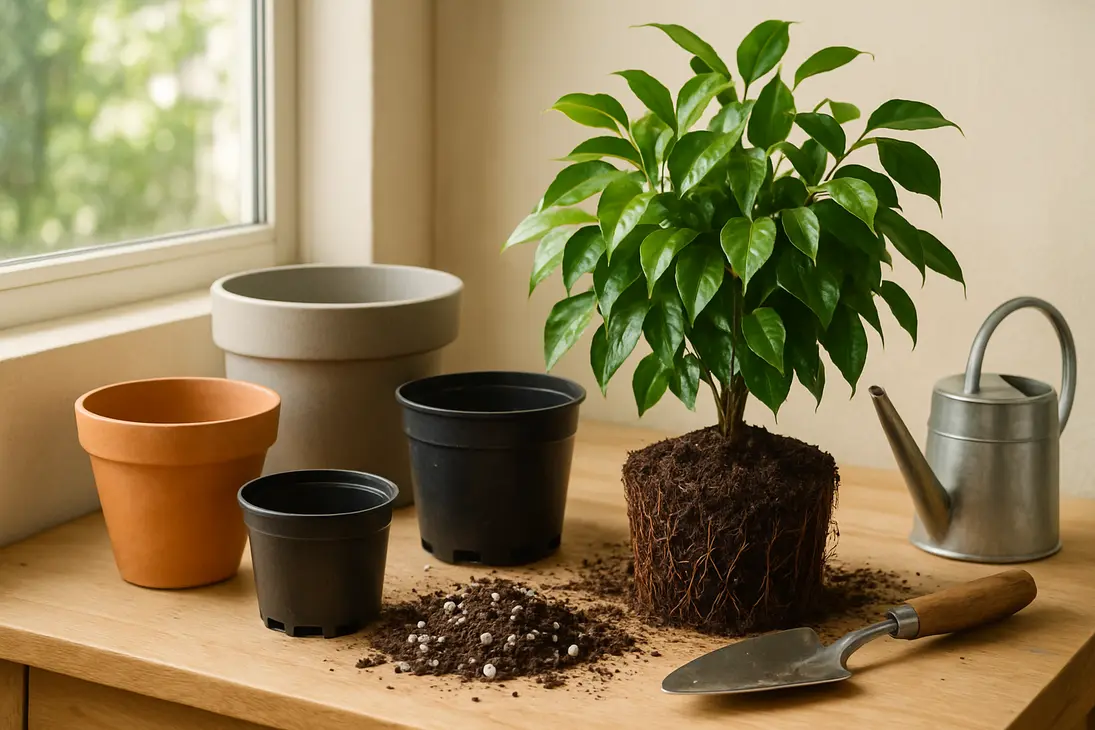
Choosing the right pot size is less about giving your plant “lots of room” and more about matching the container to the roots it has now. For most houseplants, the safest choice is a pot only slightly larger than the current root ball, with drainage holes and a light container potting mix.
Pot size affects how much soil surrounds the roots, how long that soil stays wet, and how much oxygen reaches the root zone. A pot that is too large can keep unused soil damp for too long, especially indoors, leading to root rot.
Why Pot Size Matters for Plant Health
Roots need moisture and oxygen. In a well-sized pot, roots can use water before the mix stays wet too long. In an oversized pot, the outer and lower soil may remain damp because the roots have not grown into it yet.
A good container provides:
- Enough space for near-term root growth
- Drainage and airflow
- A soil volume that dries at a reasonable pace
What happens when a pot is too small
A pot that is too small restricts roots and dries quickly. The plant may survive, but watering becomes less forgiving.
Common signs include:
- Roots circling tightly inside the pot
- Roots growing through drainage holes
- Water running out immediately
- Soil drying much faster than before
- Wilting soon after watering
- Slower growth in the growing season
Small pots are not always a problem. Many plants tolerate being slightly snug, and a smaller soil volume can reduce rot risk for sensitive plants. The issue is whether the plant has enough root room and whether you can keep up with watering.
What happens when a pot is too large
A pot that is too large surrounds a small root ball with too much fresh mix. When watered, that extra mix holds moisture the plant cannot quickly use. The result is often wet, low-oxygen soil.
Oversized pots can cause:
- Persistently damp soil
- Yellowing leaves
- Drooping while soil is wet
- Soft stems or mushy roots
- Fungus gnats
- Slow recovery after repotting
The risk is highest indoors, in winter, in low light, and with dense potting mixes.
Why “more room to grow” is not always better
A pot is a closed environment. Unlike garden soil, excess moisture cannot move away into surrounding ground. If the root system is small compared with the soil volume, moisture management becomes difficult.
More room helps only when the plant has enough roots to use it. A small plant in a huge pot is not future-proofed; it is more likely to sit in wet mix. Increase pot size gradually.
How to Choose the Best Pot Size
Choose based on the current root ball, not the size you hope the plant reaches later. Most small and medium houseplants only need a pot about 1 to 2 inches wider when repotting. Large floor plants may need 2 to 4 inches more if the root mass justifies it.
Use the root ball as your starting point
Slide the plant out gently when the soil is slightly moist. A healthy root ball may show roots around the outside, but it should not always be a solid mass.
| Root ball condition | Pot choice |
|---|---|
| Few roots holding soil together | Keep same size unless soil needs refreshing |
| Roots visible but not packed | Move up slightly |
| Dense circling roots | Move up one pot size and loosen outer roots |
| Thick, matted roots displacing soil | Move up one size; tease or prune if appropriate |
| Brown, mushy, sour-smelling roots | Treat root rot first; do not simply up-pot |
If roots are rotten, trim the damaged roots with clean tools, remove soggy mix, and repot into fresh mix. Use a pot that fits the remaining healthy root system, even if that means the same size or smaller.
Move up only one pot size when repotting
“One pot size up” usually means the next standard container size: a 4-inch pot to a 5- or 6-inch pot, a 6-inch pot to an 8-inch pot, or a 10-inch pot to a 12-inch pot.
A practical guide:
- Small plants: increase about 1 inch
- Average tabletop plants: increase about 2 inches
- Large plants: increase 2 to 4 inches if roots are dense
- Succulents and cacti: stay especially conservative
If you want a large decorative pot, keep the plant in a properly sized nursery pot inside it.
Match pot depth and width to the plant type
Diameter matters, but so does depth. Some plants have shallow roots; others need deeper or heavier containers for stability.
| Plant type | Better pot shape |
|---|---|
| Succulents and cacti | Shallow to moderate, not oversized |
| Ferns | Moderate width with steady moisture capacity |
| Snake plants | Sturdy, often wider rather than very deep |
| Pothos and philodendron | Standard depth with modest width increase |
| Palms and floor plants | Deeper, heavier container |
| Orchids | Specialized orchid pot or basket when needed |
| Herbs and vegetables | Larger container volume for outdoor sun and fast growth |
A tall plant in a light pot may tip even if the root space is adequate. Use a heavier pot, wider base, or cachepot for stability.
Choose pots with drainage holes
Drainage holes are essential for most plants. They let excess water escape and help air return to the mix.
If you love a decorative pot without holes, use it as a cover pot. Keep the plant in a nursery pot with drainage, water it separately, let it drain fully, and empty any collected water.
Do not rely on rocks at the bottom of a holeless pot. They do not replace drainage and can leave a wet zone above the rocks.
When Your Plant Actually Needs Repotting
Repotting is useful when roots need more room, the mix has broken down, pests or disease require action, or watering has become difficult. It is not needed on a fixed schedule for every plant.
Roots circling the pot or growing out of drainage holes
A few roots coming through drainage holes are not an emergency. A thick mat of roots or tightly circling roots suggests the plant is becoming root-bound.
When repotting, loosen the outer roots gently so they can grow into the new mix. Avoid tearing apart the root ball unless the plant tolerates it or the roots are severely matted.
Soil drying out much faster than usual
If a plant that used to need water weekly now wilts every few days under the same conditions, the pot may be crowded with roots. Less soil means less moisture storage.
Before repotting, check whether conditions changed:
- Brighter light
- Warmer or drier air
- Active spring or summer growth
- Terracotta pot drying faster
- Mix becoming hydrophobic after drying out
If conditions are the same and the pot is full of roots, move up one size.
Stunted growth despite good care
Slow growth can result from low light, cool temperatures, lack of nutrients, pests, old mix, or dormancy. But if the plant is in its growing season, has suitable care, and has dense circling roots, cramped roots may be the problem.
Do not move a stressed plant into a much larger pot without confirming the root issue. That can make moisture problems worse.
Water running straight through the pot
Water pouring out immediately can mean the container is packed with roots and has little soil left to absorb moisture. It can also mean the mix has become hydrophobic and is shedding water.
Remove the plant if possible. If the root ball is mostly roots, repot. If there is still soil but it has shrunk away from the pot, rehydrate slowly, such as with brief bottom watering. Do not leave the plant sitting in water for long periods.
When not to repot yet
Wait if:
- The plant is healthy and growing normally
- Soil dries at a manageable pace
- Roots are not tightly circling or escaping heavily
- The plant is flowering or setting buds
- It is winter and growth is slow
- The plant is already stressed
- You are tempted to jump several pot sizes
Exceptions include sour-smelling soil, soggy mix, pests, or suspected root rot. In those cases, the goal is improving the root environment, not simply increasing pot size.
Pot Size, Soil, and Watering: Preventing Root Rot After Repotting
Pot size is only one part of root rot prevention. A well-sized pot can still fail with dense soil and frequent watering. The safest combination is modest pot size, drainage holes, suitable potting mix, and adjusted watering after repotting.
Use potting mix, not garden soil
Garden soil can compact in containers, drain poorly, and reduce oxygen around roots. Use a potting mix designed for containers.
For common houseplants, a general indoor potting mix often works. For plants that dislike wet roots, choose or amend a faster-draining mix.
Examples:
- Succulents and cacti: cactus mix with pumice, perlite, or grit
- Aroids: mix with bark, perlite, or chunky material
- Ferns: moisture-retentive but airy mix
- Outdoor herbs: quality container mix for sun and frequent watering
Do not pack the mix down hard. Firm it enough to support the plant without compacting it.
Adjust watering after moving to a larger pot
A larger pot usually holds moisture longer, so your old watering schedule may no longer fit. The top can look dry while the bottom remains damp.
Check moisture before watering. Use your finger, a wooden skewer, or the pot’s weight. Tropical houseplants often prefer partial drying between waterings; succulents and cacti need the mix to dry much more thoroughly.
When watering, water evenly until some drains out, then let the pot drain fully. Empty saucers and cachepots.
Consider pot material: plastic, terracotta, ceramic, and nursery pots
Pot material changes drying speed.
| Pot material | Moisture behavior | Caution |
|---|---|---|
| Plastic nursery pot | Holds moisture longer | Easier to overwater in low light |
| Terracotta | Dries faster | May dry too fast in hot, dry conditions |
| Glazed ceramic | Holds moisture like plastic | Must have drainage or be used as cachepot |
| Unglazed clay | More breathable | Can collect mineral residue |
| Self-watering pot | Keeps water available | Risky for plants needing dry periods |
Nursery pots are practical because they drain well and make root checks easy. If you overwater, terracotta and a snug pot may help. If your home is dry or you forget to water, plastic may be more forgiving.
Watch for signs of overwatering after repotting
After repotting, monitor the plant and soil for a few weeks.
Warning signs include:
- Yellowing lower leaves
- Wilting while soil is wet
- Soft stems near the soil line
- Sour or swampy smell
- Fungus gnats
- Brown, soft roots
- Weak, limp new growth
Not every yellow leaf means root rot. The key pattern is decline plus soil that stays wet too long.
If you suspect rot, remove the plant and inspect the roots. Healthy roots are firm; rotten roots are often brown or black, soft, hollow, or smelly. Trim rotten roots, discard soggy mix, and repot into fresh mix in a pot sized for the remaining healthy roots.
Conclusion
Choose a pot that fits the root ball you have now. Most plants do best when moved up gradually, usually only one pot size at a time. A slightly larger pot gives roots room to grow without surrounding them with too much wet, unused soil.
Look for real repotting signs: circling roots, roots escaping drainage holes, unusually fast drying, stunted growth despite good care, or water running straight through a root-packed pot.
To reduce root rot risk, combine the right pot size with drainage holes, proper potting mix, and careful watering. A modest pot and airy mix are usually safer than an oversized container chosen with good intentions.
FAQ
What is the best pot size for most houseplants?
For most houseplants, choose a pot about 1 to 2 inches wider than the current root ball. Small plants may need only 1 inch more; large floor plants may need 2 to 4 inches if roots are dense and healthy.
The pot should also have drainage holes and enough depth for the plant’s root type and top growth.
Why is it bad to repot a plant into a much bigger pot?
A much bigger pot holds more soil than the roots can use. After watering, that extra soil can stay wet too long, especially at the sides and bottom. Wet mix has less oxygen, which increases root rot risk.
Gradual pot increases are usually safer, especially indoors.
Should I repot a plant that seems happy in a small pot?
Not necessarily. If the plant is healthy, growing normally, and the soil dries at a manageable pace, wait.
Check the roots before deciding. If they are tightly circling, growing heavily from drainage holes, or causing water to run straight through, move up one pot size.
Does a larger pot mean I should water less often?
Usually, yes. More potting mix often holds moisture longer. After repotting, do not follow the old schedule automatically.
Water according to the plant’s needs and actual soil moisture. Let excess water drain, and empty saucers or cachepots.
You Might Also Like