What Happens to Cacti in 100% Humidity?
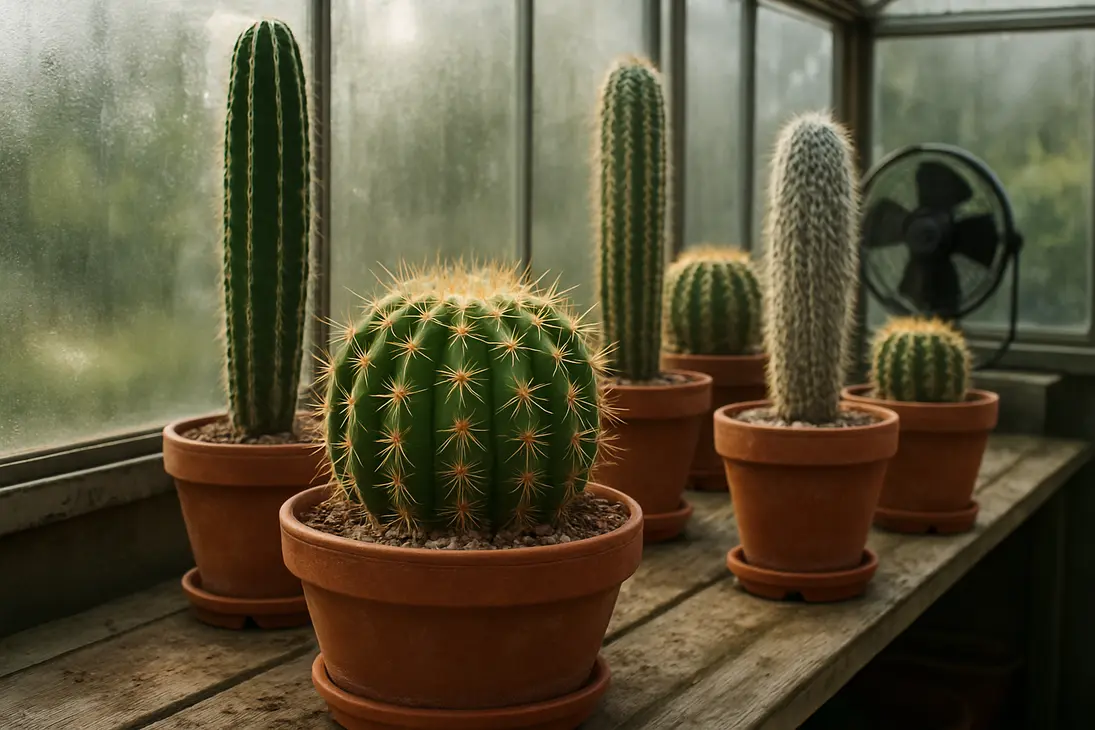
Cacti do not instantly die in 100% humidity. A cactus can handle a foggy morning, humid night, or short greenhouse spell. The real danger is prolonged saturated air combined with wet soil, poor airflow, cool temperatures, and low light.
“100% humidity” means the air is holding as much water vapor as it can at that temperature. If temperatures drop, moisture may condense as dew on plant surfaces, pot rims, benches, and soil. For many desert cacti, humid air alone is not the main problem. The real risk is slow drying, which can lead to root rot, stem rot, mold, fungal growth, pests, and weak indoor growth.
How 100% Humidity Affects Cacti
Cacti conserve water well, but they are not immune to moisture problems. In very humid air, even careful watering can become risky if the potting mix is dense or the plant lacks warmth, light, and air movement.
A cactus outdoors in a humid climate may be fine in gritty soil, a draining pot, bright light, and moving air. A cactus in a closed glass container with damp peat-based soil is in a much more dangerous situation.
Transpiration and Gas Exchange Slow Down
Plants lose water through transpiration. When humidity is very high, water evaporates from plant surfaces more slowly because the air is already saturated.
Many cacti use CAM photosynthesis, opening their stomata mostly at night to reduce water loss. Saturated air does not mean the cactus “cannot breathe,” but still, humid air makes normal exchange less efficient and favors fungi and bacteria.
Air movement matters. Humid outdoor air with a breeze is less risky than humid, motionless air in a terrarium, crowded shelf, or closed greenhouse.
Soil Stays Wet Longer
The biggest practical issue with 100% humidity is slow soil drying. Potting mix dries through drainage, evaporation, plant uptake, warmth, and airflow. Humid air reduces evaporation, while cool temperatures and low light slow water use. The result is a pot that may stay damp for days or weeks.
Cactus roots need oxygen. In waterlogged soil, air spaces fill with water, roots weaken, and rot organisms can attack. A cactus can rot even if it was not watered heavily; what matters is how long the roots remain damp.
A gritty, mineral-heavy mix may handle humid weather well. A dense mix with peat, compost, or fine particles may stay wet too long.
Condensation Can Collect on Spines, Skin, and Soil
At 100% humidity, condensation can form when plant surfaces are cooler than the surrounding air. This is common in greenhouses, cold windowsills, enclosed containers, and dewy outdoor nights.
Cactus spines, areoles, ribs, and woolly crowns can trap droplets. Short-term dew is usually harmless outdoors if morning sun and airflow dry the plant. Trouble begins when water sits in crevices around areoles, damaged skin, old flowers, or dense wool.
Condensation on soil also keeps the surface damp and can encourage algae, mold, fungus gnats, and mushrooms, especially in organic mixes.
When High Humidity Becomes Harmful
High humidity becomes harmful when it is prolonged and paired with conditions that prevent drying. Indoors, this often happens in winter, on dim shelves, near cold windows, or inside decorative containers with no drainage.
Root Rot from Damp, Low-Oxygen Soil
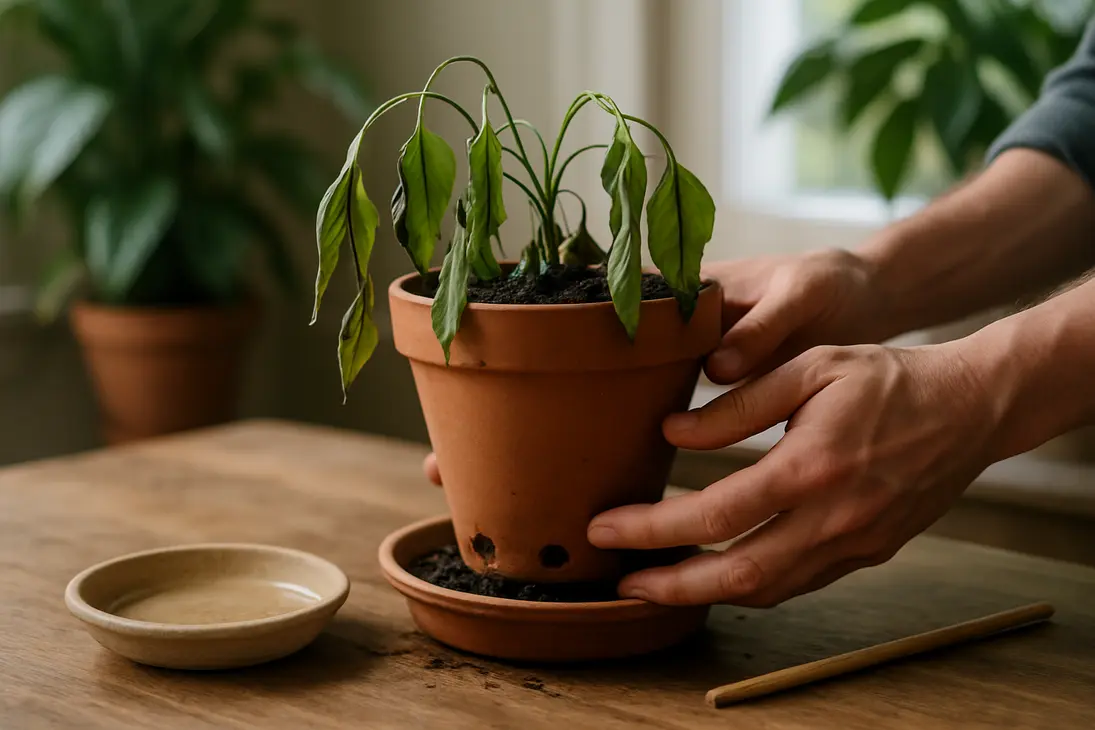
Root rot is one of the most serious cactus humidity problems because it often starts out of sight. A cactus may look normal while its roots decline. Later, it may become loose in the pot, stop growing, yellow near the base, wrinkle despite moist soil, or develop a soft lower stem.
High humidity contributes by slowing evaporation, but potting mix and watering routine usually decide whether rot develops. Common triggers include fixed-schedule watering, pots without drainage, peat-heavy soil, cool winter dampness, low light, and oversized pots.
If rot is suspected, remove the cactus and inspect the roots. Healthy roots are firm and pale to tan. Rotten roots may be black, mushy, hollow, or foul-smelling. If the stem base is firm, trim dead roots, let the plant dry, and repot into a grittier mix. If rot has entered the stem, saving the plant may require cutting above the rot into clean tissue, drying the cutting, and rerooting it.
Fungal Growth, Mold, and Mushrooms in Pots
Mold or mushrooms in a cactus pot usually mean the mix is staying moist and contains organic matter such as bark, peat, or compost. The mushrooms themselves may not be attacking the cactus, but they warn that conditions are wetter than many desert cacti prefer.
Remove visible mushrooms or mold, check for drainage holes, let the mix dry thoroughly, increase light and airflow, and repot into a mineral-heavy cactus mix if the current mix is rich or spongy. Avoid moisture-holding top dressings such as moss or fine bark.
A brief patch of surface mold after watering may disappear as the pot dries. Repeated mold, algae, or mushrooms mean the growing conditions need adjustment.
Soft Spots, Corking, Scarring, and Stem Rot
High humidity can contribute to visible stem problems, but not every mark is rot.
Soft, dark, spreading spots are concerning, especially if they feel mushy, smell bad, or grow quickly. Rot often appears near the base, at injuries, around old flowers, or where water collects.
Corking is different. Many cacti naturally develop tan, firm, woody tissue near the base as they age. It is usually dry, hard, and gradual. Scarring may appear after old damage, sunburn, pest injury, or fungal spotting. If tissue is firm and not spreading, it is usually cosmetic. If it is soft or expanding, isolate the plant and investigate.
Pest Problems That Thrive in Damp Conditions
High humidity does not invite every cactus pest. Spider mites often prefer hot, dry conditions. But damp, stagnant areas can favor other problems.
Fungus gnats are common where organic potting mix stays wet. Their larvae feed on fungi and decaying material and may damage tender roots, especially on seedlings. Adult gnats are mostly a nuisance, but they signal overly moist conditions.
Mealybugs and scale are not caused by humidity, but stressed plants in crowded, low-airflow spaces are easier targets. Outdoors in humid climates, slugs and snails may chew tender cactus tissue.
Start by correcting the environment: dry the pot appropriately, improve airflow, remove dead flowers and debris, and inspect the plant closely.
Not All Cacti React the Same Way
Not all cacti need identical desert conditions. Some come from arid regions, others grow as epiphytes in humid forests, and seedlings have different needs from mature plants.
Desert Cacti Prefer Dry Air and Fast-Drying Soil
Desert and semi-desert cacti generally do best when humidity is balanced by strong light, warmth, drainage, and airflow. They can tolerate humid climates if roots dry quickly and rain or condensation does not sit around the crown.
Examples include many Mammillaria, Echinocactus, Ferocactus, Opuntia, Astrophytum, and columnar cacti. The care principle is the same: avoid long-lasting dampness around roots and stems.
Indoors, desert cacti usually struggle less with the humidity reading itself and more with weak light, still air, decorative pots, and overwatering.
Epiphytic Cacti Tolerate More Humidity
Epiphytic cacti, such as Christmas cactus, Thanksgiving cactus, Rhipsalis, and many Epiphyllum types, naturally grow in more humid environments than desert cacti. They often appreciate moderate to high humidity indoors.
However, “tolerates humidity” does not mean “likes soggy soil.” Epiphytic cacti still need oxygen around their roots. Their mix should be airy and moisture-retentive, often using bark, perlite, pumice, and a modest amount of organic matter. They usually need more frequent watering than desert cacti but should never sit in stagnant, waterlogged soil.
Seedlings Can Handle Higher Humidity Temporarily
Cactus seedlings are a special case. Many growers germinate cactus seeds in high humidity because tiny seedlings dry out easily. A humidity dome, bag, or covered tray can help during germination.
The key word is temporarily. Once seedlings are established, they need gradual acclimation to more airflow. Open covers slowly over days or weeks to reduce rot and shock. Keeping seedlings sealed too long can encourage algae, mold, damping-off, and weak growth.
Mature desert cacti should not be treated like seedlings. A closed, humid container that helps seeds sprout can be dangerous for established plants.
Indoor Cacti Need Humidity Balanced With Light and Airflow
Indoor cacti live in a compromise. Even in a humid house, insufficient light is often the larger problem. Low light slows growth and water use, so humid air and damp soil become more dangerous.
If indoor humidity is high, compensate with bright suitable light, a gritty quick-drying mix, pots with drainage holes, space between plants, gentle air movement, and less frequent watering, especially in winter.
A cactus can often adapt to a humid room if its roots dry promptly and it receives enough light.
How to Keep Cacti Healthy in Very Humid Conditions
If you live in a humid climate, use a greenhouse, or keep cacti indoors with limited air movement, the goal is not to eliminate humidity completely. The goal is to prevent long periods of wetness around roots and stems.
Use a Fast-Draining, Airy Cactus Mix
A good cactus mix holds enough moisture for roots to drink, then dries before oxygen runs out. In humid conditions, use more mineral material and less organic matter.
Useful ingredients include pumice, perlite, coarse sand or grit, crushed lava rock, fine gravel, and a small portion of potting soil or composted material.
For many desert cacti, 50–80% mineral material is a practical starting range. In very humid homes or rainy climates, use the higher mineral range. For epiphytic cacti, keep the mix airy but include more moisture-holding ingredients such as bark or a modest amount of potting mix.
Avoid fine, compacted mixes. If water pools on the surface or the pot stays heavy for many days, the mix is too moisture-retentive.
Water Less Often When Humidity Is High
High humidity does not mean never water. It means water based on dryness, season, and plant activity, not the calendar.
For desert cacti, wait until the mix is dry all the way through before watering again. In warm, bright conditions, that may happen fairly often. In cool, humid, low-light conditions, it may take weeks.
Check dryness by lifting the pot, using a wooden skewer to test deeper moisture, feeling through the drainage hole if possible, and watching the plant instead of only the soil surface.
When you water, water thoroughly and let excess drain away. Small sips can keep the top layer damp while leaving deeper roots poorly watered. During cool dormancy, some growers give little to no water depending on species and conditions.
Increase Air Circulation
Airflow helps dry condensation, reduce stagnant pockets, and discourage fungal growth.
Indoors, a small fan on low can help, but do not blast cacti with constant strong wind. Gentle room movement is enough. In a greenhouse, use vents, fans, spacing, and avoid overcrowded benches.
After watering in humid weather, airflow is especially important. Water early in the day when possible so surfaces can dry before temperatures drop.
Choose Pots With Drainage Holes
Drainage holes are essential for most cacti. A decorative cachepot is safe only if the cactus is in a separate draining pot and is never left sitting in collected water.
Terracotta can help in humid conditions because moisture evaporates through the sides. Plastic holds moisture longer, which can be useful in hot, dry climates but risky in humid, low-light rooms. Pot size matters too: oversized pots hold more wet mix than roots can use.
Choose a pot only slightly larger than the root system unless the species needs deeper rooting space.
Avoid Closed Terrariums for Most Desert Cacti
Closed terrariums are usually a poor match for desert cacti. They trap humidity, limit airflow, and create condensation cycles that keep soil and plant surfaces damp.
Open dish gardens are better, but they still need drainage and the right mix. A glass bowl with gravel at the bottom is not the same as a pot with drainage holes; water can still collect below the roots.
For most beginners, individual pots are far easier to manage.
Watch for Early Warning Signs
Inspect cacti regularly in humid conditions, especially after watering, during cool weather, or in enclosed spaces.
| Sign | What it may mean | What to do first |
|---|---|---|
| Pot stays heavy for many days | Mix dries too slowly | Increase airflow, delay watering, consider repotting |
| Mushrooms or persistent mold | Damp, organic mix | Remove growth, dry the pot, improve mix and drainage |
| Soft base or dark mushy spot | Possible rot | Isolate, unpot, inspect roots and stem |
| Wrinkling while soil is wet | Root damage or rot | Stop watering and check roots |
| Gnats around the pot | Consistently moist organic soil | Let mix dry, improve drainage |
| Firm tan base | Often normal corking | Monitor unless soft or spreading |
| Pale, stretched growth | Low light, often with too much water | Increase light gradually and water less |
Do not respond to every symptom by adding water. A rotting cactus can look wrinkled because damaged roots cannot absorb moisture.
Conclusion
A cactus can survive 100% humidity for short periods, and some cacti tolerate humid air well. The danger comes when saturated air keeps soil, spines, areoles, and stems damp, especially in cool, dim, stagnant conditions.
For desert cacti, use fast drainage, bright light, careful watering, and steady airflow. For epiphytic cacti, higher humidity is usually less of a problem, but soggy soil still is. Humidity alone is rarely the whole issue; wet soil plus poor airflow is what turns high humidity into rot, mold, and decline.
FAQ
Can a cactus survive 100% humidity?
Yes. A cactus can survive 100% humidity, especially briefly. Outdoor cacti may experience fog, dew, or humid nights without harm if they dry afterward. Long-term saturated air becomes risky with wet soil, poor airflow, low light, or cool temperatures.
Does high humidity mean I should stop watering my cactus?
Not necessarily. Water less often and check the soil more carefully. For most desert cacti, wait until the mix is dry throughout. In bright, warm conditions, the plant may still need water; in cool, dim, humid conditions, water much less.
Why are mushrooms growing in my cactus pot?
Mushrooms usually mean the potting mix is damp and organic. They may not be attacking the cactus, but they show the pot is staying wetter than ideal. Remove them, let the mix dry, improve airflow, and consider repotting into a grittier mix.
Which cacti tolerate humidity best?
Epiphytic cacti tolerate humidity best. Christmas cactus, Thanksgiving cactus, Rhipsalis, and Epiphyllum types suit moderate to high humidity better than many desert cacti. Desert cacti can also grow in humid climates if they have excellent drainage, strong light, and airflow.
Sources
- Reddit discussion reflecting common grower concerns about mushrooms in cactus pots: https://www.reddit.com/r/cactus/comments/xf9dpq/lil_mushrooms_growing_with_my_cacti_is_this_a_bad/
You Might Also Like