Can You Bring Pollinated Potted Vegetable Plants Indoors?
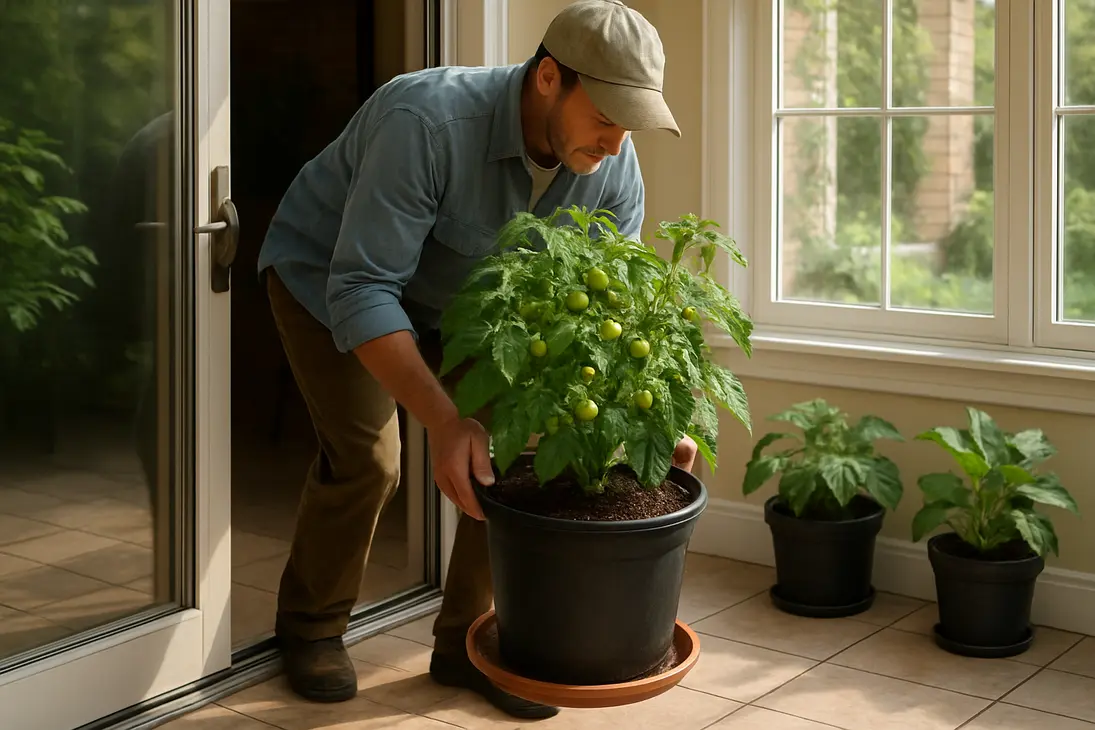
Yes, you can usually bring a pollinated potted vegetable plant indoors, especially if frost, storms, heat, or pests are threatening the crop. This works best with container-grown tomatoes, peppers, eggplants, beans, cucumbers, compact squash, and herbs that can be moved without breaking stems or disturbing roots.
Pollination is only the start of fruit development. After a flower is pollinated, the plant still needs enough light, water, nutrients, warmth, and healthy foliage to keep fruit growing. When problems happen after returning potted plants indoors, the cause is usually not failed pollination. It is more often low light, overwatering, pests, temperature stress, or shock from the move.
Yes—But Pollination Is Only the First Step
A pollinated vegetable plant can continue developing fruit indoors if it stays healthy enough to support it. This is most likely when fruit is already visible and enlarging, such as small tomatoes, peppers, eggplants, beans, or cucumbers. It is harder with large, high-light crops that still need weeks of strong growth, such as full-size tomatoes, melons, winter squash, or large cucumbers.
Outdoor light is much stronger than most indoor window light. Indoors, plants may survive but slow down. Fruit may ripen slowly, remain smaller, or drop if the plant cannot produce enough energy.
What “after pollination” means for fruiting vegetables
“After pollination” does not always mean fruit is guaranteed.
For tomatoes, peppers, and eggplants, successful pollination usually shows when the flower fades and the tiny fruit behind it begins to swell. Tomatoes may form a small green bead. Peppers and eggplants show a firm young fruit at the base of the spent blossom.
For cucumbers, squash, melons, and similar crops, the female flower already has a tiny fruit-like swelling behind it. Pollination is successful only if that swelling keeps growing over the next several days. If it yellows, shrivels, or stops enlarging, pollination may have been incomplete or the plant may lack resources.
Beans and peas are usually more forgiving. Once pods begin to lengthen, they often continue filling if the plant has enough light and moisture.
The safest time to move a plant indoors is after fruit has clearly started enlarging, not simply after flowers have opened.
Why some flowers or young fruits may still drop indoors
Some flower or fruit drop after moving indoors is normal. Plants shed flowers and small fruits when they cannot support them.
Common causes include:
- A sudden drop in light
- Drying out before or during the move
- Soil staying wet too long indoors
- Cold drafts or hot vents
- Root stress from moving a heavy pot
- Pest outbreaks
- Too many fruits for the plant’s current energy supply
Tomatoes and peppers often drop blossoms when stressed. Cucumbers and squash may abort small fruits if light is weak or pollination was incomplete. Peppers often finish already-set fruit indoors, but new flowers are less reliable without strong light.
When it is better to leave the plant outside a little longer
If outdoor conditions are still safe, leaving the plant outside a few more days can improve fruit set. Outdoor light, airflow, and pollinator activity are difficult to match indoors.
Leave it outside a little longer if:
- Frost is not expected
- Flowers are open but fruit has not begun to swell
- The plant is too large for good indoor light
- Cucumbers, squash, or melons still need pollinators
- The pot is wet, muddy, or full of insects
- You can protect it temporarily with a porch, row cover, or frost cloth
Move it indoors right away if frost is likely, wind could break stems, pests are severe, or temperatures are extreme enough to stop growth.
Check the Plant Before Moving It Indoors
Before bringing a vegetable pot inside, inspect it carefully. Outdoor containers can carry insects, eggs, slugs, weed seedlings, dead leaves, and damp soil. A few minutes of cleanup can prevent weeks of indoor pest problems.
Look for early signs of successful pollination
Check whether fruit is actually forming before you move the plant.
Good signs include:
- Spent flowers drying while the base enlarges
- Small green tomatoes increasing in size
- Pepper or eggplant fruits becoming firm
- Cucumber or squash fruits staying green and growing
- Bean pods lengthening after flowers fade
If flowers are still fresh and open, handle the plant gently. Tomatoes and peppers can self-pollinate, and light vibration may help, but rough handling can knock off blossoms. Vining crops with separate male and female flowers may still need hand-pollination indoors if female flowers open later.
Remove clearly failing tiny fruits that are yellowing, shriveling, or soft so the plant can focus on healthy developing fruit.
Inspect leaves, stems, soil, and pot drainage
Look underneath leaves first. Aphids cluster on tender growth and leaf undersides. Whiteflies flutter when disturbed. Spider mites may leave fine webbing and stippled leaves. Caterpillars leave holes and dark droppings. Slugs may hide under the rim or saucer.
Remove dead leaves, fallen flowers, and plant debris from the pot. Indoors, decaying material can encourage fungus gnats and mold because airflow is lower.
Check drainage before moving the pot inside. Make sure:
- Drainage holes are open
- Water can escape freely
- The saucer can be emptied
- The pot will not damage floors or furniture
- The plant is stable and not top-heavy
If the pot is saturated, let it drain outdoors first. Wet soil dries much more slowly indoors.
Quarantine the plant before placing it near houseplants
Do not put outdoor vegetable pots directly beside houseplants. Even clean-looking plants can carry aphids, thrips, spider mites, whiteflies, ants, earwigs, or fungus gnat larvae.
A simple quarantine helps:
- Keep the plant in a bright, separate spot for one to two weeks if possible.
- Inspect leaf undersides every few days.
- Rinse or wipe off small pest clusters early.
- Remove heavily infested leaves if the plant can spare them.
- Avoid overwatering, which encourages fungus gnats.
If a plant is badly infested, it may not be worth bringing indoors. Consider harvesting mature or nearly mature fruit or protecting the pot outdoors briefly instead.
Give the Plant Enough Indoor Light to Finish Fruiting
Light is the biggest indoor limitation for fruiting vegetables. A bright room may still be dim compared with outdoor sun. Vegetable fruits are built from sugars made by the leaves, so weak light can slow or stop development.
Leafy herbs tolerate lower light better than fruiting tomatoes, peppers, cucumbers, squash, and eggplants.
Best indoor placement after bringing the pot inside
Choose the brightest place available, usually directly in front of a south-facing window or the sunniest west-facing window. Keep foliage close to the glass but not touching cold panes at night.
A good indoor spot has:
- Several hours of direct sun if possible
- No cold drafts
- No hot, dry air from vents or radiators
- Space around the foliage
- A waterproof saucer that can be emptied
- Room to rotate the pot every few days
Be realistic. A plant moved from full outdoor sun to indirect indoor light may stay alive but is unlikely to mature a heavy crop. Nearly full-size fruit may ripen; very small fruit may stall.
If you move the plant indoors only overnight for frost protection and return it outside during the day, light matters less. If it will stay indoors for more than a few days, stronger light is important.
When to use grow lights
Use grow lights if the plant has immature fruit, must stay indoors for more than a short spell, or lacks direct sun. Fruiting vegetables need much more light than typical houseplants.
A bright full-spectrum LED grow light positioned above the plant can help significantly. Follow the fixture’s distance guidance and watch for stretching, leaf burn, or leaning.
Signs the plant needs more light include:
- Pale, stretched new growth
- Leaves leaning strongly toward the window
- Fruit growth slowing sharply
- Repeated flower drop
- Yellowing lower leaves while soil remains moist
- Weak or floppy stems
For fruiting plants, a long, consistent day under lights is better than a few weak hours. Turn lights off at night so the plant still has a dark period.
How light needs differ for herbs, peppers, tomatoes, and vining crops
Some crops are much better indoor candidates than others.
| Crop type | Indoor difficulty after pollination | What to expect |
|---|---|---|
| Leafy herbs such as parsley, mint, chives, basil | Easy to moderate | Can keep producing leaves with bright light; basil needs warmth and stronger light |
| Peppers | Moderate | Existing fruit often ripens; new flowers need strong light and warmth |
| Tomatoes | Moderate to difficult | Mature green tomatoes may ripen; small fruit needs strong light to size up |
| Eggplants | Moderate to difficult | Set fruit may continue if warm and bright |
| Beans and peas in pots | Moderate | Existing pods may fill if light does not drop too sharply |
| Cucumbers | Difficult | Young fruits may abort without strong light and complete pollination |
| Summer squash, melons, winter squash | Difficult | Large plants and high light needs make indoor finishing challenging |
Peppers are among the best candidates because they handle containers well and often ripen already-set fruit indoors. Compact tomatoes can also work. Large indeterminate tomatoes, cucumbers, squash, and melons are harder unless you have strong light and enough space.
Adjust Watering and Care After the Move
Outdoor watering habits often cause indoor problems. Outside, sun, wind, warmth, and active growth dry pots quickly. Indoors, the same pot may stay damp much longer. If you keep watering on the outdoor schedule, roots can suffer from lack of oxygen.
Avoid overwatering after the plant comes inside
Do not water just because it is your usual watering day. Check the pot first.
For small and medium pots, push a finger a couple of inches into the mix. For large containers, use a wooden skewer, moisture meter, or lift the pot if possible. The surface may be dry while the lower root zone is still wet.
Water when the root zone is beginning to dry but before severe wilting. When you water, water thoroughly, let excess drain, and empty the saucer. Do not leave vegetable pots sitting in standing water.
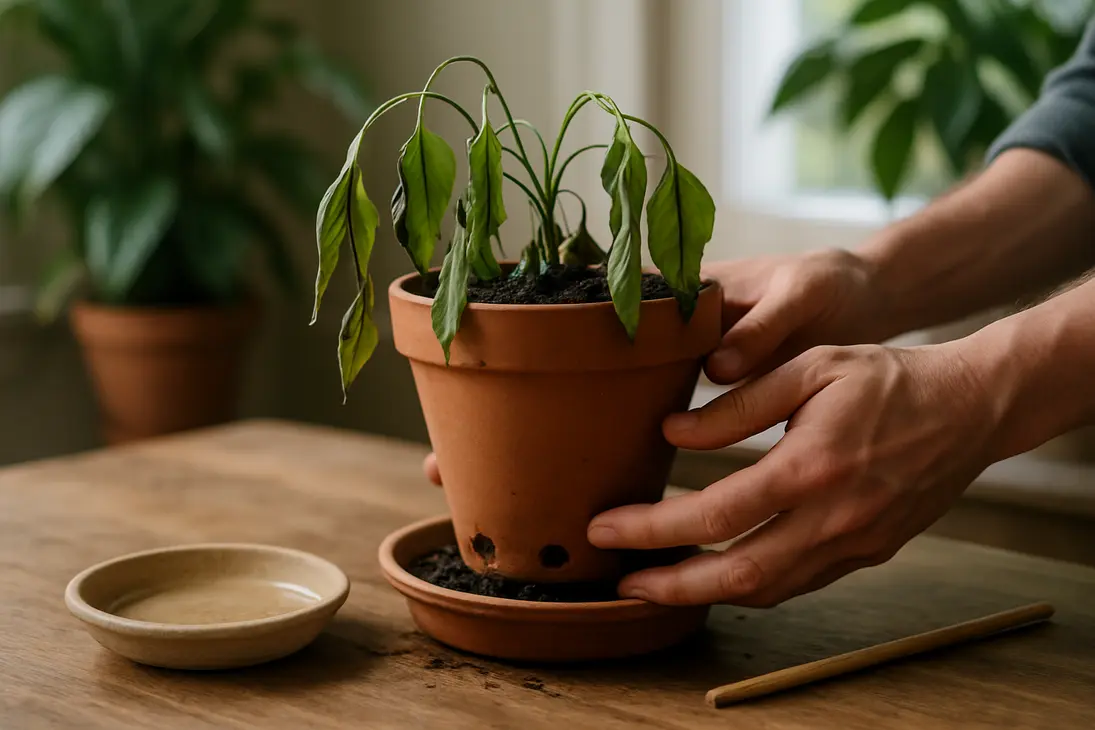
Warning signs of overwatering include wilting in wet soil, yellow lower leaves, fungus gnats, sour-smelling soil, and persistently limp growth.
Keep feeding modest while fruit is developing
A fruiting plant still needs nutrients, but indoor growth is usually slower. Heavy feeding can push soft leafy growth, stress roots, or cause fertilizer salts to build up.
If the plant was already on a reasonable feeding schedule, continue lightly according to the fertilizer label. Do not increase fertilizer to compensate for weak light, cold roots, wet soil, or pest damage.
For tomatoes and peppers, steady watering is especially important. Blossom end rot is often tied to inconsistent calcium movement within the plant, which is strongly affected by water stress. In containers, alternating between very dry and soaked soil can make problems worse.
Maintain airflow, warmth, and humidity without stressing the plant
Indoor air is usually still. Gentle airflow helps reduce fungal problems and strengthens stems, but avoid harsh drafts. A small fan nearby can help if it does not blast the plant constantly.
Warm-season vegetables prefer stable warmth. Keep tomatoes, peppers, eggplants, cucumbers, and squash away from cold windows at night, frequently opened doors, heaters, and vents.
Very dry air can stress plants and encourage spider mites. Very humid, stagnant air can encourage disease. Good spacing, careful watering, and gentle airflow are usually enough.
Watch for Stress, Pests, and Fruit Development Problems
After moving the plant indoors, check it often but do not keep changing its care. Some adjustment is normal. The goal is to spot serious problems early.
Normal short-term adjustment vs. serious decline
Normal adjustment can include:
- A few yellow lower leaves
- Slight wilting soon after the move
- Dropping some open flowers
- Slower new growth
- Slower fruit sizing or ripening
More serious warning signs include:
- Wilting while soil is wet
- Rapid yellowing throughout the plant
- Sticky leaves or visible pest colonies
- Fine webbing
- Mold on the soil surface
- Tiny fruits repeatedly shriveling
- Sour-smelling potting mix
- Collapsing or blackening stems
If the plant declines quickly, check soil moisture and drainage first, then pests, then light. Many indoor vegetable problems come from low light combined with too much water.
What to do if new flowers open indoors
If new flowers open indoors, decide whether the plant should keep producing or focus on existing fruit.
With limited light, it is often better to remove some new flowers so energy goes to fruit already developing. This is especially useful late in the season after frost forces the plant inside.
Under strong grow lights, peppers and compact tomatoes may support some new flowers. If fruit continues sizing up and leaves stay healthy, you can leave them. If flowers drop repeatedly or fruit stalls, reduce the load.
For cucumbers, squash, and melons, new flowers are less useful unless you can hand-pollinate and provide strong light.
When hand-pollination may still be needed
Fruit that is already developing does not need to be pollinated again. New flowers may need help indoors.
Tomatoes are self-pollinating but benefit from movement. Gently tap flower clusters or use an electric toothbrush near the flower stem for a few seconds during the day.
Peppers and eggplants are also self-fertile. Gentle tapping or light brushing inside the flower can help where airflow is minimal.
Cucumbers, squash, pumpkins, and melons usually have separate male and female flowers. Without bees, hand-pollination is often necessary. The female flower has a tiny fruit-like swelling behind it; the male flower has a slender stem. Transfer pollen from a freshly opened male flower to the center of a freshly opened female flower with a small brush, or touch the male flower’s pollen-bearing parts directly to the female flower.
Beans and peas are usually self-pollinating and need little help.
Hand-pollination only solves pollen transfer. It cannot make up for weak light, soggy soil, or a severely stressed plant.
Conclusion
Pollinated potted vegetable plants can be moved indoors, especially to protect them from frost, storms, pests, or damaging temperatures. The best candidates are healthy container plants with fruit already beginning to develop. Peppers, compact tomatoes, herbs, and some pod crops are usually easier than large vining vegetables.
The main challenge is indoor care after the move. Fruiting vegetables need brighter light than most people expect, less frequent watering than they needed outdoors, good drainage, pest monitoring, and stable temperatures. Some flower or fruit drop is normal, but rapid decline usually points to low light, wet soil, pests, or environmental shock.
Inspect the plant before bringing it in, quarantine it away from houseplants, place it in the brightest possible location, and adjust watering to indoor conditions. With those basics covered, already-pollinated fruits often have a good chance of continuing to grow and ripen.
FAQ
Will fruit keep growing after I bring a pollinated plant indoors?
Yes. Fruit can keep growing indoors if the plant has enough light, water, nutrients, warmth, and healthy leaves. Fruit that is already well formed is more likely to finish than fruit that has just barely set.
Peppers and mature green tomatoes often do reasonably well indoors. Very young cucumbers, squash, and melons are more likely to stall or drop without strong light.
Do I need to hand-pollinate again once the plant is inside?
Not for fruit that is already successfully pollinated and growing. That flower does not need to be pollinated again.
You may need to hand-pollinate new flowers that open indoors. Tomatoes, peppers, and eggplants may only need gentle tapping or vibration. Cucumbers, squash, melons, and pumpkins usually need pollen moved from male flowers to female flowers if insects are absent.
Can I bring tomato or pepper plants indoors before frost?
Yes. Potted tomatoes and peppers can be brought indoors before frost to save developing fruit. Move them before damaging cold arrives, inspect for pests, and give them the brightest window or grow light setup possible.
Mature green tomatoes may ripen even if the plant slows down. Already-set peppers often continue coloring indoors. If plants are large and light is limited, remove weak flowers and focus on fruit already present.
Why are my potted vegetable plants dropping flowers or tiny fruits indoors?
The most common reasons are low light, move shock, overwatering, underwatering, temperature stress, pests, or incomplete pollination. Indoors, the plant gets less light and usually uses water more slowly, so it may drop flowers or tiny fruits it cannot support.
Check light, soil moisture deeper in the pot, drainage, drafts, heater blasts, and pests on leaf undersides. If cucumbers, squash, or melons are opening new flowers indoors, hand-pollination may also be needed.
You Might Also Like