Bonsai Tree Sprouting: What to Do With New Shoots and Multiple Sprouts
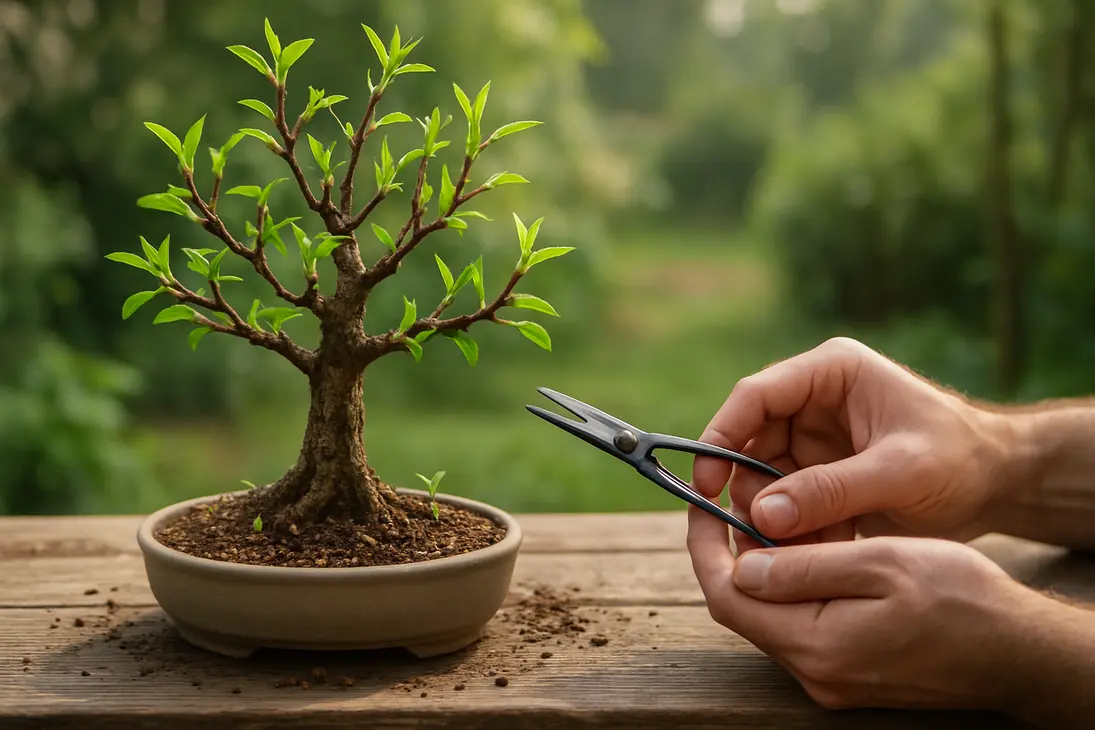
When you notice a bonsai tree sprouting, do not cut immediately. First identify what is sprouting. New growth can be a healthy seasonal sign, especially in spring or after pruning. It can also be a sucker, weed seedling, rootstock growth, or weak stress growth from a tree trying to recover.
The right response depends on where the sprout appears, the tree’s health, the species, and whether the growth helps the design. Some shoots should be kept to build branches, improve structure, or thicken the trunk. Others should be removed before they waste energy, crowd the tree, or create swelling in the wrong place.
First, Identify What Is Sprouting
Before pruning, separating, or wiring anything, inspect the new growth carefully.
| Where the sprout appears | What it may be | Usual action |
|---|---|---|
| On an existing branch | Normal new shoot | Usually keep until it extends, then prune or pinch if needed |
| On the trunk | Useful back-bud or unwanted trunk shoot | Keep only if it helps the design |
| At the base of the trunk | Sucker, basal shoot, or rootstock growth | Often remove unless needed |
| From the soil, separate from the trunk | Weed or volunteer seedling | Usually remove or separate |
| After hard pruning | Back-budding or stress response | Let the tree recover before heavy selection |
New shoots on branches or trunk
Fresh shoots on branches are usually normal bonsai growth. They often appear in spring, after warm weather, after pruning, or once a recently repotted tree begins recovering.
On deciduous bonsai such as maple, elm, hornbeam, and beech, shoots may emerge from buds along branches. Tropical bonsai such as ficus can push new growth repeatedly in warm, bright conditions. Conifers behave differently: junipers extend soft growing tips, while pines produce candles.
Trunk shoots can be useful if they appear where you need a new branch, want help healing a scar, or need temporary growth to thicken part of the trunk. However, several shoots from one spot can create swelling or reverse taper, so do not keep them all long-term.
Sprouts from the base or roots
Sprouts from the base of the trunk or exposed roots are usually suckers or basal shoots. They are common on vigorous trees and may also appear from rootstock on grafted plants.
A basal shoot is not always bad. It can sometimes serve as a sacrifice branch to thicken the lower trunk, help develop a clump style, or replace missing low growth. Most, however, compete with the main trunk and can spoil the nebari, or visible surface roots.
If a shoot comes from below a graft union, it may be genetically different from the desired top of the tree and should usually be removed. Rootstock growth can be more vigorous and may weaken the grafted portion.
Seedlings growing in the pot
Tiny plants sprouting from the soil are often not part of the bonsai. Seeds may arrive in potting media, blow in from nearby plants, fall from decorative moss, or germinate from weeds.
A seedling usually has its own stem emerging from the soil, separate from the bonsai trunk. Its leaves may look different from the bonsai’s foliage. A grass-like sprout in a ficus pot or a broadleaf seedling in a juniper pot is almost certainly not bonsai growth.
Remove unwanted seedlings while small. Hold the soil steady and gently pull the seedling. If it resists, snip it at soil level rather than tearing up bonsai roots.
Buds appearing after pruning or seasonal growth
Buds after pruning are often normal. When you cut back a branch, the tree may activate dormant buds behind the cut. This back-budding is useful for creating compact branch structure.
Season matters. Spring growth is expected on most temperate trees. Summer growth may be a second flush on vigorous deciduous or tropical bonsai. Autumn growth can occur after warm weather or feeding, but tender late growth may not harden before winter on outdoor species.
Buds can also appear after stress from heat, underwatering, pests, leaf loss, or hard pruning. If the tree is recovering, do not rush into styling. Let the new growth strengthen the tree first.
Should You Keep, Remove, or Separate Multiple Bonsai Sprouts?
Keep growth that improves the bonsai and remove growth that wastes energy or causes future problems. Beginners often clean up too much too soon. In most cases, observe first and cut gradually.
Keep sprouts that improve branch structure
Keep a sprout if it helps solve a design problem. Useful sprouts may:
- Fill an empty area
- Grow on the outside of a curve
- Point in a useful direction
- Appear where a first branch is needed
- Serve temporarily as a sacrifice shoot
- Replace a dead, weak, or poorly placed branch
Also consider balance. Strong top growth can dominate many species and weaken lower branches. You may need to control upper shoots more often while allowing lower shoots to strengthen.
Remove weak, crowded, crossing, or badly placed shoots
Remove sprouts that are unlikely to help the tree, including:
- Shoots growing straight up from a branch, unless temporarily useful
- Shoots growing downward
- Crossing or rubbing shoots
- Shoots growing inward toward the trunk
- Multiple shoots from the same point
- Weak, pale, stretched shoots from low light
- Base suckers that compete with the trunk
- Shoots below a graft union
When several shoots emerge together, choose the best one or two once they are easy to compare. Leaving too many can create swelling or reverse taper.
Use clean, sharp scissors or bonsai shears. Soft green shoots can sometimes be pinched off, but avoid tearing bark or peeling tissue.
Avoid removing too much growth at once
New shoots make food for the tree. Removing too much foliage, especially from a weak bonsai, reduces its ability to recover.
Avoid combining major stresses such as heavy pruning, repotting, root pruning, wiring, and defoliation. A strong tree can handle more than a weak, newly purchased, recently shipped, or newly repotted tree, but timing still matters.
A safe beginner approach is:
- Remove weeds and obvious seedlings.
- Remove rootstock suckers or base shoots you are sure you do not want.
- Let uncertain shoots grow for a few weeks.
- Select the best shoots once their direction is clear.
- Prune in stages rather than stripping the tree.
When separating seedlings is possible—and when it is not worth it
You can grow a separate plant from a sprout only if it is a true seedling with its own roots. If the sprout is attached to the bonsai’s trunk or root system, it is not an independent plant. Cutting and potting it usually will not work unless treated as a cutting and the species roots readily.
Separating is worthwhile when the seedling is clearly separate, has roots, is a species you want, and can be removed without disturbing the bonsai. Random weeds, grass, or unknown seedlings are usually not worth saving.
If you do separate one, use a small pot with free-draining soil, water gently, and protect it from harsh sun and wind while it recovers.
How to Care for a Bonsai That Is Actively Sprouting
Active sprouting means the tree is using water, light, and nutrients to build new tissue. Keep conditions steady. Most problems come from overreacting with too much water, too much fertilizer, sudden moves, or constant pruning.
Water when the top layer starts to dry
Do not water on a fixed calendar. Check the soil surface daily during active growth. When the top layer begins to dry, water thoroughly until water runs from the drainage holes. Then let the soil begin to dry again before watering.
Watering frequency depends on species, pot size, soil mix, temperature, wind, sun exposure, indoor humidity, and foliage mass. New sprouts look delicate, but constantly wet soil can be more dangerous than brief surface dryness. Roots need oxygen as well as moisture.
Give enough light for strong, compact growth
Weak light produces long, pale, stretched shoots. Suitable bright light produces stronger growth, better leaf color, and shorter internodes.
Outdoor species such as juniper, pine, maple, elm, and many flowering trees generally belong outdoors, where they receive natural light, airflow, and seasonal changes. Tropical bonsai such as ficus, schefflera, jade, and some serissa can grow indoors if they receive very bright light, often with help from grow lights.
Change light gradually. A tree moved suddenly from shade or indoors into intense sun can scorch.
Use well-draining bonsai soil
Bonsai pots are small and shallow, so soil structure matters. Garden soil is usually too dense. It can compact, drain poorly, and suffocate roots.
Good bonsai soil holds some moisture while allowing air and excess water to move through. Many mixes use particles such as pumice, lava rock, akadama, bark, grit, or similar coarse materials. The right mix depends on climate, species, and watering habits.
If a sprouting bonsai sits in soggy, slow-draining soil, improve watering now and plan a proper repot at the correct season. Do not heavily disturb a weak tree at the wrong time unless it is in serious trouble.
Avoid fertilizing too heavily during delicate new growth
New growth needs nutrients, but heavy feeding is not always better. Too much fertilizer can push coarse, leggy growth and may stress weak, dry, or newly repotted trees.
For a healthy tree in active growth, use a balanced bonsai fertilizer or suitable general fertilizer at a modest label rate. For a weak tree, wait until it shows steady recovery. The aim is controlled vigor, not forced growth.
When to Prune, Pinch, or Wire New Bonsai Growth
New sprouts are tempting to shape immediately, but timing matters. Very young shoots are soft and easy to damage. Older shoots may become too stiff to bend safely.
Let new shoots grow before shaping decisions
In many cases, let shoots extend before deciding what to keep. This shows which shoots are strong, where they are heading, how long the internodes are, and whether the tree is healthy enough for work.
For developing bonsai, growth is necessary. If you cut every shoot immediately, the tree may never build trunk thickness or branch structure. Refined bonsai may need earlier control, but only when healthy and already well-developed.
Pinching vs pruning: when each makes sense
Pinching removes the soft growing tip while the shoot is tender. It is mainly used to control extension and encourage finer growth on refined trees.
Pruning cuts a shoot after it has extended and begun to mature. It is used to set length, create taper, encourage back-budding, and maintain structure.
For beginners, pruning is often safer than constant pinching. Let a shoot grow several leaves or nodes, then cut back with a purpose. Species matters: pine candle work, juniper trimming, maple pruning, and ficus pruning are not the same.
Wiring young shoots without damaging them
Wire young shoots when they are firm enough to hold shape but still flexible. If a shoot is soft and easily bruised, wait. If it has hardened and resists bending, forcing it may crack.
Use wire strong enough to hold the branch but not so thick that it crushes bark. Wrap gently and check often, because shoots thicken quickly during active growth and wire can bite in.
For tender growth, clip-and-grow may be safer: let a shoot extend, prune back to a bud pointing the desired way, and repeat over time.
Seasonal timing matters by species
There is no universal bonsai pruning calendar. Temperate deciduous trees, conifers, broadleaf evergreens, tropical trees, and flowering species respond differently.
General guidelines:
- Many deciduous trees are pruned during active growth for shape and in dormancy for structure.
- Tropical bonsai can often be pruned during warm, bright active growth.
- Junipers should not be stripped of all growing tips.
- Pines need species-specific candle and needle work.
- Flowering bonsai may lose blooms if pruned at the wrong time.
- Weak or recently repotted trees should recover before styling.
If you do not know the species, identify it before major cuts. “Bonsai” is a training method, not a plant type.
Common Mistakes With Bonsai Sprouts
Most mistakes come from reacting too quickly: overwatering because sprouts look fragile, keeping every new shoot, or pruning everything for a tidy outline. A calmer approach works better.
Mistaking weeds or volunteer seedlings for bonsai growth
A green plant in the pot is not necessarily part of the bonsai. Compare the leaves to the tree’s foliage and check whether the stem connects to the trunk.
Weeds use water and nutrients, hide the soil surface, and make watering harder to judge. Some develop strong roots quickly in a small pot. Remove unknown seedlings early, or transplant one separately if you want to experiment.
Overwatering because new sprouts look fragile
Fresh sprouts can wilt if the tree dries severely, but constantly wet soil is not the answer. Overwatering reduces oxygen around roots and can lead to root rot, especially in dense soil or low indoor light.
Water thoroughly when needed, then wait until the top layer begins to dry. If the tree dries too fast, consider better soil, a slightly larger training pot, temporary shade during extreme heat, or wind protection.
Using regular garden soil in a bonsai pot
Garden soil can become compacted mud in a shallow bonsai container. This is risky because new foliage increases water demand while compacted soil limits root health.
Warning signs include water pooling on the surface, sour smell, fine particles washing from drainage holes, soil staying wet too long, or new growth that starts well but weakens later. If the tree is healthy, repot into proper bonsai soil at the right time.
Expecting seed-grown bonsai to look mature quickly
If the sprouts are seedlings, they are not instant bonsai. Seed-grown bonsai usually spend years developing trunk character, taper, and branch structure.
Seedlings can be rewarding long-term projects, but nursery stock or pre-bonsai material is faster for practicing styling. Let seedlings grow strongly in suitable containers before moving them into shallow bonsai pots.
Pruning every new shoot too soon
Constantly cutting new shoots can weaken a bonsai and prevent development. Leaves feed the tree, shoots thicken branches, and extension growth can build taper.
Before cutting, ask whether the shoot helps the design, strengthens the tree, causes crowding, or is appropriate to prune in the current season. If you are unsure, wait.
Conclusion
When a bonsai tree is sprouting, first identify the growth. Shoots on branches may be healthy new growth. Sprouts from the base may be suckers. Tiny plants in the soil may be weeds or volunteer seedlings. Buds after pruning may be useful back-budding or recovery growth.
Keep sprouts that improve future structure, fill needed spaces, or strengthen the tree. Remove weak, crowded, crossing, badly placed, or competing shoots gradually. Do not strip too much growth at once, especially from a weak or recently repotted bonsai.
Support active growth with proper watering, enough light, well-draining soil, and modest fertilizer. Let new shoots grow long enough to judge them, then prune, pinch, or wire according to the species and the tree’s condition.
The best response to multiple bonsai sprouts is careful selection, not panic.
FAQ
Should I cut off new sprouts on my bonsai tree?
Not automatically. Keep sprouts that help the design, such as a well-placed branch or a shoot that fills an empty area. Remove weak, crowded, crossing, basal, or rootstock shoots. If the tree is weak or recently stressed, leave more foliage until it recovers.
Why are tiny plants sprouting from my bonsai soil?
They are often weed seedlings or volunteer seedlings from windblown seeds, contaminated soil, nearby plants, or decorative moss. If the sprout emerges separately from the bonsai trunk and has different leaves, it is probably not part of the bonsai. Remove it while small.
Can I grow a bonsai from one of the sprouts in the pot?
Yes, if it is a true seedling with its own roots and a species worth growing. Lift it carefully, pot it separately in free-draining soil, and grow it as a young tree. If it is attached to the bonsai’s trunk or roots, it is a sucker, not an independent seedling.
How long should I wait before pruning new bonsai shoots?
Wait until the shoot has extended enough to show direction and strength. In many beginner situations, let it grow several leaves or nodes, then prune back with a purpose. Refined trees may be pinched sooner, while weak or recently repotted trees should grow longer before pruning.
You Might Also Like