Are There Any Fly Species Called “Time Flies”?
“Time flies” is a familiar phrase, but it is not the name of a recognized fly species. If you are searching for time flies species, the accurate answer is: no known insect group or standard common name is formally called “time flies.”
Most searches for this term come from confusion with another insect name, a typo, a pun, or an attempt to identify flies that appear at a certain season, time of day, or place in the home or garden. The better next step is to identify the insect by its body, wings, behavior, and breeding source.
What “Time Flies” Means in Relation to Fly Species
In everyday English, “time flies” means time seems to pass quickly. In entomology, it is not a scientific category, genus, species, family, or standard common name.
Scientific names follow a formal system, such as Musca domestica for the common house fly. Common names are less formal, but names like “house fly,” “fruit fly,” “drain fly,” and “cluster fly” still refer to recognizable insects or groups. “Time fly” does not work that way in standard insect identification.
When people use the term, they usually mean one of these things:
- They wonder whether the phrase “time flies” is literal.
- They are confusing it with another insect name.
- They are seeing insects at a certain time of year.
- They notice flies at a certain time of day.
- They have a recurring household or garden pest.
This distinction matters because fly control depends on the actual insect. Fruit flies near produce, fungus gnats in potting mix, drain flies in plumbing slime, and cluster flies overwintering indoors all require different responses.
Are There Any Insects Commonly Mistaken for “Time Flies”?
Several insects could be behind a search for “time flies species.” Some are true flies, some are not, and some are only called “flies” casually.
Common sources of confusion include:
- Mayflies, because their adult lives are short and their name sounds time-related.
- Fruit flies, which appear quickly around ripening or fermenting produce.
- House flies, which become more obvious in warm weather.
- Fungus gnats, often mistaken for tiny flies around houseplants.
- Drain flies, which appear in bathrooms, kitchens, and damp drains.
- Cluster flies, which may appear indoors during warm spells in cooler months.
- Seasonal swarms, where insects emerge together after rain, warmth, or improved breeding conditions.
A useful first question is whether the insect has one pair of wings or two. True flies have one pair of functional wings. Many other insects with “fly” in the name are not true flies.
Mayflies Are Not True Flies
Mayflies are a common source of confusion because their name includes “fly,” and their adult stage is famously brief. That short adult life can make them seem connected with time. Still, mayflies are not “time flies,” and they are not true flies.
Mayflies belong to the insect order Ephemeroptera, not Diptera. Their young live in water, and adults often emerge in large numbers near rivers, lakes, ponds, and streams. Many adult mayflies do not feed; their main purpose is reproduction. Depending on the species and conditions, adults may live from a short period to a few days.
You may be seeing mayflies if the insects:
- Appear near water.
- Have delicate, upright wings when resting.
- Have two or three long tail-like filaments.
- Emerge in large numbers during a short seasonal window.
- Are attracted to lights near waterfront areas.
Mayflies are usually a nuisance rather than a household or garden pest. They do not breed in fruit bowls, houseplant soil, drains, or kitchen scraps. If they gather around outdoor lights, reducing unnecessary night lighting during emergence periods can help.
True Flies Belong to Diptera
True flies belong to the order Diptera, a name that means “two wings.” Most adult true flies have one pair of functional wings and a second pair of small balancing organs called halteres.
Common true flies include:
- House flies
- Blow flies
- Flesh flies
- Fruit flies
- Fungus gnats
- Drain flies
- Mosquitoes
- Midges
- Crane flies
- Cluster flies
Common names can be misleading. A dragonfly, butterfly, and mayfly are not true flies. A fungus gnat, despite lacking “fly” in its common name, is a true fly.
For gardeners and homeowners, the practical difference is important. True fly problems often trace back to a breeding source: wet organic matter, decaying produce, manure, compost, drains, carrion, or moist potting mix. Finding that source is usually more effective than swatting adults.
Why Some Flies Seem Linked to Certain Times
Although there are no recognized “time flies species,” many flies feel time-linked because their activity follows predictable patterns. Insects respond to temperature, day length, moisture, food availability, and breeding habitat. When those conditions align, a population may seem to appear suddenly.
In a garden, that might happen after compost becomes too wet, fruit drops under a tree, mulch stays damp, or warm weather speeds development. Indoors, it might happen after produce sits too long, a floor drain develops organic buildup, or a houseplant stays consistently wet.
The timing can be consistent from year to year because local weather and plant cycles repeat. You may notice small flies around seedlings every spring because seed-starting trays are warm and moist, or more house flies in summer when doors are open and outdoor breeding material is abundant.
Seasonal Fly Activity
Fly activity usually increases in spring and summer because warmth speeds development. Eggs hatch faster, larvae feed more actively, and adults move more. Moisture also matters. Damp soil, compost, manure, rotting fruit, and algae-rich drains can all support different fly groups.
Common seasonal examples include:
- Fruit flies increasing around ripe or fermenting fruit, tomatoes, melons, and kitchen produce.
- House flies becoming more noticeable in warm months around garbage, manure, pet waste, and food scraps.
- Fungus gnats becoming common in seed-starting season, greenhouses, and overwatered houseplants.
- Drain flies appearing when drains or damp plumbing areas contain organic film.
- Cluster flies appearing indoors in fall, then reappearing on warm winter or spring days.
In gardens, seasonal swarms are not always harmful. Some flies are pollinators, decomposers, or food for wildlife. Others are pests only when they breed near living spaces or damage seedlings, roots, fruit, or stored food. Identify the insect before deciding whether action is needed.
Time-of-Day Activity
Flies can also seem tied to the clock. Some are most active in daylight, while others are noticed at dusk, around lights, or in damp areas at night.
House flies are usually more noticeable during the day, especially near windows, doors, kitchens, patios, livestock areas, or compost. Fruit flies may be visible throughout the day but become especially annoying when people prepare food. Fungus gnats often hover near houseplants, seed trays, and windows.
Drain flies may appear near sinks, showers, basement drains, or laundry areas after a room has been quiet. Some small flies and gnats gather near lights in the evening, making them seem as if they arrive at the same time each night.
Time-of-day behavior can help with identification, but it is not enough by itself. Light, humidity, temperature, air movement, and nearby food sources all affect insect behavior.
How to Identify the Fly You’re Looking For
If “time flies” brought you here because you are trying to name an insect, focus on observable clues. You do not need a microscope for a first pass, but you do need to note details.
Look at:
- Size: Tiny, mosquito-sized, or house-fly-sized?
- Color: Tan, black, gray, metallic, fuzzy brown, or patterned?
- Wings: Clear, patterned, roof-like, upright, hairy, or held flat?
- Body shape: Slender, humpbacked, fuzzy, broad, or delicate?
- Location: Kitchen, bathroom, houseplant soil, compost, lawn, pond edge, greenhouse, window?
- Behavior: Hovering, crawling on drains, circling fruit, resting on windows, swarming near lights?
- Breeding source: Wet soil, ripe fruit, garbage, drains, manure, dead animals, decaying leaves, damp mulch?
- Number of wings: One visible pair suggests a true fly; two pairs may point to another insect group.
A clear photo is often more useful than a long description. Photograph the insect from above and the side if possible, with a size reference such as a coin, ruler, plant label, or fingertip kept safely nearby.
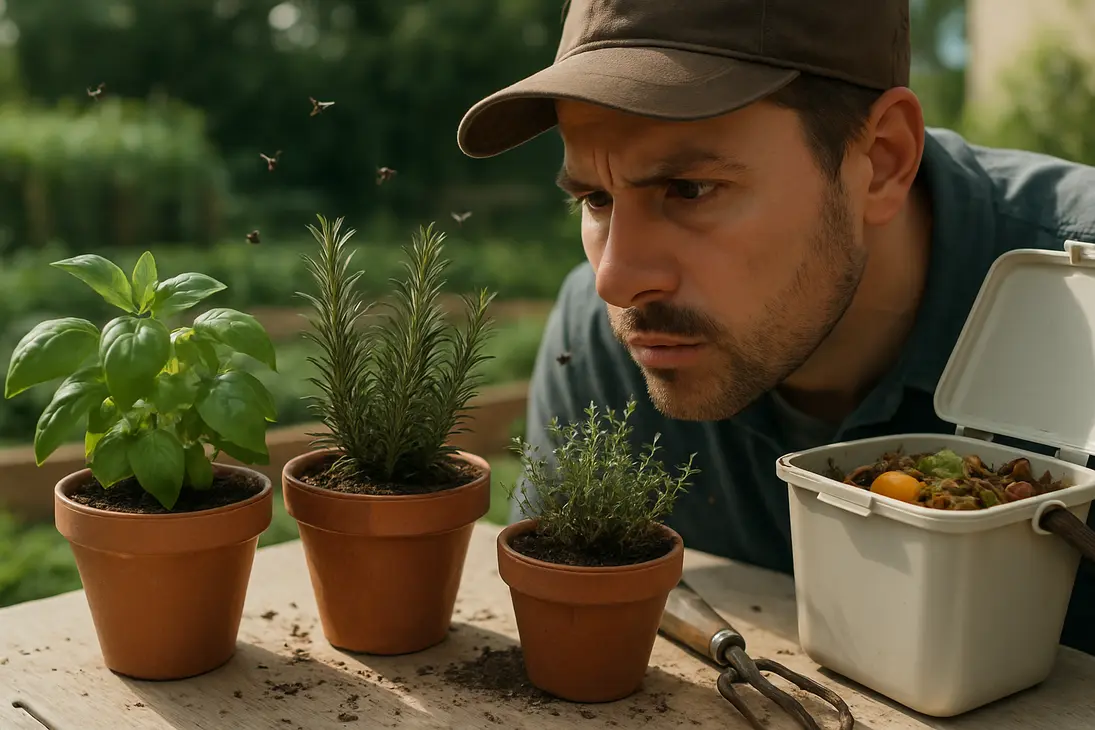
For gardeners and houseplant growers, the breeding source is often the fastest clue. Tiny dark insects rising from potting mix usually suggest fungus gnats. Small tan flies around fermenting produce suggest fruit flies. Fuzzy moth-like insects near drains suggest drain flies. Large slow flies at sunny windows in cool seasons may be cluster flies.
Common Household Fly Clues
The table below can help narrow down common “mystery fly” situations. These are practical clues, not a substitute for expert species-level identification.
| Insect commonly noticed | What it often looks like | Common source | Practical first step |
|---|---|---|---|
| House fly | Medium gray fly; quick, active | Trash, manure, food waste, pet waste | Remove waste, improve screens, cover bins |
| Fruit fly | Very small tan or brown fly near food | Overripe fruit, fermenting liquids, residues | Remove produce, clean containers, empty compost |
| Drain fly | Tiny fuzzy or moth-like fly | Organic film inside drains or damp plumbing | Scrub drain interiors and remove slime |
| Fungus gnat | Tiny dark gnat with delicate body | Wet potting mix, algae, decaying organic matter | Let mix surface dry; avoid overwatering |
| Cluster fly | Larger, slow fly at windows | Adults overwintering indoors | Seal gaps; vacuum adults; focus on exclusion |
A few notes can prevent common mistakes:
- Fruit flies and fungus gnats are often confused. Fruit flies stay close to fermenting produce or residues. Fungus gnats are tied to moist soil and potting media.
- Drain flies are not solved by spraying the air. The breeding film inside drains must be cleaned out.
- Cluster flies are not usually breeding in your kitchen. They often entered earlier through gaps and become active when warmed by sun.
- House flies often indicate sanitation or access issues. Open doors, torn screens, uncovered bins, pet waste, or nearby livestock can contribute.
- Not every small flying insect is a fly. Winged aphids, small wasps, termites, ants, and moths may be mistaken for flies.
In gardens, also check compost piles, dropped fruit, overwatered containers, damp mulch against structures, and trays under pots.
When to Use a Field Guide or Expert ID
Use a field guide, local extension service, entomology resource, or pest professional when the insect is persistent, biting, damaging plants, appearing in large numbers, or difficult to identify from basic clues.
Species-level identification may matter if:
- The insect is affecting edible crops.
- Seedlings are declining and fungus gnat larvae are suspected.
- Flies keep returning despite cleaning.
- You suspect a sanitation, plumbing, or structural issue.
- You are dealing with biting flies or possible health concerns.
- The insects are swarming and you are unsure whether they are harmless.
For the best identification help, provide clear photos, location, approximate size, time of year, time of day, behavior, suspected breeding source, and general region. If you use a pest control professional, ask what insect they identified and where they believe it is breeding. Good fly management should focus on the source, not just adult insects.
For gardeners, local advice is useful because seasonal emergence differs by region. Weather matters too: a wet spell after warm days can produce a noticeable increase in gnats, midges, mosquitoes, or other fly-like insects.
Conclusion
There are no established time flies species in scientific or standard common-name use. “Time flies” is usually a phrase, typo, pun, or search misunderstanding rather than an insect name.
The confusion is understandable because many flies and fly-like insects are linked to timing. Some emerge seasonally, some appear after rain or warmth, some gather near lights, and some return when breeding conditions repeat. Mayflies are a common source of confusion, but they are not true flies and are not called time flies.
To identify the insect you are seeing, look at its wings, size, color, body shape, location, behavior, and likely breeding source. In homes and gardens, the answer is often a fruit fly, fungus gnat, drain fly, house fly, or cluster fly. Once you know which one you have, control becomes much more practical.
FAQ
Is “time fly” a real insect species?
No. “Time fly” is not a recognized common name or scientific name for a specific insect species. “Time flies” is normally an expression meaning that time passes quickly. If you are seeing insects, you are probably dealing with another fly or fly-like insect.
Are mayflies the same as time flies?
No. Mayflies may be confused with “time flies” because their adult stage is short-lived, but they are not called time flies. They are also not true flies. Mayflies belong to Ephemeroptera, while true flies belong to Diptera.
Why do flies appear at the same time every year?
Flies often appear at the same time each year because their life cycles respond to seasonal conditions. Temperature, moisture, food availability, day length, and breeding sites influence when eggs hatch, larvae develop, and adults become active.
What is the best way to identify an unknown fly?
Observe size, color, wing shape, body shape, location, behavior, and likely breeding source. Note whether it is near fruit, drains, houseplants, compost, windows, water, or outdoor waste. Take clear photos with a size reference, then compare them with reliable identification resources or contact a local extension service, entomology resource, or pest professional.
You Might Also Like