How Do You Save Houseplants With Brown Leaf Tips?
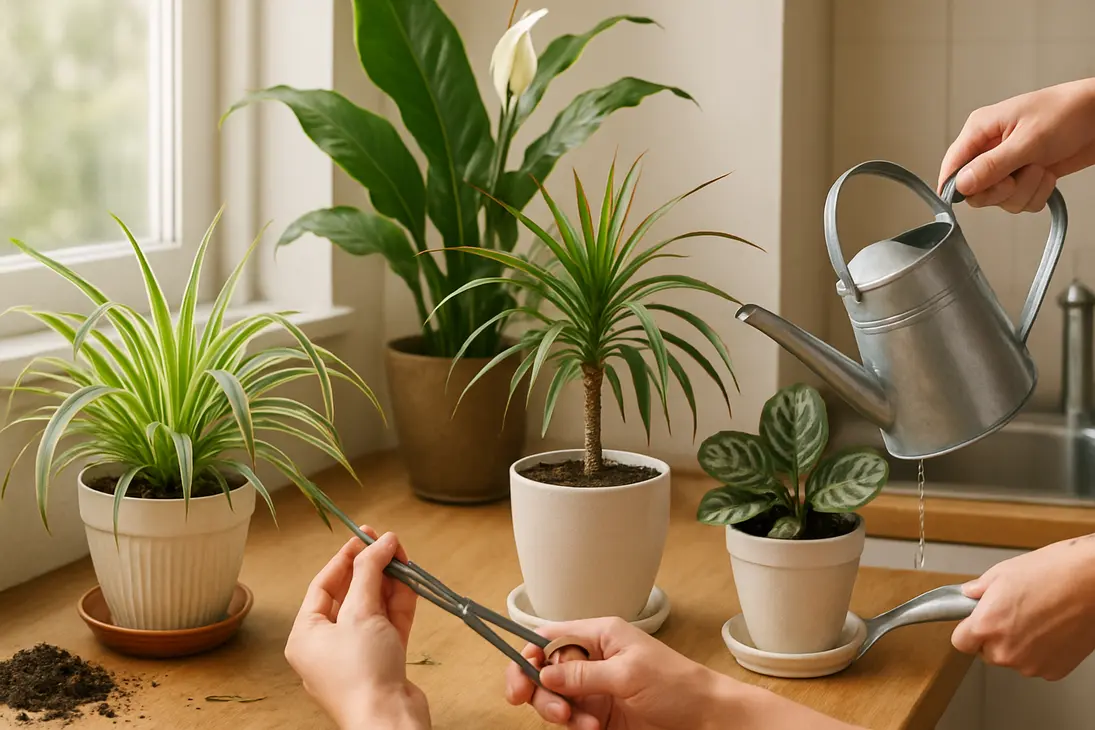
Brown leaf tips are common on spider plants, peace lilies, dracaenas, palms, calatheas, and many other houseplants. They usually do not mean the plant is dying. More often, they are a stress signal.
When saving houseplants with brown tips, look for patterns. A few old tips on older leaves may be normal. Many crispy tips appearing after fertilizing, watering changes, dry air, or a move to brighter light usually point to a care problem.
Understanding Brown Leaf Tips
Why Houseplant Leaf Tips Turn Brown
Leaf tips brown because they are farthest from the roots and often show stress first. Common causes include fertilizer salts, dry soil, dry air, mineral-heavy water, heat, harsh light, or root stress.
Dry, crispy tips are not usually disease. Disease more often causes soft spots, spreading lesions, yellow halos, mushy stems, foul smells, or leaf collapse.
Too Much Fertilizer and Salt Buildup
Over-fertilizing is one of the most common causes of brown, crispy tips. Fertilizer contains soluble salts. In excess, they build up in the potting mix and make it harder for roots to absorb water.
This often happens when people fertilize weak plants, feed during winter, exceed label rates, combine fertilizer products, or apply fertilizer to dry soil.
Underwatering or Inconsistent Watering
When potting mix dries too far, plants may sacrifice leaf tips and edges first. Repeated cycles of bone-dry soil followed by heavy soaking also stress fine roots.
Snake plants tolerate dryness well. Peace lilies, ferns, and other moisture-loving plants show stress much faster.
Dry Indoor Air and Low Humidity
Many houseplants are grown in humid greenhouse conditions, then moved into much drier homes. Heating and air conditioning can make this worse.
Thin-leaved plants such as calatheas, ferns, peace lilies, and some palms often respond with brown tips or edges. Low humidity may not be the only cause, but it can intensify underwatering and fertilizer burn.
Tap Water Minerals, Fluoride, or Chlorine
Some plants are sensitive to minerals or additives in tap water. Spider plants, peace lilies, calatheas, and dracaenas are often linked with brown tips from hard or treated water.
Tap water is not always a problem. But if watering, fertilizer, light, and heat seem appropriate, water quality is worth checking.
Light Stress or Heat Exposure
Brown tips and edges can appear when plants sit in harsh direct sun, touch hot glass, or stand near radiators, vents, or heat-producing appliances. Sudden intense sun can scorch foliage, even on plants that like bright light.
Heat also dries the pot faster, so sun stress and underwatering often appear together.
How to Tell If Over-Fertilization Is the Problem
Brown tips can look similar across several causes, so look for several clues before blaming fertilizer.
Brown, Crispy Tips or Edges
Fertilizer burn often appears as dry tan to dark brown tips. Damage may extend slightly along leaf edges, especially on narrow leaves such as spider plant foliage.
If brown areas are wet, black, mushy, foul-smelling, or spreading quickly in patches, consider rot, disease, cold damage, or another injury instead.
White Crust on Soil or Pot Edges
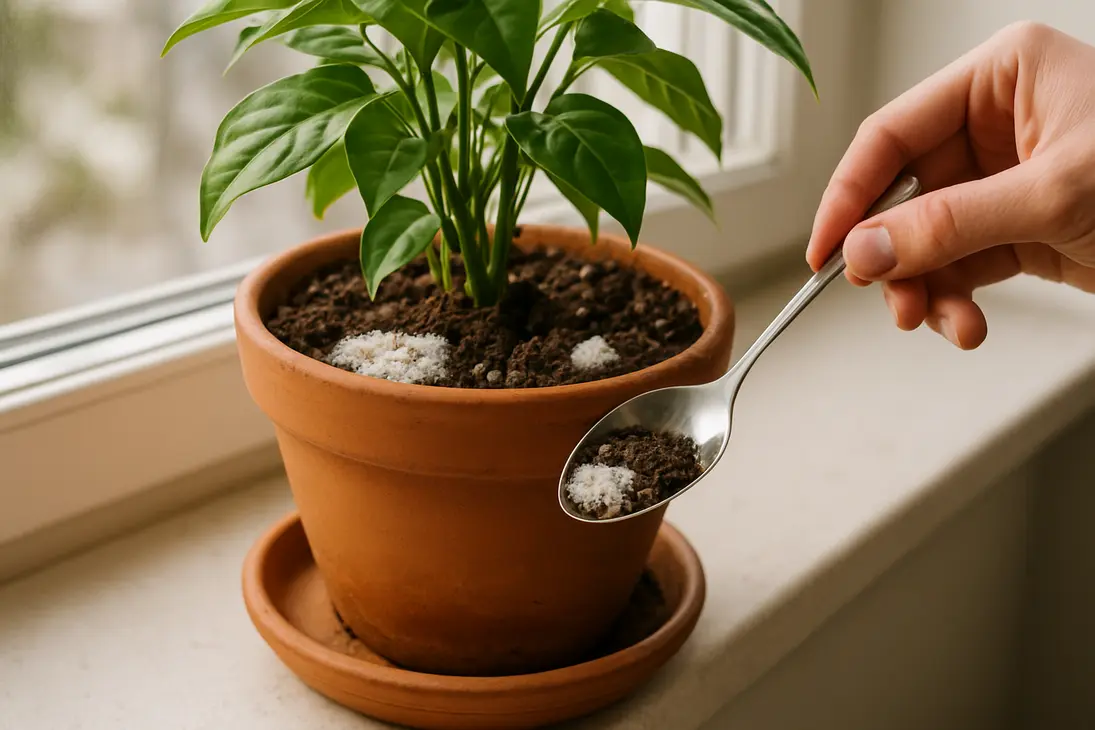
A pale, chalky, or crusty layer on the soil surface, pot rim, drainage holes, or saucer often indicates mineral or fertilizer salt buildup. It is common in plants that are fertilized often, watered lightly, or left sitting in saucer water.
Wilting Despite Moist Soil
A plant that wilts while the soil is moist may have damaged or stressed roots. Too much fertilizer can interfere with water uptake, but overwatering and root rot can cause the same symptom.
Healthy roots are usually firm and light-colored to tan. Rotten roots are dark, soft, slimy, and often sour-smelling.
Yellowing Leaves Alongside Brown Tips
Yellow leaves with brown tips can happen when roots are stressed by excess fertilizer. The plant may shed older leaves while recovering.
Yellowing can also come from overwatering, low light, nutrient deficiency, or normal aging, so use this clue with others.
Recent Fertilizer Use or “More Is Better” Feeding
Ask yourself:
- Did you fertilize recently, especially at full strength?
- Did you fertilize a dry plant?
- Have you been feeding during slow winter growth?
- Did you combine liquid feed, spikes, or slow-release granules?
- Did the tips brown soon after feeding?
If the timing lines up, fertilizer burn or salt buildup is likely.
| Clue | Fertilizer burn likely? | What else it could be |
|---|---|---|
| Brown crispy tips after feeding | Yes | Underwatering, heat |
| White crust on soil or pot | Yes | Hard water minerals |
| Wilting in moist soil | Possible | Root rot, compacted soil |
| Brown tips near heat vent | Possible | Dry air, heat stress |
| One old leaf browning | Less likely | Normal aging |
Saving a Houseplant With Brown Tips
How to Save a Houseplant With Brown Tips From Too Much Fertilizer
If fertilizer burn seems likely, reduce salts around the roots, stop adding stress, and wait for healthy new growth.
Stop Fertilizing Immediately
Do not add more fertilizer to help the plant recover. A stressed plant cannot use extra nutrients well, and more salts can worsen the damage.
Pause feeding until the plant is actively producing healthy new growth again. Remove visible fertilizer spikes. If slow-release pellets are heavily mixed through the soil and the plant is declining, repotting may be safer.
Flush the Soil Thoroughly
Flushing washes excess soluble salts from the potting mix.
To flush a houseplant:
- Move it to a sink, tub, shower, or outdoor area.
- Make sure the pot has drainage holes.
- Slowly pour room-temperature water over the soil.
- Let water drain freely from the bottom.
- Continue with several pot volumes of water.
- Let the pot drain completely before returning it.
Do not flush a pot with no drainage holes. Repot into a draining container instead. If the mix is compacted, sour, or water-repelling, repotting may work better than flushing.
Check Drainage and Empty the Saucer
After flushing, empty the saucer. Runoff may contain the salts you just washed out.
If water drains slowly, check for blocked holes, compacted mix, or a decorative outer pot holding water around the nursery pot. Stressed roots need both moisture and oxygen.
Trim Brown Tips Without Cutting Healthy Tissue
Brown tips will not heal, so trimming is cosmetic. Use clean, sharp scissors and cut only the dead brown part. Leave a very thin brown edge so you do not cut into healthy green tissue.
For narrow leaves, follow the natural point instead of cutting straight across. Do not remove many green leaves from a weak plant; they still provide energy.
Repot if the Soil Is Severely Salty or Compacted
Repot when:
- Salt crust returns quickly.
- The mix is dense, old, or compacted.
- The pot has no drainage.
- Roots are damaged or tightly circling.
- Slow-release fertilizer is mixed through the soil.
Use a pot with drainage holes, usually only slightly larger than the root ball. Remove loose old soil gently, trim mushy roots, and repot into fresh, suitable mix.
Give the Plant Time to Recover
Existing brown tips will stay brown, and some damaged leaves may continue to decline. That does not always mean treatment failed.
Watch the new growth. Healthy new leaves are the clearest sign that the plant is recovering. Avoid repeated moves, pruning, repotting, and panic watering.
Fix Other Conditions That Make Brown Tips Worse
Brown tips often come from several small stresses at once. Correct fertilizer problems, then review watering, humidity, water quality, light, heat, and soil.
Use the Finger Test or Moisture Meter Before Watering
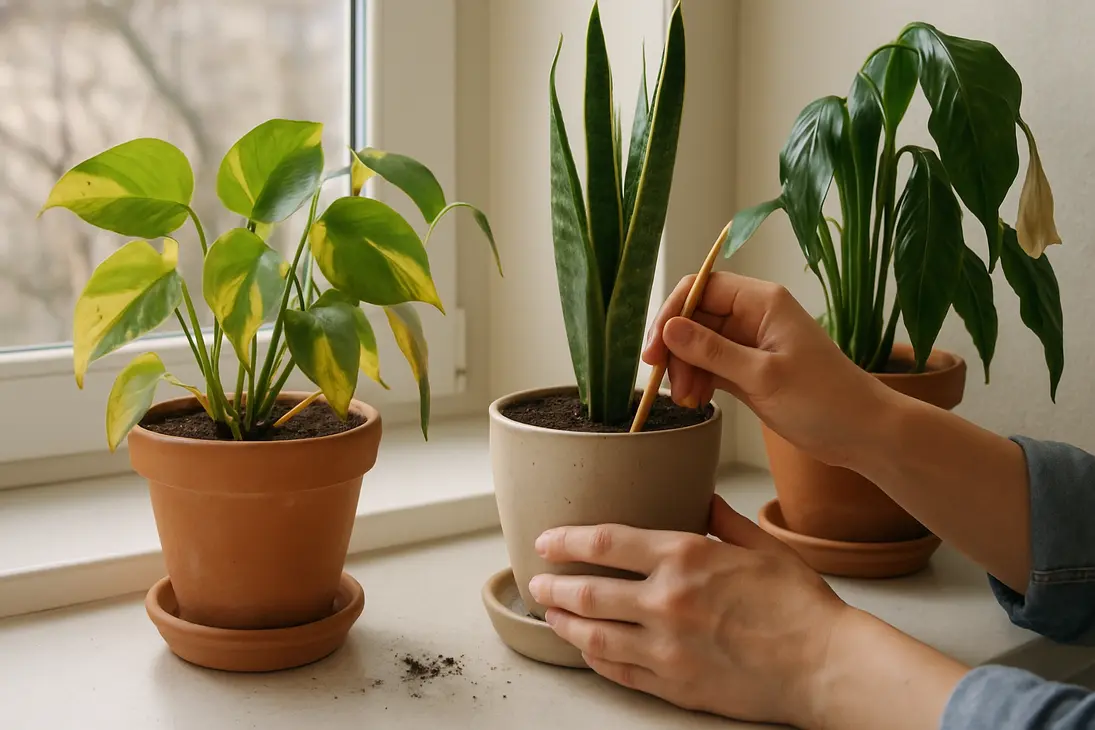
Do not water only by the calendar. Soil dries at different speeds depending on season, pot size, light, temperature, soil type, and root mass.
For many tropical houseplants, water when the top inch or two feels dry. Drought-tolerant plants can dry longer; moisture-loving plants should not become bone dry.
When you water, water thoroughly until some drains from the bottom. Tiny sips leave salts behind and encourage shallow roots.
Increase Humidity for Plants That Need It
For humidity-sensitive plants:
- Group plants together.
- Use a room humidifier nearby.
- Keep plants away from vents and air conditioners.
- Move humidity-loving plants to bright bathrooms or kitchens if light is adequate.
Pebble trays and misting offer only brief or minor relief and rarely solve chronic dry-air browning alone.
Switch to Filtered, Distilled, or Rain Water if Needed
If brown tips keep returning on spider plants, peace lilies, calatheas, or dracaenas despite good care, try different water for a month or two.
Filtered water may help, depending on the filter. Distilled, rain, or reverse-osmosis water reduces mineral input more reliably. Letting tap water sit overnight may reduce some chlorine, but it will not remove dissolved minerals or fluoride.
Move the Plant Out of Harsh Direct Sun or Heat
Check the plant’s location at different times of day. Afternoon sun, hot glass, radiators, and heat vents can all brown leaf tips.
Move the plant back from harsh sun, use a sheer curtain, or choose bright indirect light. If a plant needs more light, increase exposure gradually.
Improve Soil Drainage With the Right Potting Mix
A good potting mix holds moisture but still drains and contains air. Dense, muddy mixes suffocate roots and make salt buildup harder to manage.
Most leafy tropical houseplants do well in quality indoor mix amended with perlite, pumice, fine bark, or coco chips if needed. Succulents and cacti need faster drainage. Ferns may need more moisture retention without staying swampy.
Brown Tips on Spider Plants and Peace Lilies
Spider plants and peace lilies are forgiving, but both show stress clearly through brown tips.
Spider Plant Brown Tips
Spider plants often develop brown tips from salt buildup, inconsistent watering, dry air, or mineral-heavy water. Their narrow leaves make even minor tip burn obvious.
To help a spider plant:
- Flush the soil if you fertilize often.
- Use a pot with good drainage.
- Water when the upper soil dries.
- Avoid long dry spells.
- Try filtered, distilled, or rain water if tips persist.
- Fertilize lightly during active growth.
If the plant is producing firm leaves and plantlets, a few brown tips are usually cosmetic.
Peace Lily Brown Tips
Peace lilies droop when dry, yellow when stressed, and brown at the tips when care is off. Common causes include underwatering, overwatering, excess fertilizer, dry air, direct sun, and tap water sensitivity.
To help a peace lily:
- Keep the mix evenly moist, not soggy.
- Water thoroughly when the top layer begins to dry.
- Avoid repeated drought collapse.
- Provide bright indirect light.
- Feed lightly only during active growth.
- Try lower-mineral water if tips continue.
A peace lily wilting every few days may be root-bound or drying quickly. One wilting in wet soil may have root trouble.
When Brown Tips Are Normal Aging vs. a Care Problem
Some aging is normal. Older leaves eventually yellow, brown, and die, usually one at a time from the lower or older part of the plant.
It is more likely a care issue when:
- Many leaves brown at once.
- New leaves emerge with brown tips.
- Browning worsens after fertilizing.
- Salt crust is visible.
- The plant also wilts, yellows, or drops leaves.
- The plant sits near heat, harsh sun, or very dry air.
Normal aging is gradual. Stress browning is repeated, patterned, or sudden.
How to Prevent Brown Tips From Coming Back
Prevention is mostly about consistent care that fits the plant and your home.
Fertilize Lightly During Active Growth Only
Most houseplants need fertilizer mainly while actively growing, often spring through early fall. If a plant is not producing new leaves, it is using fewer nutrients.
Do not fertilize sick, wilted, bone-dry, dormant, or newly repotted plants if the fresh mix already contains fertilizer. Correct stress first.
Fast-growing plants in bright light may need more feeding than slow-growing plants in low light.
Dilute Fertilizer More Than the Label Suggests
Indoor plants often grow more slowly than outdoor plants because they receive less light. Many do better with weaker fertilizer than the maximum label rate.
A cautious approach is half strength or less during active growth. Use even less for sensitive, stressed, or low-light plants. More fertilizer will not force growth if light, roots, or water are limiting.
Water Deeply Enough to Prevent Salt Buildup
Shallow watering leaves dissolved salts in the mix. When water evaporates, those salts concentrate around the roots.
When the plant is ready for water, water thoroughly until excess drains out, then empty the saucer. If your pot has no drainage, use it as a decorative cover and keep the plant in a draining nursery pot inside it.
Match Care to the Specific Plant, Not a One-Size-Fits-All Routine
Do not treat every houseplant the same. Before setting a routine, learn:
- Whether it prefers to dry out or stay lightly moist
- How much light it needs
- Whether it is sensitive to tap water
- Whether it likes high humidity
- Whether it is a heavy feeder or slow grower
This prevents overwatering one plant, underwatering another, and fertilizing all of them too often.
Conclusion
Saving houseplants with brown tips starts with identifying the stress behind the damage. Too much fertilizer and salt buildup are common causes, especially when crispy tips appear after feeding or white crust appears on the soil.
Stop fertilizing, flush or repot if needed, improve drainage, and review watering, humidity, water quality, light, heat, and potting mix. Brown tips will not turn green again, but healthy new growth means the plant is recovering.
FAQ
Should I cut the brown tips off my houseplant?
Yes. Use clean, sharp scissors and trim only the dead brown tissue. Avoid cutting into healthy green tissue, which may brown again at the cut edge.
Can brown leaf tips turn green again?
No. Brown, crispy leaf tissue is dead. Recovery shows up as healthy new leaves and no continued spread of tip burn.
How often should I fertilize houseplants to avoid brown tips?
Fertilize only during active growth and use a light dose. Many houseplants do well with diluted fertilizer in spring and summer, while low-light or slow-growing plants need much less. Avoid fertilizing stressed, dry, or dormant plants.
Are brown tips always caused by over-fertilizing?
No. Brown tips can also come from underwatering, inconsistent watering, dry air, tap water minerals, heat, harsh sun, compacted soil, root stress, or normal aging. Over-fertilization is more likely when crispy tips appear after feeding, salt crust is visible, or the plant wilts despite moist soil.
You Might Also Like