Root Rot in Snake Plants: How to Spot It, Stop It, and Prevent It
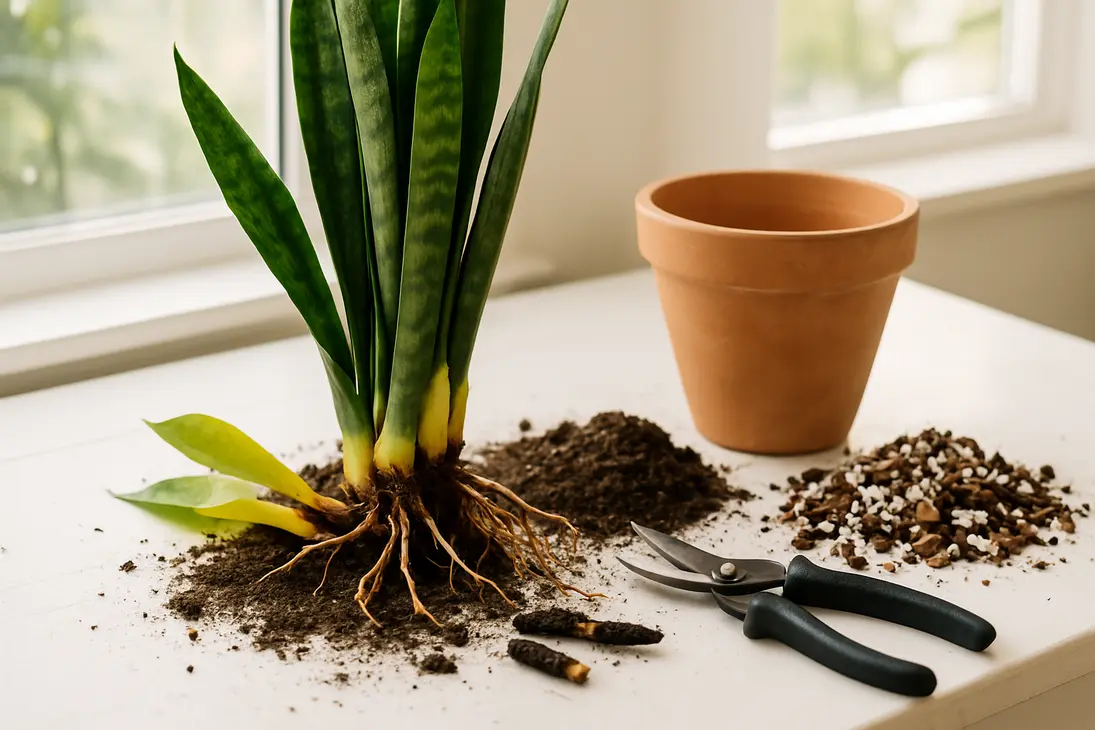
Snake plants are tough, but their roots can rot when soil stays wet too long. The first signs often show above the soil as yellowing, soft leaves, leaning growth, or sudden collapse.
A snake plant with root rot can often be saved if some firm roots, rhizomes, or leaf bases remain. The fix is to inspect the roots, remove rotten tissue, repot into a faster-draining setup, and correct the conditions that caused the problem.
What Root Rot Looks Like in a Snake Plant
Root rot can be confusing because early symptoms resemble underwatering, aging, or general stress. A wrinkled leaf may mean the plant is thirsty, but it can also mean damaged roots can no longer absorb water.
The best clues are texture, smell, and where the decline starts. A thirsty snake plant usually stays firm. A rotting one often becomes soft, limp, or mushy near the base.
Early warning signs
Early root rot often looks like a watering problem because the plant may appear thirsty while the soil is still wet.
Watch for:
- Leaves softening near the soil line
- Yellowing that starts at the base
- Leaves leaning or loosening without being broken
- Soil staying damp for many days
- A musty, sour, or swampy smell
- Fungus gnats around persistently moist soil
- Stalled growth during the growing season
If the plant looks worse a few days after watering instead of better, suspect root trouble.
Advanced symptoms
Advanced rot is easier to identify but harder to reverse. By this stage, decay may have reached thick roots, rhizomes, or leaf bases.
Serious symptoms include:
- Mushy, water-soaked leaf bases
- Leaves falling over at the soil line
- Brown, black, or translucent patches near the crown
- A rotten smell when the pot is moved
- Heavy, wet soil deep in the pot
- Sections pulling away with little resistance
- Shriveling while the soil is still moist
If the central rhizome is soft and foul-smelling, that section will not recover. Firm leaves or solid rhizome pieces may still be useful for propagation.
What healthy vs. rotting roots look and feel like
The best way to confirm root rot is to inspect the roots. Leaves can mislead you; roots and rhizomes give a clearer answer.
| Plant part | Healthy | Rotting or dead |
|---|---|---|
| Fine roots | Pale tan, cream, orange-tan, or light brown; flexible | Dark, slimy, or shedding outer layers |
| Thick roots | Firm, slightly woody or fleshy | Soft, hollow, mushy, or smelly |
| Rhizomes | Firm, pale to orange, solid | Soft, blackened, wet, collapsing, or foul |
| Leaf bases | Firm and upright | Squishy, translucent, brown, or separating |
Do not panic over every brown root. Older roots can be tan or brown and still healthy if they are firm. Mushiness, slime, bad smell, and collapsing tissue are the real warning signs.
Why Snake Plants Get Root Rot
Snake plants store water in thick leaves and rhizomes, so they do not need constantly moist soil. In pots, roots also need air. When soil stays waterlogged, air pockets fill with water, roots weaken, and decay can spread.
Root rot usually comes from several factors working together: too much water, slow-drying soil, poor drainage, low light, cool temperatures, or an oversized pot.
Overwatering and constantly moist soil
Overwatering does not only mean watering too often. It means the roots stay wet longer than the plant can tolerate.
This often happens when you:
- Water on a fixed weekly schedule
- Give frequent small splashes
- Water before checking deep soil moisture
- Keep the plant in a cool or dark room
- Use a dense mix that dries slowly
Snake plants generally prefer to dry well between waterings. Indoors, they may go several weeks between waterings, especially in winter or low light.
Pots without proper drainage
A pot without drainage is a common cause of root rot. Water collects at the bottom, even if the surface feels dry.
Decorative pots are often the problem. In one Reddit post about snake plant propagation, a grower described buying a snake plant in an attractive planter and later realizing the lack of drainage had contributed to rot.
If you like a decorative cachepot, use it as an outer cover. Keep the snake plant in a nursery pot with drainage holes, remove it to water, and let it drain fully before putting it back.
Dense soil that holds too much water
Regular all-purpose potting soil can be too heavy for snake plants, especially in deep pots or dim rooms. Fine mixes hold water, compact over time, and reduce oxygen around roots.
A better mix is loose, chunky, and fast-draining. Many growers start with cactus or succulent mix and add perlite, pumice, coarse sand, or fine orchid bark.
Low light and seasonal slowdowns
Snake plants tolerate low light, but they use less water there. Soil that dries in 10 days near a bright window may stay damp for weeks in a dark corner.
Winter makes this worse. Shorter days, cooler rooms, and slower growth reduce water demand. Many rot cases happen because the watering schedule stays the same while the plant’s needs drop.
How to Check a Snake Plant for Root Rot
You do not need to unpot a snake plant every time one leaf yellows. But if several symptoms point to root trouble, checking the roots is better than guessing.
When to unpot the plant
Unpot the plant if you notice two or more of these signs:
- Soil stays wet more than a week after watering
- Leaves are soft, leaning, or collapsing at the base
- Yellowing starts near the soil line
- The pot smells sour, musty, or rotten
- The plant looks wrinkled while the soil is moist
- Tissue at the crown is blackened or mushy
- The plant was kept in a pot without drainage
If only one old outer leaf is yellowing and the rest of the plant is firm, root rot is less likely.
How to inspect the root ball
Work over newspaper, a tray, or outdoors in shade.
- Slide the plant out gently. Tip the pot sideways and ease the root ball out.
- Smell the soil. Healthy mix smells earthy; rot smells sour or foul.
- Check deep moisture. The surface may be dry while the center is wet.
- Remove loose wet soil. Use your fingers or a chopstick.
- Inspect roots and rhizomes. Look for black, slimy, hollow, or mushy tissue.
- Squeeze suspect areas gently. Healthy rhizomes are firm; rotten ones collapse.
- Separate sections if needed. One division may be rotted while another is healthy.
Texture matters more than color alone. Soil-stained roots can look dark but still be firm and alive.
How to judge whether the plant can be saved
A snake plant is worth saving if it has firm roots, a solid rhizome section, or firm leaf bases.
The outlook is poor if all roots are mushy or gone, the main rhizome is soft throughout, every leaf is rotting at the base, or there is a strong foul smell with no firm tissue. Even then, firm leaf sections may be propagated if the rot has not moved up the leaf.
How to Save a Snake Plant With Root Rot
Once you confirm rot, do not return the plant to the same wet conditions. Remove damaged tissue, discard bad soil, repot into a better mix, and water cautiously.
Trim away damaged roots and leaves
Use clean, sharp scissors, pruners, or a knife. Wipe blades before and after cutting, especially when moving from rotten tissue to healthy tissue.
Steps:
- Remove old wet soil. You do not need to wash every root, but soggy or foul mix should go.
- Cut off mushy roots. Trim back to firm tissue.
- Remove rotten rhizomes. Discard any section that is soft through the center.
- Take off collapsing leaves. Mushy leaf bases will not recover.
- Keep firm tissue. Cosmetic damage is fine if the base and rhizome are solid.
If you made large cuts, let the plant dry in a shaded, airy place for several hours or overnight before repotting.
Repot in fresh, well-draining soil
Do not reuse the same wet mix. Use fresh, fast-draining soil and a clean pot with drainage holes.
Choose a pot that fits the remaining root system. After trimming roots, the plant may need a smaller pot, not a larger one. Oversized pots hold extra moisture around weakened roots.
A practical mix:
- 2 parts cactus or succulent potting mix
- 1 part perlite or pumice
- Optional: 1 part fine orchid bark
If you only have regular potting soil, amend it heavily with coarse material. Repot at about the same depth as before, and do not bury leaf bases deeply.
Water carefully after repotting
Freshly trimmed plants have fewer roots and cannot use water quickly. If you soak the pot immediately and place it in low light, rot can restart.
If trimming was minor and the plant is firm, water lightly after repotting and let it drain fully. If you removed significant rot or made large cuts, wait a few days before watering.
After repotting:
- Keep the plant in bright, indirect light
- Avoid harsh direct sun while it is stressed
- Do not fertilize until growth stabilizes
- Let the mix dry thoroughly before watering again
- Check moisture near the bottom of the pot
Recovery is slow. Damaged leaves may not improve, but the plant should stop declining and eventually produce firm new growth.
When propagation is the better option
Propagation is better when most roots are gone but some leaves remain firm. Use only healthy tissue.
For leaf cuttings:
- Cut above any soft, yellow, translucent, or mushy area.
- Use firm green tissue only.
- Let the cut end dry for a day or two.
- Place it in water or a well-draining propagation medium.
- Keep it warm and bright, but out of scorching sun.
Leaf cuttings from variegated snake plants may not keep the same variegation. Division from a healthy rhizome is more reliable for preserving appearance.
How to Prevent Root Rot From Coming Back
Prevention is about matching water to conditions. A snake plant in bright light, warm temperatures, terracotta, and chunky soil dries much faster than one in a dark room, plastic pot, and dense mix.
Test soil moisture before watering
Do not water by the calendar. Check the plant’s actual conditions.
Useful methods:
- Push a finger several inches into the mix
- Use a wooden skewer; if damp soil clings, wait
- Lift the pot and learn its wet vs. dry weight
- Use a moisture meter as a rough guide, not the only test
For snake plants, the lower part of the pot should be dry or nearly dry before watering. A dry surface is not enough in a deep pot.
When you do water, moisten the root ball evenly, then let it drain. Frequent tiny sips can create uneven moisture and stale damp pockets.
Use a pot with drainage holes
Drainage holes are essential. They let excess water escape and help air return to the mix as water drains.
If a decorative pot has no hole, either:
- Use it as a cachepot with a draining nursery pot inside
- Drill a drainage hole if possible
- Choose a different pot
Drainage does not make overwatering impossible, but it greatly reduces the risk.
Choose a fast-draining snake plant soil mix
Use an airy, structured mix that does not become dense and muddy after watering.
Look for or create a mix with:
- Cactus or succulent soil as a base
- Perlite or pumice for aeration
- Coarse particles for air spaces
- Minimal heavy compost or moisture-retentive additives
Avoid packing soil tightly around roots. Firm it enough to support the plant, but do not compress it.
Empty saucers and cachepots
Even with drainage holes, a snake plant can rot if it sits in runoff water. After watering, let the pot drain fully, then empty the saucer or outer pot.
Cachepots make this easy to miss. The plant may look tidy while the nursery pot sits in water inside the cover pot. Check after every watering.
Water less in winter or low light
Snake plants need less water when growth slows. In winter or low light, the time between waterings can stretch significantly.
Water less when:
- Days are shorter
- The room is cooler
- The plant is farther from a window
- The pot is plastic or glazed ceramic
- The soil is dense
- The plant was moved into a larger container
The safest habit is to check the soil each time instead of watering because a set number of days has passed.
Conclusion
Root rot in snake plants is caused by roots staying wet too long. Overwatering is the common trigger, but slow-drying soil, poor drainage, oversized pots, low light, cool rooms, and water left in saucers all contribute.
If you catch it early, the plant can often recover. Check the roots, remove mushy tissue, repot into fresh fast-draining mix, and let the plant dry properly between waterings. If the roots are too far gone, firm leaf cuttings or healthy rhizome pieces may still save part of the plant.
FAQ
Can a snake plant recover from root rot?
Yes, if some firm roots, rhizomes, or leaf bases remain. Remove mushy tissue, repot in fresh well-draining soil, and keep the plant on the dry side while it recovers.
If the entire rhizome is soft or every leaf is rotting at the base, propagate firm leaf sections if any remain.
How often should I water a snake plant to avoid root rot?
There is no universal schedule. Water only after the mix has dried thoroughly, including deeper in the pot. In bright, warm conditions this may be every couple of weeks; in winter, low light, or dense soil, it may be much less often.
Should I reuse soil from a snake plant with root rot?
No. Discard wet, sour-smelling, compacted, or root-filled soil. Repot the plant in fresh fast-draining mix, and wash the pot before reusing it.
Can snake plant leaves be propagated after root rot?
Yes, but only if the leaf tissue is firm and healthy. Cut well above any mushy, yellowing, translucent, or foul-smelling area, then let the cut end dry before propagating.
Sources
- Reddit: “Failing at snake plant propagation :(” — https://www.reddit.com/r/indoorgardening/comments/pu3glv/failing_at_snake_plant_propagation/
You Might Also Like