Do Rose Bush Thorns Survive Winter? Rose Bush Winter Care Basics
Do Rose Bush Thorns Survive Winter After Flowers Drop?
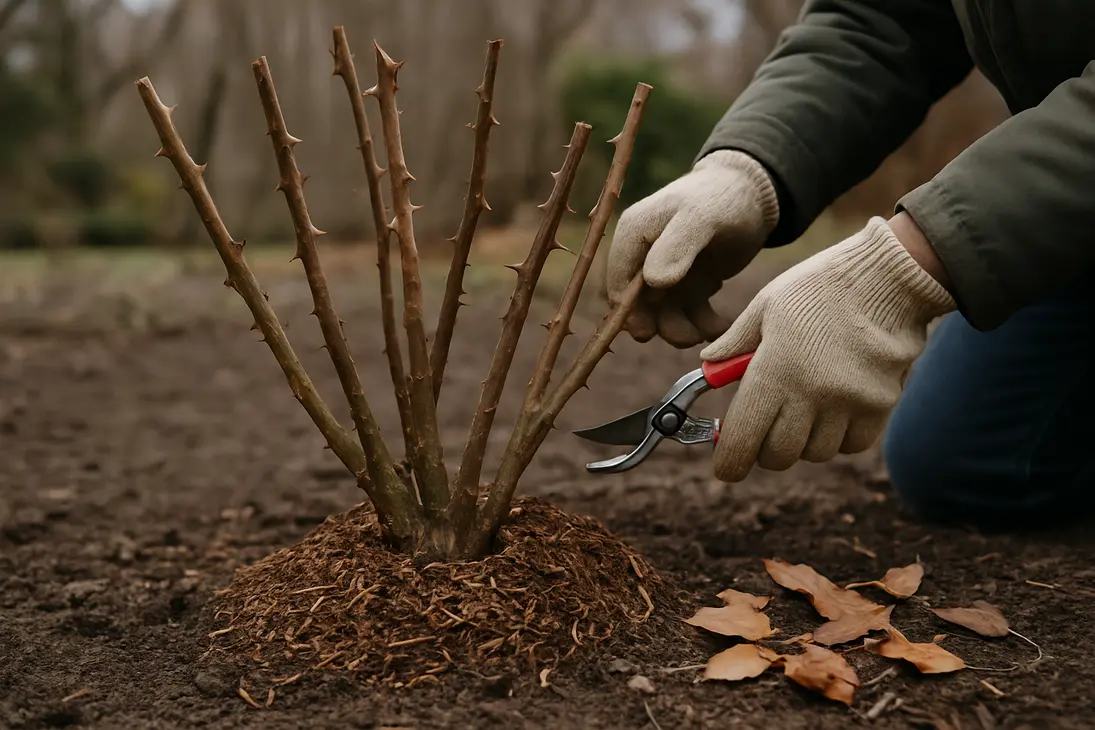
Yes, rose bush thorns usually survive winter. Technically, the sharp points on roses are prickles, not true thorns, but most gardeners call them thorns. They are part of the cane’s outer tissue, so they stay attached as long as the cane remains standing.
Flowers are different. Blooms are temporary reproductive parts that fade, drop petals, or turn into hips. Leaves may also yellow and fall as the rose enters dormancy. Thorns do not shed seasonally like petals or leaves.
However, thorns do not prove a cane is alive. Dead canes can hold their thorns for months, especially in cold, dry weather. In winter rose care, the better question is whether the cane beneath the thorns is healthy. A dormant cane may be leafless and bare but still alive. A winter-killed cane may turn black or brown, shrivel, become brittle or mushy, or die back from the tip.
Good winter care protects the crown, roots, and healthy canes so the rose can restart growth in spring.
What Happens to a Rose Bush in Winter?
Roses do not disappear in winter like many herbaceous perennials. Most keep woody canes above ground, even when they stop blooming and lose leaves. In cold climates, some top growth may die back. In mild climates, roses may only slow down and keep some foliage.
Dormancy helps the plant survive. Shorter days and colder temperatures reduce tender growth, while the rose relies on stored energy in its canes, crown, and roots.
Rose type matters. Hardy shrub and landscape roses often need little protection. Hybrid teas, tree roses, newly planted roses, container roses, and roses near the cold edge of their hardiness range usually need more care.
Flowers, Leaves, and Hips
After the last bloom cycle, flowers fade and drop. If spent flowers are not deadheaded, some roses form hips, the rounded seed structures behind the flower. Hips may remain into winter and attract birds, though not every rose produces showy hips.
Leaves often yellow, dry, spot, or fall as cold weather arrives. Bare canes are normal where hard freezes occur. In warmer zones, roses may keep some leaves.
Before winter settles in, remove fallen rose leaves and diseased debris around the plant. Black spot, mildew, rust, and pest eggs can overwinter in old foliage. Cleanup will not prevent every spring problem, but it lowers disease and pest pressure.
Canes, Buds, and Thorns
Canes are the woody stems of the rose. Dormant buds sit along those canes, often near leaf scars, and can produce new shoots when temperatures rise.
Thorns, or prickles, remain attached through winter. Their presence alone does not mean the cane is alive. Like bark, they can stay on dead wood.
Healthy dormant canes may be green, olive, reddish-brown, or tan, depending on the variety and climate. A firm cane is more promising than one that is black, shriveled, collapsed, or dry all the way down.
Roots and the Crown/Graft Union
The roots and crown are the most important parts to protect. The crown is where canes meet the root system. On grafted roses, the graft union is the swollen area where the rose variety was joined to rootstock.
If canes die back but the crown survives, many roses can regrow. If the crown or graft union dies, the plant may die completely, or a grafted rose may send up rootstock shoots that do not match the original rose.
Winter protection mainly insulates this lower part of the plant. Mulch, soil mounds, compost, straw, leaves, or rose collars help moderate temperature swings. The goal is not to keep the rose warm, but to keep it consistently cold and protected from drying winds, freeze-thaw cycles, and sudden drops.
Winter Care Steps That Help Rose Bushes Survive
Winter rose care is mostly about timing and restraint. Do not push new growth. Help the plant harden off, stay properly hydrated, and avoid preventable damage.
| Timing | What to Do | Why It Helps |
|---|---|---|
| Late summer to early fall | Stop high-nitrogen feeding | Prevents tender late growth |
| Fall | Remove diseased leaves and debris | Reduces overwintering disease and pests |
| Before hard freezes | Water if soil is dry | Helps roots handle winter stress |
| After dormancy begins | Mulch the base | Insulates roots and crown |
| Late winter or early spring | Prune winter damage | Shows what survived |
Stop Fertilizing Before Cold Weather
Avoid fertilizing roses late in the season, especially with quick-release or high-nitrogen products. Nitrogen encourages soft shoots that frost damages easily.
If a rose looks tired in fall, do not try to “rescue” it with fertilizer. Focus on cleanup, correct watering, and mulch. Resume feeding in spring after growth begins and pruning is complete.
A safe general rule is to stop regular feeding several weeks before your average first frost. In mild climates, roses may grow longer, but avoid forcing lush growth as nights cool.
Water Carefully Before the Ground Freezes
Roses should not enter winter bone-dry. If autumn has been dry, water deeply before the ground freezes. Moist soil holds temperature more evenly than powder-dry soil, and hydrated roots tolerate stress better.
The soil should be moist, not soggy. Roses dislike waterlogged roots. Yellowing leaves, drooping growth, sour-smelling soil, algae on the surface, or soil that stays wet for days can signal excess water or poor drainage.
Established in-ground roses usually need winter water only during dry spells when soil is not frozen. Newly planted roses need closer attention because their roots are limited. Container roses dry faster but also freeze harder, so they need shelter.
Do not water frozen soil. The water will not reach roots properly and can create icy, saturated conditions around the crown.
Mulch Around the Base
Mulch is one of the easiest winter protections for roses. Apply it after the plant begins dormancy and the weather has cooled. Heavy mulch too early can trap warmth and moisture or invite pests.
Use loose organic materials such as shredded bark, compost, chopped leaves, pine needles, straw, or aged wood chips. Do not pack mulch tightly against the canes; leave some breathing room to reduce rot and rodent damage.
In colder climates, mound soil, compost, or mulch around the crown or graft union. This is especially helpful for grafted roses with the graft union above soil level.
In spring, pull excess mound material back gradually after severe cold passes. Leaving a heavy mound too long can keep the crown damp and delay growth.
Protect Tender or Newly Planted Roses
New roses, tender varieties, exposed roses, and plants near the edge of their hardiness range may need extra help.
Useful options include:
- Mounding mulch or compost over the crown after dormancy begins.
- Wrapping canes loosely with burlap in windy sites.
- Using a rose collar to hold mulch around the base.
- Moving potted roses to an unheated garage, shed, cold frame, or protected wall.
- Grouping containers and insulating pots with leaves, straw, or burlap.
Avoid sealing roses in plastic. Plastic traps moisture and heat on sunny days, then temperatures drop again at night. This can damage canes and encourage disease. Any cover should allow air movement.
Climbing roses may also need wind protection. Tie long canes securely so they do not whip in winter storms.
Delay Heavy Pruning Until Late Winter or Early Spring
Do not cut roses back hard in fall just because they look messy. Heavy fall pruning can stimulate new growth during mild spells and removes cane length that may protect lower buds from winter dieback.
Light cleanup is fine. Remove dead, diseased, broken, or badly crossing canes. Shorten very tall canes if winter wind may rock the plant and loosen roots.
Save major shaping for late winter or early spring, after the worst cold has passed and buds begin to swell. Then you can see what survived and prune back to healthy wood.
How to Tell Dormant Canes From Winter Damage
A leafless, thorny rose can look dead in winter, but dormancy often looks stark. Do not judge by thorns or lack of leaves alone.
Inspect cane color, firmness, texture, and bud swelling. Unless canes are clearly dead or diseased, wait for spring growth before making final decisions.
Signs the Rose Is Dormant but Alive
A dormant but living rose may show:
- Firm canes that do not collapse when gently flexed.
- Green, olive, reddish, tan, or firm brown bark.
- Plump dormant buds along the canes.
- No foul smell or mushy tissue near the crown.
- Pale green, white, or moist inner tissue when lightly scratched.
- Bud swelling as temperatures rise.
Color alone is not enough. Some healthy canes darken in winter, while a dead cane may still hold thorns.
Signs of Winter-Killed Canes
Winter-killed canes often die from the tips downward. Signs include:
- Blackened or very dark canes.
- Shriveled, wrinkled, or sunken bark.
- Brittle canes that snap easily.
- Mushy or water-soaked tissue.
- Brown, dry inner tissue when cut.
- No bud swelling while other canes are growing.
Sometimes only the top few inches die. Sometimes a whole cane dies back to the crown. If all canes look dead but the crown is firm, wait; roses can send up basal shoots later in spring.
When to Scratch-Test or Prune Back
A scratch test can help, but use it sparingly. Gently scrape a tiny bit of bark with a fingernail or clean knife. Greenish, moist, or pale tissue suggests that section may still be alive. Dry brown tissue is likely dead.
When pruning damage, cut back gradually from the dead tip until you find healthy inner wood. Healthy cane tissue is usually pale green or white inside, not brown and dry. Make cuts just above an outward-facing bud when possible.
Use clean, sharp pruners. If cutting diseased canes, clean tools between plants. Wear gloves and long sleeves because winter thorns still catch skin and clothing.
Common Winter Rose Care Mistakes
Most winter rose problems come from doing too much at the wrong time or neglecting basics before cold weather. Avoid soggy soil, late fertilizer, hard fall pruning, and diseased debris around the base.
Overwatering or Leaving Soil Soggy
Roses need moisture and oxygen around their roots. Soil that stays soggy can suffocate roots and encourage rot. A drooping rose may look thirsty even when drainage is the real problem.
Before watering, check the soil a few inches down. If it is still wet, wait. If it is dry before a hard freeze, water deeply. Clay soils need more caution than sandy soils because they hold water longer.
If water pools around your rose after rain, improve drainage during the growing season with raised beds, compost-amended soil, or better planting height. Winter mulch cannot fix a swampy site.
Fertilizing Too Late in the Season
Late fertilizer encourages tender shoots that are easily damaged by frost. If a rose looks weak in fall, do not push growth with repeated feeding.
Instead, reduce stress: water correctly, remove diseased foliage, protect the crown, and wait until spring. Once growth begins, fertilizer is more useful.
Pruning Too Much Before Winter
Hard fall pruning can leave roses more exposed. Taller canes may die back, but they also act as a buffer. Cutting everything low before winter can let cold injury reach closer to the crown.
Selective fall pruning is still useful. Remove broken, diseased, dead, or extremely tall canes that may rock in the wind. Save shaping cuts for late winter or early spring, when winter damage is easier to see.
Ignoring Pests, Mites, or Diseased Leaves
Winter does not erase every rose problem. Pest eggs, fungal spores, and diseased leaves can remain in debris.
Before winter, rake up fallen rose leaves, especially spotted or mildewed ones. Remove diseased leaves still clinging to the plant. Do not compost badly diseased foliage unless your compost pile gets hot enough to break it down reliably.
Also avoid packing mulch tightly around the canes, where rodents may nest and chew. Keep protection loose and breathable.
Conclusion
Rose bush thorns usually survive winter because they are attached to the canes, not shed like petals or leaves. A thorny cane may be alive and dormant, or it may be dead but still standing, so thorns are not a reliable survival test.
Protect the living canes, dormant buds, crown or graft union, and roots. Stop fertilizing before cold weather, water only when soil is dry and not frozen, mulch after dormancy begins, protect tender or newly planted roses, and delay heavy pruning until late winter or early spring.
When spring returns, inspect patiently, prune winter-killed wood, and watch for swelling buds and fresh shoots.
FAQ
Do rose bushes lose their thorns in winter?
No. Rose thorns, technically prickles, are attached to the canes and usually remain after flowers and leaves drop. They may stay on both living and dead canes.
Should I cut off thorny rose canes before winter?
No. Do not cut canes just because they are thorny. Before winter, remove only dead, diseased, broken, or overly long canes that may whip in wind. Save heavy pruning for late winter or early spring.
How do I know if my rose bush died over winter?
Look in spring for firm canes, plump buds, pale or green inner tissue, and new shoots from the crown. Dead canes are often black, brittle, shriveled, mushy, or brown inside. If the crown is firm, wait before removing the plant.
Should roses be watered during winter?
Water only if the soil is dry, the ground is not frozen, and the weather has been dry. Do not water frozen or soggy soil. Roses need moisture going into winter, but waterlogged roots can be damaged.
You Might Also Like