Why Are the Leaves on My Pothos Turning Brown?
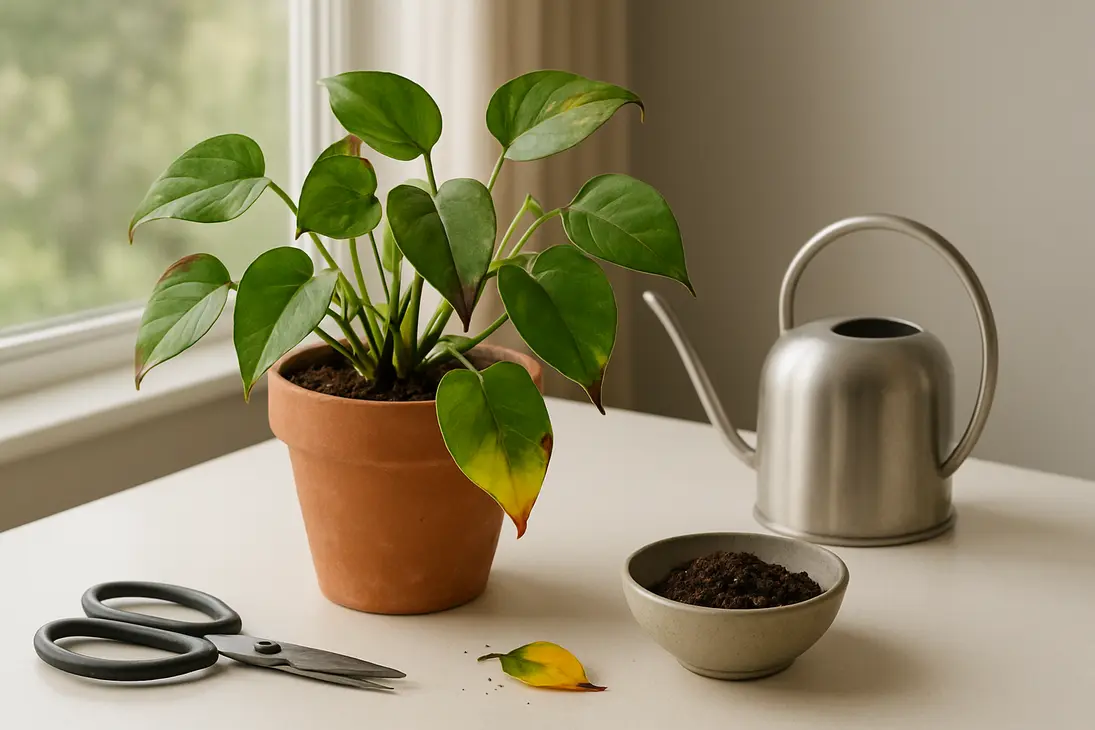
Brown leaves on pothos usually mean the plant has been stressed by watering, drainage, light, pests, temperature, or buildup in the soil. Pothos is resilient, and most causes are fixable once you match the browning pattern to the likely problem.
If browning starts low on the plant, notice whether it is one old leaf or several leaves at once. One lower leaf turning yellow, then brown, and dropping is often normal. Several lower leaves browning together usually points to watering stress, poor drainage, root trouble, or not enough light reaching the base of the vines.
Start by Identifying the Type of Browning
Look closely before changing your care routine. Different browning patterns point to different causes.
| Browning pattern | Most likely causes | What to check first |
|---|---|---|
| Brown tips or crispy edges | Underwatering, dry air, mineral buildup, fertilizer burn | Soil dryness, watering habits, white crust on soil |
| Brown spots with yellow halos | Leaf damage, pests, fungal/bacterial leaf spot, inconsistent watering | Undersides of leaves, wet foliage, spreading spots |
| Lower leaves yellowing, browning, and dropping | Normal aging, low light, watering stress, root stress | How many leaves are affected and how quickly |
| Soft dark patches or mushy stems | Overwatering, poor drainage, root rot | Soil smell, root color, pot drainage |
A pothos can show more than one symptom. Soggy soil may cause yellow lower leaves, brown patches, and soft stems, while a plant kept too dry may develop curled leaves, crispy edges, and leaf drop.
Brown tips or crispy edges
Brown tips and dry, papery edges often point to moisture stress. This happens when the plant dries too much between waterings or sits near a heater, sunny window, or draft. Pothos tolerates some dryness, but repeated deep drying can kill leaf tips and margins.
Crispy edges can also come from mineral salts in the soil, especially if you fertilize often, use hard tap water, or see a white crust on the soil or pot.
Brown spots with yellow halos
Brown spots with yellow tissue around them are more concerning than plain crispy tips. They may come from pest feeding, leaf spot disease, physical damage, or water sitting on leaves in poor airflow. Spots that spread, enlarge quickly, or appear on many leaves need closer inspection.
Check undersides of leaves and the joints where leaves meet the vine. Spider mites, thrips, mealybugs, and scale can damage pothos foliage. Early signs may include speckling, dull leaves, sticky residue, silvery streaks, or small scars.
Lower leaves turning yellow, brown, and dropping
Lower leaves are older, more shaded, and farther from the growing tips, so they often show stress first. If one older leaf yellows slowly, turns brown, and drops while the rest of the plant looks healthy, it may simply be aging out.
If several lower leaves yellow and brown in a short time, look for soggy soil, irregular watering, poor light, or root damage.
Soft, dark brown patches or mushy stems
Soft brown or blackish areas are more serious than dry tips. Mushy stems, foul-smelling soil, or collapsing leaves while the soil is wet can indicate rot. Pothos stems should feel firm, and roots should be light tan to white and firm, not black, slimy, or hollow.
If the base is browning and stems near the soil feel soft, stop watering and inspect the roots. In advanced rot, taking healthy vine cuttings may be more successful than saving the original root system.
Common Causes of Brown Leaves on Pothos
Most brown pothos leaves come from a few practical problems: too much or too little water, poor drainage, unsuitable light, pests, or excess salts. Nutrient deficiency is possible but less common indoors than watering and root-zone problems.
Inconsistent watering or underwatering
Pothos does not need constant moisture, but it does not like repeated swings from bone dry to soaked. When soil stays dry too long, the plant cannot move enough water to the leaf tips, so tips and edges turn brown and crispy.
Signs include:
- Limp or curled leaves that improve after watering
- Soil pulling away from the pot
- A very light pot
- Crispy brown tips or edges
- Older leaves yellowing after dry spells
If water runs straight through the pot, the soil may have become hydrophobic. Water slowly in stages, or bottom-water briefly until the root ball rehydrates, then let excess water drain fully.
Overwatering and poor drainage
Overwatering means roots are staying wet too long, not simply that you watered often. It can happen in a pot without drainage, a decorative cachepot holding runoff, dense soil, an oversized pot, or a dim room where the plant uses water slowly.
Symptoms often include yellowing leaves, brown patches, leaf drop, and soil that remains damp for many days. Check soil moisture instead of watering by the calendar, especially in winter or low light.
Root rot from soggy soil
Root rot is the advanced result of chronic wet soil. Damaged roots cannot absorb water properly, so the plant may wilt or brown even though the pot is wet. Watering again makes the problem worse.
Check for root rot if you notice:
- Wet soil that does not dry reasonably
- A sour or rotten smell
- Mushy stems near the soil line
- Black, brown, slimy, or collapsing roots
- Rapid yellowing and browning of multiple leaves
If only some roots are rotted, trim the damaged roots and repot into fresh, airy mix. Healthy roots should be firm, even if they are tan or light brown from the soil.
Too much direct sunlight
Pothos prefers bright, indirect light. It can tolerate lower light, but harsh direct sun, especially through a hot window, can scorch leaves.
Sun scorch usually appears as tan, brown, or bleached patches on the leaves facing the light. Morning sun may be acceptable, but strong afternoon sun can burn foliage, especially pale variegated areas on types such as golden pothos or marble queen pothos.
Low humidity or temperature stress
Pothos adapts to average indoor humidity, but very dry air can contribute to brown tips, especially during winter heating. Low humidity usually causes tip browning rather than large soft patches.
Temperature stress can also brown leaves. Avoid placing pothos near:
- Exterior doors in cold weather
- Air conditioning vents
- Heating vents or radiators
- Cold window glass
- Very hot, direct sun
Hot blasts dry leaves and soil quickly, while cold drafts can cause damaged patches or sudden yellowing.
Pest damage from spider mites, thrips, mealybugs, or scale
Pests are not the only cause of brown spots, but they should be checked because early treatment is easier. Look for:
- Spider mites: fine webbing, tiny moving specks, stippled leaves
- Thrips: silvery streaks, black specks, distorted growth, brown scarring
- Mealybugs: white cottony clusters in leaf joints or along stems
- Scale: brown or tan bumps stuck to stems or leaf veins
- Sticky residue: often from sap-feeding pests
Inspect in bright light and isolate the plant if pests are present.
Nutrient deficiency, fertilizer burn, or mineral buildup
Pothos is not a heavy feeder. Brown leaves are more often caused by water, roots, or excess fertilizer than by true deficiency.
Fertilizer burn and mineral buildup can cause brown tips, crispy margins, and weak growth. White crust on the soil or pot is a clue. This is more likely if fertilizer is applied often, used on dry soil, or used during low-growth months.
If buildup is likely, pause fertilizing and flush the soil if the pot drains well. If the soil is old, compacted, or salty, repotting may be better.
Why Lower Pothos Leaves Turn Brown First
Lower leaves are older and often receive less light, so they are naturally more vulnerable. However, normal lower-leaf loss should be gradual, not sudden or widespread.
Normal older-leaf shedding
Pothos vines occasionally drop old leaves. If one lower leaf turns yellow, then brown, then falls while the plant continues producing healthy growth, it is usually normal.
Normal aging tends to involve:
- One lower leaf at a time
- Slow yellowing before browning
- Firm stems
- No spreading spots
- Healthy new growth
Remove the dead leaf and continue consistent care.
Not enough light reaching the base of the plant
A pothos in a dim corner may keep growing at the tips while the base becomes sparse. The plant puts energy into areas receiving better light, while shaded lower leaves may yellow and brown.
This is common with long trailing pothos. Moving the plant to brighter indirect light and pruning long vines can help rebuild a fuller plant.
Long vines with bare or stressed lower growth
Long vines can become leggy when light is limited or pruning is avoided. Older leaves along lower or inner sections may drop, leaving bare stems. Once leaves are lost along a vine, those exact spots may not refill on their own.
Prune long vines just above a node, then root healthy cuttings and plant them back into the pot if you want a fuller look.
Root stress showing up in older leaves first
When roots struggle, the plant may sacrifice older leaves first. Root stress can come from soggy soil, compacted mix, severe underwatering, fertilizer salts, or a pot that is too large and stays wet too long.
If lower leaves keep browning quickly or repeatedly, check soil moisture, drainage, and roots before assuming it is normal aging.
How to Fix Brown Leaves on a Pothos
Brown tissue will not turn green again. Recovery means stopping the cause and helping the plant grow healthy new leaves. Start with watering and the root zone because those are the most common sources of browning.
Check soil moisture before watering
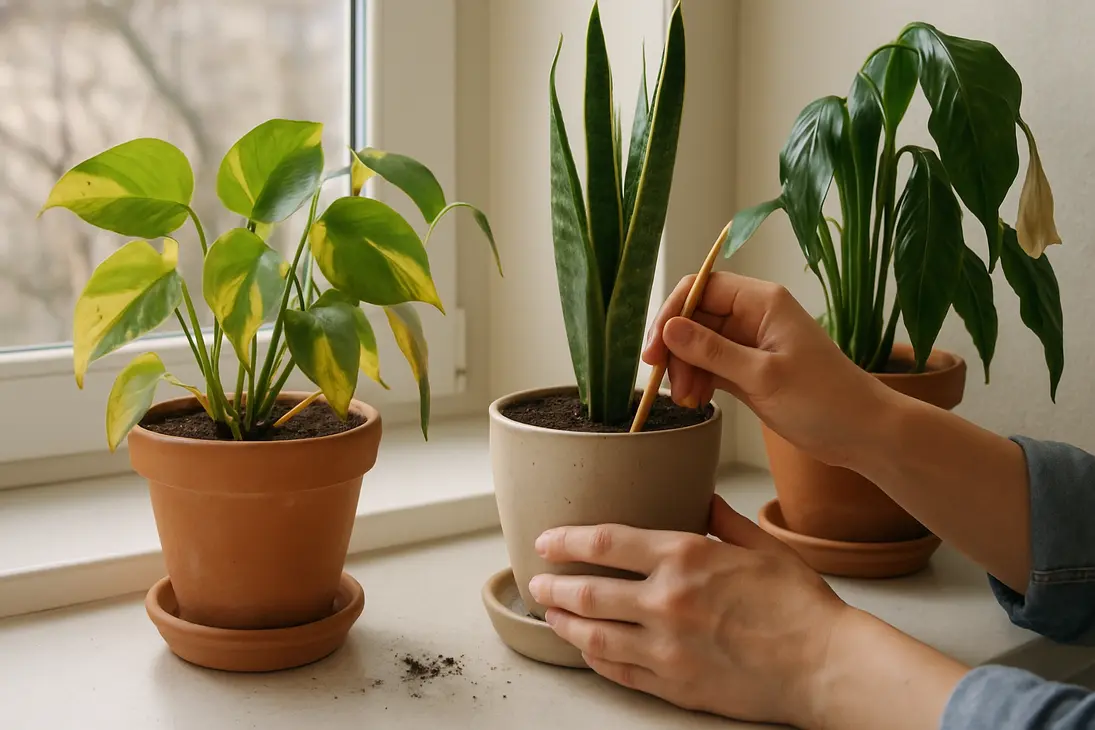
Put your finger into the soil, or use a wooden chopstick or moisture meter for deeper pots. For most indoor pothos, water when the top 1–2 inches of soil have dried. In larger pots, check below the surface because the top may be dry while the bottom is still wet.
Water thoroughly until excess drains out, then empty the saucer or decorative pot. Avoid tiny sips that wet only the surface, and do not water again while the root zone is still damp.
Improve drainage and inspect the roots
If soil stays wet too long, improve drainage. Make sure the pot has drainage holes and that runoff is not collecting in an outer pot.
To inspect roots:
- Slide the plant gently out of the pot.
- Look for firm, pale to tan roots.
- Trim black, mushy, slimy, or hollow roots.
- Remove sour-smelling soil if rot is present.
- Repot into fresh, airy potting mix.
- Choose a pot only slightly larger than the root ball.
A good pothos mix should hold some moisture but still drain and breathe. Standard indoor potting mix amended with perlite or orchid bark often works better than dense soil.
Move the plant to bright, indirect light
Place pothos in bright, filtered light without harsh sun on the leaves. Good options include an east-facing window, a spot several feet from a bright south or west window, or light filtered through a sheer curtain.
If the plant has been in low light, move it gradually to avoid scorch. If only the vine tips get light while the base stays shaded, rotate the pot and prune to encourage fuller growth.
Trim fully brown or dying leaves
Fully brown leaves can be removed because they no longer help the plant. Use clean scissors or pruners and cut the leaf stem close to the vine without tearing the main stem.
For leaves with only small brown tips, trimming is optional. Snip the brown area following the leaf’s natural shape, leaving a tiny brown edge so you do not cut into healthy tissue. Avoid removing too much healthy foliage from an already stressed plant.
Treat pests if spots, webbing, or sticky residue appear
If you find pests, isolate the pothos and rinse the foliage in the sink or shower. Wipe leaves and stems carefully, especially undersides and leaf joints.
For persistent pests, use a houseplant-safe treatment such as insecticidal soap or horticultural oil according to the product label. Repeat treatments are usually needed because eggs or hidden insects may survive. Check nearby plants too.
Flush the soil or adjust fertilizer if buildup is suspected
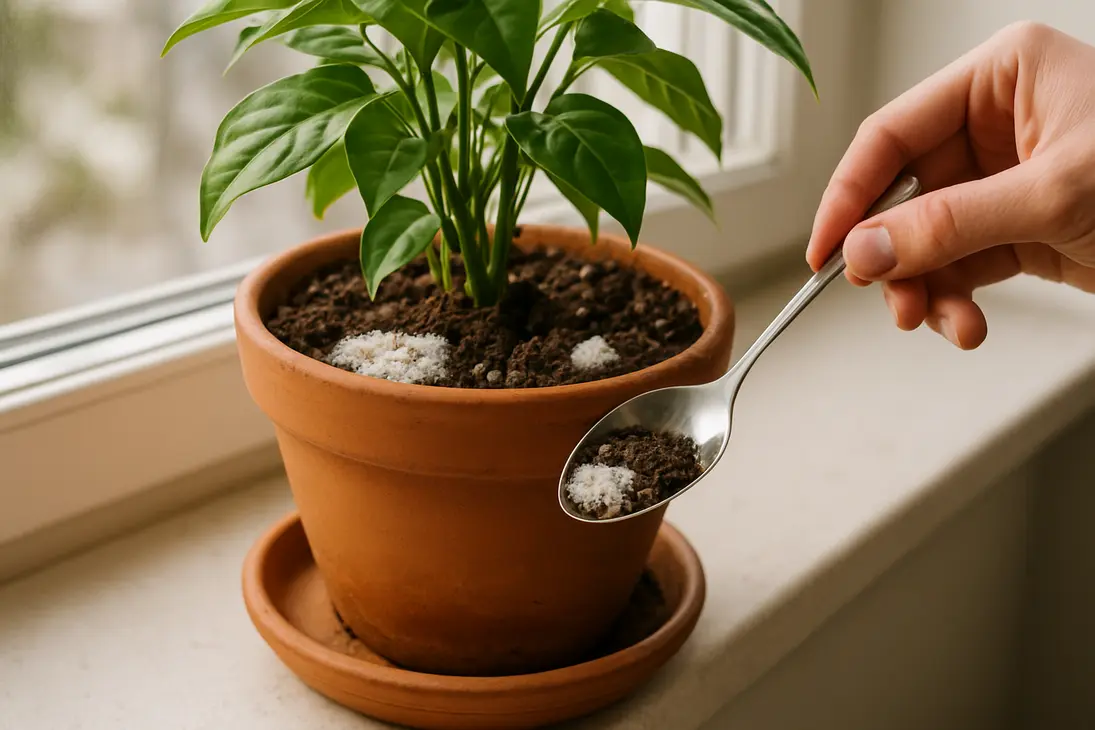
If brown tips appeared after fertilizing or you see white crust, salts may be contributing. If the pot drains well, run water slowly through the soil and let it drain completely. Empty the saucer afterward.
Pause fertilizer until the plant is actively growing and no longer developing new brown tips. When feeding resumes, use a diluted balanced houseplant fertilizer during the growing season. Do not fertilize a very dry or severely stressed plant.
How to Prevent New Brown Leaves
Prevention comes down to consistency. Pothos does not need fussy care, but it dislikes extremes: soggy soil, long dry spells, harsh sun, cold drafts, and unchecked pests.
Water when the top soil has dried
Check soil before watering instead of following a strict schedule. In bright, warm conditions, pothos may need water more often. In winter, low light, or cool rooms, it may need much less.
A practical routine is to check weekly and water only when the top layer has dried. For many homes, that may be every 1–3 weeks, depending on pot size, soil mix, light, temperature, and season.
Use a pot with drainage and airy soil
Drainage holes are strongly recommended. Without them, water can collect at the bottom and suffocate roots.
Use a potting mix that does not compact into a heavy block. If soil stays wet for many days, smells sour, or shrinks hard from the pot edges, refresh it. Airy soil lowers the risk of root rot and makes watering easier.
Avoid harsh sun and cold drafts
Keep pothos in bright, indirect light for healthy growth. Avoid locations where afternoon sun hits the leaves for hours. If scorch appears only on the window-facing side, move the plant back or filter the light.
Also protect it from cold glass and hot or cold air blasts. Environmental stress often appears as brown edges, patches, or sudden yellowing.
Check leaves regularly for pests
Make pest checks part of watering. Look under leaves, along stems, and around new growth. Early detection prevents the widespread speckling, browning, and leaf drop that can happen when infestations grow.
A quick monthly leaf wipe also removes dust and helps you spot problems early.
Prune leggy vines to encourage fuller growth
Pruning keeps pothos compact and leafy. Cut long vines just above a node, especially if the top of the pot is becoming bare. Healthy cuttings can be rooted in water or moist potting mix and added back to the pot.
If lower leaves keep browning because the base is shaded and vines are too long, pruning may help more than changing watering alone.
Conclusion
Brown pothos leaves are usually a sign of a fixable care issue. Crispy tips suggest dryness, mineral buildup, fertilizer burn, or dry air. Yellowing lower leaves may point to normal aging, low light, or watering stress. Soft brown patches and mushy stems suggest soggy soil or rot.
If lower leaves brown first, ask whether it is one old leaf or a repeated pattern. One aging leaf is normal. Several lower leaves browning together means you should check moisture, drainage, roots, and light. Damaged leaves will not recover, but once the cause is corrected, new growth should come in healthier.
FAQ
Can brown pothos leaves turn green again?
No. Once pothos leaf tissue turns brown, that part is dead and will not turn green again. The goal is to stop the cause so new leaves grow normally. If only the tip is brown, the rest of the leaf can still function.
Should I cut brown leaves off my pothos?
Yes, if the leaf is fully brown, mostly yellow, or dying. Remove it with clean scissors or pruners. If only the tip or edge is brown, trimming is optional and mostly cosmetic. Avoid removing large amounts of healthy foliage at once from a stressed plant.
How often should I water a pothos with brown leaves?
Water when the top 1–2 inches of soil have dried, not on a fixed schedule. A pothos with brown leaves might be too dry, but it might also be too wet, so check the soil first. If the soil is damp, wait. If it is dry and the pot feels light, water thoroughly and let the excess drain.
Are brown spots on pothos always caused by pests?
No. Brown spots can come from pests, but they can also result from inconsistent watering, sun scorch, leaf damage, disease, or root stress. Check for webbing, sticky residue, insects, silvery streaks, or black specks. If none are present, look next at watering, drainage, and light.
You Might Also Like