Why Is My Plant Withering Despite Getting Sunlight and Little Water?
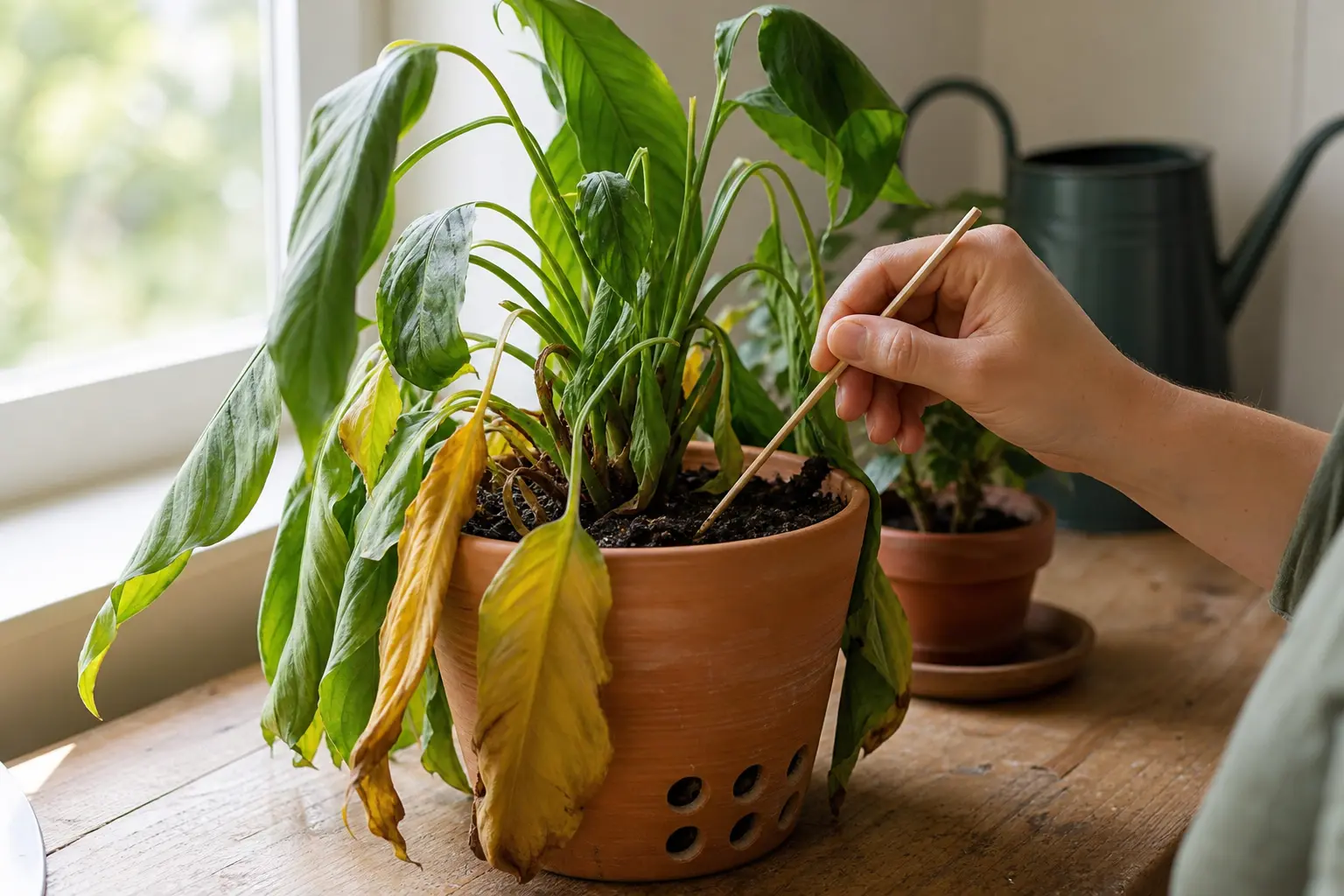
A plant can wither even when it gets sunlight and is not watered often. The issue is usually not simply too much sun or too little water, but whether the roots can absorb available moisture.
A thirsty plant wilts because the root zone is too dry. An overwatered plant can look similar because roots in dense, airless soil become damaged and cannot take up water. Heat, transplant shock, pests, fertilizer buildup, and unsuitable light can also cause drooping.
Before changing your routine, inspect the soil, pot, roots, and leaves. Watering a wilted plant without checking the cause can make the problem worse.
Start With a Quick Wilting Diagnosis
Wilting means leaves or stems have lost the pressure that keeps them firm. It is a symptom, not a diagnosis: a plant can wilt in bone-dry soil or soaking-wet soil.
Ask these questions first:
- Was the plant recently purchased, moved, repotted, or transplanted?
- Has it been placed in stronger direct sun?
- Does the pot have drainage holes?
- Is the soil dry below the surface or only dry on top?
- Are leaves crisp and dry, or limp and yellowing?
- Are there insects, webbing, spots, sticky residue, or soft stems?
Signs of underwatering
Underwatered plants often have lightweight pots and dry potting mix that may pull away from the pot sides. Leaves may become limp, dull, papery, or crispy around the edges.
Other clues include:
- Dry, brittle leaf tips and margins
- Lower leaves yellowing or dropping after prolonged dryness
- Soil that is dry below the surface
- Improvement within hours or a day after thorough watering
Very dry potting mix can become water-repellent. Water may run down the pot edge and out the drainage holes without soaking the root ball. In that case, the plant can remain wilted after watering.
Signs of overwatering and root stress
Overwatering can result from poor drainage, a pot that is too large, dense soil, standing water in a saucer, or low light and cool temperatures that slow drying.
Look for:
- Soil that remains wet for many days
- Yellowing lower leaves
- Soft, weak, or darkening stems
- Limp leaves that are not crisp
- Sour or swampy-smelling soil
- Fungus gnats around constantly moist soil
- Brown or black roots that feel soft or mushy
A plant with damaged roots may look thirsty above ground while the soil is still wet. More water will usually prolong the problem.
What to check before watering again
Do not rely only on a schedule or dry-looking surface soil. Check:
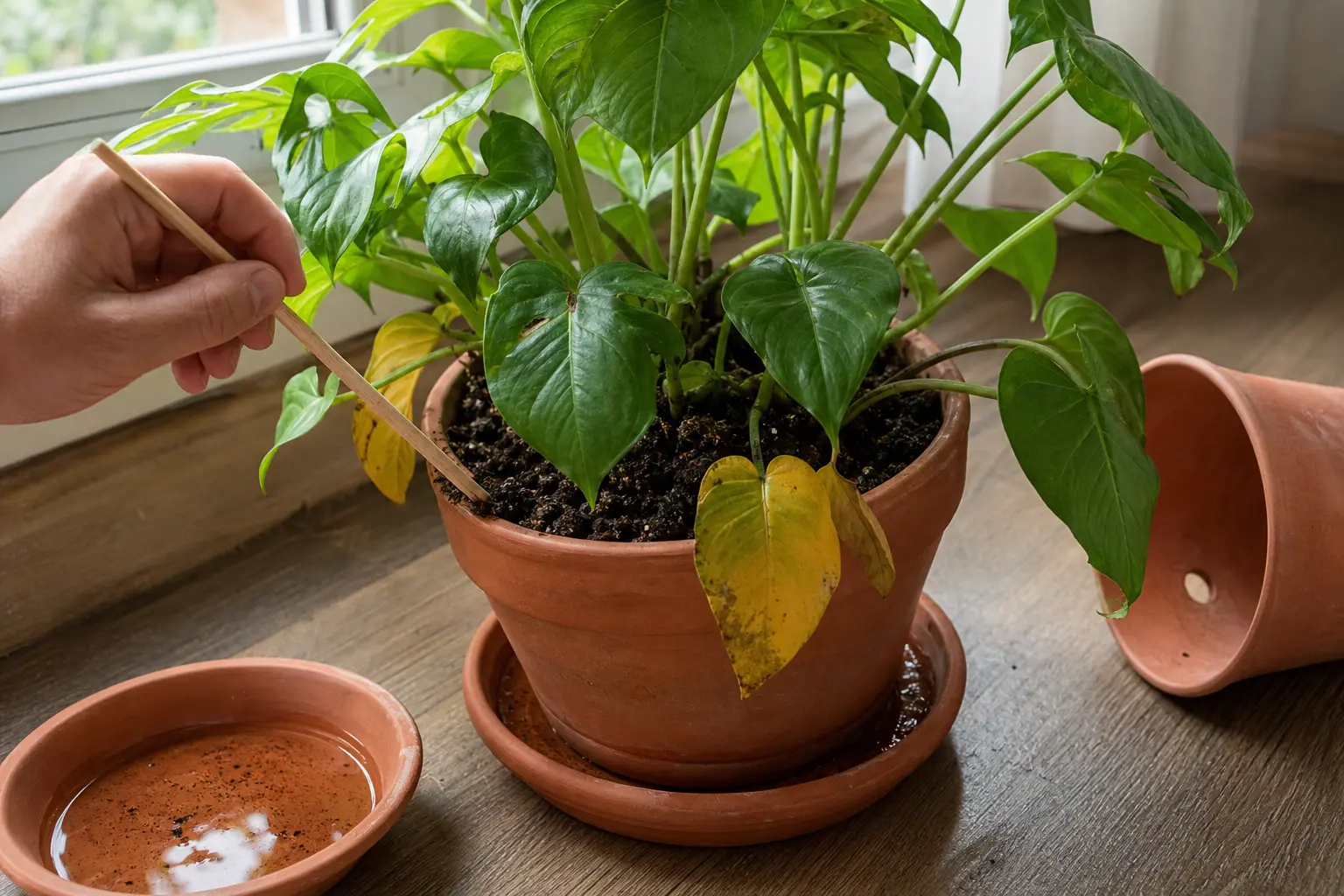
- Moisture lower in the pot. Insert a finger, wooden skewer, or probe several inches into the mix.
- Pot weight. A dry pot is usually much lighter than one that was recently watered.
- Drainage. Make sure water can escape through open drainage holes.
- Leaf texture. Crisp edges suggest dryness; soft yellowing often suggests excess moisture or root trouble.
- Recent weather and light. Heat and bright light speed drying, while cool, cloudy conditions slow it.
Check Soil Moisture, Drainage, and Root Health
The root zone matters more than a watering schedule. Roots need both water and oxygen. In heavy, compacted soil, air spaces remain filled with water and roots can suffocate or rot.
Test moisture below the soil surface
The top inch of soil often dries first, especially in warm rooms or containers. That does not mean the lower root zone is dry.
For small houseplants, push a finger into the mix. For deeper pots, use an untreated wooden skewer:
- Push it toward the lower half of the pot.
- Pull it out after a moment.
- Damp soil sticking to it means the root zone is still moist.
- A clean, dry skewer suggests watering may be needed.
For garden plants, dig a small test hole several inches from the stem and check beneath the dry surface crust.
Make sure the pot or planting area drains properly
A decorative pot without drainage holes is risky for most plants. Water can collect at the bottom where roots sit. Use such pots as cover pots, keeping the plant in a nursery pot with drainage holes.
Also check that:
- Drainage holes are not blocked.
- The pot is not sitting in water after watering.
- Outdoor sites do not puddle after rain.
- The soil is not mostly fine material that packs tightly around roots.
A layer of stones in the bottom of a pot is not a replacement for drainage holes. It can leave excess water below the root ball.
Look for compacted soil, root rot, and rootbound plants
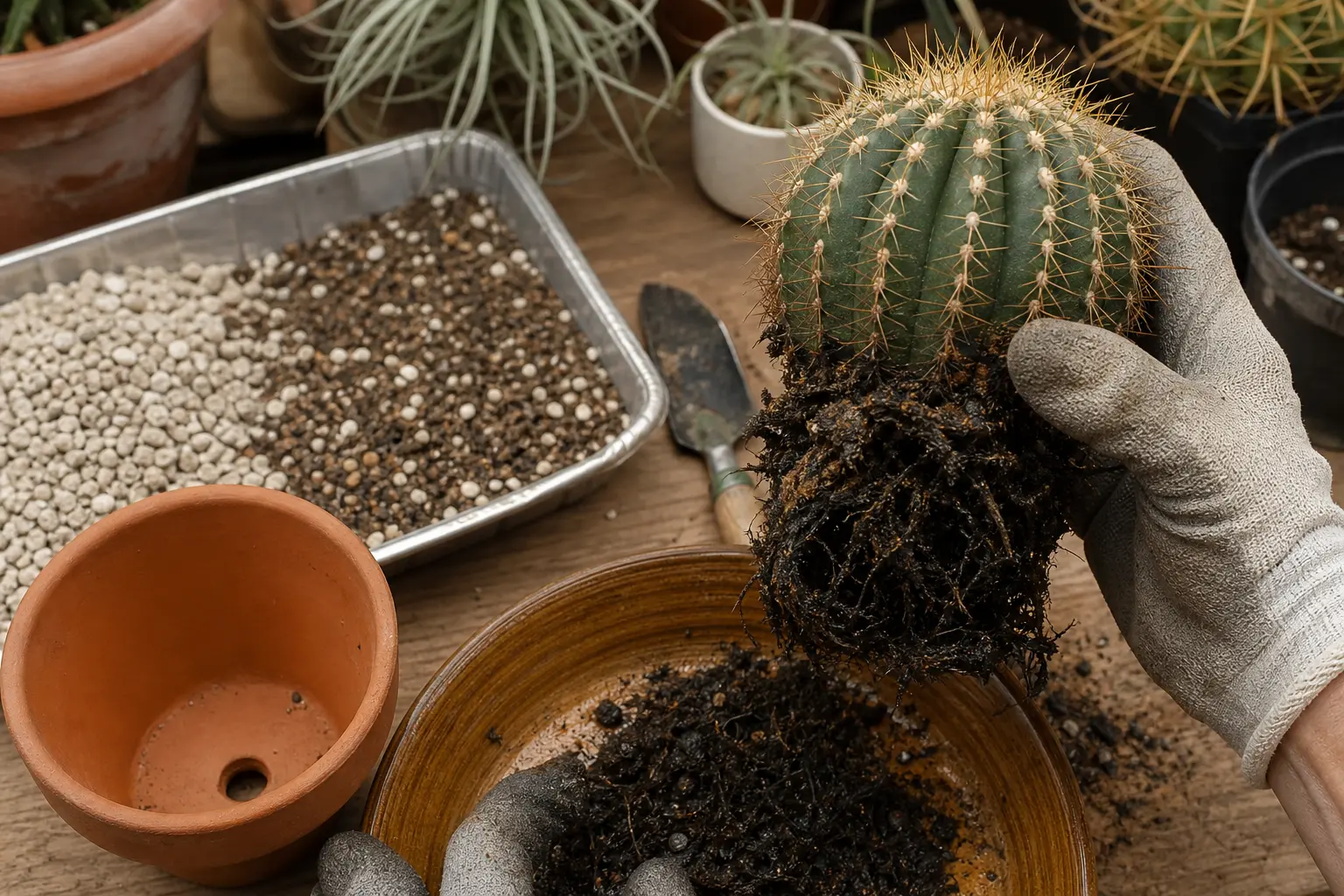
If drainage or moisture checks suggest a root problem, gently slide the plant from its pot and inspect visible roots.
Healthy roots are generally firm, though their color varies by species. Rotting roots are often soft, mushy, hollow, or foul-smelling. Remove clearly dead roots with clean scissors and repot in fresh, suitably airy mix if enough healthy roots remain.
Compacted soil may be hard, shrink away from the pot edge, or stay wet at the bottom while dry on top. Replace severely compacted mix rather than trying to fix it only by changing watering frequency.
A rootbound plant has dense roots circling the pot. It may dry out unusually fast because little soil remains to hold water. Repot only one size up; a much larger pot can keep too much soil wet around a small root system.
Adjust watering by season, pot size, and growing medium
There is no dependable “water every seven days” rule. Needs change with light, temperature, pot size, and soil type.
| Condition | What happens | Practical response |
|---|---|---|
| Bright light, warm weather, active growth | Soil dries faster | Check more often and water when the plant’s preferred dryness is reached |
| Winter, low light, cool rooms | Soil stays wet longer | Water less often and test soil before watering |
| Small or terracotta pot | Mix dries quickly | Check frequently |
| Large or glazed pot | Mix dries slowly | Let deeper soil dry enough before watering |
| Coarse, airy mix | Drains quickly | Water may be needed more often |
| Dense or compacted mix | Holds water too long | Improve or replace the medium |
Make Sure the Light and Environment Suit the Plant
Sunlight is essential, but the right amount depends on the species. A shade-loving plant in intense afternoon sun may wilt quickly, while a high-light plant far from a window may weaken slowly.
Too much direct sun and heat stress
Strong sunlight raises leaf temperature and increases water loss. A plant may wilt during midday heat even if its soil is moist because leaves lose water faster than roots can replace it.
Watch for:
- Bleached, tan, or scorched patches
- Afternoon-only wilting
- Dry brown edges on sun-facing leaves
- Hot pots, especially dark plastic containers
Move sensitive plants back from harsh south- or west-facing glass, use a sheer curtain, or provide afternoon shade outdoors. Make changes gradually, since sudden exposure to full sun can scorch plants.
Too little usable light
Low light can cause withering indirectly. Plants use less water when they receive too little light, so soil stays wet longer and root decline may follow.
Signs include stretched stems, wide gaps between leaves, small new leaves, fading color, and persistent wet soil. Move the plant closer to suitable natural light rather than adding water or fertilizer.
A few feet away from a window can be much dimmer than the windowsill. A pothos tolerates lower light than a cactus, but neither thrives in the same conditions.
Temperature swings, drafts, and low humidity
Plants can droop after sudden cold, hot air, or dry drafts. Problem locations include heating vents, air conditioners, exterior doors, radiators, and cold windows.
Low humidity often causes brown leaf tips or margins on tropical houseplants, particularly during heating season. Do not compensate by keeping soil constantly wet. Moving plants away from vents, grouping them, or using a humidifier is more reliable.
Stress after moving, transplanting, or bringing home a new plant
A newly purchased, moved, or repotted plant may be adjusting to different light, humidity, temperature, and watering conditions. Transplanting also disturbs fine roots.
Provide stable, species-appropriate conditions for a couple of weeks. Avoid repeatedly moving, fertilizing, or repotting it again unless there is an urgent drainage or root-rot issue.
Consider Nutrients, Pests, Disease, and Plant-Specific Needs
Once moisture, drainage, and placement are reasonably correct, inspect for other stressors.
Fertilizer damage and nutrient problems
Too much fertilizer can burn roots and leave salt buildup in the soil. Symptoms can include brown tips, yellowing, stunted growth, and wilting despite moist soil. A white crust on the soil or pot rim can indicate residue.
Stop fertilizing a stressed plant. If the pot drains freely and is not waterlogged, flushing the mix with plain water may remove some soluble salts. If soil is soggy or root rot is likely, repotting into fresh mix is often safer.
Nutrient shortages usually cause slow growth, pale leaves, or patterned yellowing rather than sudden collapse. Correct light, roots, and watering before applying fertilizer.
Pests and disease that weaken a plant
Check leaf undersides, stem joints, and new growth. Spider mites may leave fine webbing and stippled leaves; mealybugs resemble white cottony clusters; scale looks like attached brown bumps; aphids gather on tender growth.
Isolate infested houseplants if possible, remove visible pests, and use an appropriate treatment. Recheck regularly because hidden insects or eggs may survive the first cleanup.
Fungal or bacterial problems may cause spreading spots, dark lesions, stem rot, or a collapsing crown. Remove badly affected material, improve airflow, and avoid leaving foliage wet late in the day. Severe crown or root rot can be difficult to reverse.
Seedlings: shallow roots and sensitivity to fertilizer
Seedlings have shallow, delicate roots. They dry quickly but also suffer in saturated seed-starting mix. Keep the medium evenly moist rather than muddy, and ensure containers drain well.
Avoid strong fertilizer on very young seedlings. Once they have true leaves and are growing steadily, use a gentle feeding approach appropriate to the plant type. Provide strong enough light so seedlings do not stretch and flop.
Exceptions for succulents, carnivorous plants, and common houseplants
Plant-specific needs can override general advice.
- Succulents and cacti: Need fast-draining mix and substantial drying between waterings. Soft or blackened tissue usually indicates excess moisture and rot.
- Carnivorous plants: Often prefer consistently moist conditions and may be sensitive to mineral-heavy water and fertilizer.
- Peace lilies, calatheas, and similar tropical foliage plants: Prefer bright indirect light and evenly managed moisture, not hot direct sun or stagnant soil.
- Spider plants, pothos, and philodendrons: Tolerate some drying but can develop root problems if left wet for long periods.
If you do not know the species, identify it before making major changes. A care method suitable for a jade plant can harm a Venus flytrap.
How to Help a Withering Plant Recover
Recovery depends on correcting the cause without creating another problem. Do not water, fertilize, repot, prune, and move the plant all at once. Address the clearest issue, then observe.
If the plant is too dry
Water slowly and thoroughly until the root ball is moist and excess drains from the pot. Empty the saucer after draining.
If water runs through extremely dry soil, place the pot in a shallow tray of water briefly so the mix can absorb moisture from below, then remove it and let it drain. For garden plants, water deeply around the root zone.
Move severely dry plants out of harsh direct sun temporarily. Do not fertilize immediately, since stressed roots are not ready to process extra nutrients.
If the soil is staying too wet
Stop watering until the root zone has dried to an appropriate level for the species. Then correct the cause:
- Empty water from saucers and cover pots.
- Move the plant to brighter suitable light if low light is slowing drying.
- Keep it away from cold drafts.
- Confirm drainage holes are open.
- Replace compacted or sour-smelling soil.
- Repot if roots are rotting, the pot lacks drainage, or the medium will not dry normally.
Remove only leaves or stems that are fully dead, mushy, or clearly diseased. Green leaves still help recovery.
When to repot or seek plant-specific advice
Repot for a clear reason: root rot, compacted mix, blocked drainage, unsuitable pots, soil pests, or severe rootbound growth.
Use fresh medium suited to the plant and a pot only slightly larger than the root mass. After repotting, provide stable, moderate conditions and allow time for recovery.
Seek plant-specific help if a plant is unusual, valuable, or declining quickly despite corrected care. Photos of the whole plant, symptoms, pot, soil, roots, light, and watering routine can make diagnosis more accurate.
Conclusion
Sunlight and little water do not rule out plant stress. The most common causes are true dehydration or roots that cannot function because soil is too wet, dense, cold, or poorly drained.
Check moisture beneath the surface before watering, inspect drainage and roots, and match light to the species. Then consider recent moves, temperature changes, fertilizer, pests, and plant-specific needs. A measured correction is more effective than repeatedly watering a wilted plant.
FAQ
Can a plant wilt from too much water?
Yes. Overwatered roots lose oxygen and may rot, preventing normal water uptake. The plant can droop even while soil is wet. Yellowing leaves, soft stems, sour-smelling soil, and persistent moisture are common warning signs.
How often should I water a withering plant?
Do not water on a fixed schedule. Test soil below the surface and consider the plant type, pot size, season, light level, and growing medium. Water thoroughly when the root zone has dried to the level that plant prefers.
Why is my plant drooping after I moved or repotted it?
Moving changes light, temperature, humidity, and drying speed. Repotting can disturb fine water-absorbing roots. Keep the plant in steady, suitable conditions and avoid fertilizer until it establishes, unless severe rot requires action.
Can too much sunlight make a plant wither?
Yes. Intense direct sun and heat can make leaves lose moisture faster than roots can replace it. This is common with shade-loving houseplants, recently moved plants, and small pots that heat quickly. Look for bleached patches, scorched edges, or afternoon-only wilting and reduce harsh exposure gradually.
You Might Also Like