What Causes Root Rot in Cacti?
The most common causes of cactus root rot are soil that stays wet too long, inadequate drainage, and watering that does not match the plant’s light, temperature, and growth rate. Cacti need moisture, but their roots also need air. When the root zone remains saturated, oxygen levels fall, roots weaken or die, and decay organisms can invade damaged tissue.
Root rot is not always simply “watering too much.” A cactus can rot after a modest watering if it is planted in dense old soil, sitting in a pot without drainage, kept in a cold room, or growing slowly in weak light.
How Cactus Root Rot Develops
Roots absorb water, nutrients, and oxygen from air spaces between soil particles. In a suitable cactus mix, excess water drains away and air returns as the pot dries. In waterlogged soil, those spaces remain filled with water.
Without enough oxygen, roots cannot function normally. Fine feeder roots die, and the plant becomes less able to take up water even though the soil is wet. Fungi, bacteria, and other decay organisms can then colonize damaged tissue. Rot may spread upward into the lower stem, causing soft, brown, black, or foul-smelling areas.
Excess Watering or Watering Too Often
Watering too frequently is the leading cause of cactus root rot. The issue is not always the amount given at one time; it is whether the root zone dries adequately before the next watering.
A thorough watering followed by a proper drying period is usually safer than small amounts every few days. Frequent light watering can keep the center of the pot damp, especially in peat-heavy soil. The surface may look dry while the lower root ball remains wet.
Common problems include:
- Watering on a fixed weekly schedule regardless of season or weather.
- Watering again because only the top inch of mix feels dry.
- Giving a dormant cactus the same water it received during active growth.
- Watering after a cool or cloudy period before the previous watering has dried.
- Watering immediately after repotting when roots were damaged or trimmed.
There is no universal number of days between waterings. A cactus in bright summer conditions may dry quickly, while the same plant in a cool indoor room may need little water for weeks.
Soil That Stays Wet for Too Long
Wet soil becomes risky when it remains wet beyond what the roots can tolerate. Drying time depends on soil texture, pot size and material, temperature, light, humidity, and root-system size.
A small cactus in a large pot full of moisture-retentive compost may stay wet long after the plant has stopped using water. Soil also dries unevenly: the top may dry first while the lower root zone remains saturated. This is common in deep pots and mixes containing fine peat, compost, or decomposed organic material.
Poor Oxygen Around the Roots
Poor oxygen is the mechanism that makes excess moisture harmful. Roots need porous media with air-filled gaps. Fine particles pack tightly, and wet organic matter can collapse around roots, leaving little airflow.
Compaction is especially problematic in pots because water has limited routes for escape. Dense, saturated mix dries slowly and can make watering difficult to judge.
Growing Conditions That Keep Cactus Roots Too Wet
A reasonable watering routine can still cause root rot if the pot and environment prevent the mix from drying. Instead of asking only how often to water, consider how quickly that specific cactus dries in its pot and location.
Dense, Degraded, or Poorly Draining Potting Mix
Ordinary houseplant compost is often too dense and moisture-retentive for many cacti, particularly indoors. Fine-textured mixes hold more water and less air than gritty, open cactus mixes.
Potting media also changes with age. Organic components break down, particles become smaller, and the mix settles. A cactus that was healthy in fresh soil may struggle after a few years because its root zone no longer drains or aerates well.
A useful cactus mix should drain freely while holding enough moisture for roots after watering. Many growers amend commercial cactus mix with coarse mineral materials such as pumice, perlite, grit, or lava rock.
- Desert cacti generally benefit from a particularly open, fast-drying mix.
- Epiphytic cacti, such as Christmas cactus, prefer more organic moisture retention but should not remain waterlogged.
- Cool, low-light indoor conditions require a more open mix than hot, bright outdoor conditions.
Pots Without Drainage Holes or Oversized Pots
A pot without a drainage hole is a major root-rot risk. Excess water collects at the bottom around the roots. Decorative cachepots are acceptable only if the cactus remains in an inner pot with drainage and is removed for watering. Do not leave water standing in the outer pot.
Oversized pots create a similar issue. A small root system cannot use moisture from a large volume of soil quickly, so unrooted areas remain wet too long. Choose a pot that gives modest room for growth rather than several inches of extra width.
Terracotta can help mix dry faster because moisture evaporates through the walls, but it does not replace drainage or an appropriate soil mix.
Cool Temperatures, Low Light, and Slow Growth
Cacti use water most actively when they are warm, well lit, and growing. In cool or dim conditions, growth slows and moisture stays in the pot longer. Watering at the same rate year-round ignores this change.
A watering interval that is safe during bright summer weather may cause rot in winter. Low light also weakens plants and reduces their resilience when roots stay wet.
Humid or Poorly Ventilated Conditions
Humidity and still air slow evaporation and overall drying. This is most relevant in enclosed rooms, terrariums, crowded shelves, and humid climates.
Provide reasonable air circulation, space plants so pots can dry normally, and empty saucers promptly. Avoid placing desert cacti among moisture-loving plants so densely that their pot remains damp for extended periods.
Other Causes and Contributors to Cactus Root Damage
Too much moisture is the usual starting point, but other root stresses can make rot more likely. Healthy roots recover from minor mistakes better than injured, burned, or pest-damaged roots.
Root Injuries During Repotting or Handling
Roots can be torn or crushed during repotting, especially fine roots. Small injuries do not automatically cause rot, but they become risky if the cactus is planted into wet soil immediately afterward.
After repotting a dry-grown cactus, it is usually sensible to wait before watering, particularly if roots were trimmed or broken. The exact timing depends on the extent of damage, temperature, and cactus type, but the principle is consistent: do not saturate fresh wounds.
Use clean tools and containers. If you remove rotten sections, disinfect tools between plants.
Fungal or Bacterial Rot Entering Damaged Roots
Fungi and bacteria are often involved in root rot, but they are usually opportunists rather than the original cause. They thrive where tissue has been weakened by poor oxygen, injury, or cold wet conditions.
Bacterial rot may produce a very soft, wet, unpleasant-smelling area. Fungal decay can appear brown, black, dry, or mushy. Because symptoms overlap, home growers should focus on sanitation and moisture control rather than identifying the exact organism.
Remove decayed roots, discard contaminated mix, clean the pot, and replant only healthy, firm tissue in fresh, dry, well-draining media.
Pests or Contaminated Growing Media
Root-feeding pests can injure roots and create entry points for rot. Root mealybugs may leave white, waxy deposits around roots and in soil crevices. Fungus gnat larvae are also more common in persistently wet organic soil.
Use fresh mix when repotting a cactus with suspected root rot. Inspect roots carefully, including near the crown where the roots meet the stem.
Fertilizer Salt Buildup and Other Root Stress
Overfertilizing does not directly cause classic waterlogging rot, but fertilizer salts can damage roots. Stressed roots absorb water poorly and are more vulnerable in wet conditions. Salt buildup is more likely when fertilizer is applied too often or too strongly.
Other stresses include sudden cold, root-bound conditions, and prolonged drought followed by heavy watering. These do not guarantee rot, but they can reduce the plant’s ability to cope with wet soil.
How to Tell Root Rot From Underwatering
A shriveled cactus does not automatically need water. Both underwatering and root rot can make a cactus look deflated because the plant is not receiving enough usable water. The difference is whether the roots are dry but functional or damaged and unable to absorb moisture.
Signs of Root Rot Below the Soil Line
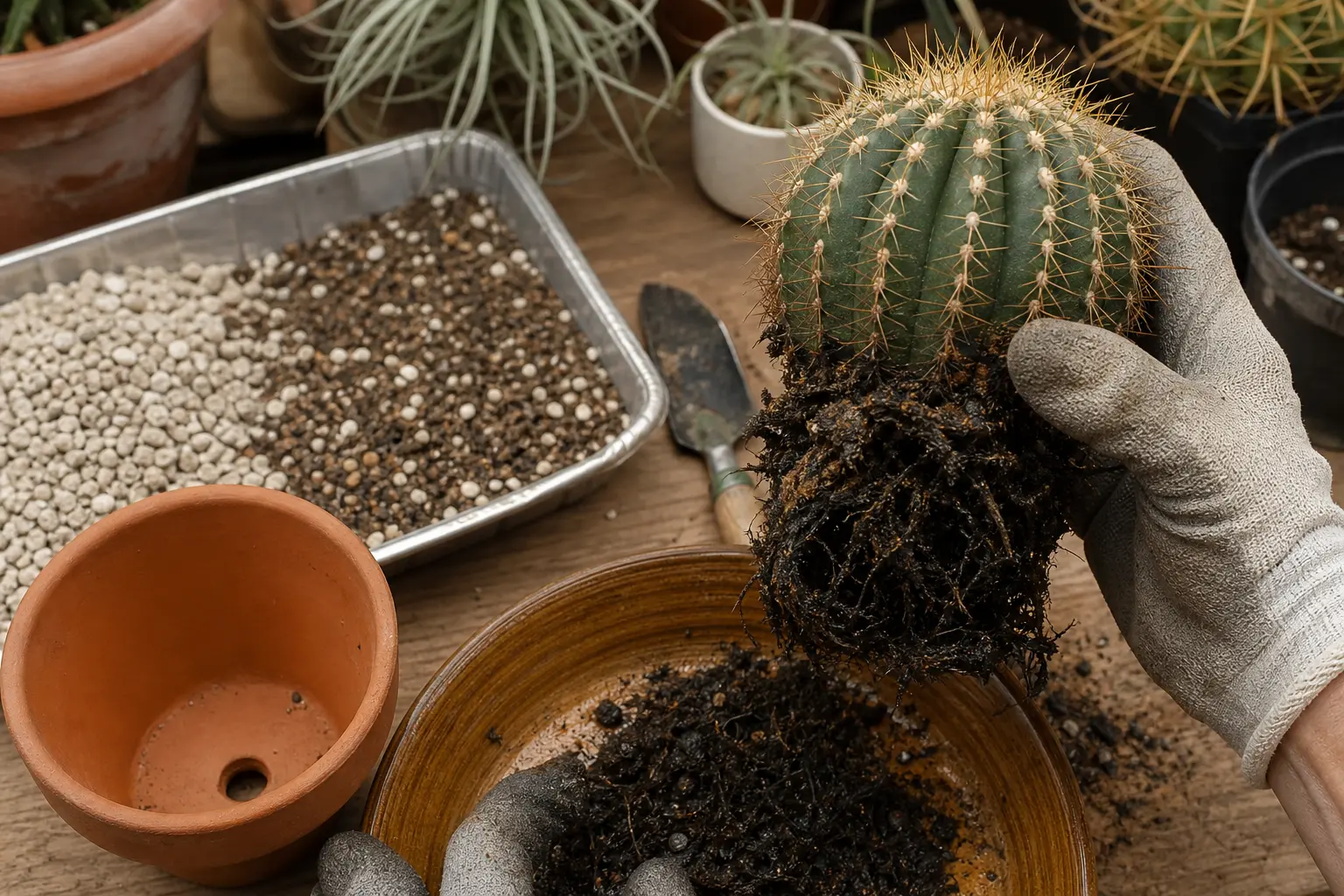
The most reliable diagnosis requires checking the roots. Ease the cactus out of its pot with gloves, folded newspaper, tongs, or another safe method appropriate for its spines.
Healthy roots are usually firm and flexible. Their color can range from pale cream to tan or brown depending on age and species. Texture matters more than color.
Signs of rot include:
- Black, dark brown, mushy, hollow, or slimy roots.
- Roots that detach easily or leave a thin outer sheath behind.
- A sour, musty, or foul smell from the root ball.
- Wet, compacted soil clinging around unhealthy roots.
- Soft or discolored tissue at the cactus base or root crown.
Dry, dead roots can also be brown and brittle. Rotten roots feel soft or collapse when pressed, while dry roots tend to snap or crumble.
Above-Ground Symptoms That Can Be Misleading
Early root rot can cause stalled growth, dull color, slight shriveling, or a cactus that does not firm up after watering. These symptoms are not diagnostic on their own.
| Symptom | Could indicate root rot | Could also indicate |
|---|---|---|
| Wrinkling or shriveling | Roots cannot take up water | Normal thirst, winter dormancy |
| Yellowing or paling | Root stress | Low light or nutrient issues |
| Soft lower stem | Rot spreading upward | Physical damage or cold injury |
| No growth in warm season | Root damage | Insufficient light or dormancy |
| Soil staying wet | High rot risk | A pot or soil problem before rot begins |
The strongest warning sign is a cactus that remains wrinkled despite wet soil. Adding more water often worsens the problem.
Why a Shriveling Cactus May Still Have Rotting Roots
A healthy cactus stores water in its stem and may wrinkle gradually during drought. Once watered, it should regain firmness over time if its roots are healthy.
With root rot, soil may be wet but damaged roots cannot transport moisture into the plant. The cactus dehydrates while sitting in a wet pot. Before watering a shriveled cactus, check pot weight, deeper soil moisture, temperature, and root health if there is doubt.
How to Prevent Cactus Root Rot
Prevention means matching water retention to the cactus’s ability to use water. Give roots an airy mix, a draining pot, and enough time to dry between waterings.
Let the Potting Mix Dry Before Watering Again
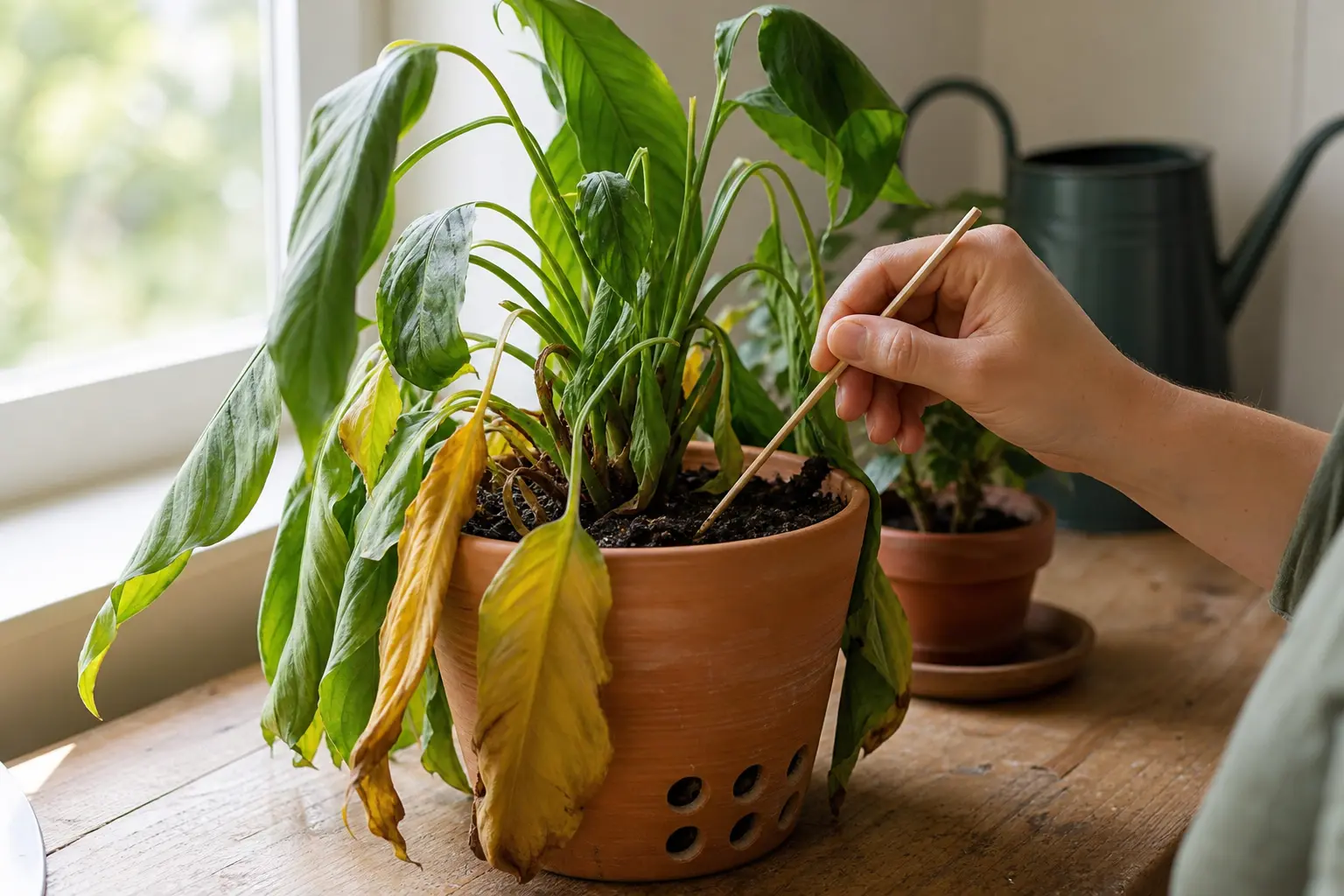
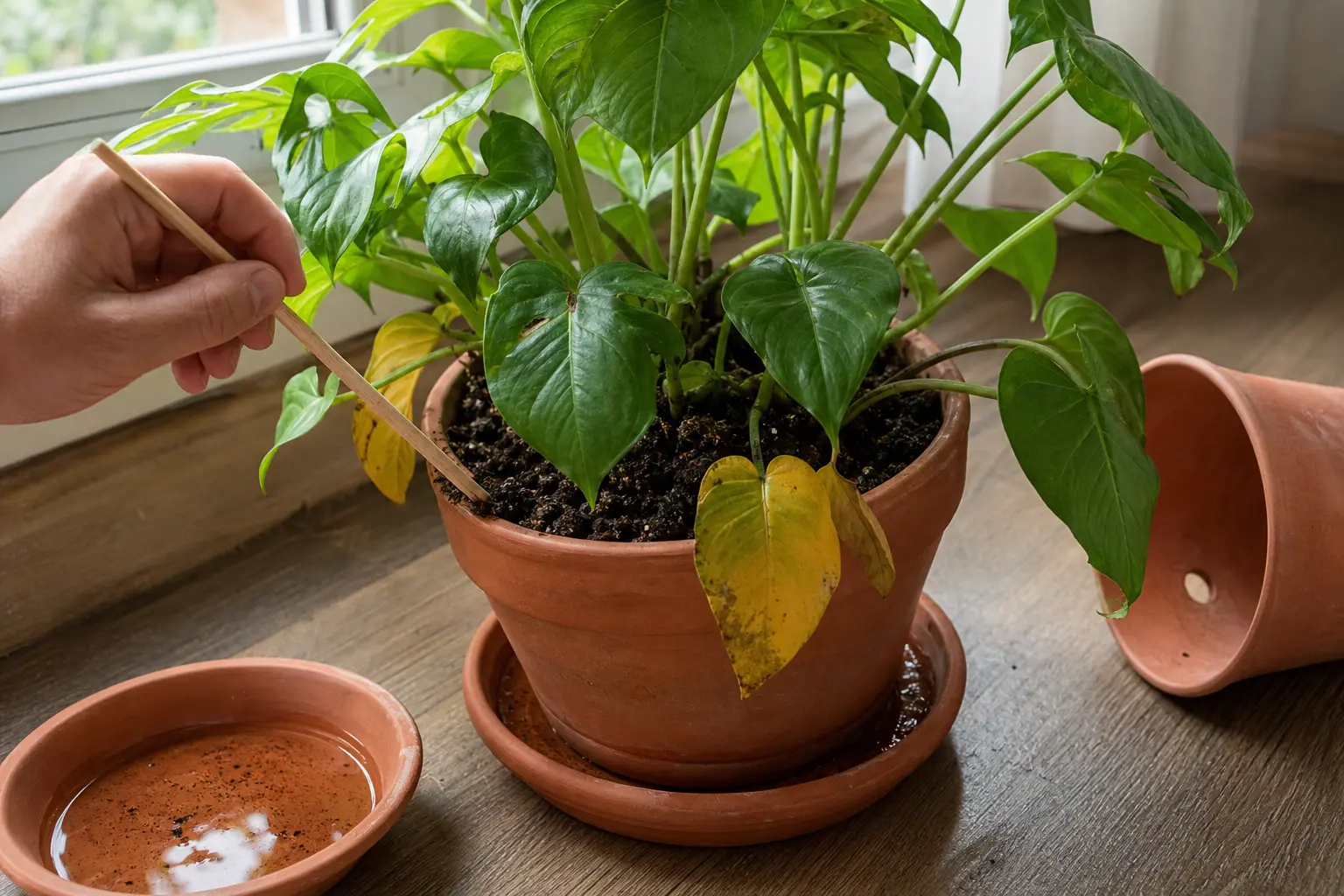
Do not water by calendar alone. Check the mix deeper than the surface with a wooden skewer or chopstick, or lift the pot to judge its weight. A dry pot is noticeably lighter than a freshly watered one.
When the mix has dried appropriately, water thoroughly enough that moisture reaches the roots and runs from the drainage hole. Discard drainage water, then wait until the mix dries again.
Use a Fast-Draining Cactus Mix and a Draining Pot
Use a pot with at least one drainage hole and a fresh, open cactus mix suited to the plant and your conditions. In cool, humid, or dim homes, err toward a more mineral, fast-draining blend.
Avoid adding a drainage layer of stones to a pot without holes. It does not solve trapped water; water still has nowhere to escape.
Adjust Watering for Season, Light, and Temperature
Water more cautiously when light is low, temperatures are cool, or the cactus is resting. Water more readily during active growth only when the mix has dried and the plant has adequate warmth and light.
Weather matters. A hot, bright week and a cool, overcast week do not call for the same watering interval. A cactus moved indoors, repotted, or shifted to shade will often need less water until you learn how quickly its pot dries.
Inspect Roots When Repotting
Repotting is an opportunity to assess root health before symptoms become severe. Check for compacted soil, pests, dead roots, and soft tissue near the base.
Remove loose, dead, or rotten roots with clean tools. If substantial rot is present, discard the old mix. Replant in a properly sized draining pot, and avoid immediate watering if roots have been cut or injured.
Conclusion
Cactus root rot develops when roots remain too wet and oxygen-starved long enough to weaken, die, and decay. Overwatering is common, but dense old soil, poor drainage, oversized pots, cool temperatures, low light, high humidity, and damaged roots all contribute.
The best prevention is not a rigid watering schedule. Use a draining pot, airy cactus mix, suitable light and temperature, and water only after the mix has dried sufficiently. When a cactus looks shriveled in wet soil, inspect the roots before reaching for the watering can.
FAQ
Can a cactus get root rot from watering too frequently?
Yes. Frequent watering keeps air out of the root zone and does not allow roots to recover between wet periods. Even small amounts can cause problems if they keep the center of the pot continually damp. Base watering on drying time, not a fixed schedule.
Can root rot happen even if the cactus soil feels dry on top?
Yes. The top layer can dry while the lower root zone remains wet, especially in deep pots, dense mixes, or containers without drainage. Check moisture farther down and lift the container to judge its weight.
Will letting the soil dry out cure cactus root rot?
Drying the soil can stop conditions from worsening if roots are only mildly stressed, but it cannot restore roots that have decayed. If a cactus has soft roots, a foul smell, or rot spreading toward the stem, remove it from the pot, trim away dead tissue, and repot healthy material in fresh, dry, fast-draining mix.
What should healthy cactus roots look like?
Healthy roots should feel firm, intact, and flexible rather than slimy, hollow, or mushy. They may be cream-colored, tan, or brown depending on age and species. Fine roots can be delicate, but they should not pull away or collapse when touched gently.
You Might Also Like