Is Your ZZ Plant Overwatered? Signs, Fixes, and Prevention
Overwatering is one of the most common ZZ plant problems because the plant often looks tough until it suddenly declines. ZZ plants store water in thick underground rhizomes, grow slowly indoors, and usually need much less water than many common houseplants.
The confusing part is that an overwatered ZZ plant can look thirsty: yellow leaves, drooping stalks, and limp growth. Before watering again, check the soil, pot, and roots. In many cases, the best first fix is to stop watering and improve drainage.
What Overwatering Looks Like on a ZZ Plant
An overwatered ZZ plant usually declines gradually. The soil stays damp too long, leaves yellow, and stems may soften near the base. Because the rhizomes store moisture, the plant can look acceptable for a while even when the root zone is too wet.
Yellowing Leaves
Yellow leaves are one of the most common signs of overwatering. A few older yellow leaflets are not always serious, especially after moving, repotting, or low-light stress. Overwatering is more likely when yellowing appears with:
- Damp soil several days after watering
- Soft or wobbly stems
- A sour smell from the pot
- Brown or black marks near the soil line
- Yellowing that spreads quickly
When soil stays saturated, roots lose oxygen and begin to fail. Damaged roots cannot move water and nutrients properly, so the plant yellows even though the pot is wet.
Mushy or Soft Stems
Healthy ZZ stalks should feel firm. If a stalk is soft, mushy, translucent, or squishy near the soil line, rot may be starting.
If only one stalk is affected, remove it and inspect the base. If several stems are soft, the problem may be in the rhizomes or roots. Mushy tissue usually does not recover, but firm parts of the plant may still be saved.
Drooping or Collapsing Stalks
ZZ plants can droop from underwatering, low light, age, or physical damage. Overwatering-related drooping usually happens while the soil is still wet. The stalks may lean, bend, or collapse because the roots are no longer healthy enough to support them.
A drooping ZZ plant in dry soil may need water. A drooping ZZ plant in damp soil should not be watered again until you investigate.
Brown or Black Spots
Brown or black spots can come from several issues, including cold damage, sun scorch, pests, or aging. With overwatering, the most concerning spots are soft, dark, or spreading from the base of the stems.
Watch for:
- Blackened stem bases
- Soft brown patches
- Water-soaked tissue
- Dark spots plus a bad smell
- Mushy stems with yellowing leaves
Dry, crispy tips alone are not a clear overwatering sign. Soft black or brown tissue near the soil line is more serious.
Soggy Soil That Stays Wet Too Long
The soil often gives the clearest answer. ZZ plants should dry out between waterings. If the mix stays wet for a week or more indoors, especially in low light, the plant is at risk.
The top inch may dry while the lower pot remains wet. Dense soil, oversized pots, glazed containers, cachepots without drainage, and saucers full of water can all keep the root zone too damp.
Why ZZ Plants Are Easy to Overwater
ZZ plants are low-maintenance, but they are not moisture-loving plants. Their drought tolerance is exactly why frequent watering causes problems.
Water-Storing Rhizomes
ZZ plants grow from thick, potato-like rhizomes that store water and energy. These rhizomes help the plant survive dry periods, but they can rot if kept wet too long.
Treat a ZZ plant more like a drought-tolerant succulent than a plant that wants constantly moist soil. It can handle drying out. It cannot handle sitting in soggy mix.
Low-Light Conditions Slow Water Use
ZZ plants tolerate low light, but they use water more slowly in dim conditions. A plant in a hallway, office corner, or cool room may take much longer to dry than one near bright indirect light.
This is why fixed weekly watering often fails. In low light, the plant grows slowly, pulls less moisture from the soil, and stays wet longer.
Dense Soil and Poor Drainage Increase Risk
Even careful watering can cause problems if the potting setup holds too much moisture. Common risk factors include:
- Pots without drainage holes
- Dense, compacted, peat-heavy soil
- Oversized pots with extra wet soil
- Decorative cachepots that collect water
- Saucers left full after watering
- Low light combined with frequent watering
A good setup lets water run through, allows air around the roots, and dries down before the next watering.
How to Confirm Overwatering Before You Water Again
Do not judge only by leaves. Yellowing and drooping can happen from both too much and too little water. Always check the soil and pot before adding more.
Check the Soil Below the Surface
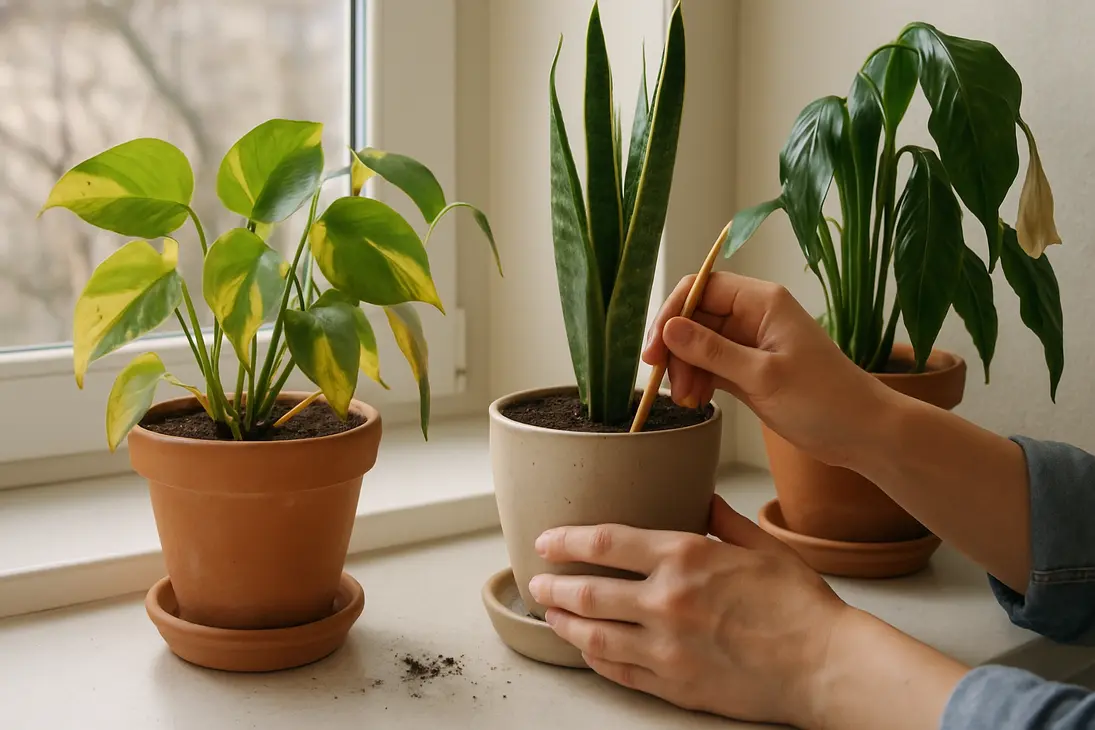
The surface can be misleading. Push a finger, chopstick, skewer, or moisture meter probe several inches into the pot. If damp soil clings to it, wait.
Signs the plant is still too wet include:
- Soil sticks to your finger or skewer
- The pot feels heavy
- The lower soil smells sour or musty
- Drainage holes show damp soil
- A clear nursery pot has condensation
For ZZ plants, waiting a few extra days is usually safer than watering too soon.
Use the Finger Test or a Moisture Meter
The finger test works well for small pots: water only when the mix is dry well below the surface. For larger pots, a skewer or moisture meter can help you check deeper.
A moisture meter is useful but not perfect. Readings can be inconsistent in chunky or salty soil. Use it with other clues, such as pot weight, soil smell, and stem firmness.
If the plant droops while the soil reads wet, inspect for root problems instead of watering.
Inspect the Pot and Drainage Holes
A ZZ plant needs drainage. Check whether the pot has open drainage holes, whether water is sitting in a saucer or decorative pot, and whether the container is much larger than the root ball.
If the plant is in a pot without drainage, move it to a draining nursery pot. You can still place that nursery pot inside a decorative cachepot, but remove it for watering and let it drain fully before putting it back.
Look for Root Rot Signs
If the plant has yellowing leaves, mushy stems, bad-smelling soil, or continued decline, inspect the roots.
Healthy roots are firm and light-colored to tan. Healthy rhizomes are firm. Rotten roots are often brown or black, mushy, slimy, hollow, or foul-smelling.
Root rot signs include:
- Roots that slide apart when touched
- Soft rhizomes
- Blackened stem bases
- Stalks detaching easily
- Sour or swampy soil smell
If rot is present, simply drying the old soil may not be enough.
How to Save an Overwatered ZZ Plant
The rescue method depends on severity. Mild overwatering may improve with drying. Mushy roots, stems, or rhizomes need trimming and fresh soil.
Stop Watering and Let the Soil Dry
If the stems are firm and the main issue is yellowing, stop watering. Move the plant to bright, indirect light, empty saucers or cachepots, and improve airflow. Keep it away from cold drafts.
Do not fertilize a stressed, overwatered ZZ plant. Damaged roots cannot use fertilizer well, and salts may add stress.
Remove the Plant and Check the Roots
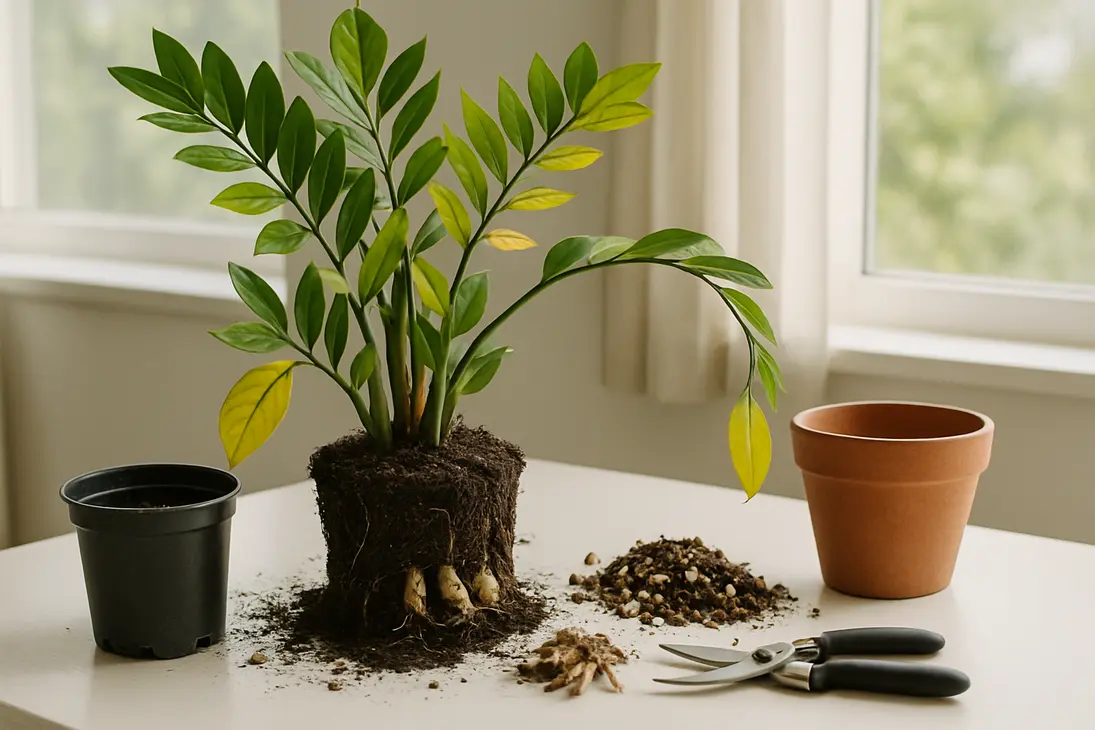
If the soil smells bad, the stems are mushy, or the plant keeps declining, slide it out of the pot. Loosen and remove wet, compacted, sour soil so you can see the roots and rhizomes.
If the root ball is soaking wet, let it rest briefly on newspaper or a towel while you prepare a clean pot and fresh mix. Do not leave roots exposed for a long time, but avoid putting them straight back into soggy soil.
Trim Rotten Roots and Mushy Stems
Use clean, sharp scissors or pruners. Cut away black, slimy, hollow, mushy, or foul-smelling roots. Remove stems that are soft at the base or collapsing.
Keep firm roots and firm rhizomes. Discard fully mushy rhizomes. Yellow leaves will not turn green again, and rotten stems will not heal, so removing damaged tissue helps stop decay from spreading.
Repot in Fresh, Fast-Draining Soil
Repot into fresh, dry or barely moist, fast-draining mix. Do not reuse waterlogged soil. Choose a pot with drainage holes and avoid sizing up too much; a pot only slightly wider than the root system is usually better.
A good ZZ mix can be indoor potting soil amended with perlite, pumice, orchid bark, or coarse coco chips. The exact recipe matters less than drainage and air space.
Keep rhizomes at about the same depth, avoid burying stems deeply, and do not compact the soil hard.
Wait Before Watering Again
After repotting a waterlogged ZZ plant, wait before watering unless the new mix and roots are very dry. If many roots were removed, water lightly to moderately at first because the reduced root system cannot use as much moisture.
Watch for firm remaining stems, slower yellowing, and soil that dries in a reasonable time. ZZ plants recover slowly, so stability is the first good sign.
How to Prevent Overwatering in the Future
The best prevention rule is simple: water the plant, not the calendar. ZZ plant watering depends on light, season, pot size, soil mix, and temperature.
Water Only When the Soil Is Dry
Let the soil dry well below the surface before watering again. In many homes, ZZ plants may need water every two to four weeks, but low light or winter conditions can stretch that much longer.
Before watering, ask:
- Is the soil dry several inches down?
- Does the pot feel lighter?
- Are the stems firm?
- Is the plant actively growing?
If you are unsure, wait a few days and check again.
Use a Pot With Drainage
Drainage is essential for long-term ZZ plant health. A pot without holes traps excess water at the bottom and makes watering risky.
If you like a decorative pot without drainage, use it as a cover pot. Keep the ZZ in a plastic nursery pot with holes, remove it to water, let it drain, and then return it. Empty saucers after watering.
Choose a Chunky, Well-Draining Mix
A chunky mix helps roots get oxygen and prevents the pot from staying wet for weeks. Good options include:
- Indoor potting mix plus perlite or pumice
- Potting mix plus orchid bark
- Cactus/succulent mix adjusted with some potting mix if it dries too fast
If the plant stays wet for weeks, the mix may be too dense, the pot too large, the light too low, or watering too frequent.
Adjust Watering for Light and Season
ZZ plants in bright indirect light usually use water faster than plants in dim rooms. They also slow down in winter or cool conditions.
Use conditions as your guide:
- Bright, warm room: check more often
- Low-light office or hallway: water less often
- Winter or cool room: water much less
- Small terracotta pot: dries faster
- Large glazed or plastic pot: dries slower
A ZZ plant that needed water every few weeks in summer may need far less in winter.
Avoid “Little Sips” and Water Properly When Needed
Frequent small amounts can create uneven moisture. The surface gets wet repeatedly, while the lower pot may stay dry or, in dense soil, remain constantly damp.
When the soil is genuinely dry, water thoroughly until some water drains from the bottom. Let the pot drain completely, empty the saucer, and then wait until the soil dries again. This “water well, then wait” method works better than frequent sipping.
Conclusion
An overwatered ZZ plant often shows yellow leaves, soft stems, drooping stalks, dark tissue near the base, and soil that stays wet too long. Always check the soil before watering a stressed plant. If the mix is damp, more water can make the problem worse.
Mild cases may recover by drying out. If roots, rhizomes, or stems are mushy, remove damaged tissue and repot the firm, healthy parts in fresh, fast-draining soil.
For prevention, use a pot with drainage, choose an airy mix, and water only after the soil dries down. With less frequent watering and better drainage, ZZ plants are usually resilient and forgiving.
FAQ
How do I know if my ZZ plant is overwatered or underwatered?
Check the soil. An overwatered ZZ plant usually has damp soil, yellowing leaves, drooping stalks, and possibly soft stems. An underwatered ZZ plant has very dry soil, a lighter pot, and may show wrinkled or curling leaflets.
If the plant droops while the soil is wet, do not water. Check the roots instead.
Can a ZZ plant recover from root rot?
Yes, if enough firm roots or healthy rhizomes remain. Remove the plant, cut away mushy or blackened roots, discard soft rhizomes, and repot healthy sections in fresh, fast-draining soil.
Recovery is not guaranteed if most rhizomes are rotten, and new growth may take time.
Should I cut off yellow leaves on an overwatered ZZ plant?
Yes. Fully yellow leaves will not turn green again. Use clean scissors or pruners to remove yellow leaflets or damaged stalks.
If a stalk is firm and only a few leaflets are yellow, remove only those leaflets. If the stalk is soft at the base, remove the whole stalk and inspect for rot.
How often should I water a ZZ plant indoors?
Water only when the soil has dried well below the surface. In many homes, that may be every two to four weeks, but timing varies with light, season, pot size, and soil.
Do not follow a fixed schedule. Check the soil and pot weight, then water thoroughly only when the mix is dry.
You Might Also Like