How to Tell If You’re Overwatering a Potted Plant
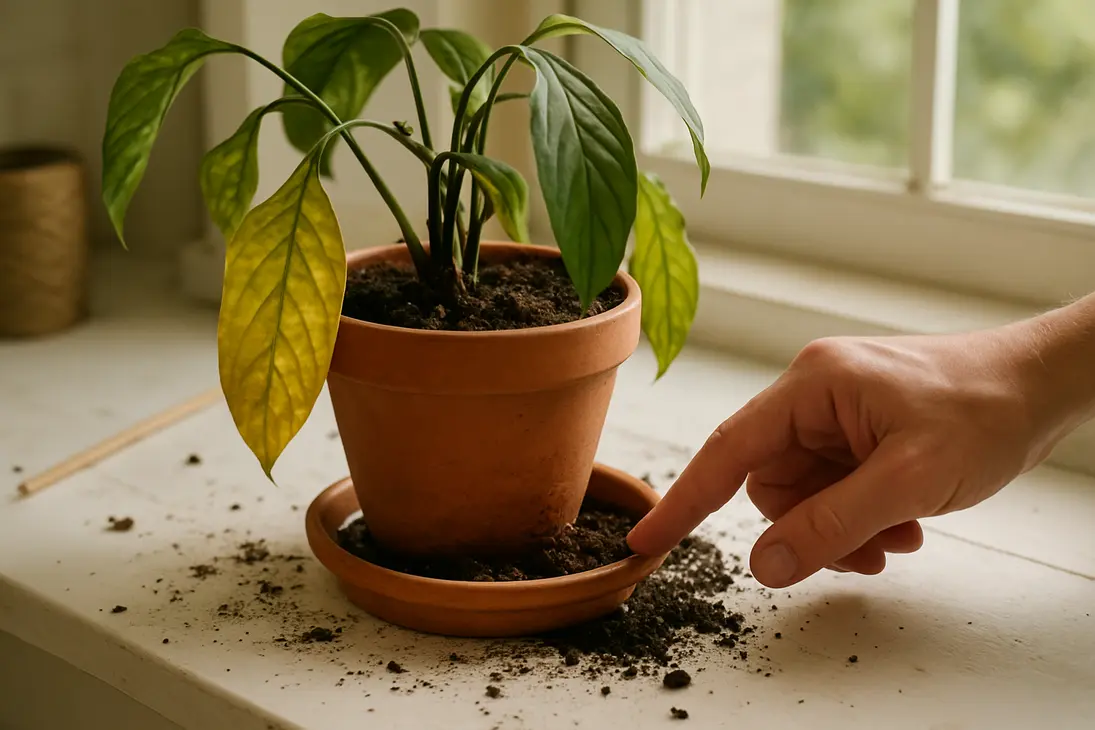
Overwatering is one of the most common potted plant problems, but it is easy to misread. Yellow leaves, drooping stems, and brown tips can also come from underwatering, low light, pests, fertilizer issues, drafts, or normal aging.
The best clue is the combination of plant symptoms and soil conditions. If the plant looks stressed and the potting mix stays wet for too long, overwatering becomes much more likely.
Common Signs of Overwatering in Potted Plants
One symptom alone is not proof. Several symptoms together—especially with damp, heavy, slow-drying soil—are a stronger warning sign.
Yellowing leaves
Yellow leaves are a classic overwatering sign when they appear while the soil is still wet. Waterlogged potting mix loses air pockets, and roots need oxygen to work well.
Look for patterns:
- One old lower leaf may be normal aging.
- Several yellow leaves at once can point to stress.
- Soft yellow leaves are more suspicious than dry, papery ones.
If yellowing spreads and the soil rarely dries, check your watering and drainage.
Wilting even though the soil is wet
An overwatered plant can look thirsty. In dry soil, wilting happens because roots lack water. In wet soil, it happens because damaged or oxygen-starved roots cannot move water into the leaves properly.
This is a common trap: the plant droops, so it gets watered again. If your plant wilts, check the soil before adding water.
Soft, mushy, or limp leaves and stems
Softness is a major clue. Overwatered plants often feel limp, swollen, heavy, or mushy rather than dry and brittle.
You may notice collapsed leaves, soft stems near the soil line, translucent succulent leaves, or herbs darkening at the base. This is especially serious for succulents, cacti, snake plants, ZZ plants, and other plants that store water. If the stem base is mushy or smells bad, inspect the roots.
Brown leaf tips or edges
Brown tips are not always from overwatering. They can also come from low humidity, inconsistent watering, fertilizer salts, sun scorch, or tap water sensitivity.
Overwatering can cause browning when damaged roots fail to supply leaves evenly. Soft brown edges with nearby yellowing fit overwatering better than crispy tips on curled leaves in dry soil.
Leaf drop, especially newer or lower leaves
Overwatered plants may shed leaves under stress. Lower leaves often drop first, but newer leaves can fall too if roots are badly affected.
Leaves that drop while still yellow, soft, or slightly green can suggest overwatering. Leaves that dry, curl, and then fall are more typical of underwatering. Repotting, cold exposure, moving, or light changes can also cause leaf drop, so check the soil before deciding.
Slow growth or a generally weak-looking plant
Some overwatered plants do not collapse. They simply stall. They may look pale, dull, weak, or “stuck,” with smaller leaves or little new growth during an active season.
Low light, cool rooms, oversized pots, and dense soil can all slow water use and keep the root zone wet longer.
Mold, fungus gnats, or a sour smell from the soil
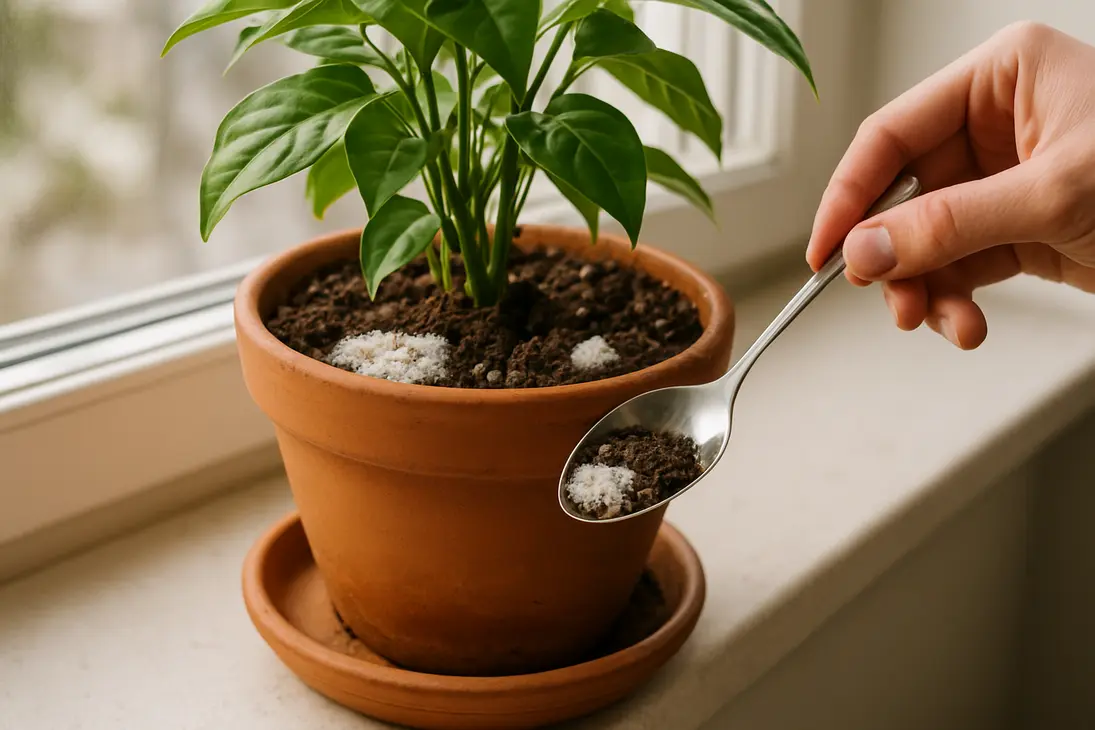
The potting mix often gives the clearest evidence. Watch for white or gray mold, fungus gnats, green algae, soil that stays dark and wet for days, or a sour, swampy smell.
Fungus gnats and surface mold usually mean the top layer is staying damp. A sour or rotten smell is more serious and may indicate anaerobic soil or root rot.
How to Confirm the Soil Is Too Wet
Leaves can mislead you, but the soil tells the rest of the story. The surface may look dry while the lower pot is still wet, especially in deep containers or dense mixes.
Use the finger test
Push your finger into the potting mix. For many houseplants, check the top 1–2 inches. If that layer is still damp, wait. If it is dry at that depth, the plant may be ready for water, depending on the species.
Texture matters:
- Wet: cold, muddy, sticky, soil clings heavily
- Moist: cool and lightly damp
- Dry: crumbly, lighter, little soil sticking
Most potted plants need a cycle of watering followed by partial drying, not constant wetness.
Check deeper soil, not just the dry surface
The top dries first because it is exposed to air. The bottom can stay wet much longer.
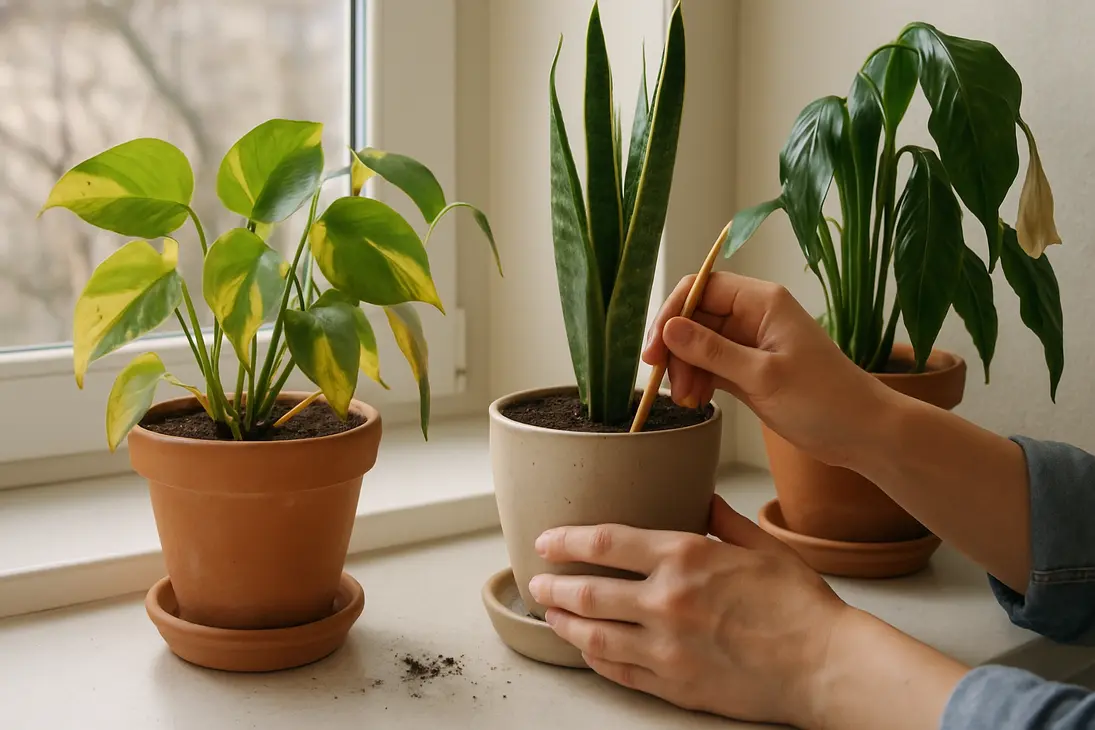
Insert a wooden skewer or chopstick, then pull it out. You can also inspect near the drainage hole or gently lift a little soil from the pot edge. If the surface looks dry but the skewer comes out damp with soil stuck to it, wait. This is especially important when a small plant sits in a large pot.
Lift the pot to feel its weight
Wet soil is heavier than dry soil. After watering and draining, lift the pot and notice the weight. Lift it again several days later. Over time, you will learn the difference between freshly watered, still moist, and ready to water.
For large pots, gently tilt instead of lifting. Pot weight is useful because it reflects moisture in the whole container, not just the top inch.
Use a moisture meter carefully
Moisture meters can help, but they can be wrong because of soil type, salt buildup, probe placement, or poor contact.
Probe deeper into the root zone, test more than one spot, and clean the probe after use. Treat the reading as a guide, not proof. A “wet” reading plus a heavy pot and yellowing or wilting leaves makes overwatering more likely.
Look for drainage problems in the pot or saucer
Sometimes the issue is not how much you water but where the water goes afterward.
Check for no drainage hole, blocked holes, water left in the saucer, a nursery pot sitting in hidden water inside a decorative pot, dense soil, or poor airflow around the base. Pots without drainage are risky for most plants. If using a decorative cachepot, remove the inner pot to water, let it drain fully, then put it back.
Overwatering vs. Underwatering: How to Tell the Difference
Overwatering and underwatering can both cause drooping, yellowing, browning, and leaf drop. The difference is usually in soil moisture, leaf texture, pot weight, and recent care.
| Clue | More likely overwatering | More likely underwatering |
|---|---|---|
| Soil | Wet, heavy, slow to dry | Bone dry, pulling from pot edges |
| Leaves | Soft, limp, yellowing, mushy | Crispy, curled, papery |
| Stems | Soft near soil line | Shriveled but not mushy |
| Smell | Sour or rotten | Usually no sour smell |
| Recent care | Frequent watering, poor drainage | Missed watering, long dry spell |
| Pot weight | Heavy | Very light |
Soil condition: soggy vs. bone dry
Soil is the first check. If the plant is drooping and the soil is wet several inches down, do not water again. If the soil is dry throughout and pulling away from the pot edges, underwatering is more likely.
Very dry potting mix can become hydrophobic, meaning water runs down the sides without soaking the root ball. That is another reason to check deeper than the surface.
Leaf texture: soft and limp vs. crispy and curled
Texture often tells more than color. Overwatered leaves tend to feel soft, limp, swollen, or mushy. Underwatered leaves are more likely to feel thin, dry, curled, or crisp.
Succulents show this clearly: underwatered leaves wrinkle or shrivel, while overwatered leaves may turn translucent, squishy, or fall off easily.
Timing: symptoms after frequent watering vs. long dry spells
Overwatering is more likely if you water on a fixed schedule, the plant sits in water, the room has become cooler or darker, or the soil stays wet for many days.
Underwatering is more likely if you forgot to water, the plant is in bright heat, the pot dries rapidly, or the plant perks up within a day after thorough watering.
Why both problems can make a plant wilt
Wilting is about water movement inside the plant. In underwatering, roots cannot access enough water. In overwatering, water is present, but roots may be too damaged or oxygen-starved to absorb it.
That is why drooping does not automatically mean “water me.” Check the potting mix first.
Why Overwatering Happens
Overwatering is usually a pattern, not one heavy watering. It often comes from watering too often, poor drainage, low light, oversized pots, or soil that holds too much moisture.
Watering on a fixed schedule
“Every Saturday” may be too often in winter, not enough in summer, and wrong after cloudy weather. Plants use water at different rates depending on light, temperature, humidity, pot size, root size, and growth.
Check plants on a schedule, but water only when each pot is ready.
Poor drainage or no drainage hole
Drainage holes let excess water escape and improve air exchange near the bottom of the pot. Without them, water can collect where you cannot see it.
If you like pots without holes, use them as outer cachepots. Keep the plant in a nursery pot with drainage, water it separately, let it drain, then return it.
Soil that stays wet too long
Dense, compacted, or garden-based soil can hold too much water in containers. Many houseplants do better in a lighter mix with aerating ingredients such as perlite, bark, pumice, or coarse coir, depending on the plant.
If water sits on the surface or the pot stays wet for a week or more indoors, the mix may be too dense.
A pot that is too large
A large pot can keep too much unused soil wet around a small root ball. The plant cannot absorb water fast enough, especially near the bottom and sides.
When repotting, move up only one pot size in most cases. That gives roots room without surrounding them with excessive wet mix.
Low light, cool temperatures, or seasonal changes
Plants use less water in low light and cool temperatures. In winter, many indoor plants grow more slowly, so summer watering habits can become too frequent.
A plant moved from a bright window to a dim corner will also need less water. Adjust watering when light, temperature, or season changes.
Treating all plants as if they need the same water routine
A fern, pothos, cactus, basil plant, orchid, and snake plant do not need the same watering routine. Some prefer evenly moist soil; others need to dry significantly.
Learn each plant’s general preference, then use the soil check to decide when to water.
What to Do If You’ve Overwatered a Plant
If caught early, overwatering may be fixed with drying time and better conditions. If root rot has started, the plant may need trimming and repotting.
Stop watering and let the soil dry
Stop adding water and let the mix dry to the right level for that plant. Do not fertilize to “help” it recover; stressed roots are not ready for feeding.
Remove leaves that are fully yellow, mushy, or dead so you can monitor new symptoms more clearly.
Empty saucers and improve airflow
Pour out standing water from saucers, trays, or decorative pots.
To help the pot dry, remove it from a closed cachepot if possible, raise it slightly for airflow underneath, keep it off cold floors, improve gentle room airflow, and avoid crowding plants tightly.
Do not put a stressed plant in harsh direct sun to dry it quickly. That can add more stress.
Move the plant to brighter indirect light if appropriate
Brighter indirect light can help many plants use water and recover, if the plant tolerates it. A pothos, philodendron, monstera, or peace lily in a dark corner may do better near a bright window with filtered light.
Move gradually. The goal is improved growing conditions, not sudden sun exposure.
Check the roots if the plant keeps declining
If yellowing, wilting, bad smell, or collapse continues after you stop watering, inspect the roots.
Healthy roots are usually firm and pale, tan, or light brown. Rotted roots are dark, mushy, slimy, hollow, or foul-smelling and may pull apart easily. Slide the plant out gently and loosen only enough mix to inspect the root ball.
Repot into fresh, better-draining soil if root rot is present
If roots are rotting, remove as much wet, sour mix as practical.
Basic steps:
- Trim mushy dead roots with clean scissors or pruners.
- Remove soggy potting mix.
- Use a pot with drainage holes.
- Repot into fresh mix suited to the plant.
- Choose a pot close to the remaining root size.
- Water lightly only if needed, then drain fully.
If few healthy roots remain, recovery is uncertain. For some plants, taking cuttings may be a useful backup.
Adjust your watering routine going forward
After the plant stabilizes, fix the cause.
A better routine:
- Check soil before watering.
- Water thoroughly only when the plant is ready.
- Let excess water drain.
- Empty the saucer.
- Adjust for season, light, and temperature.
For many potted plants, the goal is not constantly wet soil. It is a wet-to-dry cycle that gives roots both moisture and oxygen.
Conclusion
The most reliable way to tell if you’re overwatering a potted plant is to combine symptoms with soil checks. Yellow leaves, wilting, mushy stems, brown tips, leaf drop, weak growth, fungus gnats, mold, or sour-smelling soil can all point to overwatering, but leaves alone are not enough.
Before watering again, check below the surface, feel the pot’s weight, and make sure water is not trapped in the saucer or decorative pot. If the plant looks thirsty but the soil is wet, pause.
FAQ
What is the first sign of overwatering in plants?
One early sign is yellowing leaves while the soil is still damp. Some plants droop, slow growth, or develop soft leaves first. The earliest pot-level clue is soil that stays wet longer than usual.
Can an overwatered plant recover?
Yes, if the roots are still mostly healthy. Stop watering, empty saucers, improve airflow, and let the soil dry appropriately. If roots are mushy or rotten, trim damaged roots and repot into fresh, better-draining soil.
How often should I water potted plants?
There is no universal schedule. Watering depends on plant type, pot size, soil mix, light, temperature, humidity, and season. Check the soil instead of watering automatically. Many houseplants are ready when the top inch or two dries; succulents and cacti usually need more thorough drying.
Why does my plant look wilted when the soil is wet?
Wet-soil wilting happens when roots are oxygen-starved, stressed, or rotting. Water is present, but damaged roots cannot absorb and move it properly. Do not water again right away. Check drainage, let the pot dry, and inspect roots if decline continues.
You Might Also Like