Herbicide Application Mistakes Gardeners Commonly Make
Herbicides can be useful, but most herbicide application mistakes come from preventable choices: choosing the wrong product, mixing casually, spraying in poor weather, or treating herbicide as a substitute for good garden care.
In a home garden, the margin for error is small. A breeze can move spray onto tomatoes, a contaminated sprayer can injure roses, and a product that works on young annual weeds may do little against mature perennials. Used carefully, herbicides solve specific weed problems. Used carelessly, they waste money, damage plants, and create safety concerns.
Choosing the Wrong Herbicide for the Weed or Area
Many problems begin before the sprayer is filled. The product must match the weed, the site, and the plants you want to keep. A lawn, vegetable bed, gravel path, and shrub border are not interchangeable.
Before applying anything, identify:
- The weed type: grass, broadleaf, sedge, annual, perennial, or woody seedling
- The site: lawn, edible garden, ornamental bed, patio, driveway, or bare soil
- Nearby plants that must not be injured
Guessing often leads to poor control or accidental damage.
Using a non-selective herbicide where a selective one is needed
A non-selective herbicide can damage or kill many green plants. It may be useful for pavement cracks, clearing weeds before planting, or spot-treating isolated weeds, but it is risky in lawns, mixed borders, and vegetable gardens.
Selective herbicides target certain weeds while being less harmful to certain desirable plants when used according to the label. The mistake is assuming “weed killer” means “kills only weeds.” Herbicides affect plant types, not your intentions.
Confusing pre-emergent and post-emergent herbicides
Pre-emergent and post-emergent herbicides solve different problems.
| Herbicide type | What it targets | Common mistake |
|---|---|---|
| Pre-emergent | Germinating weed seeds | Applying after weeds are visible |
| Post-emergent | Existing weeds | Expecting future prevention |
A pre-emergent will not remove an established dandelion. A post-emergent may kill visible weeds but do little to prevent the next flush. Timing matters, especially with seasonal weeds such as crabgrass.
Assuming all herbicides work the same way
Herbicides differ in how they move and how long they remain active. Some burn only the tissue they touch. Some move through the plant to roots or growing points. Some have soil activity.
A fast brown-down does not always mean the root is dead. A slower yellowing response may still be effective. Match the product’s action to the weed problem, especially with perennial weeds.
Misusing glyphosate around lawns, vegetables, or ornamentals
Glyphosate is a common non-selective herbicide and a frequent source of garden damage. It can be useful for directed spot treatments, but it can injure lawns, vegetables, flowers, shrubs, and young trees if it contacts green tissue.
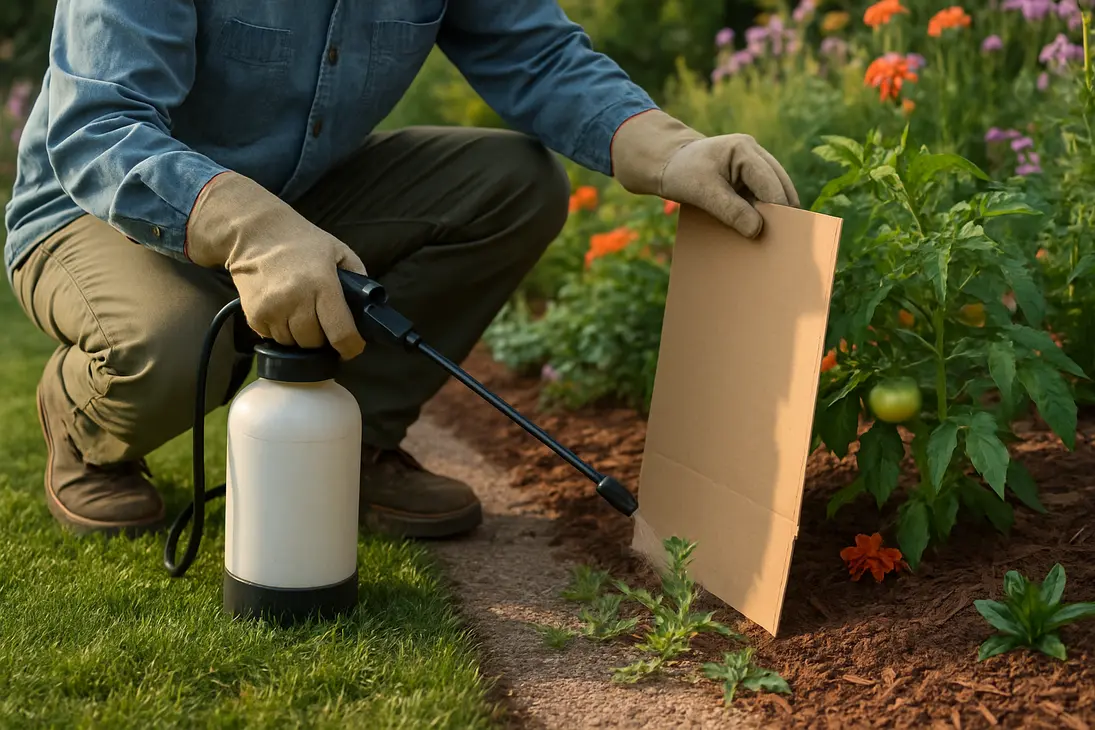
Common mistakes include spraying near lawn edges, treating weeds between vegetable rows without shielding crops, spraying on breezy days, or hitting suckers, low leaves, or green bark. Near desirable plants, use extra caution. A cardboard shield can help, but in tight edible or ornamental beds, hand removal or mulch may be safer.
Mixing, Measuring, and Spraying Incorrectly
Even the right herbicide can fail if mixed or applied poorly. Small errors in rate, equipment, or coverage can change the result.
Not reading or following the label rate
The label explains where the product can be used, which weeds it controls, how to mix it, what protection is required, and when to avoid spraying. The front of the container is not enough.
Check the approved sites, mixing rate, application limits, rain restrictions, replanting or harvest intervals, protective equipment, and storage or disposal directions. If the label does not list your intended use, do not assume it is allowed.
Mixing too strong or too weak
More herbicide is not automatically better. A mixture that is too strong can injure nearby plants, increase runoff or exposure, waste product, and sometimes reduce movement of systemic herbicides by burning tissue too quickly.
Too weak is also a problem. Weeds may only be injured and may regrow. Use a dedicated measuring tool, measure water and concentrate carefully, and mix only what you need.
Using dirty or poorly calibrated sprayers
A dirty sprayer can carry old herbicide into the wrong place. A poorly calibrated sprayer can apply too much or too little.
Before adding herbicide, check for clogged nozzles, leaks, uneven spray patterns, unstable pressure, and old residue. For home use, simple calibration means knowing roughly how much area your sprayer covers with a known amount of water at your normal pace.
Spraying unevenly or missing weed coverage
Post-emergent herbicides usually need good contact with the target weed. Spraying too lightly, moving too fast, or only hitting the tops of tall weeds can lead to partial control.
The usual goal is even leaf wetting without dripping or runoff, unless the label says otherwise. Keep nozzle height consistent, avoid casual wand-swinging, and treat tall weeds from more than one angle if needed.
Reusing herbicide equipment on sensitive plants
Do not use the same sprayer for herbicides and then for foliar feeding, insect control, disease sprays, or misting sensitive plants. Residues can remain in hoses, seals, nozzles, and seams even after rinsing.
Keep a clearly labeled herbicide-only sprayer, especially for products active at low amounts or with soil activity. When in doubt, do not use that sprayer on desirable plants.
Applying Herbicide at the Wrong Time
Good timing improves control and reduces risk. Bad timing can make a suitable product look ineffective or cause avoidable plant injury.
Spraying when it is windy
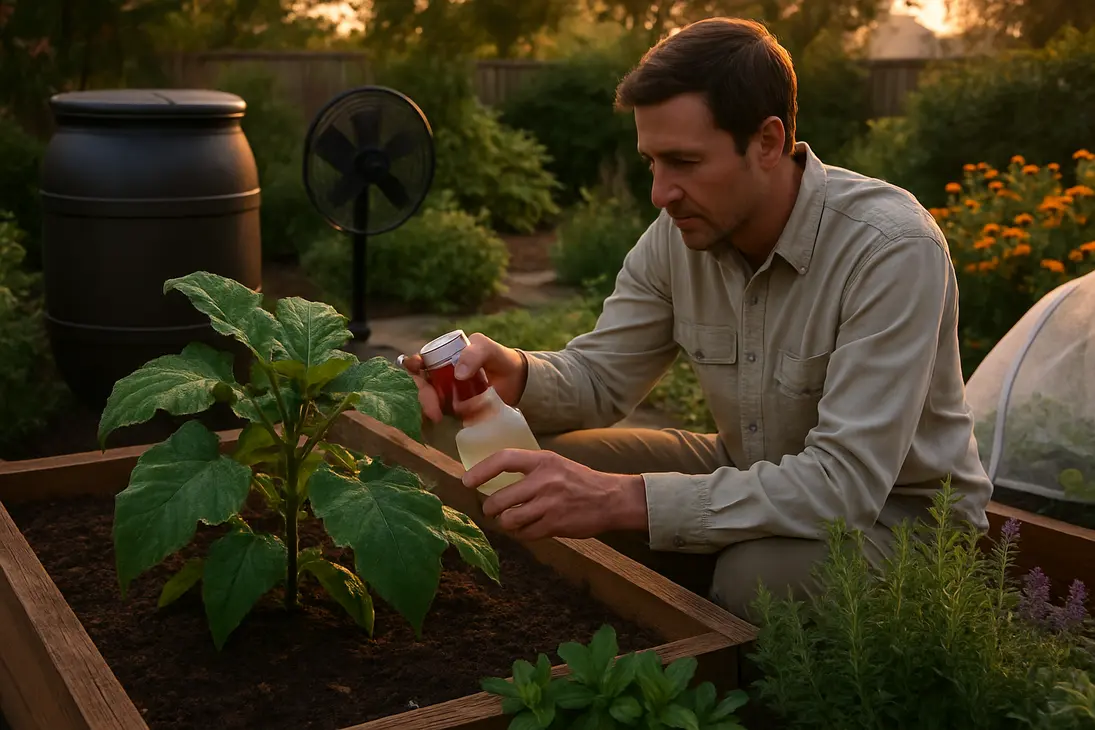
Wind drift is one of the most common herbicide mistakes. Even a light breeze can carry droplets onto flowers, vegetables, shrubs, or a neighbor’s property.
Avoid spraying when leaves are moving steadily or gusts are unpredictable. Use low pressure and a coarse spray pattern when the label allows. Keep the nozzle low. If you cannot control where the spray lands, stop.
Applying before rain or irrigation
Rain or irrigation too soon after spraying can wash herbicide off leaves, reduce control, or move product where it should not go. Some products need a rain-free period; certain pre-emergents may need watering in.
Do not rely on a general rule. Read the label, then check the forecast before mixing.
Spraying during extreme heat, drought, or plant stress
Hot, dry, or stressful conditions can reduce weed control and increase injury risk. Drought-stressed weeds may absorb herbicide poorly, and nearby desirable plants may be more vulnerable.
Extreme heat can also make application less safe for the person spraying and may increase drift or volatility concerns for some products. When possible, wait for moderate conditions and treat actively growing weeds.
Treating weeds when they are too mature
Small weeds are easier to control than large, flowering, or seed-setting weeds. Mature weeds may have thick stems, waxy leaves, deep roots, or uneven foliage that makes coverage harder.
For annual weeds, act before seed heads mature. For perennials, timing depends on the weed and product, but waiting until the patch is large, woody, and full of seed makes control harder.
Mowing, tilling, or disturbing weeds too soon after spraying
Systemic herbicides often need time to move from leaves to roots or growing points. If you mow, till, pull, or cut treated weeds too soon, you may reduce control.
This matters with perennial weeds such as bindweed, bermudagrass, poison ivy, and deep-rooted broadleaf weeds. Follow the label’s timing instructions and let the product work before removing dead material.
Accidentally Damaging Plants, Soil, or People
Many herbicide problems involve drift, contaminated equipment, unsafe handling, or treated plant material being moved where it should not go. Prevention is easier than repair.
Letting spray drift onto desirable plants
Drift injury may appear as yellowing, browning, cupped leaves, distorted growth, stunting, or dead patches. Tender new growth is often most sensitive.
To reduce drift, spray only in calm conditions, use low pressure, keep the nozzle close to the weed, use a shield near desirable plants, and stop if wind direction changes. In dense beds, precision matters more than speed. Sometimes skipping herbicide is the best choice.
Using treated grass clippings near edible plants
Grass clippings can be useful mulch, but not if they recently came from a treated lawn and the label restricts their use. Some herbicides can remain active in clippings and may injure vegetables or seedlings.
If your lawn was treated, check the label before using clippings as mulch or compost for edible beds. If you do not know what was applied, keep those clippings away from food gardens.
Ignoring protective clothing and inhalation risks
Accidentally breathing spray mist can cause irritation and should be taken seriously. Stop spraying, move to fresh air, wash exposed skin, and follow the label’s first-aid directions. If symptoms persist, worsen, or involve breathing difficulty, seek medical advice or contact poison control.
Wear the protective clothing listed on the label. Many garden applications require closed-toe shoes, socks, long pants, long sleeves, and chemical-resistant gloves, but requirements vary. Never eat, drink, or smoke while mixing or applying herbicide.
Storing or disposing of leftover herbicide incorrectly
Keep herbicides in their original containers with labels intact. Store them upright, tightly closed, and away from children, pets, food, animal feed, seeds, and garden supplies.
Do not pour herbicide into drink bottles or jars. Mix only what you expect to use. Dispose of leftover diluted spray according to the label and local rules. Never dump it into drains, waterways, or random soil.
Assuming “a little extra” will work better
If weeds survive, it is tempting to add more concentrate, spray again immediately, or soak the area. Extra herbicide can injure nearby plants, increase runoff, expose you to more product, and violate the label.
Poor results are often caused by the wrong product, mature weeds, bad timing, poor coverage, rain too soon, or disturbing treated weeds too early. Diagnose the problem before repeating treatment.
Relying Only on Herbicides Instead of Weed Prevention
Herbicides work best as one part of weed management. If soil stays bare, lawns remain thin, and weeds go to seed, spraying becomes a repeating chore.
Using mulch, hand-pulling, and soil coverage to reduce weeds
Bare soil invites weeds. Mulch blocks light, moderates moisture, and makes many weeds easier to pull. In beds, use organic mulches such as shredded leaves, straw, wood chips, or composted materials when suited to the crop and site.
Hand-pulling is still useful, especially when weeds are young or close to desirable plants. Groundcovers, dense planting, and cover crops also reduce open space where weeds germinate.
Preventing weeds before they set seed
Letting weeds flower and seed increases future work. Cut, pull, hoe, or treat weeds before seed heads mature. If weeds already have seeds, handle them carefully and avoid shaking them across the bed.
Do not compost seedy weeds unless you are confident your compost gets hot enough and is well managed. Prevention is especially important with aggressive weeds such as crabgrass, pigweed, purslane, nutsedge, bindweed, and invasive ornamentals.
Improving lawn or garden health to crowd out weeds
A thin lawn invites weeds. Mow at the right height for the grass type, water deeply but not constantly, fertilize according to need, and overseed where appropriate.
In garden beds, healthy desired plants shade soil and compete with weeds. Proper spacing, drip irrigation, mulch, and good soil structure help reduce new weeds. Herbicide may remove today’s weeds, but better plant cover reduces tomorrow’s.
Considering natural herbicide alternatives and their limits
Natural herbicide products based on vinegar, soaps, oils, or other contact ingredients can burn down small annual weeds, especially in warm, sunny conditions. They may help in pavement cracks or on very young seedlings, but they have limits.
They can damage desirable plants, often do not kill perennial roots, may require repeated applications, and can still burn skin or eyes. “Natural” does not mean risk-free.
Boiling water, flame weeders, and hand tools also have risks. Often the best alternative is a combination of mulch, early removal, dense planting, and careful spot treatment only when needed.
Conclusion
Most herbicide application mistakes come down to the wrong product, wrong rate, wrong timing, poor equipment, unsafe handling, or expecting herbicide to replace prevention.
Before spraying, identify the weed, match the product to the site, read the label, measure accurately, check the weather, protect nearby plants, wear required protection, and store or dispose of products responsibly.
Used thoughtfully, herbicides can be one tool in a broader plan that includes mulch, hand-weeding, healthy plant growth, and preventing weeds from going to seed.
FAQ
What is the most common herbicide application mistake?
Using the wrong product for the weed or site. Common examples include spraying a non-selective herbicide near lawn grass or vegetables, or applying a pre-emergent after weeds have already emerged.
Can inhaling a small amount of herbicide hurt you?
It can cause irritation, and risk depends on the product and exposure. If you inhale spray mist, stop spraying, move to fresh air, and follow the label’s first-aid directions. If symptoms persist or breathing is affected, contact a medical professional or poison control.
Are natural herbicides safer than chemical herbicides?
Not automatically. Natural herbicides can still burn skin, injure eyes, damage desirable plants, or fail to control perennial roots. Read and follow the label, avoid drift, wear protection, and use them only where appropriate.
What should you do if herbicide accidentally gets on a plant you want to keep?
Act quickly. If the label allows, rinse the plant with clean water while the spray is still wet. Avoid heavy pruning or fertilizing right away unless damaged tissue clearly needs removal. Reduce stress, water appropriately, and watch for symptoms.
You Might Also Like