How to Get Rid of Drain Flies in Houseplants
Tiny flies around houseplants are often called “drain flies,” but many are actually fungus gnats breeding in damp potting mix. The right fix depends on which insect you have and where it is breeding.
To get rid of them, correct wet, decaying conditions in the pots and check nearby drains or other damp areas. Spraying adult flies rarely works by itself because larvae may still be developing in soil, saucers, drain slime, or hidden moisture.
Confirm What’s Flying Around Your Plants
Before treating every plant, identify the flies and find the source. Use a sticky trap, flashlight, and close inspection of the soil surface, saucers, and nearby drains.
Drain flies vs. fungus gnats
True drain flies are small, fuzzy, moth-like flies with broad wings. They are weak fliers and often rest on bathroom walls, kitchen backsplashes, or near sinks, tubs, floor drains, and laundry drains.
Fungus gnats are slender, dark, mosquito-like flies with long legs. They usually walk on potting mix, fly up when a plant is disturbed, or hover close to the soil. Their larvae live in moist potting mix and feed on fungi, algae, and decaying organic matter. Heavy infestations can harm fine roots, especially on seedlings, cuttings, and stressed plants.
| Feature | True drain flies | Fungus gnats |
|---|---|---|
| Appearance | Fuzzy, moth-like | Slender, mosquito-like |
| Flight | Weak, fluttery | Erratic near plants |
| Breeding site | Drain slime and wet buildup | Damp potting mix |
| Common location | Walls near drains | Soil surface and saucers |
| Main fix | Clean drains | Dry and treat soil |
Fruit flies and phorid flies can also be mistaken for these pests. If the flies are not tied to soil or drains, look for ripe fruit, compost, spills, leaks, or decaying organic material.
Why houseplant “drain flies” are often fungus gnats
Houseplants support fungus gnats when potting mix stays wet too long. This is common in winter, low light, pots without drainage, decorative cachepots, and plants watered on a fixed schedule.
If flies rise from the soil when you tap the pot, land on the pot rim, or collect on traps placed just above the mix, fungus gnats are more likely than drain flies.
This distinction matters. Cleaning a drain will not solve larvae in soil, and treating soil will not stop true drain flies emerging from plumbing. In some homes, both problems happen at once.
Where to check: soil, saucers, drains, and nearby moisture
Start with the plant. Disturb the top layer of potting mix and watch for adults. Look for dark wet soil, algae, white fungal growth, fallen leaves, or a sour smell.
Check saucers and cachepots. A nursery pot inside a sealed decorative pot may be sitting in water even when the soil surface looks dry.
Then inspect nearby drains, especially if plants are in a kitchen, bathroom, laundry room, or near a floor drain. True drain flies often rest on vertical surfaces around drains. You can place clear tape over part of a drain overnight, sticky side down while leaving some airflow. Flies stuck to the tape in the morning suggest that drain is a source.
Also check leaking pipes, wet plant stands, humidifier spills, condensation, pebble trays, and water trapped under mats or trays.
Remove the Conditions That Let Them Breed
Small flies need moisture and organic matter. The most important control step is making the plant area less suitable for breeding.
Let the top layer of soil dry out
For fungus gnats, the top inch or two of potting mix is the main breeding zone. Letting it dry between waterings interrupts egg-laying and larval development.
Do not drought-stress plants that need consistent moisture, such as ferns, calatheas, and peace lilies. But many common plants, including pothos, philodendrons, snake plants, and succulents, tolerate more drying between waterings.
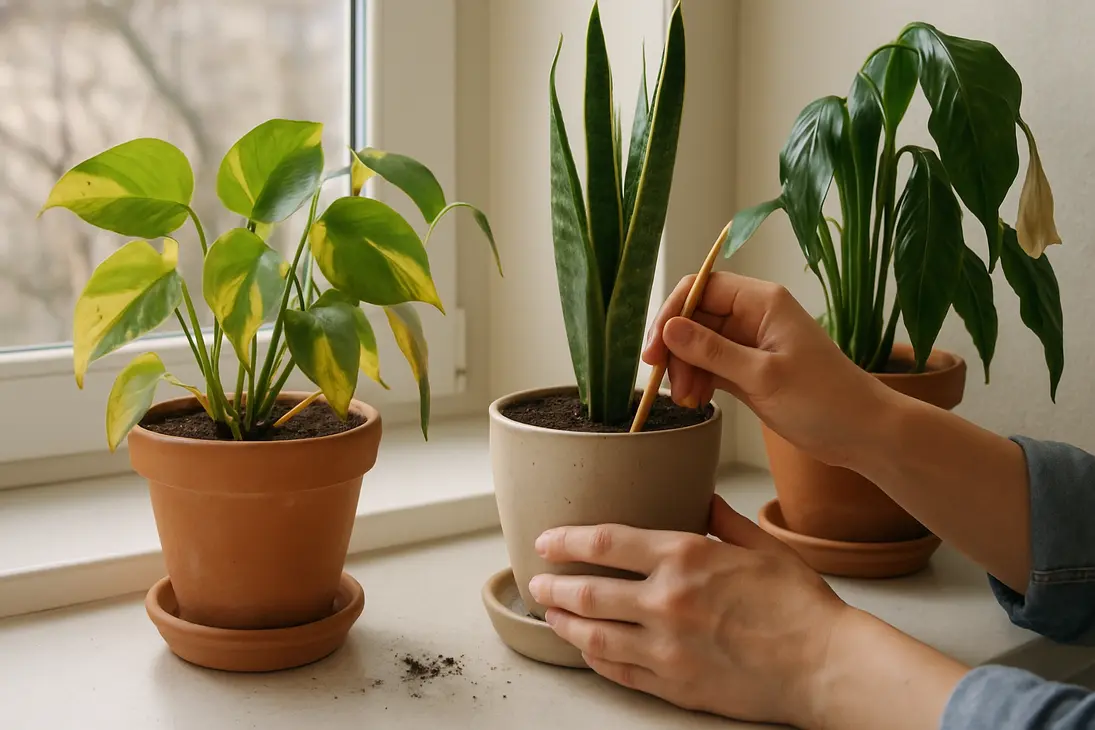
Check moisture with your finger, a wooden skewer, or by lifting the pot. Delay watering if the surface is still damp, improve light if appropriate, and avoid daily “sips” that keep the top layer constantly wet.
Empty plant saucers and cachepots
Standing water keeps roots and lower soil wet, encourages decay, and can wick moisture back into the pot.
After watering, let the pot drain fully, then empty the saucer. If using a decorative cachepot, remove the inner pot for watering and return it only after it stops dripping. Pebble trays should not become stagnant water trays; keep the pot above the waterline and refresh the tray regularly.
Remove dead leaves and organic debris
Dead leaves, old flowers, mossy crusts, and soggy mulch hold moisture and feed fungi that larvae use. Remove debris from the soil surface and prune rotting stems promptly.
If the pot smells sour or rotten, inspect the roots. Pest control will not fix a plant sitting in anaerobic, decaying soil.
Improve drainage and airflow
Pots without drainage holes are a common cause of wet soil. Move plants into containers with drainage, or use decorative pots only as outer cachepots.
Old, compacted mix also stays wet. For many houseplants, adding structure with perlite, pumice, orchid bark, or coarse coco chips helps the mix hold air and dry more evenly. Match the mix to the plant: succulents need a faster-draining mix than many tropical foliage plants.
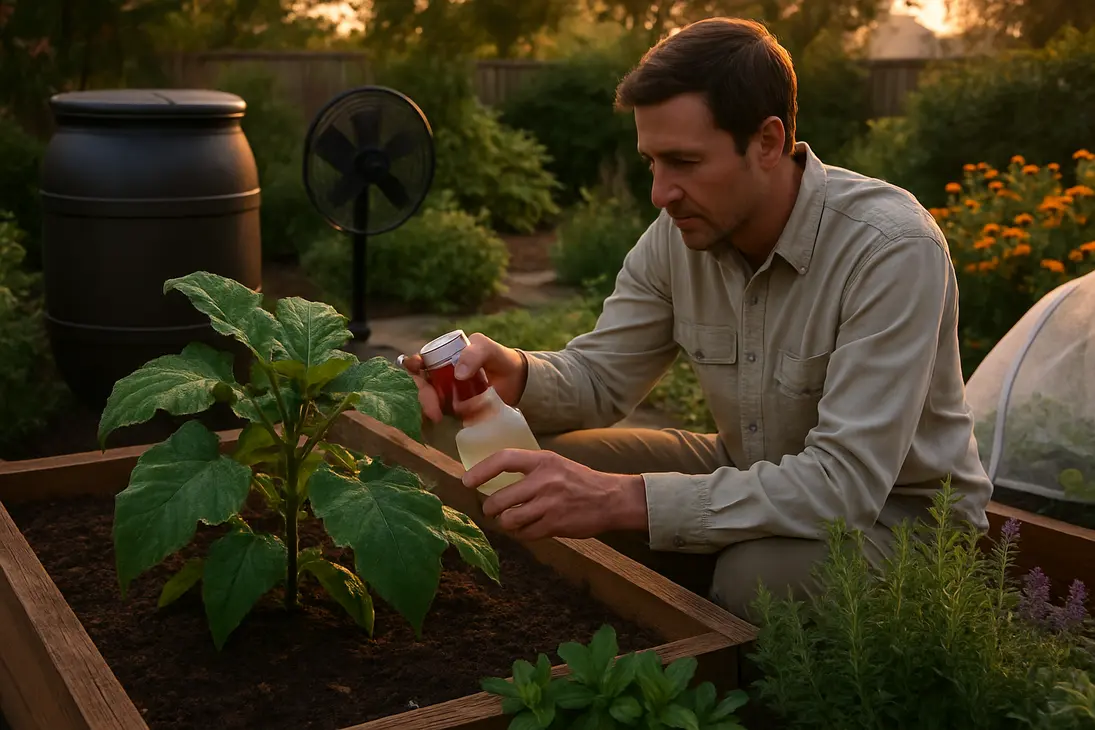
Airflow helps the soil surface dry. Avoid crowding plants tightly, and use a low fan if needed, without blasting delicate foliage.
Treat the Soil and Adult Flies
After fixing moisture problems, target both adults and larvae. Adults are visible, but larvae keep the infestation going.
Use yellow sticky traps for adults
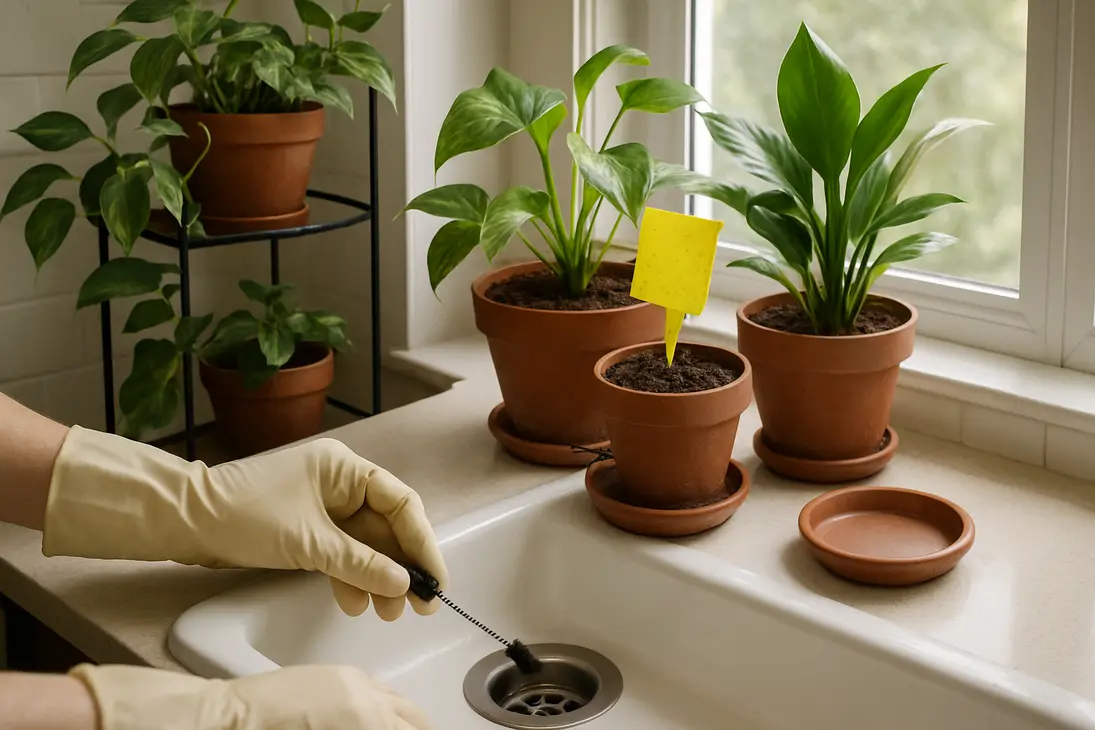
Place yellow sticky traps close to the soil surface. They catch adult fungus gnats, reduce egg-laying, and show which pots are most active. If one trap fills quickly, that pot is likely a major source.
Sticky traps do not kill larvae, so use them with soil treatment and better watering. Keep them away from pets, children, and delicate leaves; the adhesive can damage foliage.
Treat larvae with BTI mosquito bits or dunks
BTI, or Bacillus thuringiensis israelensis, is a biological control used against certain fly larvae, including fungus gnat larvae. It is sold in products such as mosquito bits or dunks.
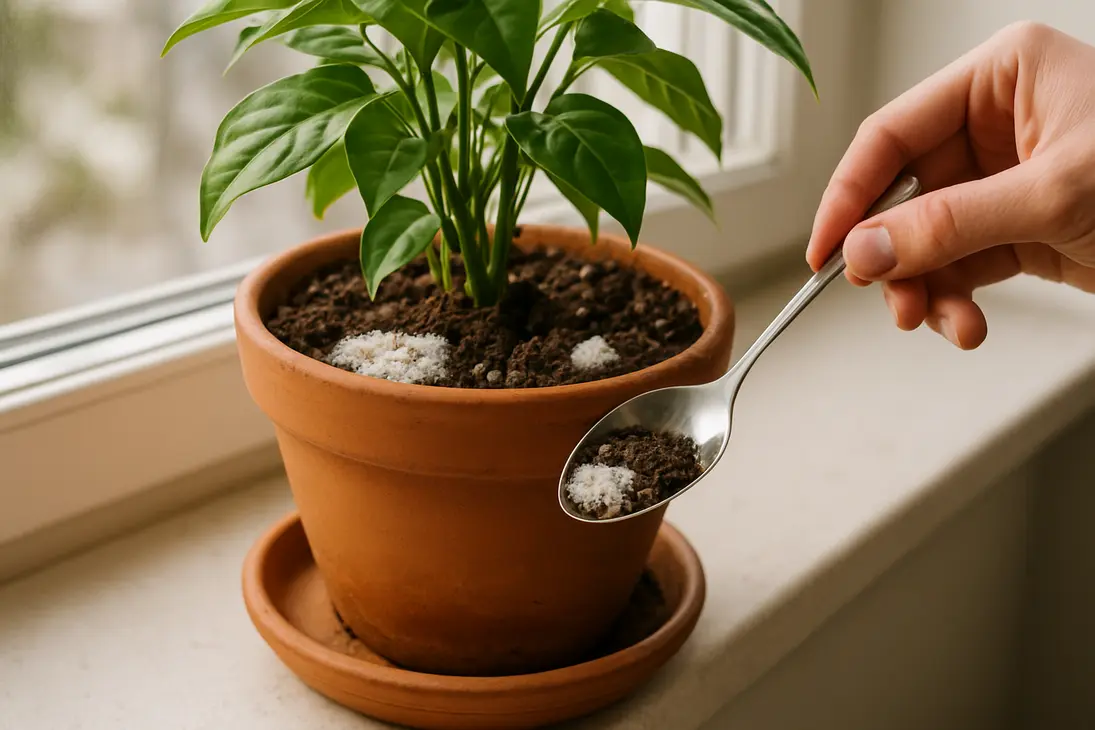
Follow the label directions. Many gardeners soak bits or part of a dunk in water and use that water on affected plants so BTI reaches the upper potting mix where larvae feed.
Repeat as directed because adults may continue emerging for a short time. BTI works best when combined with sticky traps and drier soil conditions.
Try a diluted hydrogen peroxide soil drench carefully
A diluted hydrogen peroxide drench may kill some fungus gnat larvae, but use it cautiously. A common dilution is one part 3% household hydrogen peroxide to four parts water.
Apply it to already-moist soil, wetting the top portion where larvae live. Avoid repeated heavy use, especially on sensitive, newly repotted, drought-stressed, or root-damaged plants. Hydrogen peroxide can affect beneficial microbes and does not replace better watering.
Do not mix hydrogen peroxide with other cleaners, pesticides, vinegar, bleach, or drain chemicals. If unsure, test one plant first. BTI is usually the gentler long-term option.
Replace or refresh infested potting mix when needed
Repotting is useful when the mix is old, sour-smelling, compacted, waterlogged, or still heavily infested after treatment. It is not always necessary and can stress weak plants.
When repotting, remove the plant gently, inspect the roots, trim rotten roots with clean tools, discard soggy decayed mix, and repot into fresh well-draining mix in a container with drainage holes. Choose a pot only slightly larger than the healthy root ball.
If only the surface is the problem, remove and replace the top inch or two of mix instead of fully repotting.
Clean Nearby Drains and Moist Areas
If the flies are fuzzy and moth-like, or if they gather near sinks, tubs, or floor drains, treat drains as possible breeding sites. True drain flies develop in slimy organic film, not just open water.
Scrub drain slime and buildup
Physical cleaning is the key drain fly control step. Larvae live in the buildup, so remove the slime rather than only pouring products into the drain.
Use a drain brush, pipe brush, or flexible brush to scrub inside the drain opening and as far as you can safely reach. Clean sink stoppers, tub covers, overflow openings, garbage disposal splash guards, strainers, and floor drains. Wear gloves.
In bathrooms, hair, soap scum, toothpaste residue, and skin oils can create breeding film. In kitchens, food residue around disposals and drain baskets can do the same.
Use boiling water or enzyme drain cleaner where appropriate
After scrubbing, hot water can rinse loosened material away. Boiling water is often suggested, but use caution because some plumbing, seals, porcelain, or plastic parts may not tolerate repeated boiling water. Very hot tap water may be safer.
Enzyme drain cleaners can help break down organic residue over time, especially after brushing. Follow the label and do not mix them with bleach, caustic drain openers, acids, or other chemicals.
Avoid relying on harsh drain openers for pest control. They may not reach the larval film and can be hazardous.
Check for leaks, standing water, and wet plant stands
Both drain flies and fungus gnats point to excess moisture. Look under sinks, plant trays, mats, shelves, baskets, humidifiers, and windowsills.
A slow leak, damp wood, trapped water under a liner, or condensation behind pots can support flies or the fungi they feed on. If plants sit near a sink or in a humid bathroom, move them temporarily while you break the breeding cycle.
Prevent Drain Flies or Gnats from Coming Back
Prevention is mainly moisture control. Once the flies are gone, keep the habits that made the area less attractive.
Water less often and more deeply
Most houseplants prefer thorough watering followed by an appropriate drying period. Water until excess drains out, empty the saucer, and wait until the plant needs water again.
Watering frequency changes with season, light, pot size, and plant type. Do not water on a fixed weekly schedule if the soil is still damp.
Signs of overwatering include persistently wet soil, algae, yellowing lower leaves, soft stems, fungus gnats, and a pot that stays heavy.
Use well-draining potting mix
A good indoor mix holds moisture but still contains air. Dense, old, peat-heavy, or compacted mix can stay wet for days.
For many tropical foliage plants, standard potting mix improved with perlite or bark is better than a dense mix used straight from the bag. Succulents and cacti need a gritty, fast-draining mix. Even moisture-loving plants should not sit in swampy soil.
Refresh old mix when it breaks down and holds too much water.
Quarantine new plants
New plants can bring fungus gnats, larvae, or soggy greenhouse soil. Keep new arrivals away from your main collection for a couple of weeks when possible. Inspect the soil, use a small sticky trap, and avoid overwatering.
Also inspect plants brought indoors after summer outside. Remove dead leaves and check for insects before placing them near other houseplants.
Avoid overusing compost-rich or soggy soil
Compost-rich, fine-textured mixes can stay too wet indoors, especially in low light. Match the mix to the plant and your conditions.
Avoid topping indoor pots with unfinished compost, tea leaves, coffee grounds, or food scraps. Indoors, these often mold, attract flies, and keep the surface damp.
Conclusion
Getting rid of small flies around houseplants starts with identification. True drain flies usually breed in drain slime or wet organic buildup, while flies coming from houseplant soil are usually fungus gnats.
For fungus gnats, let the soil surface dry appropriately, empty saucers, remove debris, improve drainage, use sticky traps, and treat larvae with BTI or another careful method. For true drain flies, scrub drains and remove the slimy film where larvae live.
The lasting solution is not one spray. Remove moisture, organic buildup, larvae, and adults together.
FAQ
Are drain flies actually living in my houseplant soil?
Usually, no. True drain flies normally breed in slimy organic buildup inside drains, not ordinary potting soil. If flies come directly from the soil, they are more likely fungus gnats.
Still, a very wet pot with decaying organic matter can attract small flies, and a nearby drain may make the source confusing. Check both soil and drains.
What is the fastest way to get rid of flies in houseplants?
Use a combined approach: place yellow sticky traps near the soil, let the top layer dry between waterings, empty saucers, remove dead leaves, and treat larvae with BTI according to the label.
If the flies look fuzzy or gather around sinks, clean nearby drains too. Sticky traps give quick visible results, but lasting control requires treating the breeding site.
Will hydrogen peroxide kill drain flies or fungus gnats in soil?
Diluted hydrogen peroxide may kill some fungus gnat larvae in soil. A common cautious dilution is one part 3% household hydrogen peroxide to four parts water. Do not mix it with other chemicals or use it repeatedly on stressed plants.
It is not the main solution for true drain flies in plumbing. For those, scrub out drain slime. For fungus gnats, BTI is often gentler and more targeted.
Should I repot a houseplant with flies in the soil?
Repot if the mix is soggy, sour-smelling, compacted, old, full of decaying debris, or associated with root rot. Fresh, well-draining mix can remove larvae and improve root health.
If the plant is healthy and the infestation is mild, try drying the top layer, removing debris, using sticky traps, and treating larvae before repotting.
You Might Also Like