Tomato Diseases: How to Identify Leaf Spots, Wilting, Blight, and When to Pull a Plant
Walking out to the garden and finding brown spots, yellowing leaves, or a suddenly drooping tomato plant is unsettling. This article will help you sort through symptoms, match them to common diseases, and take practical steps to manage the problem. Whether you’re a new or experienced gardener, learning to read the signs on your plants can save your crop and prevent disease from spreading to future seasons. By focusing on what you actually see—location, speed, and pattern—you’ll make better decisions than by guessing a disease name.
Key Takeaways
-
Start with symptoms, not disease names: Focus on where the problem appears (lower or upper leaves), how fast it spreads, and the visible pattern. Location and speed matter more than guessing a pathogen name.
-
Prevention beats treatment every time: Water at the base, mulch the soil, remove lower leaves touching the ground, and improve airflow. Most leaf diseases begin from soil splash and wet foliage.
-
Know which diseases can be slowed and which cannot: Leaf spots like early blight and Septoria can often be managed by removing affected leaves and improving conditions. Wilts (Fusarium, Verticillium, bacterial wilt) are systemic and usually require plant removal.
-
Avoid quick-fix myths: Epsom salt, hydrogen peroxide, and random spraying do not cure tomato diseases. Focus on diagnosis, sanitation, and targeted fungicides used only as protectants.
-
Pull the plant when it matters: If a plant collapses rapidly with bacterial wilt or a systemic wilt, removing it promptly protects the rest of your garden. Do not compost infected tissue.
What’s Wrong With My Tomato Plant? Start With the Symptoms
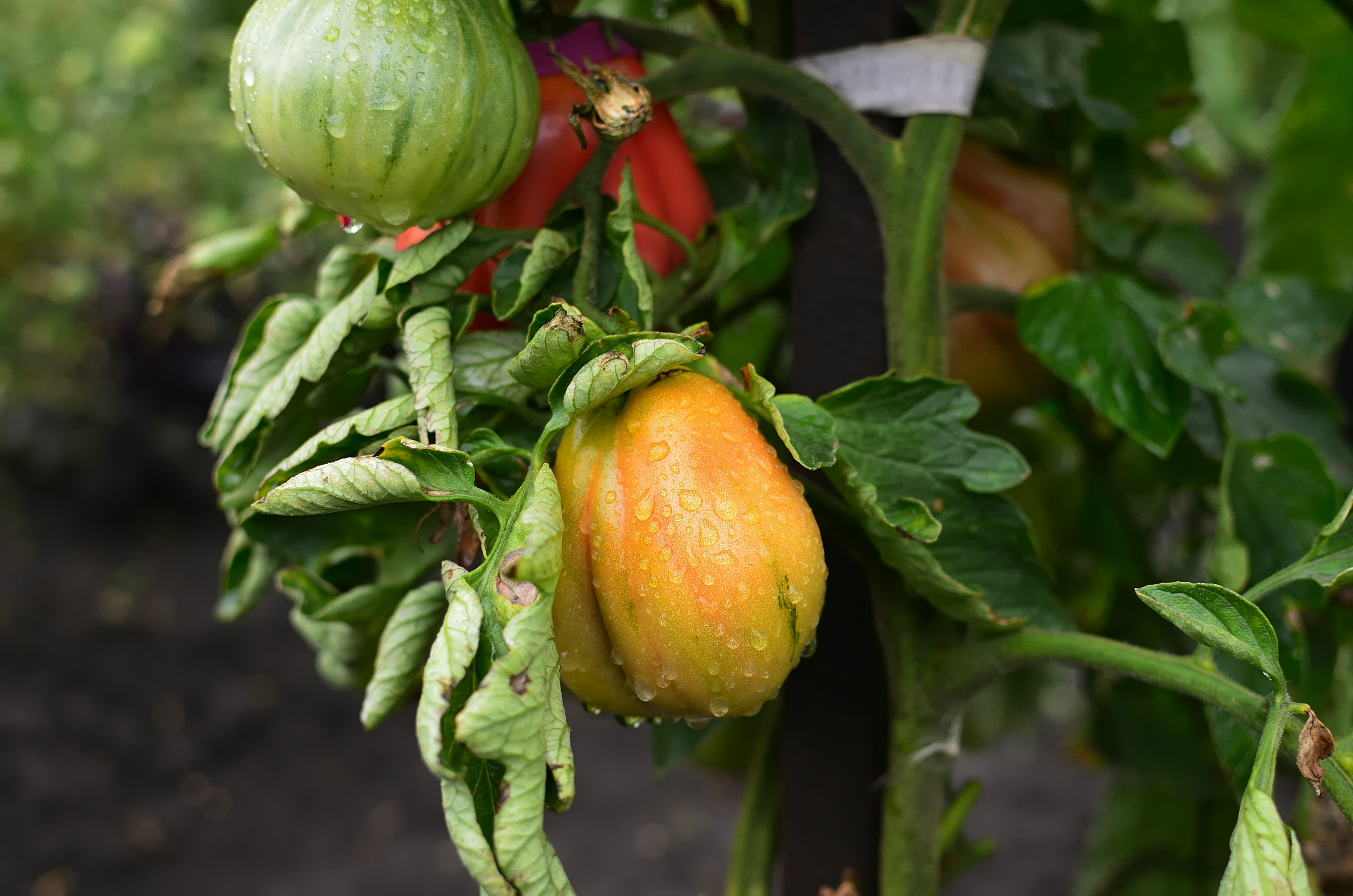
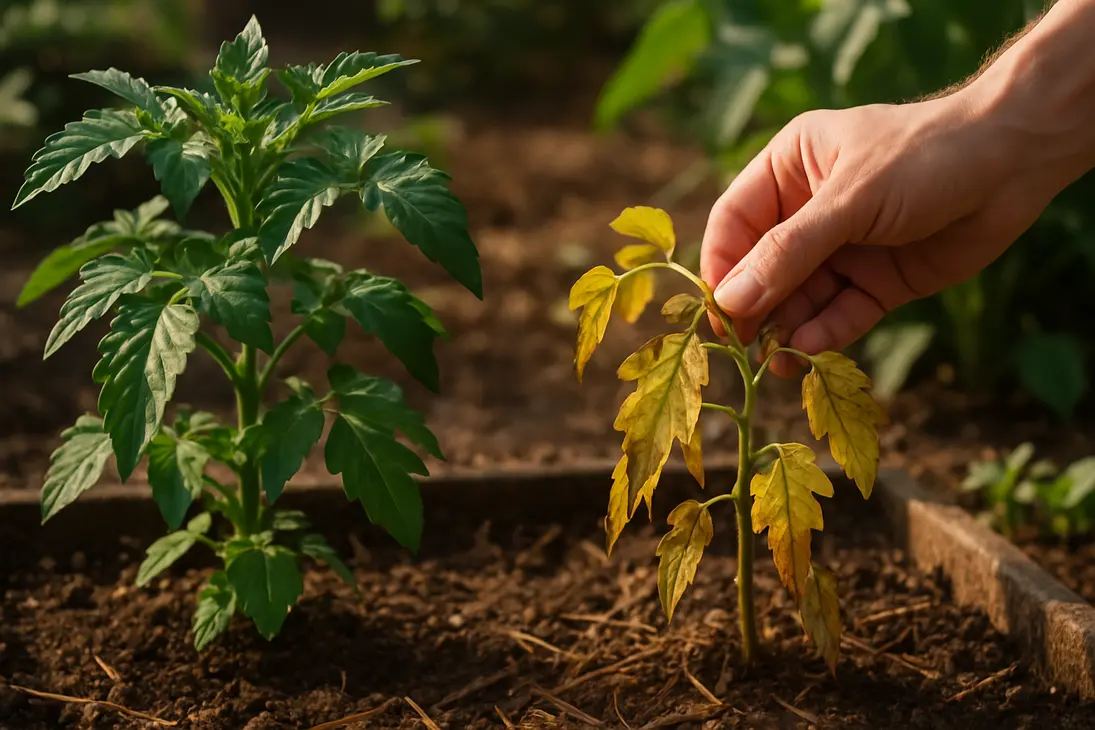
Instead of jumping to a disease name, observe what you see: which leaves are affected, how fast the problem is spreading, and whether fruit or stems look different. Focus on location (lower leaves, upper leaves, stems, fruit), speed (days or overnight), and pattern (scattered spots, one-sided wilting, greasy blotches). A single tomato plant can have multiple issues at once—for example, early blight on lower leaves and blossom end rot on fruit—so it’s important to separate symptoms. Take a moment to check the whole plant, not just the worst-looking leaf. Also consider recent weather: heavy rain, high humidity, or a sudden heat wave can quickly change the plant’s appearance.
Tomato Disease Symptom Checker: Spots, Yellow Leaves, Wilting, and Fruit Rot
| What you see | How fast it is spreading | Common possibilities | First action |
|---|---|---|---|
| Brown spots with yellow halos on lower leaves | Slow to moderate | Early blight, Septoria leaf spot, bacterial spot/speck | Remove worst lower leaves, keep foliage dry, improve airflow |
| Many tiny gray/tan spots on lower leaves | Moderate | Septoria leaf spot | Remove affected leaves, mulch, avoid splash, monitor spread |
| One-sided yellowing or wilting | Moderate to fast | Fusarium or Verticillium wilt | Check pattern, avoid spreading soil, consider resistant varieties next season |
| Whole plant suddenly wilts while still green | Fast | Bacterial wilt, root damage, severe water stress | Check soil moisture and roots; pull if bacterial wilt is likely |
| Dark, greasy-looking blotches on leaves/stems/fruit | Fast | Late blight or severe blight-like disease | Isolate, remove affected tissue, verify locally |
| Black or brown spot on blossom end of fruit | Fruit issue, not spreading leaf disease | Blossom end rot | Stabilize watering; remove affected fruit if needed |
| Leaves curl upward with little spotting | Often stress-related | Heat/water stress, pruning stress, herbicide drift, virus | Look for spots/distortion; do not assume blight immediately |
Symptoms overlap, so consider weather, plant age, and whether the problem moves up from the bottom or hits the whole plant. For severe or confusing cases, contact your local extension office. They can often diagnose from clear photos or a sample and advise on region-specific threats.
Leaf Spots on Tomato Plants: Early Blight, Septoria, and Bacterial Spot
Three common spotted-leaf diseases all start on lower leaves but differ slightly.
Early blight produces larger brown spots with concentric rings (bull’s-eye). It begins on lowest leaves and works upward; in severe cases, it spreads to stems and fruit. Caused by Alternaria solani, it thrives in warm, wet weather. The rings are a classic sign—look for them with a magnifying glass if needed. Early blight can weaken a plant over time but is rarely fatal if caught early.
Septoria leaf spot shows as many small, round tan or gray spots with darker borders. It starts on lower leaves but produces more spots per leaf than early blight. Rarely attacks fruit directly, but heavy spotting can defoliate the plant. Septoria can cause significant leaf loss, reducing photosynthesis and fruit quality. It tends to spread rapidly in dense, humid plantings.
Bacterial spot and speck cause small, dark, water-soaked spots with yellow halos and may create raised spots on fruit. Spreads quickly in wet, splashing conditions. Bacterial spot can be especially problematic in rainy years—it can disfigure fruit and make them unmarketable.
All are encouraged by wet foliage, poor airflow, and infected debris. Prevention is the same: remove worst lower leaves, water at base, mulch, improve spacing. Fungicides can help if applied early but are protective, not curative. For bacterial diseases, copper-based sprays may reduce spread if applied before symptoms appear. However, overuse of copper can lead to resistance and soil accumulation.
Wilting Tomato Plants: Water Stress, Fusarium, Verticillium, or Bacterial Wilt?
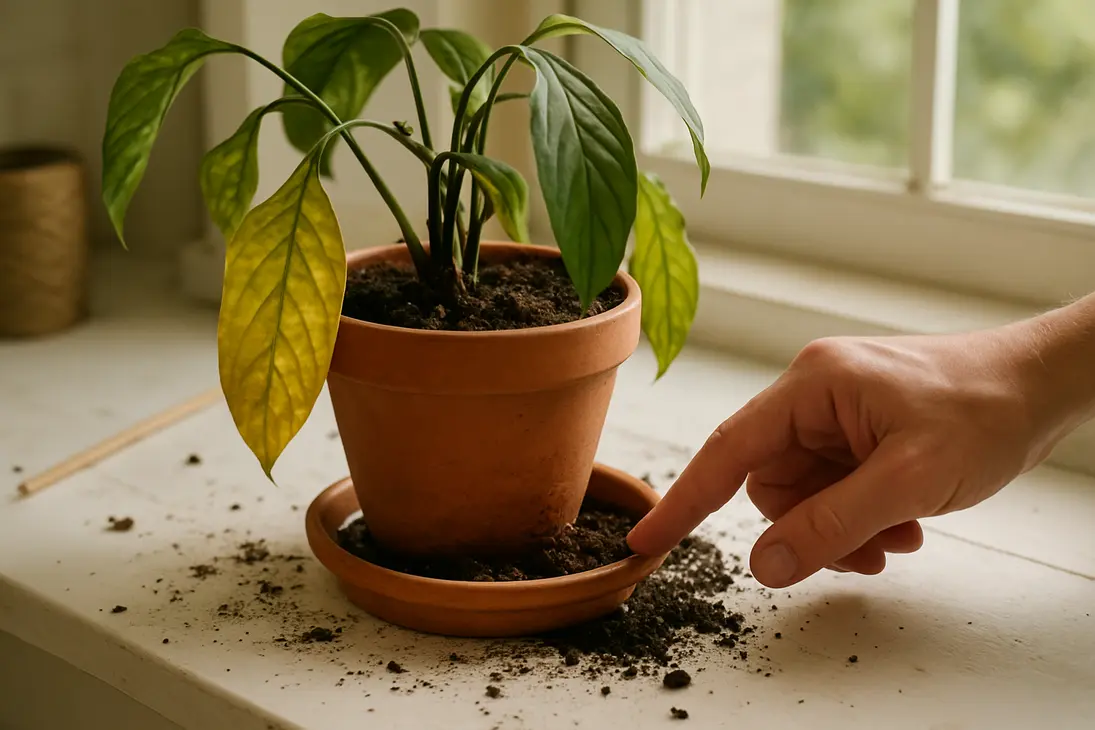
Temporary afternoon wilt happens on hot days or dry soil; plant recovers overnight. Not a disease. Check soil moisture at root level—if it’s dry two inches down, water deeply. If the soil is wet and the plant still wilts, look for root rot or a vascular problem.
Fusarium and Verticillium wilts are soil-borne fungal diseases. They show as slow, one-sided yellowing or wilting from lower leaves upward. Cutting the stem may reveal brown streaks in vascular tissue. No cure; remove plant and choose resistant varieties next season. Fusarium is more common in warm soil; Verticillium prefers cooler conditions. Both can persist in soil for years, so rotation is critical.
Bacterial wilt (Ralstonia solanacearum) causes entire plant to collapse in days while still green. Cut stem may ooze milky, sticky fluid. Pull plant promptly; do not replant tomatoes or related crops there for years. Bacterial wilt is more common in the southeastern US, but outbreaks occur elsewhere. If you suspect it, bag the plant and send a sample to your extension office for confirmation.
Always check soil moisture and root condition before assuming a pathogen. Root damage from gophers or grubs can mimic wilt symptoms. Also look for cracked or girdled stems that may indicate stem borers or physical injury.
The Tomato Diseases Gardeners Confuse Most Often
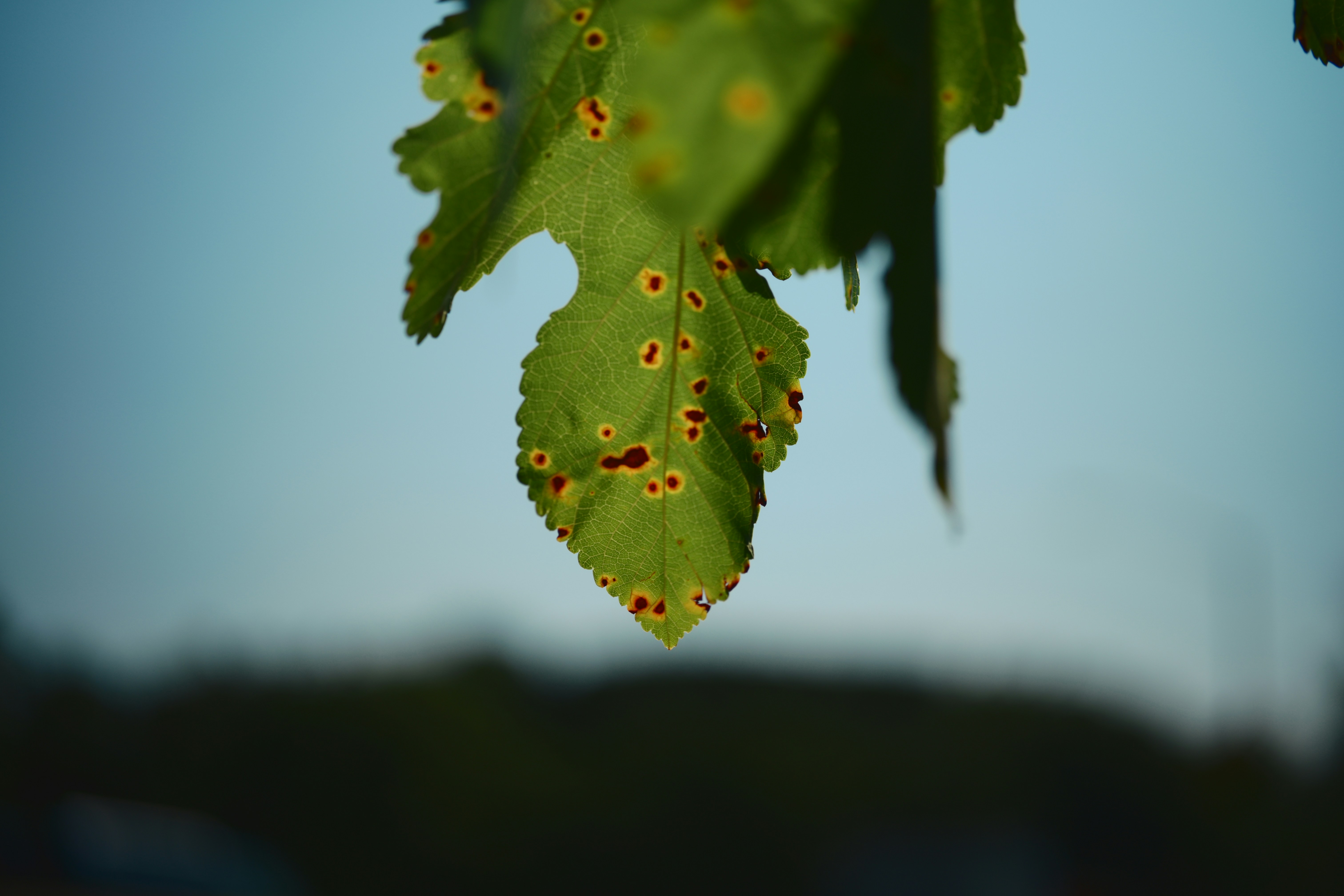
Early Blight vs. Septoria Leaf Spot
Both start low and thrive in moisture. Key differences:
| Feature | Early blight | Septoria leaf spot |
|---|---|---|
| First location | Usually lower leaves | Usually lower leaves |
| Spot appearance | Brown lesions, often with rings | Many small tan/gray spots with dark margins |
| Fruit affected? | Can affect stems/fruit in severe cases | Usually foliage, not fruit |
| Main strategy | Reduce leaf wetness, remove affected tissue, protect healthy growth | Same, with strong sanitation and splash prevention |
Management is nearly identical: remove lower leaves, avoid overhead watering, mulch, ensure airflow. Fungicides (chlorothalonil or copper) can be applied preventively. Neither disease typically kills a plant outright unless allowed to defoliate it completely. The real difference is that Septoria produces many more spots per leaf, giving a speckled appearance that can cause sudden yellowing and drop of entire lower leaves.
Late Blight and Fast-Spreading Blight-Like Problems
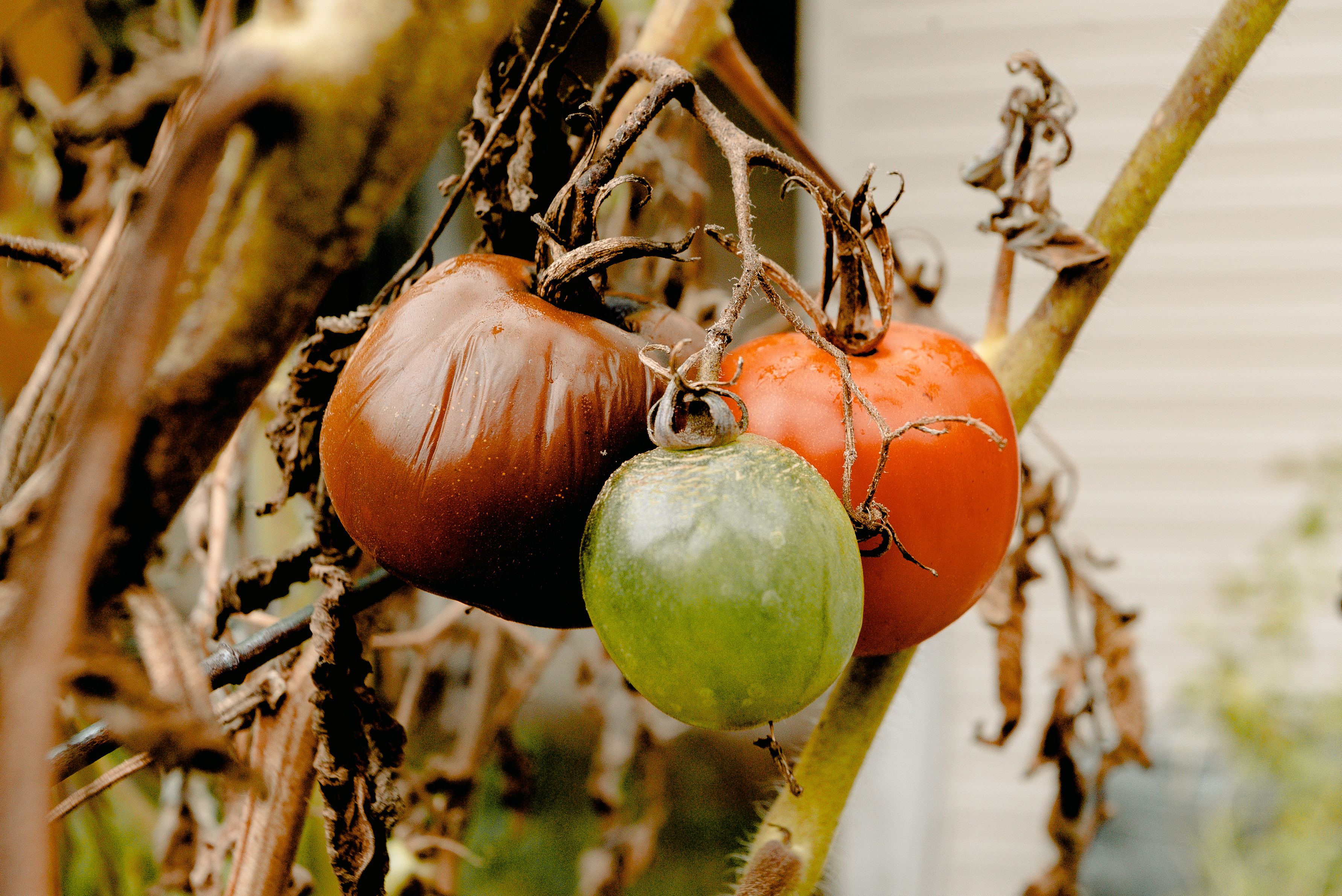
Late blight (Phytophthora infestans) can destroy a planting in days under cool, wet conditions (typically below 75°F with high humidity). Look for dark, greasy blotches on leaves, brown stem lesions, and firm, greasy spots on green fruit. White fuzzy growth may appear on leaf undersides in high humidity. Verify with extension office if suspected. Remove and bag infected plants (do not compost); avoid overhead irrigation; apply fungicides preventively if disease is in the area. Late blight is the same pathogen that caused the Irish potato famine—it’s highly contagious and can spread through wind or rain. Act fast: a single infected plant can infect neighboring gardens.
Wilt Diseases and Root/Stem Problems
Fusarium, Verticillium, and bacterial wilt are systemic and rarely respond to sprays. Distinguish from temporary wilting: yellowing from bottom up or one-sided suggests fungal wilt; whole plant wilting overnight while green suggests bacterial wilt; wilting after dry spell with recovery at night is water stress. Cut stem: brown streaks = fungal wilt; sticky white ooze = bacterial wilt. If rapid collapse, err on side of caution and remove plant; do not compost if bacterial wilt is suspected. Also check for root knot nematodes—these cause galls on roots and can lead to wilting and yellowing, especially in sandy soils. Affected areas should be planted with resistant cover crops like marigolds.
How to Prevent Tomato Diseases Before They Start
Water at the Base, Mulch the Soil, and Stop Splashback
Water at base (drip irrigation or soaker hoses). If using sprinkler, water early so leaves dry before night. Mulch with 2–3 inches of straw or shredded leaves to prevent soil splash and stabilize moisture. Keep foliage dry—wet leaves are the biggest risk factor for leaf spot. Even a single rain event can trigger disease if spores are present. A layer of mulch also moderates soil temperature, reducing stress on roots. Avoid fresh wood chips that may tie up nitrogen; straw or aged grass clippings work well.
Prune Lower Leaves, Space Plants, and Improve Airflow
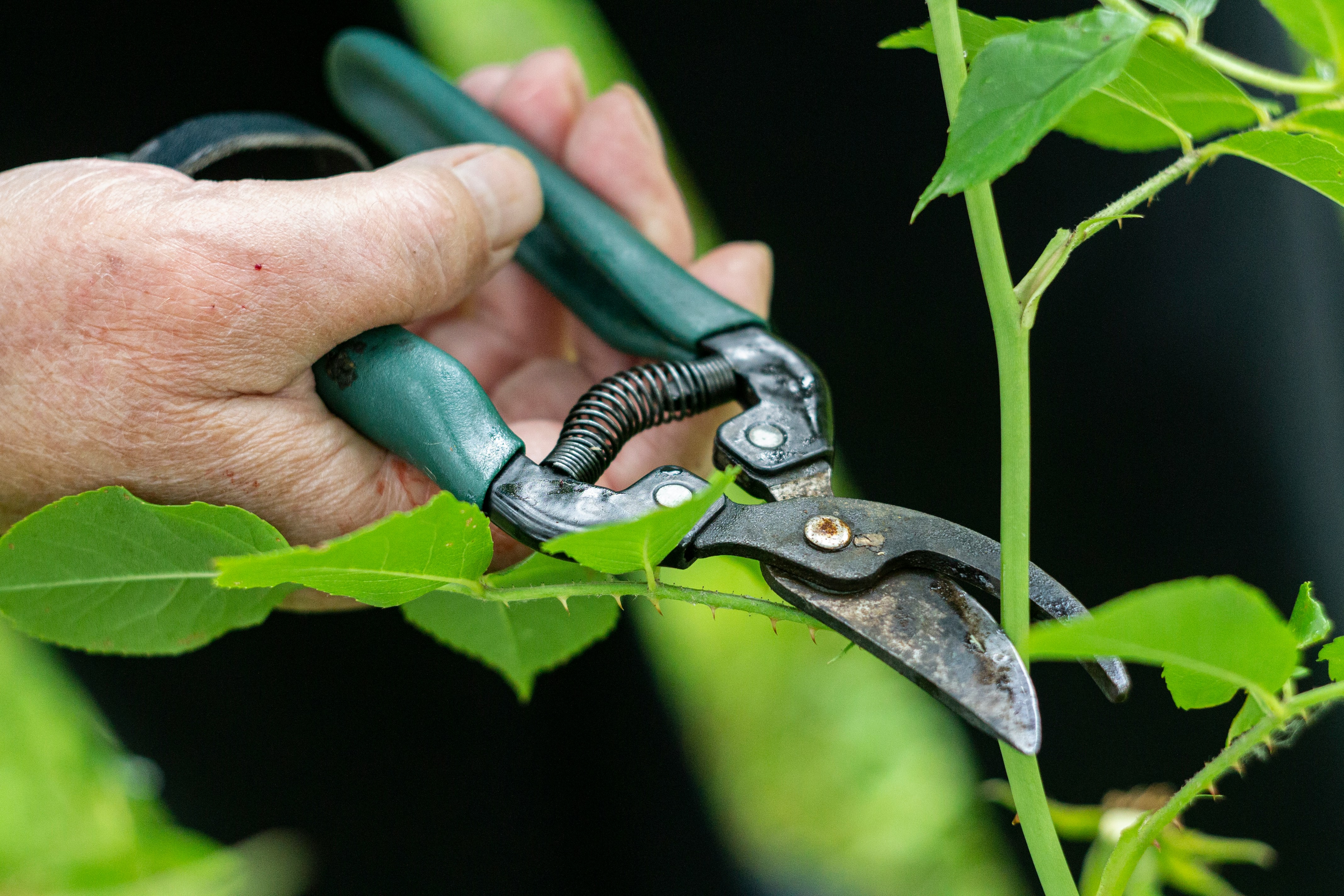
Remove leaves that touch soil once plant is established. Remove lowest leaves up to about 12 inches above ground when plant is 2 feet tall. Do not strip more than a few leaves at once—this can shock the plant and sunscald fruit. Space plants according to variety recommendations (typically 24–36 inches apart for determinate, 36–48 for indeterminate). Stake or cage to improve air movement. Good airflow dries foliage faster after rain or morning dew, reducing infection windows. Pruning should be done on dry days; disinfect pruners between plants if disease is present.
Rotation, Sanitation, Resistant Varieties, and Indoor/Container Hygiene
At season end, remove all tomato debris; do not compost diseased material unless pile reaches high temperatures (above 130°F for several days). Rotate tomatoes and related crops (peppers, eggplants, potatoes) on a 3–4 year cycle. Many soil-borne pathogens survive in plant debris. Choose varieties with disease resistance codes (e.g., VFN for Verticillium, Fusarium, nematodes). For indoor/container tomatoes, use clean potting mix and containers; provide airflow; avoid overwatering. If you reuse containers, wash them with a 10% bleach solution to eliminate pathogens. For grafted plants, the rootstock may offer additional disease resistance—consider them if you’ve had persistent soil problems.
What to Do After You Spot Disease on Tomato Plants
Remove Diseased Leaves Without Spreading the Problem
If disease is limited to a few lower leaves, remove them when foliage is dry. Use clean pruners; wash after handling. Bag and trash removed leaves. Monitor over next week; if disease stops moving upward, intervention worked. If it continues climbing, plant may be too far gone. When removing leaves, work from the outside of the plant inward to avoid brushing spores onto healthy foliage. Some gardeners use a spray of water to rinse tools between cuts. For severe outbreaks, consider removing entire lower branches.
When Fungicides or Copper Sprays Help—and When They Cannot Cure the Plant
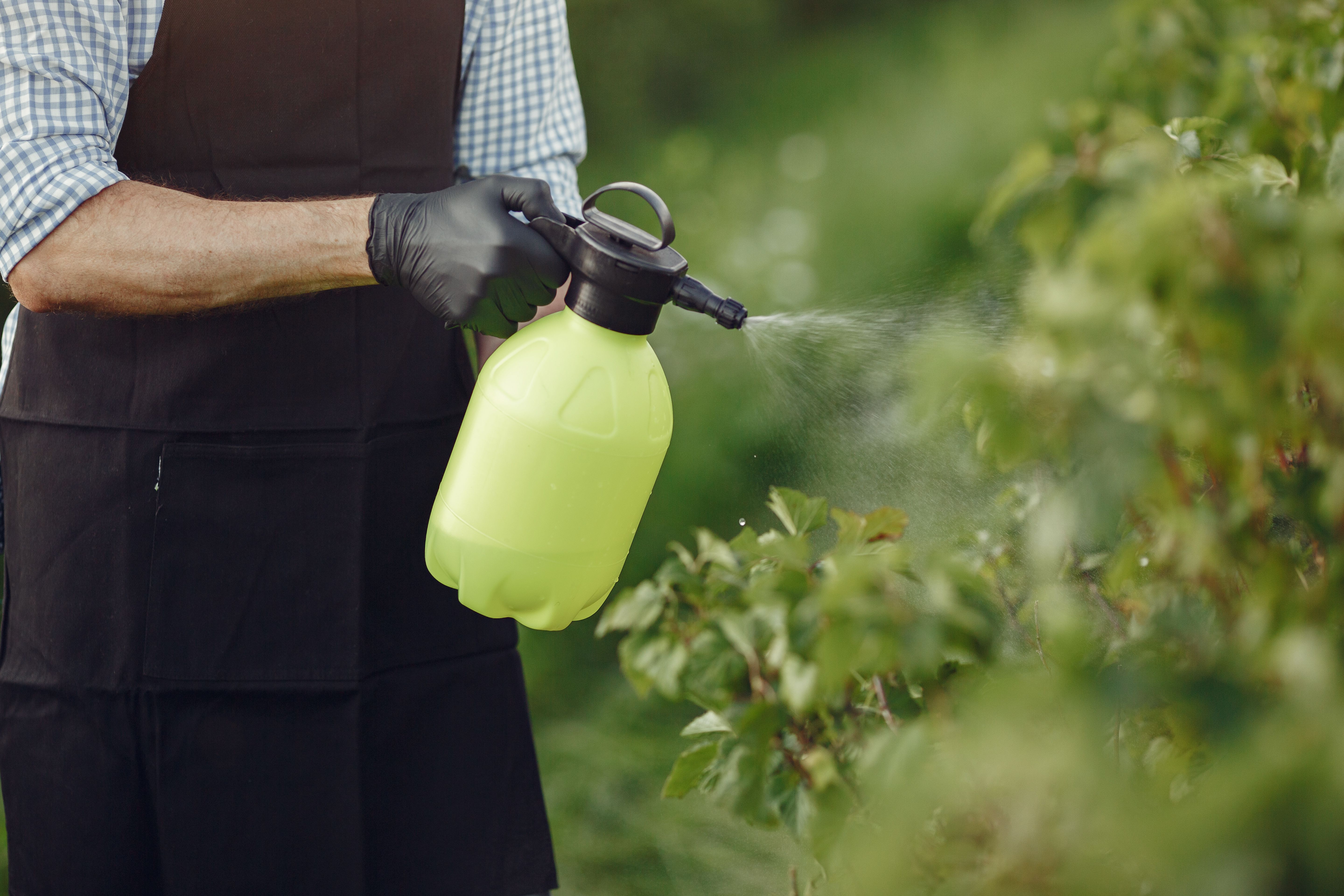
Most fungicides and copper are protective, not curative. They form a barrier that prevents spore germination; apply before disease arrives or very early. Once spots cover leaves, spraying won’t heal them. Copper must be applied thoroughly; overuse can build up in soil and harm beneficial microorganisms. For organic gardening, options include sulfur, copper, Bacillus subtilis (Serenade), and neem oil. Always follow label instructions and apply at the first sign of disease or as a preventive before wet weather. For systemic wilts (Fusarium, Verticillium, bacterial wilt), no spray works—pathogen is inside vascular tissue. Don’t waste money on remedies that claim to cure these.
What Not to Try: Epsom Salt, Hydrogen Peroxide, and “Spray Everything” Advice
Epsom salt corrects magnesium deficiency but has no effect on pathogens. Hydrogen peroxide breaks down quickly and can damage leaf tissue at high concentrations. When you see disease, do not jump to fertilize—high nitrogen pushes tender growth that is more susceptible. Focus on diagnosis, water management, and sanitation first. Only use a targeted product if the disease is identified and the label says it will help. Avoid miracle cures like baking soda, milk, or dish soap—while some have limited antifungal properties, they are rarely effective in the field and can burn leaves. Stick to proven methods: remove, mulch, water at the base, and rotate.
Conclusion
Tomato diseases are manageable with early detection and the right strategy. Start with symptoms—location, speed, pattern. Prevent with base watering, mulch, pruning, and rotation. When disease appears, remove affected leaves, improve airflow, and use sprays only if needed. For fast wilts, pulling the plant protects your garden. Trust your observations and consult your local extension service when unsure. With careful observation and consistent prevention, you can enjoy a healthy harvest despite the challenges of tomato growing.
FAQ
What are the three major diseases of tomatoes?
The most common categories are blights and leaf spots (early blight, Septoria, late blight), wilt diseases (Fusarium, Verticillium, bacterial wilt), and bacterial/viral diseases (bacterial spot, tomato spotted wilt virus). Importance varies by region.
How do I identify tomato plant disease from leaves?
Look at location and pattern. Lower-leaf spots with yellow halos often point to early blight or Septoria. One-sided wilting suggests vascular wilt. Greasy, dark blotches that spread fast may be late blight. Curled or distorted leaves without spots are more likely stress-related.
How do I get rid of disease on tomato plants?
Some diseases can only be slowed. Remove affected leaves, improve airflow, water at base, and protect healthy foliage with a labeled fungicide if appropriate. For systemic wilts or advanced collapse, pull the plant and trash it. Do not compost infected material.
Should I cut off diseased tomato leaves?
Yes, if disease is limited to a few lower leaves. Remove when foliage is dry; clean tools afterward. Do not remove more than a third of the plant’s leaves at once.
You Might Also Like