How Do Indoor Plants Impact Room Aesthetics and Ambiance?
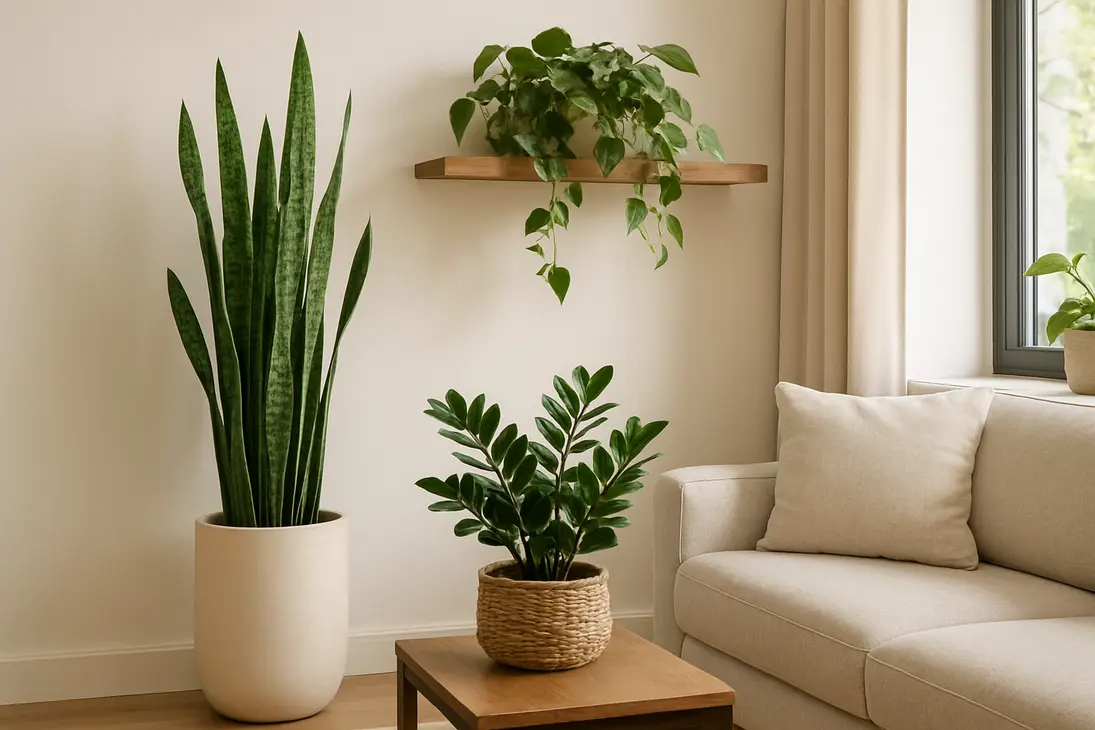
Indoor plants improve a room visually and emotionally. They add natural color, soften hard furniture, fill empty corners, create focal points, and make a space feel calmer and more lived-in. Unlike paint, furniture, or renovation, plants are flexible decor: you can move them, regroup them, change the pot, or scale the display up or down.
The best results come from choosing plants for the room you actually have. Light, space, style, and your care habits matter more than trends. A snake plant can make a small apartment feel modern and tidy, while a trailing pothos can make shelves feel softer and more relaxed.
How Indoor Plants Change the Look and Feel of a Room
Plants add qualities most interiors lack: living texture, irregular shapes, seasonal change, and natural color. Even one healthy plant can make a plain room feel more intentional, while several well-placed plants can create atmosphere without crowding the room.
They also affect mood. Greenery often makes a space feel fresher, calmer, and more welcoming because leaves break up blank walls, soften sharp lines, and signal care.
Add natural color and contrast
Green works almost like a neutral. It pairs well with white, beige, gray, black, wood, brass, terracotta, and many bold colors. Different plants create different effects: a dark green ZZ plant looks clean and architectural, a variegated pothos brightens shelves, and a peace lily adds soft white blooms.
Pots shape the mood too. Black ceramic looks graphic, terracotta adds warmth, baskets add texture, and neutral pots keep colorful rooms from feeling busy.
Soften hard lines and empty corners
Rooms are full of straight lines: walls, windows, sofas, tables, shelves, screens, and cabinets. Plants interrupt those lines with curves, layered leaves, and organic shapes.
Empty corners are especially good places for plants. A tall plant, plant stand, or full trailing plant can make a bare corner feel finished. In rooms with glass, metal, stone, or square-edged furniture, greenery softens the overall impression.
Create focal points without major decor changes
Plants create focal points without repainting, buying large art, or changing furniture. A floor plant beside a sofa can anchor a living room. Three plants on a console can make an entryway feel styled. A trailing plant on a high shelf can draw the eye upward.
They are also easy to adjust. If a plant looks too busy near patterns, move it to a simpler background. If it disappears on a large surface, raise it on a stand or choose a stronger pot.
Make small rooms feel more intentional and lived-in
Small rooms need restraint. One plant on a nightstand and one taller plant in a corner often looks better than many tiny pots scattered everywhere. In a studio, a slim upright plant can define a workspace without taking much floor area.
Plants also make small spaces feel lived-in because they grow and change. A new leaf or trailing stem adds freshness that furniture alone cannot provide.
Choosing Indoor Plants That Match Your Space
The most attractive plant is one that suits your room’s conditions. Choose based on light, scale, and style before buying.
| Room condition or goal | Better plant direction |
|---|---|
| Low natural light | Snake plant, ZZ plant, pothos |
| Bright indirect light | Monstera, peace lily, pothos |
| Direct sunny window | Cacti, many succulents |
| Small surfaces | Lucky bamboo, small pothos, compact succulents |
| Empty corner | Snake plant, ZZ plant, monstera |
| Minimalist room | Snake plant, ZZ plant, simple pot |
| Cozy room | Pothos, peace lily, warm-toned pots |
| Tropical look | Monstera, pothos, peace lily |
For low-light rooms
Low light does not mean no light. Most plants still need some natural or strong artificial light. If a room is too dim to read in during the day without a lamp, your choices are limited unless you add a grow light.
Snake plants, ZZ plants, and pothos are good lower-light options. They may grow slowly, but they can still look strong. Avoid succulents and cacti in dark corners; they usually stretch, weaken, or lose their compact shape.
For bright windows and sunny corners
Bright rooms offer more choices, but not every plant wants direct sun. Many tropical plants prefer bright indirect light. Monstera and peace lily can look full and healthy near bright windows if protected from harsh midday sun.
Direct sunny windows are better for cacti and many succulents. If a plant was grown in softer nursery light, introduce it gradually to stronger sun to avoid scorch.
For shelves, desks, and compact spaces
For small surfaces, choose plants that stay manageable. Pothos can trail or be trimmed. Lucky bamboo adds a clean vertical accent. Small succulents suit sunny desks and windowsills.
A plant should not block work, crowd food prep, or drop soil near electronics. Leave enough room for the surface to remain useful.
For statement floor plants
Statement floor plants work well in empty corners, beside sofas, near cabinets, or against blank walls. Snake plants are upright and narrow. ZZ plants are glossy and sculptural. Monstera plants feel lush and tropical but need more space as they mature.
A floor plant usually looks better in a substantial planter, basket, or stand because it gives the plant more presence.
For a minimalist, cozy, or tropical look
For a minimalist look, use fewer plants with strong shapes, such as a snake plant or ZZ plant in a simple pot.
For a cozy look, choose softer leaves and warm materials: pothos, peace lily, terracotta, cream ceramic, or woven baskets.
For a tropical look, use larger leaves and layered greenery, such as monstera, pothos, and peace lily. Keep pots coordinated so the display feels lush rather than chaotic.
Best Beginner-Friendly Indoor Plants for Aesthetic Impact
Beginner-friendly plants can still have strong design value. The best options combine attractive shape, forgiving care, and reliable indoor performance.
Snake plant
Snake plant has upright, sword-like leaves that add height without spreading widely. It suits corners, bedrooms, entryways, offices, and minimalist rooms.
It tolerates lower light but looks best in moderate to bright indirect light. The main care risk is overwatering, so let the soil dry well between waterings.
Pothos
Pothos adds softness and movement. Its trailing stems work well on shelves, bookcases, cabinets, and hanging planters.
It is forgiving and adaptable. Variegated types may lose contrast in lower light, but the plant usually remains useful and attractive. Trim vines for a tidy look or let them trail for a relaxed effect.
ZZ plant
ZZ plant has glossy, deep green leaves and a polished shape. It works well in offices, hallways, modern rooms, and low-maintenance homes.
It does not trail or sprawl much, so it suits spaces where you want greenery without visual mess. Avoid overwatering and use a pot with drainage.
Peace lily
Peace lily has broad green leaves and white blooms, giving rooms a soft, elegant mood. It suits bedrooms, bathrooms with enough light, and quiet living areas.
It prefers more consistent moisture than snake plant or ZZ plant but should not sit in soggy soil. Bright indirect light usually keeps it looking best.
Monstera
Monstera creates drama with large split leaves. It is ideal when you want a lush, tropical focal point.
It needs space, bright indirect light, and sometimes support as it grows. In a small room, one monstera may be enough.
Lucky bamboo
Lucky bamboo is compact, tidy, and vertical. It works well on desks, counters, bathroom shelves, and narrow surfaces.
Keep it in indirect light and away from harsh sun. If grown in water, refresh the water regularly and keep the container clean.
Succulents and cacti
Succulents and cacti bring sculptural shapes, muted colors, and a desert-inspired look. They are best for sunny windowsills and bright desks.
They need strong light, fast-draining soil, and careful watering. They are low-maintenance only when the light is right.
Styling Indoor Plants for Better Room Ambiance
A beautiful plant can look awkward if placed randomly. Good styling helps the plant relate to the furniture, light, wall space, colors, and movement of the room.
Use plant height to balance the room
Height prevents a room from feeling flat. A tall plant draws the eye upward and balances low sofas, beds, and media units.
Use upright plants in corners, medium plants on stands, and trailing plants on higher shelves. A simple formula is one tall plant, one medium plant, and one small plant in a room.
Group plants in odd numbers
Groups of three or five often look more natural than pairs. Vary height, leaf size, and pot size, but keep one element consistent, such as pot color or material.
Do not group plants only for appearance if their care needs clash. A cactus and a peace lily usually prefer different conditions.
Match pots and planters to the decor style
Pots are part of the design. Modern rooms suit simple ceramic, concrete, matte black, white, or neutral planters. Warm or rustic rooms work well with terracotta, baskets, and textured clay. Colorful rooms often look best with neutral pots or one repeated accent color.
If a decorative cachepot has no drainage hole, keep the plant in its nursery pot inside it. Remove the plant for watering and let it drain before replacing it.
Use hanging plants, shelves, and plant stands
Hanging plants and shelves add greenery without using floor space, which helps in apartments and small rooms. They can also keep plants away from pets or children.
Plant stands make smaller plants more visible and can improve light exposure. Avoid placing plants so high that watering becomes difficult.
Keep scale in mind for small rooms
Scale determines whether a room feels lush or crowded. In a small room, one floor plant, one hanging plant, or two tabletop plants may be enough.
Avoid scattering many tiny pots across every surface. Group small plants on a tray, use matching pots, or choose one stronger plant. Also consider leaf size: large leaves can overwhelm narrow walkways or small desks.
Care Basics That Keep Indoor Plants Looking Good
Plants improve ambiance only when they look healthy. Yellow leaves, dust, soggy soil, fungus gnats, and drooping stems can make a room feel neglected. Basic care starts with matching the plant to the room.
Match the plant to the light you actually have
Observe the room before buying. Does it get weak northern light, bright indirect light, or strong afternoon sun? Will the plant sit near the window or several feet away?
Too little light causes weak, stretched growth. Too much direct sun can scorch leaves. If a room is very dark, use a grow light or rotate plants from brighter areas.
Water based on soil moisture, not a fixed schedule
Do not water automatically on a fixed day. Water use changes with light, temperature, pot size, soil, season, and plant type.
Check the soil first. Many houseplants can be watered when the top layer dries. Snake plants, ZZ plants, succulents, and cacti should dry more thoroughly. Peace lilies prefer not to dry out completely for long periods.
Use pots with drainage
Drainage prevents water from sitting around roots. A pot without drainage can stay wet at the bottom even when the top looks dry.
Use a pot with drainage holes, a nursery pot inside a decorative cover pot, or a saucer that lets excess water drain away. Do not leave plants sitting in puddles.
Wipe leaves to remove dust
Dusty leaves look dull. Broad-leaved plants such as peace lily, monstera, ZZ plant, and snake plant benefit from occasional wiping with a damp cloth.
Clean leaves look richer and reflect light better. While wiping, check for pests, sticky residue, or damaged leaves.
Watch for yellow leaves, drooping, and root rot
A few old yellow leaves are normal, but repeated yellowing, mushy stems, bad-smelling soil, or constant drooping can signal a problem.
| Symptom | Possible cause | What to check first |
|---|---|---|
| Yellow leaves and wet soil | Overwatering or poor drainage | Drainage and soil moisture |
| Drooping with dry soil | Underwatering | Soil dryness |
| Drooping with wet soil | Root stress or rot | Soggy soil, smell, roots |
| Brown crispy tips | Dryness, salts, or low humidity | Watering pattern |
| Stretched growth | Not enough light | Distance from window |
| Scorched patches | Too much direct sun | Sun exposure |
Overwatering is common, especially in low light. Check soil before watering and use containers that let excess water escape.
Conclusion
Indoor plants improve room aesthetics by adding warmth, texture, color, height, and life. They soften hard furniture, fill awkward corners, create focal points, and make rooms feel more thoughtful and inviting.
The best plant is the one that fits your light, space, style, and care habits. Choose carefully, style with restraint, and care consistently so indoor greenery becomes part of the ambiance rather than just another object in the room.
FAQ
Do indoor plants really improve room ambiance?
Yes. Indoor plants add natural color, texture, softness, and movement. They make rooms feel calmer, fresher, and more welcoming when they are healthy, well-scaled, and intentionally placed.
What indoor plants are best for beginners?
Good beginner plants include snake plant, pothos, ZZ plant, peace lily, lucky bamboo, and succulents or cacti if you have strong light. Snake plant and ZZ plant are especially forgiving of missed waterings.
Can indoor plants help improve air quality?
Indoor plants can contribute to a fresher-feeling room, but a few houseplants should not be relied on as a primary air-quality solution. Ventilation, source control, cleaning, and filtration are more dependable. Choose plants mainly for beauty and atmosphere.
What is the most common mistake with indoor plants?
The most common mistake is overwatering, often combined with poor drainage or low light. Check soil moisture before watering, use pots with drainage holes, and choose plants that match the room’s light.
You Might Also Like