When and How to Repot Coleus Plants for Better Growth
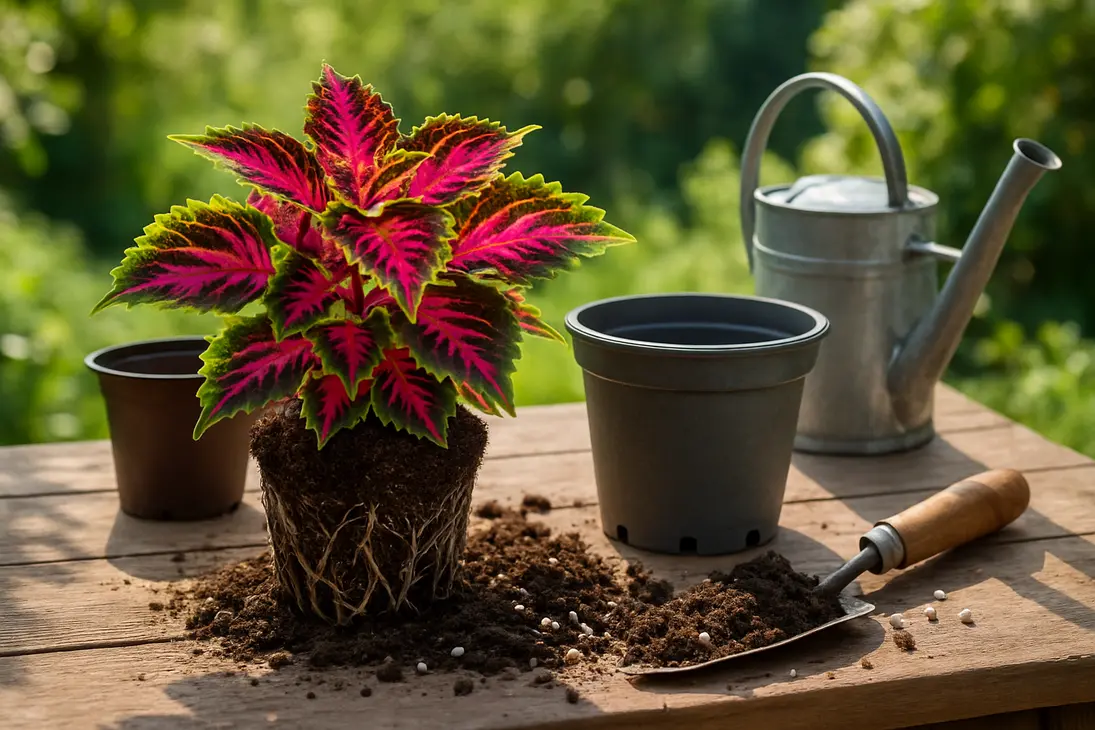
Repotting Coleus plants keeps them leafy, colorful, and vigorous. Coleus grows quickly in warm, bright conditions, so a small nursery pot can become crowded fast. Once roots run out of space or the potting mix breaks down, growth slows, watering becomes harder, and the plant may wilt or drop leaves.
Good repotting gives the roots fresh, airy soil, a little more room, and the right aftercare so the plant can recover with less stress.
When to Repot a Coleus Plant
The best time to repot Coleus is during active growth, usually spring through early summer. Indoor Coleus can also be repotted during the warm growing season if it has bright light.
Coleus is forgiving, but timing matters. Waiting too long can leave the plant root-bound and drying out daily, while moving a small plant into an oversized pot can keep soil wet for too long.
Signs your Coleus is ready for repotting
Do not repot just because the plant looks large above the soil. Check the pot and roots too. Signs include:
- Roots circling the bottom or growing from drainage holes.
- Water running straight through a dense root ball.
- Frequent wilting even with regular watering.
- Slowed growth during warm, bright conditions.
- Compacted soil or soil pulling away from the pot edge.
- A top-heavy plant that tips easily.
- Yellowing lower leaves when light and watering seem appropriate.
- A nursery pot packed with roots soon after purchase.
To confirm, slide the plant gently from its pot. If roots form a tight mat around the soil, repotting is useful. If roots are sparse and the mix is still loose, the plant may need better light, watering changes, or feeding instead.
How often Coleus plants usually need repotting
Coleus often needs repotting more often than slower houseplants. In good conditions, a young plant can fill a small pot within a few months.
| Coleus situation | Typical repotting need |
|---|---|
| Small nursery plant in a 3–4 inch pot | Within weeks to 2 months if growing fast |
| Indoor Coleus kept year-round | Every 6–12 months |
| Outdoor container Coleus | Usually at planting time, then only if crowded |
| Overwintered Coleus | Refresh or repot in spring |
| Recently rooted cutting | Pot up gradually as roots fill each container |
Use this as a guide, not a rule. Growth rate depends on warmth, light, variety, and care.
Best season or growth stage to repot
Repot in spring or early summer when the plant is making new leaves and stems. Good times include:
- After a rooted cutting fills its starter pot.
- A week or two after bringing home a nursery plant.
- In spring, when an overwintered Coleus starts growing again.
- Before planting Coleus into a summer container display.
Avoid repotting during cold weather, extreme heat, or severe drought stress. If the plant is limp from dryness, water it first and wait until it perks up.
Choosing the Right Pot and Soil Mix
Coleus likes evenly moist soil, but not stale, waterlogged soil. Choose a container and mix that hold some moisture while allowing excess water to drain.
What size pot to use
Move Coleus up one pot size at a time. Choose a pot about 1–2 inches wider than the current one.
For example:
- A 4-inch pot can move to a 5- or 6-inch pot.
- A 6-inch pot can move to an 8-inch pot.
- An 8-inch pot can move to a 10-inch pot if roots are crowded.
Avoid putting a small Coleus into a very large container unless planting several plants together. Too much empty soil stays wet longer and can stress the roots.
Plastic and glazed ceramic hold moisture longer, which helps in hot weather. Terracotta dries faster and can suit growers who tend to overwater, though it may need more frequent watering outdoors.
Why drainage holes matter
Drainage holes are essential. Without them, water collects at the bottom, roots lose oxygen, and soft Coleus stems may rot.
If using a decorative pot without holes, treat it as a cachepot. Keep the Coleus in a grow pot with drainage, set it inside, and empty standing water after watering.
Best soil type for repotting Coleus
Use a light, well-draining potting mix, not garden soil. Garden soil is usually too dense for containers and can compact around fine roots.
A simple Coleus mix:
- 2 parts quality potting mix
- 1 part perlite, pumice, or fine orchid bark
- Optional: a small amount of compost or worm castings if the base mix is low in nutrients
The mix should feel fluffy and slightly springy, not sticky or muddy. Outdoor pots in hot weather may need a moisture-retentive mix, but it must still drain well.
How to Repot Coleus Step by Step
Repotting Coleus is simple, but stems can snap and roots can tear if handled roughly. Prepare the new pot before removing the plant.
Water lightly before repotting
Water lightly several hours before repotting, or the day before if the soil is very dry. The root ball should be slightly moist, not soaked.
Gather:
- New pot with drainage holes
- Fresh potting mix
- Small trowel or scoop
- Clean scissors or pruners
- Watering can
If the plant is tall or leggy, pinch back the growing tips before or after repotting to reduce top-heaviness and encourage branching.
Remove the Coleus without tearing the roots
Hold the plant near the base without pulling hard on the stems. Tip the pot sideways and squeeze the sides if it is plastic. For a rigid pot, run a dull knife or plant label around the inside edge.
Slide the root ball out while supporting the soil. If roots have grown through drainage holes, trim only the roots trapping the plant. For a badly stuck nursery pot, cutting the plastic pot away is safer than yanking the plant.
Loosen crowded roots and refresh old soil
Inspect the roots. Healthy Coleus roots are usually pale, tan, or light brown and firm. Dark, mushy, foul-smelling roots suggest rot.
If the plant is lightly rooted, keep most of the root ball intact. If it is root-bound, gently loosen the outer roots with your fingers. You do not need to untangle every root; just open the tight outer layer.
Remove compacted or crusty soil from the surface and sides, but do not strip all soil away unless there is rot or a serious pest issue.
Trim only what is necessary:
- Dead or mushy roots
- Tight circling roots
- Roots trapping the plant in the old pot
Avoid cutting away large amounts of healthy roots.
Replant at the right depth
Add fresh mix to the bottom of the new pot. Set the Coleus so the top of the root ball sits at the same level as before. Leave a little space below the rim for watering.
Fill around the sides with fresh mix and firm gently. Do not pack the soil hard.
Avoid burying soft stems deeply, which can encourage rot. If the plant is leggy, prune it back rather than burying a long stem section.
Water after repotting
Water thoroughly until water drains from the bottom. This settles the mix around the roots and removes large air pockets.
If the soil level sinks, add a little more mix while keeping the root ball at the original depth. Empty the saucer after drainage finishes.
Do not fertilize immediately unless the plant is growing strongly and the mix contains no nutrients. Fresh soil and steady moisture matter more during the first few days.
Care After Repotting
After repotting, Coleus needs a short adjustment period because tiny root hairs are disturbed. Aim for bright but gentle light, even moisture, and good drainage.
Where to place the plant after repotting
Place the Coleus in bright, indirect light or gentle morning sun for several days. Avoid harsh afternoon sun right after repotting, especially in warm weather.
Good recovery spots include a bright indoor window out of midday sun, a shaded porch, a garden area with morning sun and afternoon shade, or light shade cloth during hot weather.
Once the plant looks settled and new growth resumes, gradually return it to normal light. Many Coleus varieties color best in bright light, but sudden intense sun after repotting can cause wilting or scorch.
How to water without overwatering
Coleus prefers lightly moist soil, but fresh potting mix may hold water longer than the old root ball. Check moisture before watering.
Water when the top inch feels slightly dry or the pot feels lighter. Then water thoroughly and let excess drain.
Avoid:
- Watering daily on a fixed schedule.
- Giving tiny surface sips.
- Leaving the pot in standing water.
- Assuming every wilt means thirst.
A newly repotted Coleus may wilt even when soil is moist because roots are adjusting. If the soil is already damp, give shade and time instead of more water.
When to fertilize again
Wait until the Coleus shows active growth before feeding, usually 2–4 weeks after repotting.
If the potting mix already contains fertilizer, wait longer. Too much fertilizer after root disturbance can stress the plant or cause weak, soft growth.
When feeding resumes, use a balanced diluted liquid fertilizer or your usual container-plant fertilizer at a gentle rate.
What mild transplant shock looks like
Mild transplant shock is common and temporary. It may include slight wilting, a few yellowing lower leaves, slower growth, or dull leaves for a short time.
Keep the plant in bright shade, maintain even moisture, and avoid more disturbance.
More serious signs include blackened stems, mushy roots, sour-smelling soil, or ongoing collapse despite moist soil and gentle light. These suggest overwatering, stem rot, or major root damage rather than normal shock.
Common Repotting Mistakes to Avoid
Most Coleus repotting problems come from oversized pots, soggy soil, heavy watering, or excessive root pruning. Coleus grows quickly, but it still needs a stable root environment.
Using soil that stays too wet
Heavy soil reduces oxygen around the roots and stays wet after watering. Coleus may wilt even in wet soil if roots are damaged.
Avoid:
- Garden soil in pots.
- Clay-heavy mixes.
- Old compacted potting soil without amendment.
- Containers with no drainage.
- Decorative pots that trap water.
If the mix feels heavy, add perlite, pumice, or fine bark before planting. If you already repotted into soggy soil and the plant is declining, let the soil dry slightly and adjust watering. Repot again only if the situation is clearly worsening.
Moving to a pot that is too large
A very large pot may seem convenient, but it creates uneven moisture. The small root ball uses water nearby while the surrounding soil stays wet.
Choose a modest size increase instead. For a fuller display in a large container, plant several Coleus together or combine them with plants that like similar moisture and light.
Damaging or over-pruning the roots
Coleus can handle light root disturbance, but severe root loss can cause wilting and leaf drop. Loosen roots gently rather than combing the root ball clean.
Do not cut healthy roots just to force the plant back into the same pot unless you are intentionally root-pruning and also reducing top growth. For most plants, moving up slightly is safer.
Trim only soft, dead, or tight circling roots with clean scissors. Afterward, keep the plant in bright shade and avoid fertilizer until new growth appears.
Ignoring light and watering changes after repotting
A repotted Coleus may not behave like it did before. Fresh soil can dry slower, a larger pot can hold more moisture, and disturbed roots may wilt in sun they previously tolerated.
For the first week, check the soil before watering, protect the plant from harsh sun, and avoid moving it repeatedly. Once new growth starts, return gradually to normal care.
Conclusion
Repot Coleus when you see circling roots, soil drying too fast, slowed growth, or a top-heavy crowded plant. Spring and early summer are usually best.
Choose a pot only 1–2 inches wider than the old one, make sure it drains, and use a fresh, airy potting mix. Handle the root ball gently, loosen only crowded roots, and replant at the same depth.
After repotting, provide bright indirect light, even moisture, and a short break from fertilizer. A little wilting or lower leaf drop can be normal, but soggy soil, deep planting, and oversized pots can cause real root problems.
FAQ
Can I repot Coleus while it is flowering?
Yes, but it is often best to pinch off the flower spikes. Coleus is usually grown for foliage, and flowering can make it leggier.
If the plant is healthy and root-bound, repotting is fine. Keep it shaded for a few days afterward and avoid combining heavy pruning with heavy root disturbance.
Should I repot a Coleus right after buying it?
Not always. If it looks healthy and the soil is not drying too quickly, let it adjust for several days to a week before repotting.
Repot sooner if the nursery pot is packed with roots, the plant wilts daily, the soil is poor or waterlogged, or roots are growing heavily from drainage holes. When unsure, slip the plant out and check the root ball.
Can I divide or propagate Coleus while repotting?
Yes. Repotting is a good time to take stem cuttings. Use healthy non-flowering tips, remove lower leaves, and root them in water or a light potting mix.
You can divide Coleus if it has multiple rooted stems or several plants in one pot. Separate roots gently and pot each division into a suitable container. Avoid dividing a weak, badly wilted plant.
Why is my Coleus wilting after repotting?
A little wilting is usually transplant shock. Move the plant to bright shade, keep the soil lightly moist, and give it a few days.
If the soil is dry, water thoroughly. If it is wet, do not add more water. Wilting in wet soil can mean poor drainage or low oxygen around the roots. Check drainage, empty the saucer, and keep the plant out of hot direct sun while it recovers.
You Might Also Like