Why Do Self-Watering Pots Keep Soil Too Wet?
Self-watering pots are designed to make moisture more consistent, not to water perfectly without supervision. When they work well, they reduce the cycle of bone-dry soil followed by overwatering. When they do not, the soil stays wet for days or weeks, the plant declines, and the reservoir still looks full.
This usually means the pot is supplying water faster than the plant can use it. Common causes include dense potting mix, low light, cool conditions, an overfilled reservoir, poor airflow, or a wick that pulls too much water. The pot may be functioning correctly, but it may not be matched to the plant’s needs.
How Self-Watering Pots Work
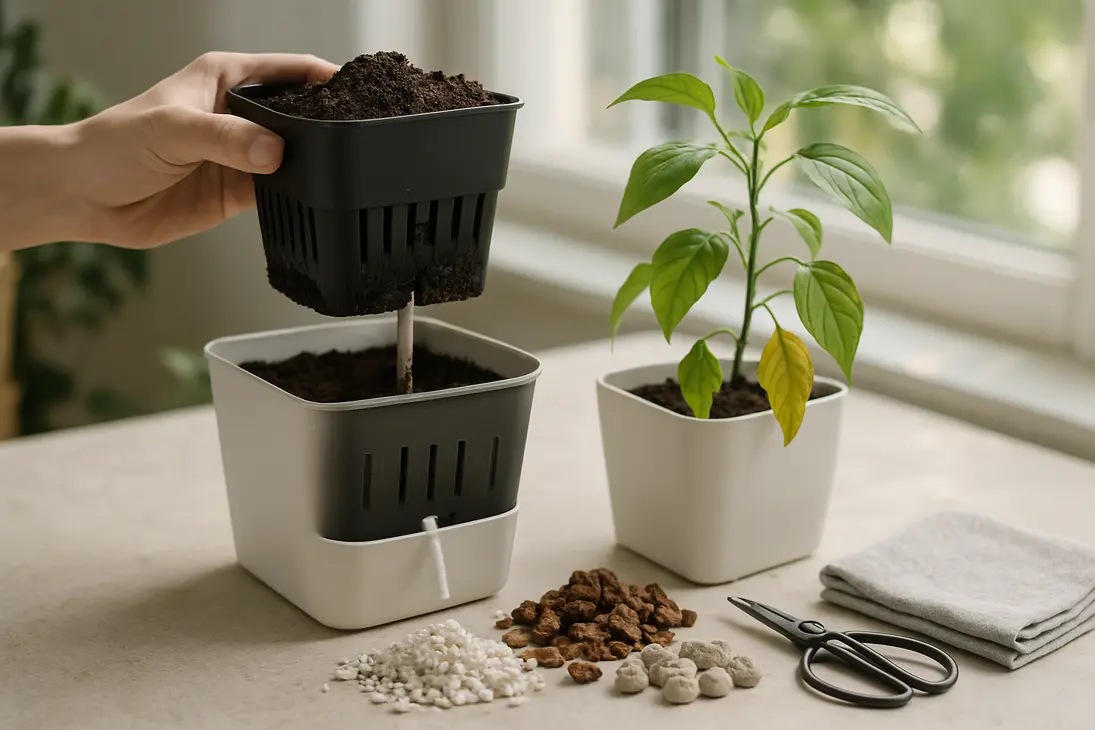
A self-watering pot has two main parts: an upper planting area and a lower water reservoir. Water moves from the reservoir into the potting mix through a wick, fabric strip, absorbent insert, or soil column. The plant then takes up moisture through its roots.
The key point: the pot does not know whether your plant is thirsty. It simply gives the soil access to water from below.
Reservoirs, Wicks, and Capillary Action
Water moves upward through capillary action, the same way a paper towel draws water from a glass. How strongly this happens depends on:
- Wick thickness and absorbency
- Potting mix texture
- How wet the mix already is
- Distance between reservoir and soil surface
- Plant water use
- Light, temperature, and airflow
Fine, peat-heavy mixes hold and pull more water. Chunkier mixes with bark, perlite, pumice, or coarse coir hold more air and usually wick less aggressively. That is why the same pot can be perfect for one plant and too wet for another.
Why “Constantly Moist” Can Become a Problem
Some plants like steady moisture, including many ferns, African violets, peace lilies, calatheas, and some herbs. But “constantly moist” is not always healthy.
Roots need oxygen as well as water. When soil pores stay filled with water, oxygen drops. Stressed roots stop working properly and may rot. This is why a plant can wilt even when the soil is wet: damaged roots cannot take up water effectively.
Self-Watering Does Not Mean No Monitoring
A self-watering pot changes how you water, but it does not remove the need to check the plant. Monitor:
- Whether the top inch or two is drying
- Whether the reservoir empties between refills
- Leaf yellowing, drooping, or softening
- Sour or swampy smells
- Roots growing into the reservoir
- Mineral crust on soil or pot surfaces
Treat the reservoir as a watering aid, not a replacement for observation.
Common Problems With Self-Watering Pots
Most issues come from one imbalance: water is always available, but the plant is not using it fast enough.
Soil Stays Wet for Too Long
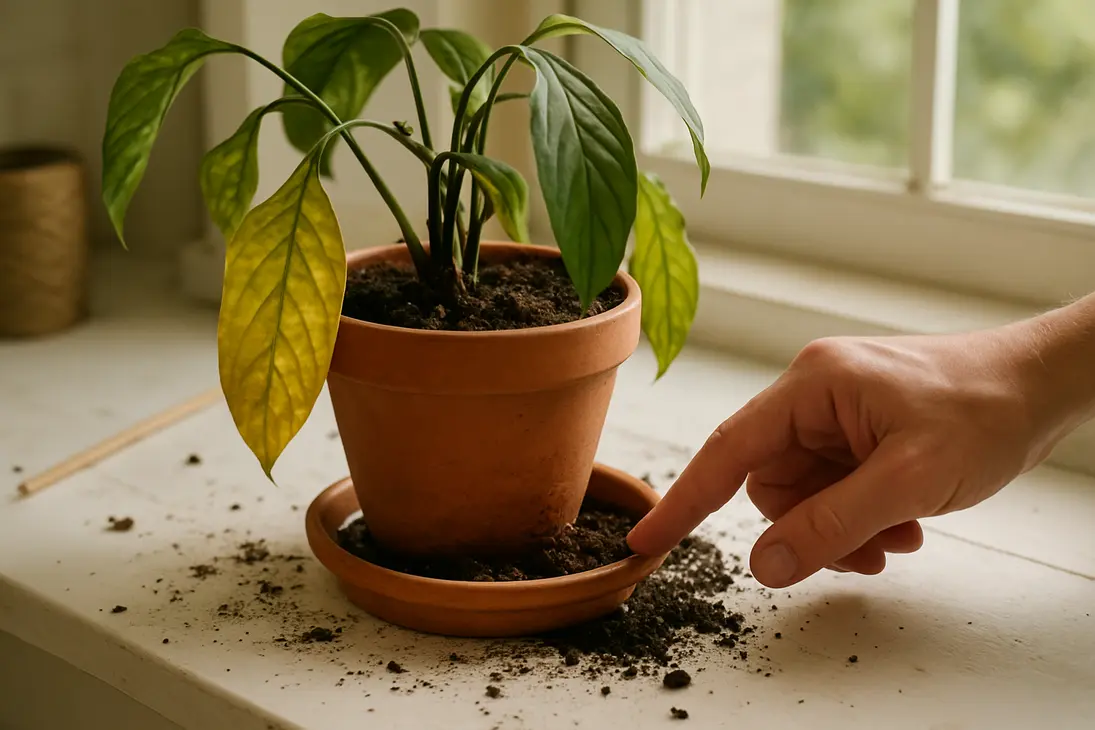
This is the most common problem. The reservoir is full, the wick is active, and the soil stays damp from bottom to top. Low light, dense mix, oversized pots, and cool rooms make this worse.
| Symptom | Likely issue |
|---|---|
| Soil stays dark and damp | Mix holds too much water |
| Fungus gnats appear | Organic matter stays moist |
| Lower leaves yellow | Roots may lack oxygen |
| Wilting in wet soil | Roots may be damaged |
| Pot always feels heavy | Water is not being used |
A moisture meter can help, but do not rely on it alone. Pot weight, finger checks, and root inspection are often more useful.
Root Rot and Mushy Stems
Root rot develops when roots stay wet and oxygen-starved long enough for decay and pathogens to take over.
Signs include:
- Brown, black, mushy, or hollow roots
- Sour or rotten smell
- Yellowing lower leaves
- Soft stems near the soil line
- Sudden collapse after weeks of slow decline
Succulents, snake plants, ZZ plants, hoyas, and cacti are especially vulnerable in constantly wet self-watering setups.
Wicks Stop Working or Pull Too Much Water
Wicks can fail in two ways. They may stop moving water if they dry out, lose soil contact, become mineral-coated, or shift out of position. In that case, the reservoir stays full while the plant dries.
They can also pull too much water. Thick cotton wicks, large fabric inserts, or soil columns sitting directly in water can keep the lower mix saturated, especially in fine-textured soil.
Reservoir Water Gets Stagnant
Water that sits too long can become stale, especially in warm rooms or clear reservoirs exposed to light. It may develop algae, odor, or biofilm.
A healthy setup should cycle through water. If the reservoir stays full for weeks, the plant is not using it fast enough.
Salt and Mineral Buildup
In traditional pots, top-watering and drainage flush some minerals away. In self-watering pots, water often moves upward and evaporates, leaving salts behind.
Watch for:
- White crust on soil
- Crust around the pot or reservoir edge
- Brown leaf tips
- Slower growth
Hard tap water and frequent fertilizer make this more likely. Periodically flush the potting mix from the top and discard the runoff.
Roots Grow Into the Reservoir
Roots follow moisture, so they may grow through openings into the reservoir. A few white roots are usually manageable. A dense mat sitting in water can rot, clog the system, or make the insert hard to remove.
If roots are crowding the reservoir, repot, root-prune, or switch container styles.
Why Some Plants Struggle in Self-Watering Pots
Self-watering pots are not universally good or bad. They suit some plants and conditions better than others.
Drought-Tolerant Plants Are Higher Risk
Plants adapted to dry periods usually dislike constant moisture. This includes many:
- Cacti
- Succulents
- Snake plants
- ZZ plants
- Jade plants
- Aloe
- Agave
- Ponytail palms
- Some peperomias
These plants store water and usually prefer a full watering followed by a real drying period. Experienced growers may use self-watering systems with very airy, mineral mixes, but most home growers are safer using drainage holes and fast-drying soil.
Low Light Slows Water Use
Light drives growth and water use. A plant in bright indirect light usually drinks more than the same plant in a dim corner.
This is why self-watering pots often cause trouble in winter. Short days, cooler rooms, and slower growth reduce demand. If the reservoir stays full as if it were summer, the soil may remain wet too long.
Dense Potting Mix Holds Too Much Moisture
Many indoor potting mixes are designed to retain water. In a self-watering pot, peat-heavy or fine coir mixes can become saturated and low in air.
A better mix usually includes larger particles, such as:
- Perlite or pumice
- Fine orchid bark
- Coarse coco chips
- A moderate amount of potting mix or coir
The goal is not to make every plant bone-dry. The goal is enough wicking to hydrate roots and enough air to prevent suffocation.
Small Pots Can Dry or Clog Unevenly
Small self-watering pots have little margin for error. Their reservoirs are small, wicks may be oversized, and roots can quickly clog the water channel. One part of the root ball may stay wet while another dries.
If a tiny self-watering pot keeps failing, the design may simply be too cramped for stable moisture control.
How to Prevent Overwatering in Self-Watering Pots
Preventing overwatering means matching water supply to plant demand and keeping oxygen in the root zone.
Use a Chunky, Well-Draining Potting Mix
For many houseplants, start with indoor potting mix and add structure:
- 2 parts indoor potting mix
- 1 part perlite or pumice
- 1 part fine orchid bark or coco chips
Use slightly more water-retentive material for moisture-loving plants and more bark, pumice, or perlite for plants that prefer to dry a bit. Do not pack the mix tightly; compaction reduces airflow.
Don’t Keep the Reservoir Full All the Time
A full reservoir is not always the goal. Many plants do better if the reservoir empties before you refill it.
A simple routine:
- Fill the reservoir.
- Let the plant use the water.
- When empty, wait a short period before refilling.
- Check the soil and plant first.
The wait may be brief for ferns and longer for pothos or philodendrons. Drought-tolerant plants may not belong in this setup at all.
Match the Pot to the Plant
Choose self-watering pots for plants that like even moisture and are growing in decent light.
| Usually better suited | Use caution or avoid |
|---|---|
| Peace lily | Snake plant |
| African violet | ZZ plant |
| Ferns | Cacti |
| Calathea and maranta | Succulents |
| Pothos in good light | Jade plant |
| Some herbs | Aloe |
| Spider plant | Ponytail palm |
Conditions matter. A sunny basil plant may love a reservoir; a calathea in a cold, dim room may still stay too wet.
Check Roots and Soil Before Refilling
Before adding water, ask:
- Is the top inch still damp?
- Does the pot feel heavy?
- Are lower leaves yellowing?
- Does the soil smell sour?
- Are roots visible in the reservoir?
- Did the plant actually use the last refill?
If the reservoir remains full after a week or two, empty it and reassess light, soil, pot size, and plant choice.
Clean and Flush the Pot Regularly
Self-watering pots collect algae, minerals, old fertilizer, and dead roots. Maintain them by:
- Rinsing the reservoir when film appears
- Flushing the mix from the top occasionally
- Discarding salty runoff
- Cleaning water-level windows
- Checking wick contact
- Removing dead roots
- Repotting when the mix breaks down
If the pot does not allow runoff to escape, remove the insert and flush it over a sink.
Troubleshooting: What to Do When a Self-Watering Pot Is Not Working
Act early. A plant can often recover if most roots are still firm.
If the Soil Is Always Wet
Stop refilling the reservoir and empty standing water. If possible, slide the plant out and inspect the root ball.
Look for:
- Sour smell
- Black, brown, mushy, or hollow roots
- Saturated lower mix
- Compacted soil
If roots are healthy, repot into a chunkier mix and refill less often. If roots are rotting, trim dead roots with clean scissors and repot into fresh airy mix. For severe rot, take cuttings from healthy stems.
Move the plant to brighter indirect light if appropriate, but avoid harsh direct sun while it is stressed.
If the Plant Is Wilting Despite a Full Reservoir
This can mean the wick is not delivering water, or roots are too damaged to use it.
Check:
- Is the upper soil dry?
- Is the lower soil soggy?
- Is the wick crusty, brittle, or displaced?
- Are roots blocking the channel?
If the mix is dry, top-water once to re-moisten the soil and wick, then let excess water drain away. If the mix is wet, do not add water; inspect for root damage.
If the Pot Smells Bad or Has Algae
A sour smell means water or organic matter is sitting too long without enough oxygen. Algae appears when water, nutrients, and light meet.
To fix it:
- Empty the reservoir.
- Wash it with warm water and mild dish soap.
- Rinse thoroughly.
- Remove dead roots and debris.
- Let parts dry briefly.
- Keep clear reservoirs out of direct light.
If the soil itself smells bad, inspect the roots for rot.
If Roots Are Sitting in Water
Lift the insert and check the reservoir. A few healthy roots can be trimmed and monitored. A dense root mass sitting in water means the plant should be repotted.
If the plant dislikes wet feet, move it to a traditional pot with drainage. The reservoir may be the wrong environment.
Conclusion
Self-watering pots can be useful, but they are not foolproof. Most problems come from heavy soil, low light, constant reservoir filling, poor plant choice, or neglected cleaning.
If your self-watering pot keeps soil too wet, empty the reservoir, inspect the roots, improve the mix, and refill less often. Then decide whether that plant is truly suited to steady bottom watering.
FAQ
Are self-watering pots bad for plants?
No. They can work well for plants that like consistent moisture, especially in bright light and airy mix. Problems happen when soil is dense, the reservoir is always full, or the plant needs drying periods.
Do self-watering pots cause root rot?
They can contribute to root rot if they keep roots wet and low in oxygen. Risk is higher with heavy mix, low light, cool rooms, oversized pots, and drought-tolerant plants.
Should the reservoir always have water in it?
Usually, no. Many houseplants benefit from letting the reservoir empty before refilling so the lower soil can breathe.
What plants should not go in self-watering pots?
Be cautious with cacti, most succulents, snake plants, ZZ plants, jade plants, aloe, agave, and ponytail palms. These usually do better in draining pots with fast-drying mix.
You Might Also Like