Why Is There Mold on My Indoor Plant Soil, and How Do I Get Rid of It?
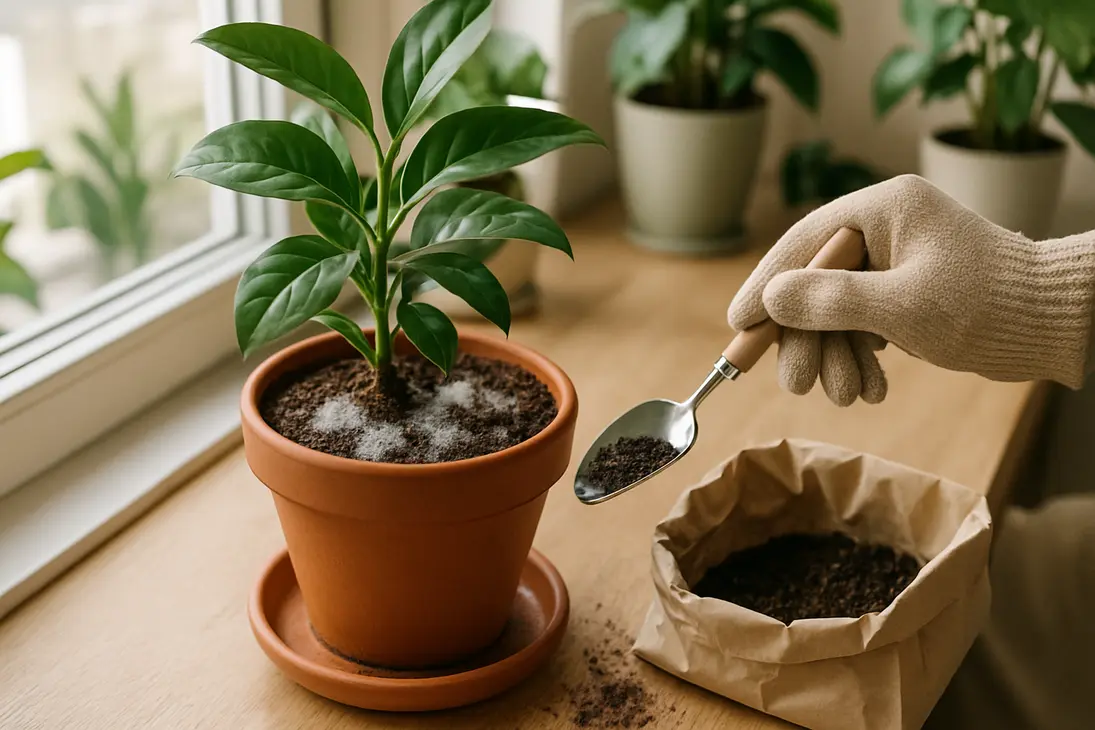
Mold on indoor plant soil usually means the top of the potting mix is staying damp long enough for fungi to grow. The white or gray fuzz is often surface fungus feeding on decaying organic matter, not a disease attacking the plant. Still, it warns that watering, drainage, light, airflow, or soil quality needs adjusting.
Light surface mold is usually fixable: remove the moldy layer, let the soil dry correctly, and change the conditions that caused it. If you only wipe away the visible growth, it will usually come back.
What Mold on Indoor Plant Soil Usually Means
Mold needs moisture, organic material, and still air. A houseplant pot can provide all three, especially in winter, low light, or dense potting mix. Most indoor mixes contain bark, peat, coir, compost, or other organic ingredients that fungi naturally break down.
A small patch of mold does not mean the plant is doomed. It usually means the surface is staying wet too often. Common causes include:
- Watering too frequently
- A pot with no drainage hole
- Water sitting in a saucer or cachepot
- Dense, old, or compacted potting mix
- Low light or cool temperatures
- Poor air movement around crowded plants
- Dead leaves or flowers left on the soil
Common signs of soil mold
Surface mold often appears as white, gray, or off-white fuzzy patches; a thin webby layer; cottony growth around bark or fallen leaves; or fuzz near the inside edge of the pot. It often returns after watering if conditions do not change.
It is more common in winter because plants grow more slowly and use less water. Soil mold is different from powdery mildew, which grows on leaves and stems.
Why overwatering is the most common cause
Overwatering usually means watering too often, not simply adding too much at once. A plant in bright light may use water quickly, while the same plant in a dim corner may stay wet for a week or more. A large pot with a small root system also dries slowly.
When the top layer stays consistently moist, fungi grow easily. The mold is the symptom; the real issue is soil that is not drying at a healthy pace.
When mushrooms, musty odors, or fungus gnats are warning signs
Surface mold is usually manageable, but these signs suggest the potting mix may be too wet deeper down:
- Mushrooms: Common in rich, moist soil, but a sign of damp conditions.
- Musty or sour odors: May indicate poor drainage, decaying roots, or stagnant soil.
- Fungus gnats: Tiny black flies that breed in moist organic matter.
- Yellowing lower leaves: Concerning when paired with wet soil.
- Soft stems or wilting despite wet soil: A possible sign of root damage.
If mold appears with these symptoms, check moisture deeper in the pot and inspect roots if the soil smells bad or the plant is declining.
Is It Mold, Mineral Buildup, Dust, or Something Else?
Not every white mark on potting soil is mold. It may be mineral residue, perlite, fertilizer salts, dust, algae, or pest material. Look at texture, location, and whether it spreads.
| What you see | Likely cause | What to do |
|---|---|---|
| White or gray fuzzy patches | Surface mold | Remove top layer; correct moisture |
| Hard white crust | Minerals or fertilizer salts | Scrape off; water thoroughly when needed |
| White round bits in soil | Perlite | Leave it alone |
| Pale dust | Dust or dry particles | Wipe or remove if desired |
| Sticky white cotton on stems/leaves | Mealybugs | Treat as a pest issue |
White fuzzy growth vs. white crust
White fuzzy growth is usually mold. It looks soft, airy, threadlike, or webby and may collapse if touched.
A white crust is usually mineral buildup from hard water, fertilizer, or evaporation from the soil surface. It looks chalky, gritty, or hard, often near the pot rim or top of the mix.
Mineral crust is not mold, but it can still point to watering problems. Frequent small sips leave minerals near the surface. When appropriate for the plant, water thoroughly until excess drains out, then empty the saucer.
Gray, green, or yellow growth on soil
Gray fuzzy growth is commonly mold, especially in damp, still conditions. Green growth is often algae, which forms a film on wet soil in bright conditions and also signals too much surface moisture.
Yellow or tan growth can be fungal material, small mushrooms, or controlled-release fertilizer pellets. If you are unsure, focus on the plant’s condition: Is the soil staying wet? Does it smell bad? Is the plant declining?
When to inspect roots, stems, and leaves too
Mold limited to the soil surface is usually an environment issue. Inspect the plant more closely if you notice:
- Wilting while the soil is wet
- Worsening yellow leaves
- Soft, black, or mushy stems
- Brown, collapsing leaf bases
- Sticky residue, cottony clusters, or insects
- A rotten smell from the pot
Healthy roots are usually firm and white, cream, tan, or light brown. Unhealthy roots may be black, mushy, hollow, slimy, or foul-smelling. If roots are damaged, the plant may need pruning, repotting, and a better-draining mix.
How to Remove Mold From Houseplant Soil
For light mold, start with the least disruptive fix. Most plants do not need immediate bare-root repotting for a small patch of white fuzz. Repot only when the mix is sour, compacted, pest-infested, staying wet too long, or affecting root health.
Scrape off the moldy top layer
Remove visible mold so it does not keep releasing spores when disturbed.
- Move the plant away from food areas and upholstery.
- Wear gloves and consider a mask if you are mold-sensitive.
- Scrape away the top 1/2 inch to 1 inch of moldy mix.
- Bag and discard the removed material.
- Wipe the pot rim if needed.
- Add fresh, dry, well-draining potting mix if necessary.
Do not stir mold into the soil. If it is growing on dead leaves, moss, bark, or decorative mulch, remove those materials too. Decorative moss often stays too damp indoors.
Let the soil dry before watering again
After removing mold, pause watering until the plant needs it. The right dryness level depends on the plant:
- Many tropical foliage plants can dry in the top 1 to 2 inches.
- Succulents and cacti usually need the mix to dry much more.
- Ferns and moisture-loving plants may need steadier moisture, but not soggy soil.
Use your finger, a wooden skewer, or the pot’s weight to judge moisture. Do not water just because the surface looks dry if the lower pot is still wet.
Improve airflow and light around the plant
Airflow and light help soil dry at a normal rate. Move the plant closer to suitable bright light, space crowded pots apart, remove cachepots that trap moisture, and avoid cold, dark corners. A small fan on low for part of the day can help in still rooms.
Low light is often overlooked. Plants in low light use less water, so a routine that worked in summer may cause mold in winter.
Repot if the soil smells bad, stays wet, or roots are unhealthy
Repot when the problem is deeper than the surface.
Repot if:
- The mix smells sour, rotten, or swampy
- Soil stays wet much longer than expected
- Fungus gnats keep returning
- The pot has no drainage hole
- The mix is dense, muddy, or compacted
- Roots are mushy, black, or falling apart
- The plant keeps declining
Remove the plant, loosen old mix, and trim clearly dead or rotten roots with clean tools. Use a pot with drainage holes and fresh indoor potting mix suited to the plant. Avoid moving a struggling plant into a much larger pot because excess soil around small roots stays wet.
How to Stop Mold From Coming Back
Removing mold helps, but prevention depends on changing the conditions that encouraged it. If watering, drainage, light, and airflow stay the same, the mold will likely return.
Water based on soil dryness, not a fixed schedule
A fixed schedule is a common cause of moldy soil. “Every Saturday” may be too often in winter and not often enough in summer.
Check the soil first. For many houseplants, water when the top layer has dried to the proper depth for that plant. Then water thoroughly so moisture reaches the root zone and excess drains out. Empty the saucer or cachepot afterward.
Adjust watering for season, temperature, light, pot size, plant size, soil type, humidity, and growth rate. A plant moved to lower light, cooler temperatures, or a larger pot will usually need less frequent watering.
Use well-draining potting mix instead of garden soil
Garden soil is not ideal for indoor containers. It can compact, drain poorly, and bring in insects, weed seeds, or excess organic matter. Houseplants need potting mix that holds some moisture while still allowing air around roots.
Choose texture based on the plant. Ferns need more moisture retention than cacti. Pothos, philodendron, monstera, and similar aroids often do better in a chunkier mix than dense all-purpose soil.
If the mix looks muddy, shrinks from the pot edge, smells off, or stays wet too long, replacing it is better than repeatedly treating mold.
Choose pots with drainage holes
Drainage holes are important for most houseplants. Without them, extra water collects at the bottom, where roots can suffocate and rot. The surface may look only damp while the lower root zone is waterlogged.
If you like decorative pots without holes, use them as cachepots. Keep the plant in a nursery pot with drainage holes, remove it for watering, let it drain fully, and then place it back inside. Also empty saucers; a pot with holes can still stay too wet if it sits in runoff.
Remove dead leaves and organic debris from the soil surface
Fungi feed on decaying organic matter. Indoors, fallen leaves and flowers can create a damp layer that encourages mold and gnats.
Keep the soil surface tidy: remove dead leaves, spent flowers, and broken stems; avoid thick decorative moss unless the plant needs it; replace moldy mulch or bark; and do not add coffee grounds, kitchen scraps, or compost to indoor pots unless you manage them carefully.
The goal is not sterile soil. It is avoiding a constantly damp layer of decaying material.
Is Mold on Indoor Plant Soil Harmful?
Small amounts of surface mold are usually more of a care warning than an emergency. However, mold should not be ignored, especially around people with allergies, asthma, or respiratory sensitivity.
Risk to the plant
Surface mold itself may not harm the plant much, but the conditions causing it can. The main risks are root rot, low oxygen around roots, fungus gnat larvae, chronic overwatering, low light, and compacted soil that limits root growth.
If the plant is healthy and mold is minor, adjust care and monitor. If it is yellowing, wilting, dropping leaves, or sitting in sour-smelling soil, inspect the roots and potting mix.
Risk to people and pets
Mold can bother sensitive people, especially when disturbed during scraping or repotting.
For pets, the concern is curiosity. Cats or dogs may dig in moldy soil, chew mushrooms, or ingest potting mix. Because soil fungi and mushrooms are not always easy to identify, remove mushrooms promptly and keep the plant out of reach if a pet is interested.
Do not assume any fungus growing in a houseplant pot is safe to eat or harmless.
When to move the plant, wear gloves, or discard contaminated soil
Take extra precautions when mold covers much of the soil, the pot smells musty or rotten, you will disturb dry moldy material, someone nearby is mold-sensitive, or pets and children can access the pot.
Move cleanup outdoors or to a ventilated area if possible. Wear gloves, avoid shaking dry moldy soil, and discard soil that is heavily moldy, foul-smelling, infested with gnats, or linked to root rot. Do not reuse it for indoor plants.
Conclusion
Mold on indoor plant soil usually means the potting mix is staying too wet because of frequent watering, poor drainage, low light, dense soil, or limited airflow. Scraping it away helps, but prevention requires better conditions.
Let soil dry to the right level before watering, use a draining pot and proper indoor mix, improve light and air movement, and remove dead debris. If the soil smells bad, stays wet too long, or roots look unhealthy, repotting is safer.
A little surface mold is usually manageable. It is a sign your plant’s care needs fine-tuning.
FAQ
Will mold on houseplant soil go away on its own?
Sometimes light mold dries out if conditions improve. But if the mix stays damp, it will usually return after watering.
Remove the visible mold and fix the cause: reduce watering frequency, improve airflow, and make sure the pot drains well.
Can I water a plant if the soil has mold on it?
Only water if the plant needs it. If the soil is still damp, wait.
If the plant is dry below the surface, remove the moldy layer first, then water thoroughly and let excess drain away. After that, wait until the soil reaches the right dryness level before watering again.
Should I use cinnamon, hydrogen peroxide, or fungicide on moldy soil?
For light surface mold, care changes matter more than treatments. Remove mold, let soil dry appropriately, improve airflow, and correct drainage.
Cinnamon has inconsistent results and does not fix soggy soil. Hydrogen peroxide can damage roots or soil life if misused. Fungicide is usually unnecessary for simple surface mold and should only be used according to the label for a clearly identified issue.
If soil is foul, compacted, or affected by root rot, repot into fresh mix instead.
Do I need to throw away a plant with moldy soil?
Usually, no. A plant with minor moldy soil can often recover after mold removal and better care.
Discard the soil if it smells rotten, stays wet too long, is heavily contaminated, or is linked to root rot. Discarding the whole plant is only worth considering if it is severely rotted, collapsing, heavily pest-infested, or unsafe around sensitive people or pets.
You Might Also Like