How Does Flushing Soil Benefit Plant Roots?
Flushing soil benefits plant roots by clearing excess soluble salts, fertilizer residues, and dissolved mineral buildup from the root zone. Done correctly, it helps restore a healthier balance of water, oxygen, and nutrients around roots, especially in containers that receive regular liquid fertilizer.
It is not a cure-all. Flushing can harm plants if soil is soggy, compacted, or poorly drained. But when stress is linked to over-fertilizing or salt buildup, a careful flush can give roots a better chance to recover.
What Soil Flushing Means for Plants
Soil flushing means slowly running clean water through the growing medium so dissolved salts and fertilizer residues leave with the drainage water. The goal is to rinse the root zone, not simply “water a lot.”
Flushing is most predictable in containers because water can drain through bottom holes. In garden beds, water movement is harder to control, and repeated heavy watering can cause erosion, compaction, or nutrient loss.
Salt buildup can come from:
- Too much synthetic or concentrated fertilizer
- Frequent light fertilizing without enough drainage
- Hard tap water with dissolved minerals
- Evaporation that leaves minerals behind
- Poor drainage
- Repeated soluble feeds without occasional leaching
In plant care, “salts” does not only mean table salt. Many fertilizers are mineral salts that dissolve in water. In the right amount, they feed plants. In excess, they can damage tender roots and make water uptake harder.
Soil flushing vs. regular watering
Regular watering replaces moisture the plant has used. Flushing uses a larger, slower flow of water to dissolve and move excess soluble material out of the root zone.
| Practice | Main purpose | Best used when |
|---|---|---|
| Regular watering | Rehydrate soil | Soil is drying |
| Deep watering | Wet a deeper root zone | Outdoor beds, shrubs, trees |
| Soil flushing | Rinse soluble buildup | Suspected fertilizer burn or salt buildup |
The difference matters because roots need both moisture and air. A plant can look wilted even when soil is wet if excess salts or low oxygen are preventing normal root function.
Why runoff matters when flushing soil
Runoff is the exit route for dissolved salts and fertilizer residues. If water goes in but does not come out, you are soaking the soil, not flushing it.
For container plants, good flushing requires:
- Open drainage holes
- A mix that lets water pass through
- Slow watering across the whole surface
- Discarding runoff instead of letting the pot sit in it
Runoff can also give clues. If it is strongly colored, smells like fertilizer, or measures much higher than the input water on an EC/TDS meter, buildup may be present. A meter is not required, but it can help gardeners who fertilize often.
Key Benefits of Flushing Soil for Root Health
The main flushing soil benefits happen below the surface. Roots need a stable environment to absorb water and nutrients. When the root zone becomes too concentrated with dissolved fertilizer salts, roots may struggle even if the soil is moist.
Flushing can reduce excess salts, improve conditions for oxygen movement after drainage, and make normal nutrient uptake easier again.
Removes excess fertilizer salts
Fertilizer salts dissolve into soil water, which roots draw from. In moderate amounts, this makes nutrients available. In excess, the solution around roots becomes too concentrated and can interfere with water uptake.
The plant may wilt, develop brown tips, or show scorched leaf margins even though the soil is damp. Fine feeder roots and root hairs are especially vulnerable.
Signs that fertilizer salts may be involved include:
- White or yellowish crust on the soil surface or pot rim
- Brown leaf tips after feeding
- Sudden wilting after fertilizer application
- Runoff much higher than the input water
- Decline despite regular watering and feeding
Flushing dilutes and moves these residues out of the root zone. It will not repair leaves that are already burned, but it can stop the stress from continuing and allow healthier new growth.
Improves root-zone oxygen movement
Healthy roots need oxygen for respiration. In a good potting mix, air spaces remain after extra water drains away.
Salt stress often leads to watering mistakes. A plant may wilt from root stress, prompting more watering. If the mix stays wet, oxygen levels drop and roots weaken further.
A proper flush can help by rinsing concentrated residues from the root zone and, after drainage, allowing fresh air back into pore spaces. This benefit depends on drainage. In compacted or waterlogged soil, flushing may leave roots even shorter on oxygen.
Helps prevent nutrient lockout
Nutrient lockout happens when nutrients are present but the plant cannot use them properly. Salt buildup can contribute by interfering with water uptake, stressing roots, and sometimes affecting root-zone pH.
A common mistake is feeding more when leaves yellow. If the real problem is buildup, more fertilizer can make the plant worse. Flushing can reset the root zone by lowering soluble concentration. Afterward, the plant usually needs a rest period before light feeding resumes.
Signs that may suggest lockout rather than simple deficiency include:
- Yellowing despite recent fertilizing
- Tip burn with pale or mottled leaves
- Stunted growth in a regularly fed container
- Crusty residue on soil or pot edges
- Symptoms that worsen after each feeding
These symptoms are not proof. Pests, root rot, drought, cold soil, and pH problems can look similar. But if symptoms began after repeated or heavy fertilizing, flushing is worth considering.
Supports stronger water and nutrient uptake
Fine roots and root hairs are the plant’s absorption system. When they are damaged by excess salts, low oxygen, or saturated conditions, water and nutrient uptake decline.
A successful flush creates a less hostile root environment. Recovery is gradual: browned leaves will not heal, but new growth may emerge without burnt tips, stems may firm up, and watering needs may become more normal.
When Flushing Soil Can Help Save Stressed Plants
Flushing is most useful when stress is linked to soluble buildup. The classic case is over-fertilizing: fertilizer is applied too often or too strongly, then leaf tips brown, edges crisp, or the plant wilts.
Timing matters. The sooner excess fertilizer is corrected, the better the chance that roots can recover.
After using too much fertilizer
If you used too much fertilizer, remove visible granules from the soil surface if possible, then flush the container with clean water.
For overly strong liquid fertilizer, flushing can dilute and remove much of the excess. For slow-release pellets mixed into the potting mix, flushing may remove dissolved salts already present, but it will not stop future release. If the overdose was extreme, repotting may be safer for sensitive plants.
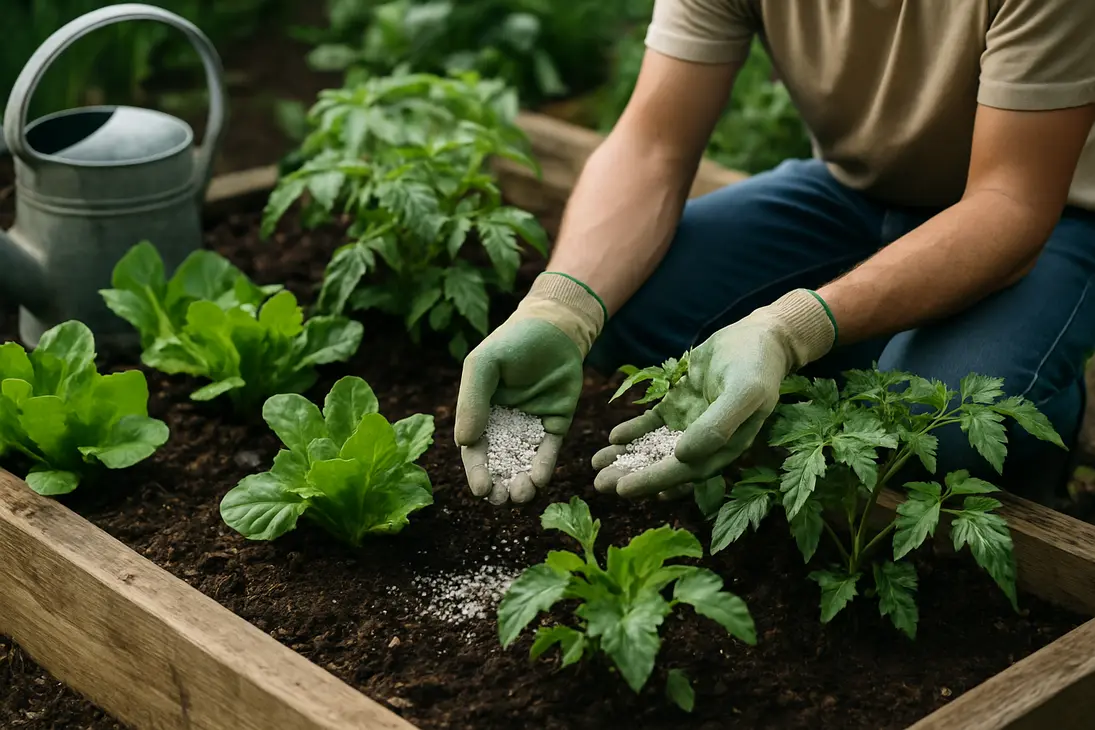
In garden beds, remove spilled dry fertilizer first. Then water enough to dilute what remains, but avoid runoff that carries fertilizer into storm drains, ponds, or waterways.
After flushing, do not feed again immediately. Let the plant stabilize.
When leaves turn brown, crispy, or burnt at the tips
Brown, crispy tips are a common sign of fertilizer or salt stress, especially on houseplants and container vegetables. Leaf edges may look scorched while the rest of the leaf stays green at first.
However, burnt tips can also come from:
- Underwatering and heat stress
- Low humidity
- Minerals or fluoride in tap water for sensitive plants
- Soggy soil and root damage
- Sun scorch
- Pests
- Natural aging
Timing helps. If browning started soon after feeding, or the plant has been fertilized frequently, flushing is more likely to help. If the plant has not been fed in months and is sitting in wet soil, flushing may worsen the problem.
When water runoff shows high salt or fertilizer buildup
If you use an EC or TDS meter, compare the water going in with the runoff coming out. Runoff that is much higher suggests soluble material is accumulating. Exact numbers vary by plant, fertilizer, water source, and medium, so do not rely on one universal reading.
Without a meter, look for white crust, mineral rings on pots, fertilizer smell in runoff, repeated tip burn, or water channeling down the pot without wetting the whole root ball.
If a dry root ball repels water, briefly rehydrate it, then flush from the top and let it drain fully. Do not leave the pot sitting in water afterward.
How to Flush Soil Safely
Safe flushing is slow, controlled, and followed by complete drainage. The goal is to rinse the root zone without suffocating roots.
Before starting, ask:
- Does the container have drainage holes?
- Does water move through the mix?
- Is the plant already wilted from soggy soil or root rot?
If the pot has no drainage, do not flush it in place. Repot or correct the container setup first.
Use clean, room-temperature water
Use clean water that is not hot or icy. Room-temperature water is gentler on stressed roots.
Rainwater, filtered water, or low-mineral water can help salt-sensitive plants, but ordinary tap water is often acceptable if it is not very hard. Avoid water from a salt-based softener because sodium can worsen soil problems.
Flush slowly until water drains freely
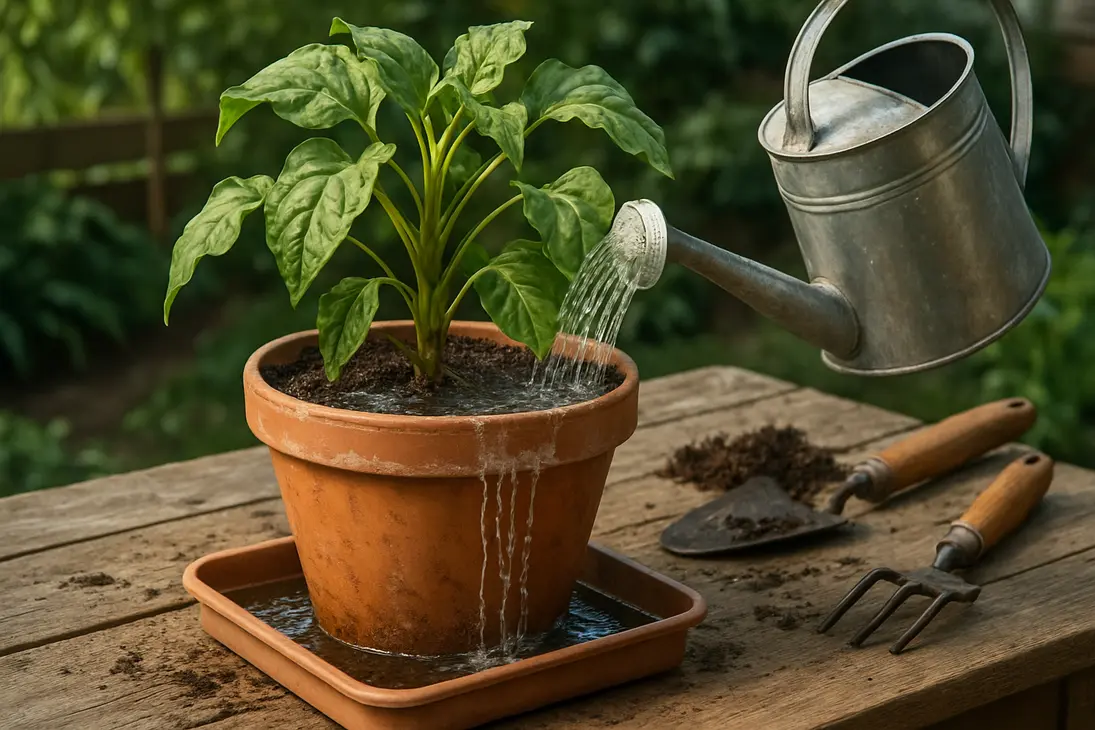
Place the pot where runoff can escape. Water slowly and evenly over the soil surface, pausing so water soaks through instead of spilling over the sides.
A common method is to run several times the container’s volume of water through the pot, but the amount depends on pot size, soil condition, and severity of buildup. The key signs are steady drainage and a thoroughly rinsed root ball.
Basic process:
- Remove saucers or decorative sleeves.
- Scrape away visible crust.
- Water slowly across the surface.
- Let water drain from the bottom.
- Continue in stages until drainage runs freely.
- Let the pot drain completely.
- Empty any saucer afterward.
Do not press hard on the soil to force drainage. If water barely moves through, the plant may need repotting into a better-draining mix.
Let the soil re-oxygenate after flushing
After flushing, the plant needs time to drain and re-oxygenate. Place it in suitable light, avoid temperature extremes, and do not water again until the mix dries to the right level for that plant.
Do not judge success in the first hour. A stressed plant may droop temporarily after handling and heavy watering. Over the next several days, look for no spreading burn, firmer stems, and eventually healthier new growth.
Resume feeding carefully after recovery
Flushing removes excess fertilizer, but it can also wash out nutrients the plant still needs. Resume feeding only after the plant is stable and actively growing.
After flushing:
- Wait for recovery signs
- Use weaker fertilizer than before
- Feed only during active growth
- Avoid “just in case” feeding
- Water containers thoroughly enough for occasional light runoff
If the plant was badly burned, skip fertilizer until new growth appears.
When Not to Flush Soil
Flushing is useful only when soluble buildup is likely and the medium can drain. If roots are already oxygen-starved, adding more water can make the situation worse.
Before flushing, ask whether you are solving a salt problem or adding water to a drainage problem.
Avoid flushing compacted or poorly draining soil without improving drainage
Do not flush a plant sitting in dense, sour-smelling, waterlogged soil. If water pools on the surface or the pot stays heavy for many days, roots may already be short of oxygen.
Better options include:
- Removing standing water from saucers or cachepots
- Opening blocked drainage holes
- Repotting into a better-draining mix
- Trimming mushy roots during repotting if needed
- Reducing watering frequency
- Improving garden soil structure over time
In clay or compacted beds, repeated flushing can cause puddling and low oxygen. Drainage improvement and better soil structure are usually more important.
Do not use salt-based “remedies” in garden beds
Salt in garden soil is risky. It can damage roots, harm soil structure, and persist in ways that make the area harder to grow in.
The solution to salt stress is not adding more salt. Avoid table salt, casual Epsom salt use, and salty household remedies. Epsom salt supplies magnesium and sulfur, but it is not a general plant tonic. If magnesium is not deficient, adding it can create imbalance.
Check for pests or root disease before assuming fertilizer burn
Many problems mimic fertilizer burn. Before flushing, inspect:
- Leaf undersides for mites, aphids, scale, or thrips
- Stems and crowns for rot
- Soil smell for sour odors
- Roots, if accessible, for mushiness or dark decay
- Recent heat, cold, sun, or watering changes
If roots are brown, mushy, and collapsing, the main problem is likely root rot or oxygen deprivation. Flushing will not fix disease or a saturated medium. If pests are present, treat them directly; a soil flush will not remove spider mites, scale, or thrips from foliage.
Conclusion
Flushing soil benefits plant roots by restoring a more balanced root zone. It can wash out excess fertilizer salts, reduce conditions that contribute to nutrient lockout, and help oxygen return to the growing medium after drainage.
Use flushing only when it fits the problem. Apply clean, room-temperature water slowly, make sure runoff drains away, and let the soil re-oxygenate afterward. Do not flush plants that are waterlogged, trapped in poorly draining containers, or suffering from pests or root disease without addressing those causes first.
FAQ
What are the main benefits of flushing soil?
The main benefits are removing excess fertilizer salts, reducing soluble buildup, improving the root-zone environment, and helping roots resume normal water and nutrient uptake.
Can flushing soil fix over-fertilized plants?
It can help if the damage is caused by soluble fertilizer buildup and enough healthy roots remain. It works best soon after over-fertilizing. It will not repair burned leaves.
Does flushing soil improve root aeration?
Only if the soil drains well. During flushing, soil is saturated. After excess water drains, air moves back into pore spaces. In compacted or soggy soil, flushing can reduce aeration.
How often should soil be flushed?
Most plants do not need frequent flushing. For fertilized containers, occasional flushing may help when you see crusty buildup, high runoff readings, or early fertilizer stress. Otherwise, good watering and avoiding over-fertilizing usually prevent the need.
You Might Also Like