What Are Tendril Plants? Characteristics, Examples, and How They Climb
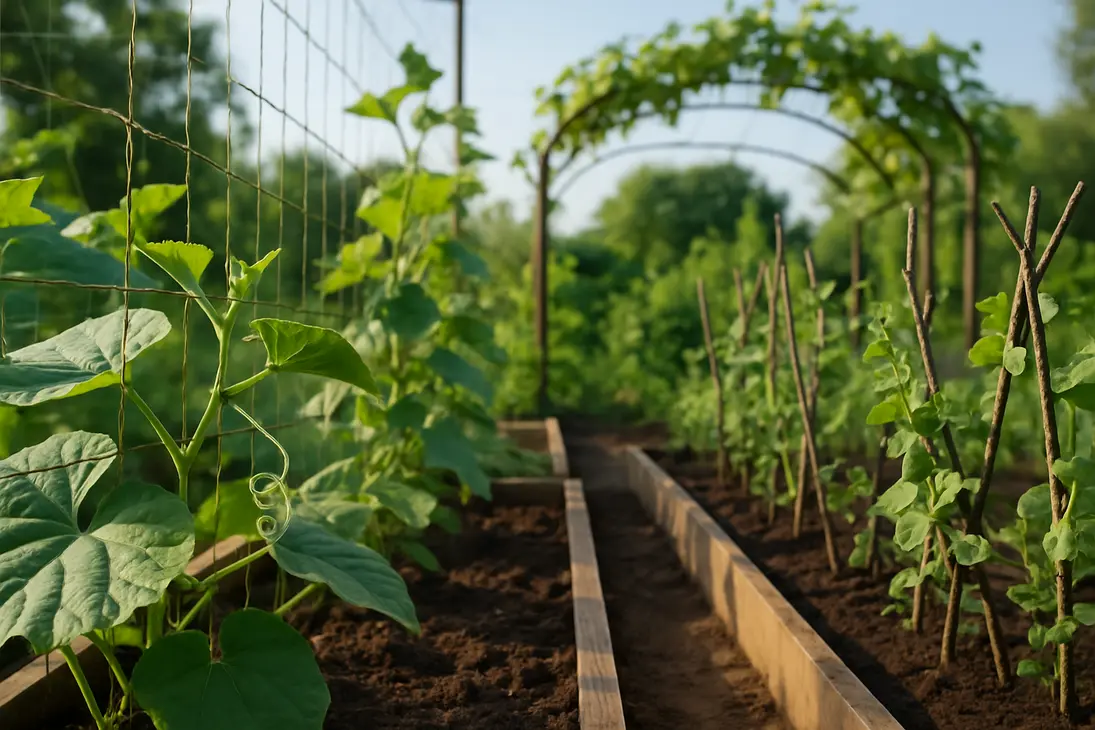
Tendril plants are climbing or trailing plants that use thin, curling structures called tendrils to grip nearby supports. Instead of standing upright with thick trunks or stiff stems, they climb by reaching, touching, coiling, and anchoring themselves to something else.
You see this when cucumber vines grab netting, peas cling to twiggy sticks, grapevines fasten to wires, or melons and pumpkins stretch across the ground with little green coils along their stems. Understanding how tendrils work helps you identify these plants and support them correctly.
What Makes a Plant a Tendril Plant?
A tendril plant climbs, anchors, or steadies itself using slender, flexible, curling organs known as tendrils. These threadlike or wiry structures extend from the plant, explore the nearby area, and coil when they touch a suitable support.
This lets a vine grow long and fast without producing a thick, self-supporting stem. Instead, it uses fences, trellises, branches, wires, shrubs, or other structures for support, leaving more energy for leaves, flowers, fruit, and length.
Not every climbing plant is a tendril plant. Morning glories and pole beans twine their whole stems around supports. Ivy uses aerial roots. Some rambling roses use hooks or thorns. Tendril plants are distinct because specialized curling structures do the gripping.
Key Characteristics of Tendril Plants
Most tendril plants share these traits:
- Slender climbing organs: Tendrils are narrow, flexible, and thinner than stems.
- Coiling behavior: When a tendril touches a suitable object, it curls around it.
- Need for close support: Tendrils cannot grab distant objects.
- Fast vine or trailing growth: Many grow quickly in warm conditions.
- Common garden examples: Peas, cucumbers, grapes, melons, pumpkins, passionflowers, and sweet peas.
A simple way to identify one is to look for small spirals or curling threads along the vine. On cucumbers and squash, tendrils often appear near leaf nodes. On peas, they form at the ends of modified leaves. On grapes, they appear opposite leaves and may look like thin branching arms.
Tendril plants range from delicate pea vines to woody grapevines. Peas need fine mesh or twiggy supports. Grapes need strong wires or arbors. Pumpkins and squash may have sturdy tendrils, but their fruit is usually too heavy for tendrils alone to hold.
Tendrils Can Be Modified Stems, Leaves, Leaflets, or Petioles
Tendrils are modified plant organs adapted for climbing, but they are not all made from the same part.
Stem tendrils develop from stem tissue or shoots. Grapes, passionflowers, and passionfruit vines are common examples.
Leaf or leaflet tendrils are modified leaf parts. Peas and sweet peas are classic examples; parts of their compound leaves become curling tendrils that grip netting, brush, string, or nearby stems.
Petiole tendrils or leaf-stalk climbers involve the leaf stalk rather than a separate threadlike tendril. Certain clematis climb this way by curling leaf stalks around thin supports.
Inflorescence tendrils occur in some species when flower-bearing structures are modified for climbing, though this is less commonly noticed in gardens.
For gardeners, the exact origin matters less than the behavior: the plant needs something narrow enough, close enough, and strong enough for its climbing organs to hold.
How Tendrils Coil and Attach to Supports
Tendrils coil because they are touch-sensitive. This touch response is called thigmotropism, meaning growth directed by contact.
A young tendril moves slowly as it grows. If it touches nothing, it may stay extended, curl loosely, or dry up. If it brushes a suitable object, cells on different sides of the tendril grow at different rates. That uneven growth bends the tendril toward and around the support.
Once attached, many tendrils keep tightening. Some form spring-like coils between the vine and the support, helping absorb wind movement or plant weight so the vine is less likely to tear loose.
Why Tendrils Curl Around Objects
Tendrils curl best around objects narrow enough to encircle. Thin stakes, strings, netting, wires, twiggy branches, and trellis mesh usually work better than broad boards or thick posts. A cucumber tendril can wrap around twine or netting but may struggle with a smooth wooden post unless mesh or string is added.
Texture can also help. Rough or irregular surfaces are easier to grip than very smooth plastic or metal. Smooth supports may still work, but young vines often need extra ties or netting.
Follow these practical rules:
- Put supports in place before vines become large.
- Keep support close to young growth.
- Use thin vertical, diagonal, or mesh materials that tendrils can wrap.
- Do not rely on tendrils alone to hold heavy fruits such as pumpkins, large squash, or melons.
The Role of Plant Hormones and Light
Plant hormones help direct the uneven growth that makes tendrils coil. Auxin is often involved in bending and differential growth: one side of the tendril grows differently from the other, causing it to curve around the object it has touched.
Light also matters. Many climbing plants grow toward brighter conditions because their leaves need sun for photosynthesis. Tendrils help position the plant where its leaves can capture more light, whether that is up a vegetable trellis or through a shrub.
Common Examples of Tendril Plants
Tendril plants include many familiar vegetables, fruits, and ornamentals. Some are annual crops, while others are long-lived woody vines.
| Plant | Type of tendril/climbing habit | Best garden support |
|---|---|---|
| Peas | Leaf/leaflet tendrils | Netting, twiggy sticks, pea fencing |
| Sweet peas | Leaf tendrils | Netting, trellis, strings |
| Cucumbers | Stem tendrils | Trellis, netting, cage, fence |
| Grapes | Stem tendrils | Strong wires, arbor, pergola |
| Pumpkins and squash | Tendrils along sprawling vines | Ground space or heavy-duty trellis for small-fruited types |
| Melons | Tendrils along vines | Trellis for small melons, slings for fruit |
| Passionflower/passionfruit | Stem tendrils | Fence, arbor, pergola, trellis |
| Some clematis | Twining leaf stalks/tendril-like petioles | Thin trellis, mesh, wires |
Edible Tendril Plants
Cucumbers produce curling tendrils near leaf nodes and climb readily on netting, cages, fences, or trellises. Trellising improves airflow and makes harvest easier.
Peas and sweet peas use modified leaf parts as tendrils. Garden peas are edible crops, while sweet peas are usually grown for flowers and fragrance and should not be treated as edible peas. Both prefer fine supports with many gripping points.
Grapes are woody perennial vines with tendrils that attach to wires, fences, and arbors. They need permanent, strong support because mature grapevines become heavy.
Pumpkins and squash produce tendrils but are often grown on the ground because their vines and fruit can be heavy. Small-fruited squash may be trained up a strong trellis, but large pumpkins need ground space or serious structural support.
Melons can be trellised when varieties are small enough. Small melons may grow vertically with a sturdy trellis and fruit slings. Large watermelons are usually better left to sprawl.
Passionfruit vines climb with tendrils and can cover fences, arbors, and pergolas in warm climates or protected sites. They need sun, room, and a support that can handle vigorous growth.
Large-Leaved Tendril Plants
Many tendril plants are noticeable because of their large leaves. Big leaves capture sunlight quickly, but they also add weight, create shade, and reduce airflow if plants are crowded.
Pumpkin and squash vines have broad leaves and long stems that can overtake a bed. Even on the ground, their tendrils latch onto nearby stems, weeds, fencing, or mulch.
Cucumber plants have large, rough leaves and lighter vines than pumpkins. They are well suited to vertical growing, especially in small gardens.
Melon vines have broad leaves and trailing stems. They can climb, but fruit weight is the limiting factor, so developing melons often need extra support.
Grapevines produce large leaves on woody growth. Their tendrils hold vines to wires or arbors, but pruning and training are still needed.
Passionflower and passionfruit vines often have distinctive lobed leaves and showy flowers. Their tendrils let them cover structures quickly, which is useful for screening but can overwhelm small spaces.
Ornamental Tendril Plants
Sweet pea is a classic ornamental tendril plant. It climbs by leaf tendrils and performs best with cool conditions, regular picking, and fine-textured supports such as netting, string grids, or twiggy branches.
Passionflower is ornamental and, in some species, fruiting. It climbs by tendrils and can be striking on a sunny fence or arbor. In mild climates, it may need regular control.
Climbing nasturtium varieties are often grown as trailing or scrambling ornamentals. Some can be guided through supports, though they do not climb exactly like peas or grapes.
Certain clematis and vine-like ornamentals climb with leaf-stalk wrapping habits rather than classic threadlike tendrils. They need thin supports; thick posts work better if you add mesh, wire, or twine.
Growing and Supporting Tendril Plants
Tendril plants are usually easy to grow when their support, spacing, water, and sunlight match their growth habit. Most problems come from adding support too late, planting too closely, or underestimating mature size and weight.
Cucumbers, pumpkins, melons, and passionflowers can grow quickly in warm weather. Once vines are tangled on the ground, lifting and redirecting them can break stems or tear tendrils.
Choosing the Right Support
Choose support based on mature size, fruit weight, and tendril type.
Trellises work for cucumbers, peas, sweet peas, small melons, and many ornamental vines. Install them before vines begin climbing.
Netting is especially useful for peas, sweet peas, and cucumbers because it provides many small gripping points.
Arbors and pergolas suit grapes, passionfruit, passionflower, and other long-season vines. They must be strong and well anchored.
Fences work well if they provide wires, mesh, or slats. A solid panel fence may need added string or wire.
Cages or stakes can help smaller vines, but a single stake is often not enough. Add twine, mesh, or horizontal ties.
Match support to the crop:
- Peas: twiggy branches, pea netting, short trellis.
- Cucumbers: vertical netting, angled trellis, sturdy cage.
- Grapes: wire system, arbor, pergola.
- Melons: strong trellis plus fruit slings for larger fruit.
- Pumpkins/squash: ground space for large types; heavy-duty trellis only for small-fruited varieties.
- Passionflower/passionfruit: fence, arbor, or pergola with room for vigorous growth.
Training Tendril Plants Without Damaging Them
Young tendril plants are easier to train than mature vines. Start guiding them as soon as they begin reaching.
Move the growing tip gently toward the support and let the tendrils attach. If needed, loosely secure the stem with soft twine, plant clips, or cloth strips. Ties should support the plant without pinching because stems thicken as they grow.
Avoid forcing brittle stems. Cucumbers and squash can crack if bent sharply, and pea stems snap easily. Check fast-growing vines every few days in warm weather, because tendrils may grab neighboring plants, tomato cages, irrigation lines, or each other.
For fruiting vines, remember that tendrils anchor the plant but do not support everything. Cucumbers usually hang well from a trellis, but melons and squash may need slings. Large pumpkins are safest on the ground.
Growing Tendril Plants in Containers or Small Spaces
Tendril plants can grow well in containers, balconies, patios, and small gardens if you choose compact varieties and install support early. Compact cucumbers, dwarf peas, patio melons, and smaller flowering vines are better choices than full-size pumpkins or vigorous grapevines.
Use containers deep enough for the crop. Fruiting vines need root room and steady moisture. Always use drainage holes and quality potting mix rather than heavy garden soil.
Set the trellis, cage, or netting in place at planting time. Adding support later can damage roots and stems. In windy spots, anchor the container and support together so the vine does not act like a sail.
Water consistently. Cucumbers, peas, and melons can dry out quickly, especially in hot weather. In small spaces, think vertically but realistically: a cucumber can climb beautifully on a balcony trellis, while a pumpkin may still need more room than you can give it.
Conclusion
Tendril plants use specialized curling structures to grip nearby supports and grow toward light. Their tendrils may be modified stems, leaves, leaflets, petioles, or flower-related structures, depending on the species.
They include many familiar edible and ornamental plants, including peas, grapes, cucumbers, pumpkins, squash, melons, passionflowers, passionfruit, and sweet peas. Some need fine netting; others need strong wires, fences, arbors, or pergolas.
The key is to support them early, give them enough space, and match the structure to the mature plant. Once you understand how tendrils search, touch, coil, and hold, these plants become easier to identify and grow well.
FAQ
What are some examples of plants with tendrils?
Common examples include peas, sweet peas, cucumbers, grapes, pumpkins, squash, melons, passionflower, and passionfruit. Some ornamental climbers, such as certain clematis, climb with tendril-like leaf stalks rather than true threadlike tendrils.
How does a tendril know when to coil?
A tendril coils when it touches a suitable support. Contact triggers uneven growth on different sides of the tendril, often influenced by plant hormones such as auxin. This causes the tendril to bend, curl, and wrap around the object.
Are all climbing plants tendril plants?
No. Some climbing plants have tendrils, but others use twining stems, aerial roots, hooks, thorns, or scrambling growth. Pole beans climb mainly by twining their stems, while ivy uses aerial roots.
Do tendril plants need a trellis?
Most tendril plants grow better with a trellis, fence, net, cage, arbor, or other support. Without support, many sprawl across the ground. Sprawling is natural for pumpkins and large squash, but it takes more space and can make harvesting harder.
You Might Also Like