Can You Water Plants on a Deck?
Yes—You Can Water Plants on a Deck, With a Few Precautions
Yes, you can water plants on a deck. For most homes, it is safe as long as pots drain well and excess water does not sit against the deck.
Watering is rarely the issue by itself. Damage usually comes from runoff, wet saucers, spilled soil, fertilizer residue, hard-water minerals, and damp debris. On wood decks, trapped moisture can encourage rot, mildew, and dark staining. On composite decks, the main risks are stains, mold in damp debris, and residue in the surface texture.
The goal is simple: water the plant, then manage where the extra water goes.
Why Deck Plants Need Extra Attention
Plants on a deck often dry out faster than plants in garden beds. Containers hold limited soil, and decks can be sunny, hot, reflective, and windy. A hanging basket, herb pot, tomato, or planter box may need frequent watering, but each watering also affects the surface below it.
Common problems include:
- Water pooling under pots or saucers
- Soil washing out of drainage holes
- Fertilizer salts or hard-water spots
- Mildew where air cannot circulate
- Damp rings or stains under containers
- Wood softening where moisture is trapped
The risk is highest when heavy, flat-bottomed pots stay in one place for months with little airflow underneath.
Wood vs. Composite Deck Considerations
Wood and composite decking handle water differently, but neither should stay damp.
| Deck type | Main concerns | Best precautions |
|---|---|---|
| Wood decking | Rot, mildew, dark stains, finish breakdown | Use pot feet, avoid standing water, move pots occasionally |
| Composite decking | Staining, mold in debris, mineral residue | Rinse residue, keep debris from sitting damp, follow manufacturer guidance |
| Painted or stained deck | Peeling, water rings, scratches | Lift pots, protect the finish, empty saucers |
| Waterproof membrane deck | Blocked drainage, stains, punctures | Use smooth trays or pads, avoid blocking drains, check weight limits |
Wood is more vulnerable to moisture damage, especially when organic material stays wet against the boards. Composite does not rot the same way, but damp soil and plant debris can still leave marks.
If your deck is new, recently refinished, or under warranty, check the manufacturer’s care instructions before placing large planters, mats, rubber feet, or metal stands directly on it.
How to Water Deck Plants Without Damaging the Deck
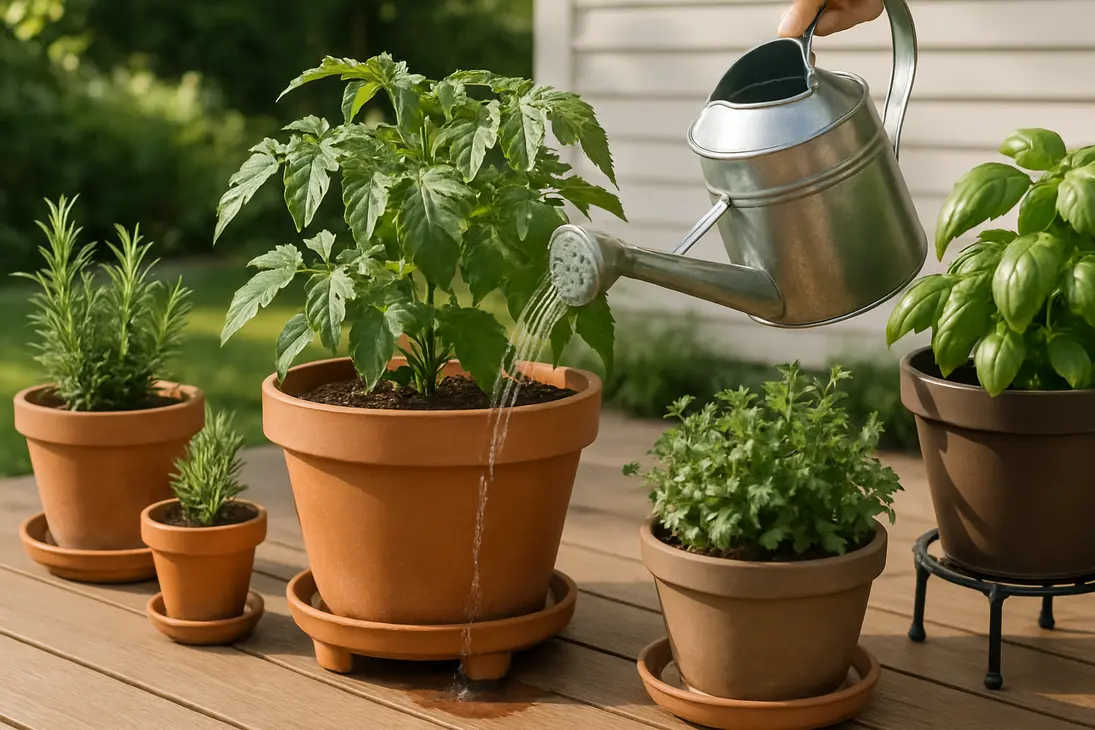
The safest setup is to water thoroughly, let the pot drain, and prevent runoff from sitting on the deck. You do not need a complicated system, but you do need drainage and airflow.
Use Saucers, Trays, or Pot Feet
Saucers and trays can protect the deck from dirty runoff, but they can also cause problems if they stay full. A pot sitting in water can develop soggy soil and root trouble, while the saucer keeps the deck damp underneath.
Better options include:
- Pot feet: Raise the container so air and water can move underneath.
- Saucers with risers: Catch runoff while keeping the pot above standing water.
- Deep trays: Useful for heavy watering, but empty them after drainage.
- Rolling caddies: Helpful for large pots if water does not collect below.
- Plant stands: Improve airflow and make cleaning easier.
Avoid placing porous terracotta directly on wood because it can absorb water and leave damp rings. Be cautious with rubber-backed mats or solid plastic sheets, which may trap moisture and discolor the deck.
Make Sure Pots Have Drainage Holes
Outdoor pots on a deck should have drainage holes. Without them, rain and irrigation water collect at the bottom, which can drown roots and make containers messy or unstable.
If a decorative planter has no hole, use it as a cachepot: keep the plant in a draining nursery pot inside it, then remove the inner pot to water or empty excess water after rain. Some planters can be drilled, but only if the material allows it.
Do not rely on gravel in the bottom of a sealed pot. If water cannot leave the container, it still collects inside.
Avoid Letting Water Sit Under Containers
The biggest deck risk is repeated trapped moisture, not a little splash during watering.
After watering:
- Water until the pot drains.
- Wait several minutes.
- Empty saucers or trays that still hold water.
- Wipe or rinse muddy runoff.
- Move heavy containers occasionally to inspect below them.
Leave space between grouped pots so air can circulate. Large planters need extra care because wet soil is heavy and can keep the deck damp for a long time. Use sturdy feet, risers, or stands rated for the weight.
Clean Up Soil, Fertilizer, and Hard-Water Residue
Water often causes problems because of what it carries: soil, compost, fertilizer, pollen, leaf litter, and minerals. These can stain the deck, lodge in grooves, or stay damp.
To reduce marks, use a quality potting mix, cover large drainage holes with mesh or coffee-filter paper, water gently at the soil surface, sweep spilled soil before it becomes muddy, and rinse light residue before it bakes on.
White crust on pots or decking may be mineral or fertilizer residue. Clean it early. For composite decking, use the manufacturer’s recommended cleaning methods instead of harsh chemicals or abrasive tools.
How Often and How Much to Water Plants on a Deck
There is no reliable fixed schedule. Daily watering may be too much for a large rosemary pot in mild weather and too little for a small hanging basket in hot wind.
Watering frequency depends on plant type, pot size, potting mix, sun, wind, temperature, rainfall, season, and root crowding. Instead of watering by the calendar, water based on soil moisture and plant need.
Check Soil Moisture Before Watering
Before watering, push your finger an inch or two into the potting mix. If it feels dry at that depth, many container plants are ready for water. If it feels cool and moist, wait.
For larger pots, the surface may dry while the lower root zone remains moist. A wooden skewer, chopstick, or moisture meter can help you check deeper.
Signs a plant may need water include:
- Soil pulling away from the pot edge
- Wilting during the cooler part of the day
- A pot that feels light when lifted
- Dry soil several inches down
- Crispy edges on moisture-loving plants
Be careful with midday wilting in hot sun. Some plants droop from heat even when the soil is still moist. If the plant recovers in the evening and the soil is damp, more water may not help.
Water Deeply, Then Let Excess Drain
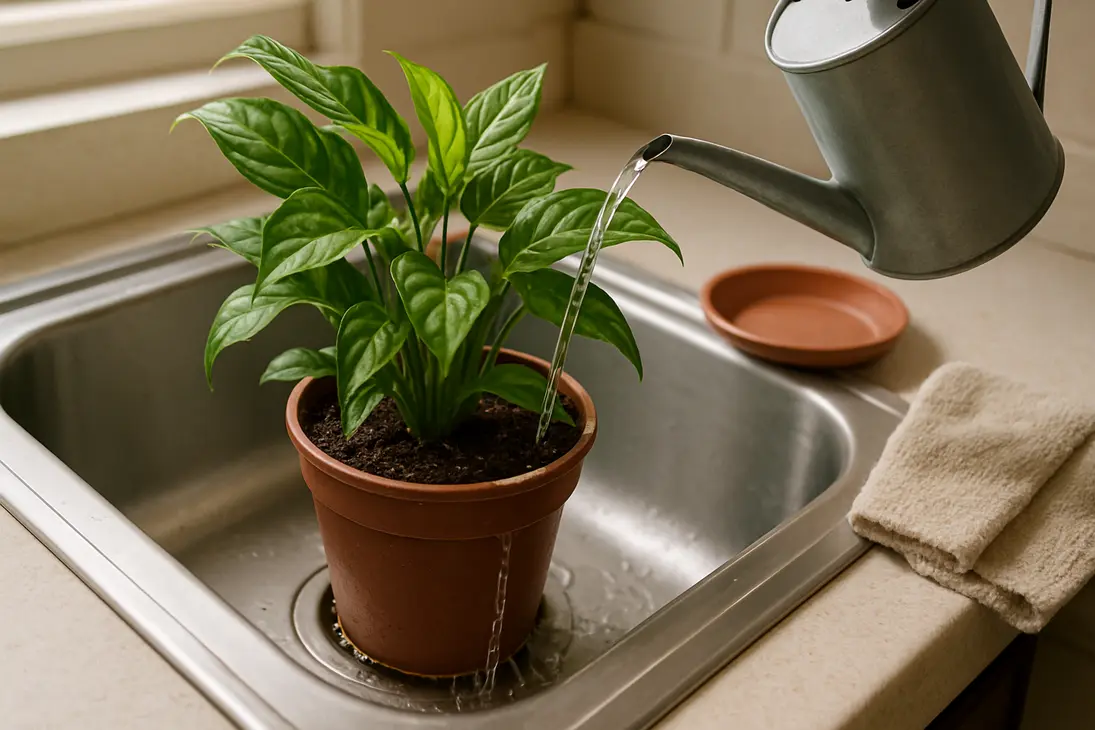
When a container needs water, water thoroughly. A light sprinkle may wet only the surface while the lower roots stay dry. Aim to moisten the full root ball until water drains from the bottom.
Then stop and let the pot drain. The goal is evenly moist soil, not saturated soil.
If water runs straight through a very dry pot, the mix may have become hydrophobic. Water slowly in several rounds, letting each round soak in. Small pots can also be bottom-watered briefly in a tub or tray, then drained fully before returning to the deck.
Adjust for Heat, Wind, and Small Containers
Deck containers dry faster in hot, windy weather. Small pots dry fastest because they hold less soil. Dark containers can heat up more than light ones, and porous clay dries faster than glazed ceramic, plastic, resin, or metal.
In summer, check hanging baskets, small herb pots, annual flowers, fruiting vegetables, newly planted containers, full-sun plants, and wind-exposed pots often. Checking daily does not always mean watering daily; it means catching stress early.
If your deck plants dry out constantly, move them to larger pots, use a high-quality potting mix with better water retention, or shift them to a less exposed spot.
Best Time to Water Deck Plants
The best time to water deck plants is usually morning. However, if a plant is dry and stressed, water it when you can. Do not let a thirsty container wilt all day just because morning has passed.
Morning Is Usually Best
Morning watering gives plants moisture before the hottest part of the day and allows foliage, pot surfaces, and deck boards to dry in daylight. This helps reduce mildew and avoids leaving damp containers overnight.
Morning is especially useful for full-sun plants, vegetables, herbs, hanging baskets, wood decks, and areas with limited airflow.
Water the soil rather than soaking the leaves. This is more efficient, reduces mess, and keeps moisture where the roots can use it.
What to Do During Heat Waves
During heat waves, containers can dry out quickly, and reflected heat from decking, siding, and railings can make stress worse.
If the soil is dry and the plant is wilting badly, water it. You can also move pots into temporary shade, group containers to reduce heat stress, or place sensitive plants where they get morning sun instead of harsh afternoon sun.
Very small pots and hanging baskets may occasionally need watering twice a day in extreme heat. If that continues for weeks, the pot may be too small, the plant may be root-bound, or the location may be too exposed. After emergency watering, check that runoff is not collecting on the deck.
Is It Bad to Water in the Middle of the Day?
It is not generally true that midday watering burns leaves because droplets act like magnifying glasses. The more practical issue is efficiency: in hot weather, more water may evaporate before the plant can use it.
If midday is your only option, water at soil level, water slowly, avoid splashing mud onto leaves or boards, move badly wilted pots into shade if possible, and check saucers afterward. Midday watering is better than letting a dry container collapse.
Preventing Overwatering, Root Rot, and Pests
Deck plants dry quickly, but they can still be overwatered—especially when saucers hold water, pots lack drainage, or rain adds more moisture than expected.
Overwatering usually means the root zone stays wet too long. Roots need oxygen. Saturated potting mix can weaken roots, cause rot, and encourage fungus gnats.
Signs You’re Overwatering
Overwatered plants can wilt just like underwatered plants, so check the soil before adding more water.
| Symptom | What it may mean | What to check |
|---|---|---|
| Yellowing lower leaves | Wet roots, nutrient stress, or aging | Soil moisture below the surface |
| Wilting while soil is wet | Root stress or rot | Drainage holes and saucers |
| Mushy stems or crown | Rot at the base | Water sitting against the plant |
| Fungus gnats | Consistently damp mix | Top inch of soil |
| Green algae | Surface staying wet | Airflow and watering frequency |
| Sour smell | Waterlogged mix | Drainage and potting mix condition |
If the soil is wet and the plant is wilting, do not automatically water again. Let the pot drain and dry to the right level for that plant.
What to Do After Heavy Rain
Rain can overwater deck plants, fill saucers, splash soil, clog drainage holes, or leave top-heavy containers unstable.
After heavy rain, empty saucers and trays, tip cachepots to remove standing water, check drainage holes, sweep debris, move pots slightly so the deck can dry, and check moisture before watering again.
Plants that prefer dry conditions, such as lavender, rosemary, succulents, and many Mediterranean herbs, may need extra protection during long rainy spells.
When to Move or Shelter Potted Plants
Sometimes the best watering decision is to move the plant.
Consider moving or sheltering containers when several days of heavy rain are forecast, pots lack drainage, saucers may overflow, succulents or drought-tolerant herbs are staying wet, a storm could knock over tall pots, water repeatedly stains or pools in one area, or a plant wilts daily in intense afternoon sun.
Most outdoor containers handle normal rainfall if they drain well. For vacations, avoid leaving pots in deep saucers “just in case.” Instead, group plants in a bright but less exposed area, use outdoor self-watering containers, ask someone to check them, or use a simple drip system with a timer.
Conclusion
Watering plants on a deck is safe when you manage drainage. Give the plant enough water, then make sure excess water does not sit against the deck or the roots.
Use pots with drainage holes, raise containers for airflow, empty saucers after watering or rain, and clean up soil and fertilizer residue before it stains. Adjust watering to the plant, pot, weather, and exposure instead of following a fixed daily rule.
FAQ
Can watering plants on a deck cause wood rot?
Yes, if moisture is repeatedly trapped under pots, saucers, mats, or debris. A quick splash from normal watering is not usually the problem; a damp area that never dries is.
Raise pots on feet or stands, empty saucers, avoid moisture-trapping mats, and move containers occasionally so the boards can dry.
Should outdoor potted plants on a deck be watered every day?
Not always. Some deck plants need daily watering in hot, windy weather, especially small pots and hanging baskets. Others may need water only every few days or less.
Check the soil first. If the root zone is moist, wait. If it is dry, water deeply and let the excess drain.
Do deck plants need saucers under them?
Saucers are useful for catching runoff and preventing soil or fertilizer stains, but they should not stay full. A pot sitting in water can develop root problems, and the saucer can keep the deck damp.
Pot feet, raised trays, or stands are often better than a flat saucer alone. If you use saucers, empty them after watering or rain.
Should I move deck plants when it rains?
You do not need to move all deck plants every time it rains. Most are fine in normal rain if the containers drain well.
Move or shelter plants when heavy rain is expected, pots lack drainage, saucers may overflow, or the plant dislikes wet soil. After rain, empty saucers, check drainage, and let the deck dry under the containers.
Sources
- Reddit discussion on watering in heat: https://www.reddit.com/r/gardening/comments/18cpbwy/watering_in_the_heat_of_the_day
- Reddit discussion on daytime watering concerns: https://www.reddit.com/r/landscaping/comments/156jn4i/does_watering_during_the_day_harm_plants
You Might Also Like