What Is a Rain Garden? How to Plan and Build One That Drains
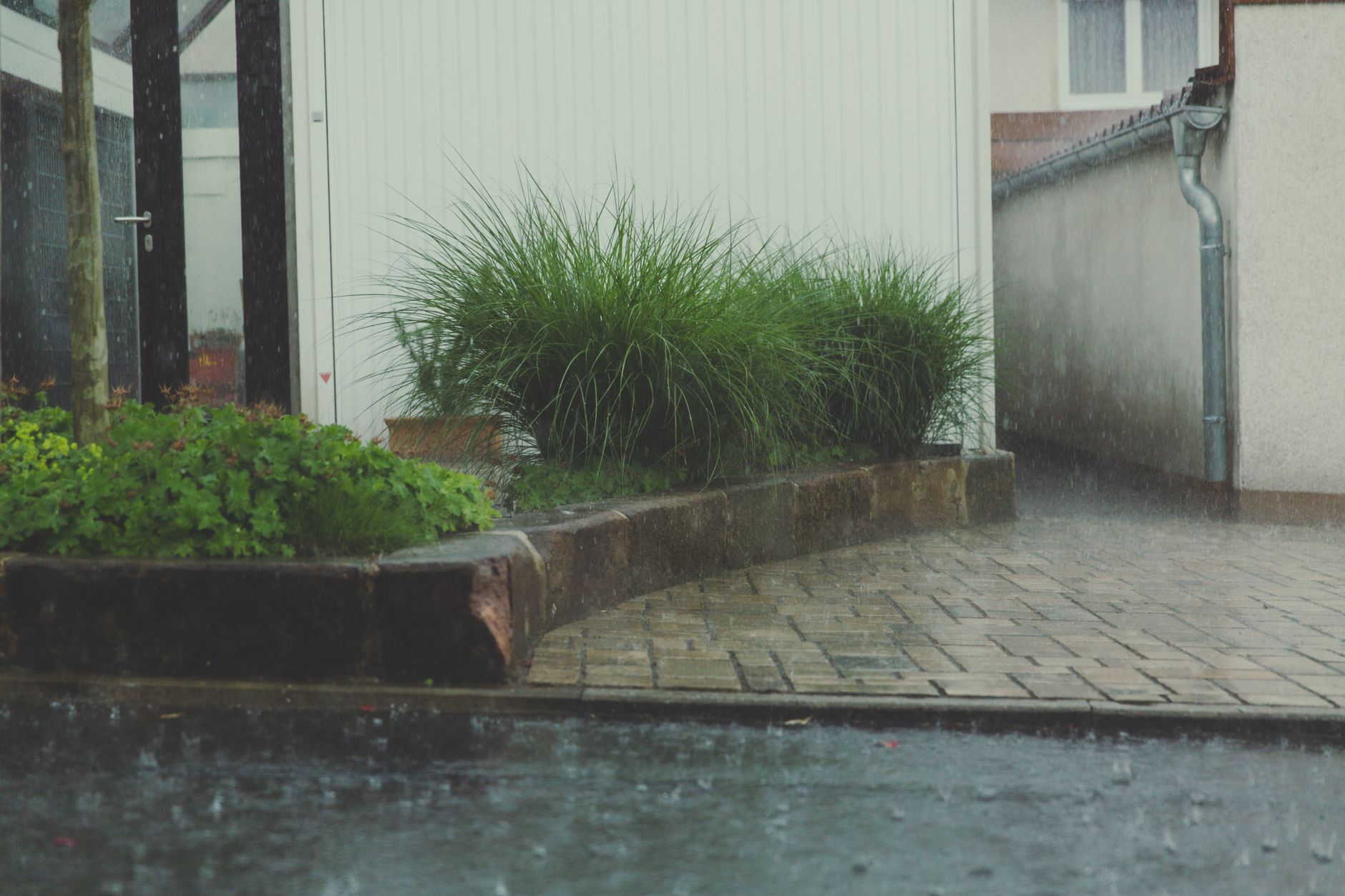
A rain garden is a shallow planted basin that temporarily captures runoff from roofs, driveways, walkways, and other hard surfaces, then allows that water to infiltrate, evaporate, or be used by plants. It is not a pond, a cure for every soggy yard, or a substitute for foundation drainage. A properly functioning rain garden normally stays dry between storms because the water collects and soaks in within a day or two.
Several elements work together: a runoff source (roof or driveway), a safe route into the basin, temporary surface storage in the basin, soil that can accept or discharge the water, plants suited to wet‑dry cycles, and a stable overflow route for larger storms.
Three questions determine feasibility: Where is the water coming from? Can the site safely receive and drain it? Where will excess water go when the garden is full?
A rain garden helps manage roof and driveway runoff, small areas of compacted‑lawn runoff, localized erosion from concentrated flow, and some residential stormwater pollutants. It should not be used for basement leaks, permanently wet soil, high groundwater, failing drains, large off‑site flows, or severe grading problems.
Key Takeaways
- A rain garden temporarily stores runoff, not water permanently: It captures roof and driveway runoff and should drain within a day or two between storms. Standing water beyond that limit signals a maintenance or design problem that needs diagnosis.
- Test infiltration and plan overflow before any construction: Soil testing under saturated conditions determines whether your site can support a rain garden. A safe overflow route away from foundations and neighbors is required before the first storm arrives.
- Build the basin level and stabilize the inlet first: A level floor spreads water evenly across the basin. Protect the inlet from erosion with appropriately sized stone, and use engineered soil media only if your infiltration tests require it.
- Select plants by moisture zone using local plant lists: The basin bottom needs plants that tolerate short flooding followed by dry soil, while the upper rim needs drought‑tolerant species. Native plants often work best and may qualify for local rebates.
- Inspect after every storm and remove sediment regularly: Check drawdown time, inlet erosion, mulch movement, and overflow function after each rain event. Removing accumulated sediment near the inlet is the most important routine maintenance task.
What a Rain Garden Does—and What It Does Not
Rain falls on an impervious surface; runoff moves via downspout, pipe, or swale into the basin. The garden spreads and temporarily stores the flow. Sediment settles near the inlet. Water moves into the soil or an engineered drainage layer. Excess water exits through a planned overflow.
How Rain Gardens Slow, Store, and Filter Runoff
Stormwater runoff collects sediment, nutrients, pesticides, oil, road salt, and debris. The rain garden slows flow, traps particles, adsorbs some pollutants, and enables plant uptake and microbial transformation. Phosphorus and some dissolved pollutants are harder to manage than sediment. Filtered water re‑enters groundwater or moves through an underdrain—it does not become drinking water. Rain gardens receiving road or driveway runoff should not be used as edible garden beds.
Benefits and Disadvantages Homeowners Should Expect
Benefits: Keeps runoff onsite, reduces erosion, supports pollinators, may qualify for rebates, and can hide downspout extensions.
Disadvantages: Requires excavation and soil handling, needs a safe overflow, risks foundation moisture if too close, needs maintenance, plants may die in wrong zone, mulch can wash out, winter appearance may be sparse, and extreme storms exceed capacity.
Rain Garden vs. Bioswale, French Drain, Dry Creek, and Bog Garden
| Landscape feature | Primary function | Water behavior | Best use | Main limitation |
|---|---|---|---|---|
| Rain garden | Store, infiltrate, treat runoff | Basin collects water, then drains | Residential roof/driveway runoff | Needs suitable soil or engineered design |
| Bioswale | Convey, slow, treat flow | Linear channel moves water | Larger or elongated flow paths | Requires correct slope and erosion control |
| French drain | Collect and move water | Subsurface gravel and pipe | Foundation or wet‑area drainage | Limited planting value |
| Dry creek bed | Direct surface water | Rock‑lined channel | Visible flow and drainage | Does not guarantee infiltration |
| Bog garden | Maintain consistently moist soil | Permanently wet | Wet‑garden habitat | Not designed to drain rapidly |
| Rain barrel / cistern | Store runoff for later use | Container holds water | Reducing roof runoff | Limited capacity and overflow |
Combinations are possible, but understanding differences helps choose the right system.
Decide Whether Your Site Can Support a Rain Garden
Site suitability is the main pre‑construction decision. Observe runoff direction, contributing area, existing erosion, ponding, and where water goes after a storm. The ideal site receives runoff but is not permanently wet.
Trace Where the Water Comes From and Where It Goes
Identify a defined contributing area (one roof section, one downspout, a portion of driveway, etc.). Measure roof horizontally. Check whether multiple sources combine before reaching the garden. Mark the inlet, basin, ponding level, overflow, and final safe discharge—overflow must not return to the house, cross unsafe walkways, erode slopes, or enter a septic area.
Choose a Safe Location Away From Foundations and Subsurface Hazards
Maintain at least 10 feet from foundations (more depending on soil, slope, code). Avoid septic systems, wells, utilities, steep slopes, retaining walls, contaminated soil, shallow bedrock, high groundwater, and critical tree roots. Utility marking is required before digging. No single setback applies nationwide—check local rules.
Test Infiltration Under Saturated Conditions
Dig a test hole at basin depth, saturate soil, refill to a measured depth, and record drop over time. Pre‑soaking matters because dry holes may drain faster than wet soil. Use the local protocol. Possible outcomes: suitable, needs larger/shallower basin, needs engineered media/underdrain, or unsuitable. Clay does not automatically fail.
Size the Garden From Runoff Volume, Not a Generic Percentage
Sizing depends on impervious contributing area, target rainfall depth, ponding depth, infiltration rate, and safety factors. A simple example: one inch of rain over a roof section creates a volume; dividing by surface storage depth gives preliminary basin area. Use local Extension worksheets or municipal manuals. For complex flows, consult a designer.
Check Permits, Incentives, and When Professional Design Is Needed
Check utility marking, permits, HOA rules, downspout‑disconnection rules, and stormwater incentives. Professional help is needed when water enters a foundation, the drainage area is large, the site is steep, street runoff is involved, groundwater is shallow, or local rules require engineered plans.
Design and Build the Basin, Inlet, and Overflow

Construction sequence: mark utilities, confirm inlet/overflow elevations, remove turf, excavate and level basin, build berm, prepare soil, stabilize inlet and overflow, test water movement, then plant, mulch, and establish.
Excavate a Level Basin and Stable Berm
Test shape with rope or paint. Remove turf and invasive weeds. Excavate from uphill, create a level floor. Use excavated soil to form downslope berm, compacted in layers. Build gently sloped sides. Preserve designed ponding depth and freeboard. Avoid vertical sides, loose berm, deep isolated holes, and equipment compaction on infiltration surface.
Use Existing Soil or Engineered Media Based on Testing
Options: use suitable native soil, amend limited depth per local guidance, remove and replace with specified bioretention media, or add underdrain. Avoid excess compost, fine material that clogs pores, unwashed fill, contaminated soil, gravel layers, and landscape fabric across the basin floor unless engineered.
Stabilize the Inlet Before It Erodes
Concentrated downspout flow can scour soil. Use downspout extension, solid pipe, rock‑lined channel, vegetated swale, or rain chain with splash area. Place erosion protection where water enters. Keep access for inspection; clean gutters to prevent debris entry.
Build a Safe Overflow Before the First Storm
Overflow is a planned safety feature. Position below the top of the berm, above ponding depth, on stable ground, away from buildings. Forms: berm notch, rock spillway, surface channel, approved pipe, or secondary basin. Check during first storms.
Estimate Cost From the Actual Design
Cost depends on site work: assessment, excavation, soil removal, engineered media, underdrain, inlet/overflow materials, plants, mulch, and labor. DIY can be a few dollars per square foot if native soil is usable; professional may exceed $20/sq ft. Check rebates before purchase.
Plant and Maintain a Rain Garden That Keeps Draining

Wettest at basin bottom, intermittently wet on slopes, driest on rim. Select plants after hydraulic layout.
Choose Plants for the Bottom, Side Slopes, and Rim
| Rain‑garden zone | Moisture pattern | Required plant traits | Common mistake |
|---|---|---|---|
| Basin bottom | Temporarily inundated, then dry | Tolerates short flooding and later drought | Using permanent‑wet plants |
| Lower/middle slope | Periodically wet | Handles changing moisture | Treating slope as equally wet |
| Upper rim | Usually dry | Drought‑tolerant | Placing moisture‑dependent species high |
| Inlet area | Strongest flow, sediment | Strong roots, erosion tolerance | Using delicate plants |
| Overflow area | Occasional concentrated flow | Flexible / erosion‑resistant | Blocking with dense shrubs |
Use locally native non‑invasive species. Match plants to sun, soil, salt exposure, and mature size. Grasses, sedges, perennials, and shrubs work well.
Establish Plants Before Expecting Low Maintenance
First 1–3 seasons: water during dry periods, weed regularly, replace failed plants, maintain mulch without burying crowns. Inspect mortality by zone: bottom deaths indicate excessive inundation; rim deaths indicate drought; inlet deaths indicate erosion.
Inspect Water Flow After Storms
After early storms, check water spread, ponding depth, drawdown time, inlet erosion, berm leakage, overflow function, mulch movement, and sediment deposition. Ongoing: clear leaves, remove sediment near inlet, replant exposed soil, repair gullies, keep overflow open. Record large storms separately.
Troubleshoot Standing Water, Erosion, Plant Death, and Mosquitoes
| Problem | Likely causes | First checks | Avoid |
|---|---|---|---|
| Water remains beyond drawdown | Compaction, clogged surface, groundwater, undersizing | Drawdown time, soil surface, underdrain | Adding water‑loving plants as only fix |
| Mosquito larvae | Water too long, container holding water | Basin drainage, debris, nearby containers | Treating failed drainage as normal |
| Inlet erodes | High velocity, undersized stone | Pipe outlet, slope | Covering erosion with loose mulch |
| Plants die in center | Inundation too long, wrong species | Drawdown time, root condition | Replanting same species repeatedly |
| Garden drains slower each year | Sediment, compaction, vegetation loss | Inlet, surface crust, maintenance history | Replacing all soil before diagnosis |
Persistent failure may require surface restoration, sediment removal, media replacement, or professional redesign.
Know When a Rain Garden Is Not the Right Fix
Reconsider if the only location is near the foundation, water remains for days before construction, groundwater is high, runoff comes from a large off‑site area, the site is steep, or no legal overflow exists. Alternatives include downspout extension, rain barrel, grading, bioswale, French drain, dry creek, permeable pavement, or foundation waterproofing.
Conclusion
A rain garden can be a practical addition when site conditions are right and design follows local standards. By capturing runoff, slowing water, and allowing infiltration, a well‑built rain garden reduces erosion, filters pollutants, and adds landscape value. The key is to match the solution to the water source, confirm site suitability, design overflow before planting, and use local standards for dimensions and plants.
FAQ
What Are the Disadvantages of a Rain Garden?
Rain gardens require correct siting, excavation, establishment care, sediment removal, and overflow planning. They are not suitable for every soil or water problem, risk foundation moisture if too close, need more maintenance during establishment, and may have sparse winter appearance. Standing water beyond the drawdown limit is a failure symptom.
What Does It Cost to Build a Rain Garden?
Cost varies widely by size, excavation, soil removal, engineered media, underdrain, plants, and labor. Basic DIY may start at a few dollars per square foot; professionally installed gardens can exceed $20/sq ft. Check local rebates and cost‑share programs before purchasing materials.
What Are the Best Plants for a Rain Garden?
No single plant is best—selection depends on region, sun, soil, runoff source, and zone within the garden. Use locally adapted non‑invasive species that tolerate wet‑to‑dry cycles. Strong‑rooted grasses, sedges, perennials, and shrubs work well. Match plants to the bottom, slope, rim, and inlet zones.
What Is the Difference Between a Rain Garden and a Bioswale?
A rain garden is a basin that temporarily stores runoff; a bioswale is a linear channel that conveys water while slowing, filtering, and infiltrating part of the flow. A rain garden emphasizes storage; a bioswale emphasizes controlled movement. Both may use vegetation and engineered soil.
Sources
- U.S. EPA, “What is Green Infrastructure?”
- Penn State Extension, “Rain Gardens”
- University of Minnesota Extension, “Rain gardens”
- Oregon State University Extension, “Rain Garden Site Suitability”
- Illinois Extension, “Rain Garden vs Bioswale”
- Virginia Tech, “Rain Garden Plants”
- Penn State Extension, “Maintaining Stormwater Systems”
You Might Also Like