What Repotting Mistakes Can Cause Plants to Die?
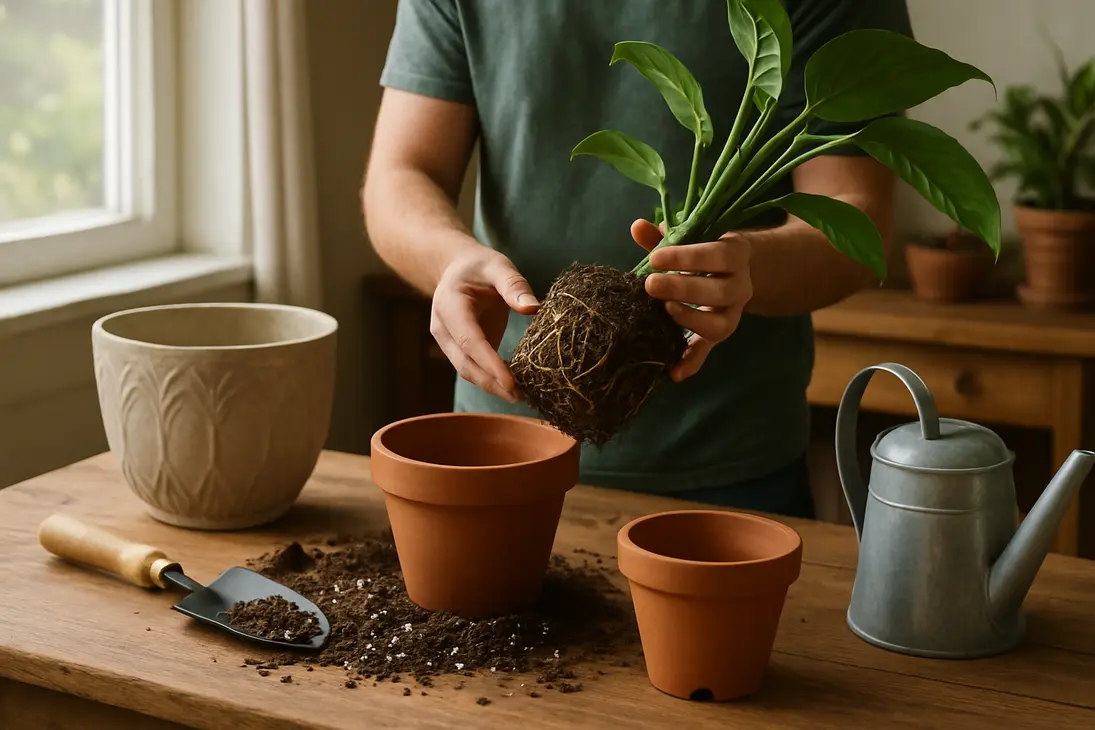
Repotting can save a cramped plant, but it can also kill one if the new conditions are worse than the old ones. The most dangerous mistakes involve timing, pot size, drainage, soil type, root damage, planting depth, watering, and aftercare.
A good repot gives roots suitable space, air, and moisture. A bad one can leave the plant with broken roots, soggy soil, buried stems, fertilizer burn, or sudden light stress.
Repotting a Plant That Doesn’t Actually Need It
Repotting is not harmless maintenance. Even careful work disturbs roots and changes how water moves through the soil. A healthy plant in a suitable pot may be better left alone, especially slow-growing plants or those that prefer snug roots, such as many succulents, snake plants, hoyas, and some flowering houseplants.
Assuming every plant needs annual repotting
“Repot every year” is too broad. Young, fast-growing plants may need yearly pot upgrades, but slow growers can often stay in the same container for several years if the mix still drains well.
Use the root ball, not the calendar. If roots form a dense mat with little visible soil, repotting may help. If growth is steady and the mix remains airy, wait.
Repotting during flowering, dormancy, illness, or extreme weather
Repotting is safest when a plant is actively growing and conditions are stable. During flowering, it can cause bud drop. During dormancy, the plant may not use water quickly enough, increasing rot risk.
Sick plants need judgment. A thirsty plant may only need water. An overwatered plant may need fresh, better-draining mix, but the work should focus on removing rotten roots and sour, wet soil.
Avoid repotting during heat waves, cold snaps, harsh sun, or windy outdoor conditions. Disturbed roots dry, chill, or overheat more easily.
Missing the real signs a plant needs repotting
A plant usually shows several clues when repotting is truly needed. One sign alone may not be enough, but multiple signs together are more reliable.
Roots circling the pot or growing from drainage holes
A few roots at the bottom are not an emergency. A tight mass circling the pot, with little soil left, is a stronger sign.
Soil drying out unusually fast
If a plant that once stayed moist for days now dries within a day under similar conditions, the pot may be mostly roots and unable to hold enough moisture.
Stunted growth despite good care
If light, watering, temperature, and feeding are reasonable but growth stalls during the growing season, cramped roots or depleted soil may be involved. Check for pests, low light, and overwatering first.
Plant becoming top-heavy or unstable
A plant that tips easily may need a wider or heavier container. This is often about balance as much as root space, especially with tall snake plants, large aroids, citrus, and patio plants.
Choosing the Wrong Pot
The pot affects soil volume, drainage, oxygen, and stability. Even with good technique, the wrong container can cause root rot or chronic drought stress.
Moving up to a pot that is too large
An oversized pot is one of the most common repotting mistakes that can kill plants. More potting mix holds more water. If roots cannot use that moisture, the soil stays wet, oxygen drops, and roots rot.
For many houseplants, move up only 1–2 inches in diameter. Large outdoor containers may need a bigger increase, but the principle is the same: do not surround a modest root ball with a huge mass of wet soil.
Oversized pots are especially risky for succulents, cacti, snake plants, ZZ plants, cuttings, young plants, low-light plants, and anything recovering from root rot.
Using a pot with no drainage holes
A sealed pot makes watering guesswork. Water can collect at the bottom even when the surface looks dry, suffocating roots and causing yellowing, wilting, or collapse.
Use decorative cachepots as outer covers, not as the growing pot, unless you can reliably remove excess water. For most plants, drainage holes are essential.
Choosing a pot that is too small or restrictive
A pot that is too small can also harm plants. Water may run around a dense root ball and out the drainage holes without moistening the center. Thick roots, bulbs, rhizomes, or caudex-forming plants may become deformed or stressed.
Some plants tolerate snug conditions, but they still need enough room for healthy root growth and water absorption.
Ignoring the plant’s growth habit and root type
Match the container to the plant. Deep-rooted plants may resent shallow bowls. Shallow-rooted succulents may rot in deep, wet pots. Orchids often need air around their roots, while tropical foliage plants usually prefer light, even moisture.
Use small, well-drained pots and gritty mixes for many succulents and cacti; bark-based mixes for orchids; chunky, well-aerated mixes for many aroids; and heavier, wider containers for large plants that tip easily.
Using the Wrong Soil Mix
Roots need moisture and oxygen. A mix that stays too wet, compacts, or dries unevenly can turn repotting into a decline.
Reusing compacted or contaminated old soil
Old potting mix breaks down over time. Fine particles settle, air spaces disappear, and the mix may hold water too long. Keeping some soil around a healthy root ball is normal, but repotting into tired, compacted mix is risky.
Avoid reusing soil from plants that died of rot or disease. It may contain pathogens, fungus gnat larvae, or decaying roots. Fresh mix and a cleaned pot are safer.
Using garden soil instead of potting mix
Garden soil often performs poorly in containers. In a pot, it can become dense, heavy, poorly aerated, and slow to drain. It may also crust on top or introduce pests and weed seeds.
Use a potting mix designed for containers. It should drain well while holding enough moisture for that plant’s needs.
Choosing soil that drains too slowly
Slow-draining soil is especially dangerous after root disturbance. A repotted plant may wilt because its roots are damaged, not because it needs more water. If the soil is already wet, watering again makes oxygen deprivation worse.
Warning signs include water sitting on the surface, soil staying wet for many days, sour smells, fungus gnats, yellow lower leaves, mushy stems, or blackened roots.
Using the same mix for every plant
One all-purpose mix can work for many common plants, but not all. Some plants die after repotting because the mix suits a different root system.
Succulents and cacti
Succulents and cacti usually need fast drainage. Dense, peat-heavy soil in a large pot can rot roots and stems. Use a cactus/succulent mix or amend with pumice, perlite, coarse sand, or grit where appropriate.
Tropical houseplants
Many tropical foliage plants like consistent light moisture, not swampy soil. A quality indoor mix with added perlite or bark often works well.
Orchids and epiphytes
Many orchids and epiphytes naturally grow with roots exposed to air. Standard potting soil can suffocate them. Moth orchids, for example, usually do better in bark-based orchid mix.
Aroids and plants that prefer chunky mixes
Monstera, philodendron, anthurium, and related plants often prefer airy, chunky mixes with bark, perlite, coco chips, or similar materials. Dense soil can stay too wet, especially in low light.
Damaging the Roots During Repotting
Some root damage is unavoidable, but excessive damage causes transplant shock. Fine roots absorb much of the water the plant needs. If too many are torn away, leaves may wilt faster than roots can recover.
Pulling the plant out by the stems or leaves
Pulling from the top can snap stems, tear roots, or break crowns. Support the plant at the base, tip the pot sideways, and ease the root ball out. Squeeze flexible pots, tap the sides, or loosen the edge with a blunt tool. For valuable plants, cutting away a plastic nursery pot is safer than yanking.
Breaking healthy roots while removing the old pot
Do not force a stuck root ball. Healthy roots are usually firm and pale, tan, or normal for the species. Rotten roots are often dark, mushy, hollow, or foul-smelling.
If roots grow through drainage holes, free them gently or trim only what is necessary. Minor damage is usually survivable; severe tearing can set the plant back badly.
Removing too much soil from the root ball
Routine repotting usually does not require bare-rooting. Removing all old soil can strip fine roots and increase shock. Keep most of the root ball intact and loosen only the outer circling roots.
Remove more soil only when there is root rot, pests, contaminated mix, or a completely unsuitable old medium.
Cutting roots unnecessarily
Root pruning is useful for bonsai, long-term container shrubs, and badly circling roots, but casual cutting can harm plants. Trim roots only when they are rotten, dead, badly damaged, tightly circling, or intentionally pruned as part of known care for that plant.
Use clean, sharp tools and avoid removing a large portion of the root system unless the plant can tolerate it.
Dividing rhizomes, bulbs, or offsets too aggressively
Rough division can damage plants with rhizomes, bulbs, corms, tubers, or offsets. Snake plants, ZZ plants, calatheas, peace lilies, alocasias, and bulbs need enough roots and growing points on each division.
Do not split a plant into many weak pieces. Fewer, stronger divisions usually recover better.
Poor Aftercare After Repotting
Aftercare determines whether disturbed roots recover. Most plants need stable moisture, oxygen, moderate light, and time.
Watering too much right after repotting
A plant may wilt after repotting because roots were disturbed, not because it is dry. Repeated watering can make things worse by pushing oxygen out of the mix.
Water after repotting if the plant and soil type call for it, then wait until the soil dries to that plant’s normal preference. Succulents and cacti may benefit from a short wait before watering if roots were cut or broken.
Letting the plant dry out completely after root disturbance
The opposite mistake is letting a newly disturbed plant become bone dry. Tropical plants, in particular, may need light, steady moisture while fine roots regrow.
Aim for appropriately moist soil: not saturated and not dust-dry. Check with your finger, a wooden skewer, or by learning the pot’s weight.
Fertilizing too soon
Freshly disturbed roots are vulnerable to fertilizer burn. Many new mixes already contain nutrients. Wait until the plant shows recovery, such as firmer leaves or new growth, before feeding. For many houseplants, waiting several weeks is sensible.
Burying the crown, stem, rhizomes, or caudex too deeply
Planting too deep can trap moisture against tissue that needs air, causing rot at the soil line. This is common with African violets, snake plants, ZZ plants, orchids, rosette succulents, desert rose, and bulbs that need their necks or tops exposed.
Repot at roughly the same soil level as before unless you know the plant requires a different depth.
Moving the plant into harsh sun or low light immediately
After repotting, roots may not replace leaf moisture efficiently. Harsh sun, hot windows, wind, and dry air can cause wilting or scorch.
Low light creates the opposite problem: the plant uses less water, so fresh mix stays wet longer. Bright indirect light and stable conditions are safest for most recovering plants.
Ignoring signs of transplant shock
Some stress is normal, but worsening symptoms can signal a serious problem.
Wilting
Mild wilting can happen even when soil is moist. If the mix is wet, do not keep watering. Provide bright indirect light, stable humidity, and time.
Yellowing leaves
A few older yellow leaves may be normal. Widespread yellowing, especially with wet soil, suggests root stress or overwatering.
Leaf drop
Sensitive plants such as ficus, citrus, and some calatheas may drop leaves after a change. Firm stems and healthy buds are good signs. Leaf drop with soggy soil is more concerning.
Mushy stems or root rot smell
Mushy tissue, blackened stems, or sour smells indicate rot. Remove the plant, inspect roots, trim rotten parts, and repot into a suitable pot and mix if enough healthy tissue remains.
No recovery after several weeks
If there is no improvement after several weeks, reassess pot size, drainage, root health, planting depth, light, and watering. Avoid changing everything every few days; constant intervention adds stress.
Conclusion
The repotting mistakes most likely to kill plants are preventable: repotting unnecessarily, using an oversized or undrained pot, choosing dense or unsuitable soil, damaging roots, planting too deeply, overwatering, fertilizing too soon, and moving the plant into harsh conditions.
Repot only when there is a clear benefit. Choose a modestly larger pot with drainage, use a mix suited to the plant, handle roots gently, keep the original planting depth, and provide stable recovery conditions.
FAQ
How soon should I water a plant after repotting?
Most leafy houseplants and outdoor container plants can be watered soon after repotting to settle the mix. Then wait until the soil dries to that plant’s normal preference before watering again.
Do not water repeatedly just because the plant wilts. If the soil is wet, the problem is likely root stress, not thirst. For succulents and cacti with damaged roots, waiting briefly before watering may reduce rot risk.
Is it normal for a plant to wilt after repotting?
Yes. Mild wilting is common because disturbed roots temporarily absorb water less efficiently. It is less worrying if stems are firm, soil is not soggy, and the plant is in bright indirect light.
Wilting is more serious if it worsens, the soil smells rotten, stems turn mushy, or leaves yellow and drop rapidly.
Should I remove all the old soil when repotting?
Usually, no. For routine repotting, keep much of the root ball intact and loosen only the outer roots if needed. Bare-rooting can damage fine roots and increase shock.
Remove more soil only for clear problems such as root rot, pests, contaminated mix, or a very unsuitable old medium.
Can repotting a plant in too large a pot kill it?
Yes. A much larger pot can hold more moisture than the roots can use. The unused wet soil stays damp, oxygen levels fall, and roots may rot.
This is especially risky for succulents, cacti, snake plants, ZZ plants, young plants, and plants recovering from root damage. Moving up one modest pot size is usually safer.
You Might Also Like