How to Care for Potted Bamboo Plants
Potted Bamboo Care Guide
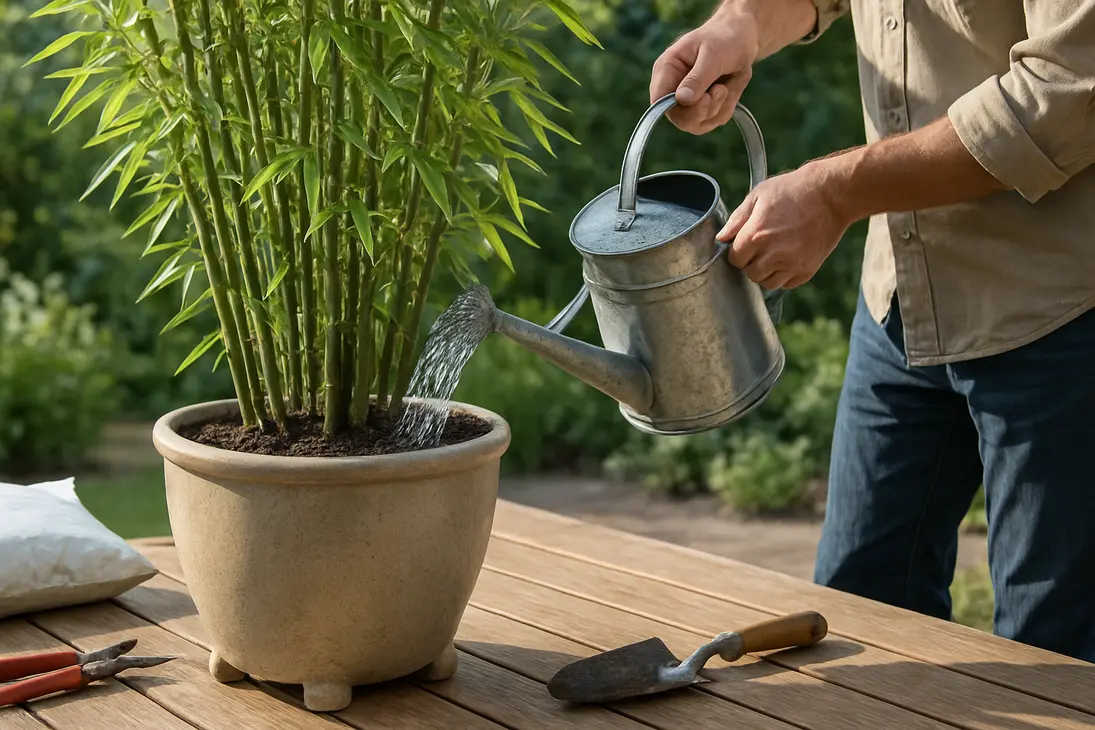
Potted bamboo care depends on choosing the right plant, giving it a roomy draining pot, keeping moisture steady, providing enough light, and repotting before roots become overcrowded. Bamboo can be forgiving once established, but it reacts quickly to drought, soggy soil, and cramped roots.
First, confirm whether you have true bamboo or “lucky bamboo.” They are sold under similar names but need different care.
Know What Kind of “Bamboo” You Have
True Potted Bamboo vs. Lucky Bamboo
True bamboo is a grass with underground rhizomes and woody canes. It is used for patio screens, balcony containers, and large outdoor pots. It needs drainage, soil-based potting mix, consistent water, and enough light for leafy growth.
Lucky bamboo is usually Dracaena sanderiana, not bamboo. It is often grown in water, pebbles, or small pots. It tolerates lower indoor light than true bamboo and is more sensitive to water quality.
| Plant sold as bamboo | What it really is | Best setup | Main concern |
|---|---|---|---|
| True bamboo | Grass with canes and rhizomes | Large draining pot with potting mix | Moisture, root space, light |
| Lucky bamboo | Dracaena houseplant | Water with pebbles or well-drained soil | Clean water, indirect light |
Woody canes emerging from soil with many narrow leaves usually indicate true bamboo. Smooth green segmented stalks in water with leafy shoots near the top are usually lucky bamboo.
Indoor vs. Outdoor Container Bamboo
True bamboo usually performs best outdoors, where it gets brighter light, airflow, and seasonal changes. It can grow well on patios, decks, balconies, and near entrances.
Indoor true bamboo is possible but harder because of low light, dry air, and small pots. Smaller or more shade-tolerant types adapt better than large screening bamboos, but they still need a bright position and careful watering.
For a low-light tabletop plant, choose lucky bamboo. For a leafy screen or bold container plant, choose true bamboo and treat it like a vigorous potted grass.
Choose the Right Pot and Soil
Pot Size and Drainage
Bamboo grows quickly when healthy, so its roots need room. A small decorative pot may dry out fast, restrict growth, and tip over in wind.
For most true potted bamboo, choose a wide, sturdy container with several drainage holes. Many patio bamboos do better in pots about 18–24 inches wide and deep or larger. Tall screening types need more root space and a heavy base.
Good containers have:
- Several drainage holes
- A broad, stable base
- Durable material suited to your climate
- Enough depth for roots
- Space at the top for watering
Avoid sealed pots unless they are decorative outer cachepots. Standing water around the root ball can suffocate roots and cause rot.
Best Soil Mix for Potted Bamboo
Bamboo likes soil that holds moisture but still drains well. Use quality potting mix rather than heavy garden soil. If needed, add compost for moisture retention and fine bark, perlite, pumice, or another coarse material for air space.
The mix should feel springy and crumbly. When watered, it should absorb moisture evenly and drain from the bottom instead of staying waterlogged.
Do not add rocks as a “drainage layer.” They reduce root space and do not fix poor drainage. Drainage holes and a suitable mix matter more.
When to Repot Bamboo
Potted bamboo eventually fills its container. Signs include constant thirst, smaller leaves, slower growth, roots circling drainage holes, or the root ball lifting upward.
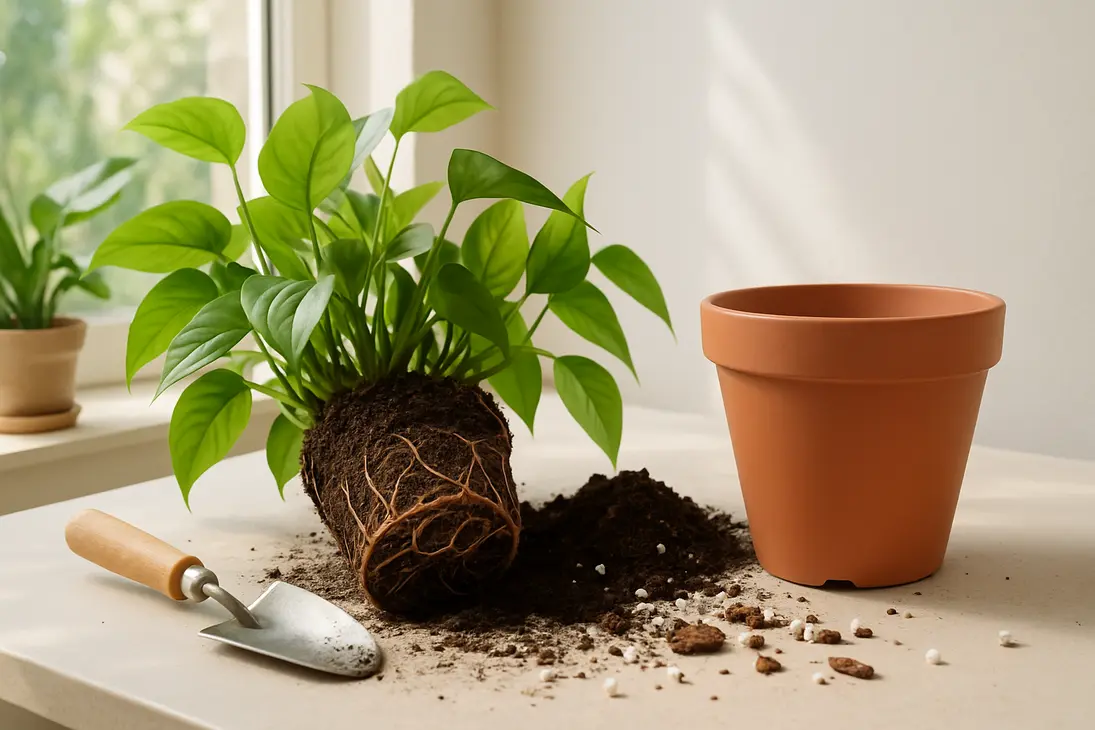
Repotting is often needed every 2–5 years, depending on bamboo type, pot size, climate, and growth rate. Spring is usually best. Move the plant into a larger pot, or divide the root ball and replant a smaller section in fresh mix. Mature bamboo roots can be dense, so use a sharp saw, pruning saw, or sturdy spade.
Get Watering Right
How Often to Water Potted Bamboo
There is no universal watering schedule. A bamboo in a black pot on a hot, windy patio may need daily summer water, while the same plant indoors in winter may need far less.
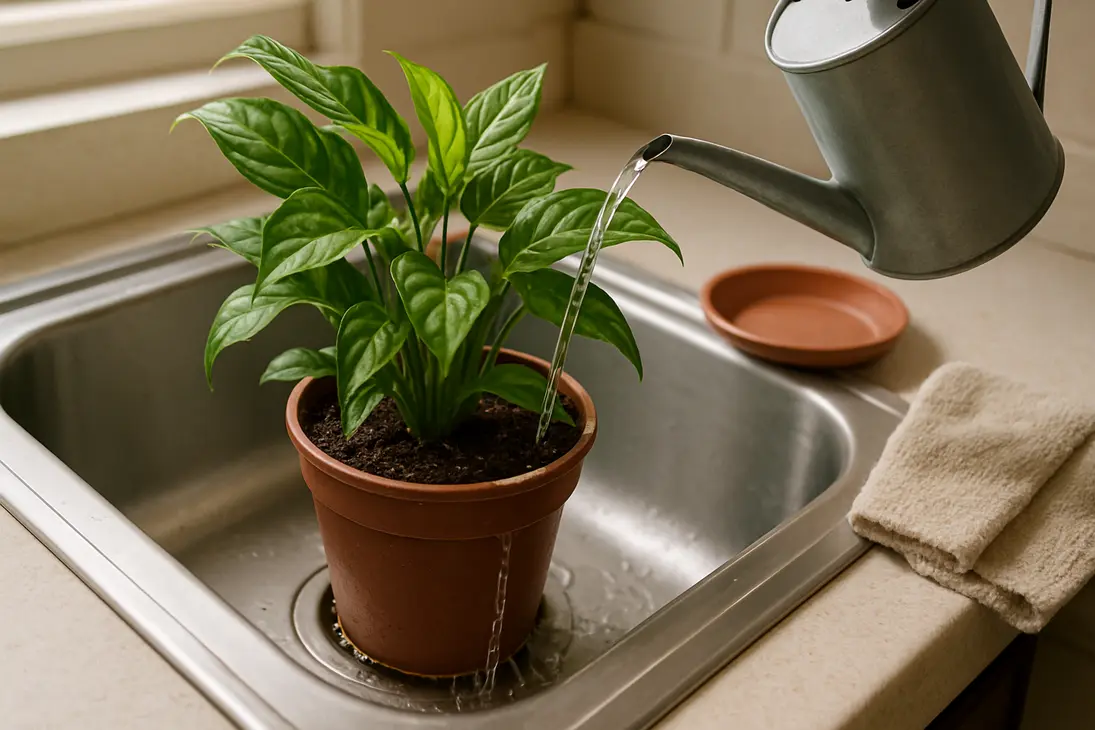
Check the soil instead of watering by the calendar. For true bamboo, water when the top 1–2 inches of mix begin to feel dry but the root zone below is still slightly moist. Water deeply until excess runs from the drainage holes.
Watering frequency depends on pot size, weather, season, plant size, soil mix, and indoor conditions. Small pots, heat, sun, wind, and active growth all increase water use. Newly potted bamboo needs closer attention while roots establish.
Signs of Underwatering and Overwatering
Underwatering and overwatering can both cause yellowing or drooping, so check the soil before reacting.
| Symptom | Likely cause | What to do |
|---|---|---|
| Leaves curl lengthwise | Dry soil, heat, wind | Water deeply; add shade or wind protection |
| Drooping leaves with wet soil | Overwatering or root stress | Let soil partly dry; check drainage |
| Yellow leaves with dry edges | Drought stress or salt buildup | Deep water; flush soil if needed |
| Yellow leaves with mushy roots | Root rot | Repot into fresh draining mix |
| Brown leaf tips | Dry air, uneven water, salts | Adjust watering; reduce fertilizer; flush soil |
Some older leaves naturally yellow and drop, often in spring or during weather changes. Widespread yellowing, persistent curling, or cane dieback means the root environment needs attention.
Tap Water, Filtered Water, and Lucky Bamboo
True bamboo in soil usually tolerates tap water unless it is very hard, salty, or chemically treated. If white crust forms on the soil or pot, flush the container by watering thoroughly and letting it drain. Do not let the pot sit in runoff.
Lucky bamboo is more sensitive. Chlorine, fluoride, and mineral buildup can contribute to yellowing or brown tips, especially in water. Filtered, distilled, rainwater, or tap water left out overnight may help, depending on local treatment. Change the water regularly and rinse the container.
For lucky bamboo in soil, keep the mix lightly moist but not soggy.
Provide the Right Light, Temperature, and Placement
Best Light for Container Bamboo
Most true bamboo needs bright light. Many types like full sun outdoors in mild climates, while others prefer partial shade. In hot regions, afternoon shade can reduce scorch and water stress.
If leaves curl every afternoon despite moist soil, the plant may be too hot or exposed. If growth is thin, weak, and leaning, it probably needs more light.
Lucky bamboo prefers bright indirect light. Hot direct sun, especially through glass, can scorch it.
Temperature and Wind Protection
Temperature tolerance depends on species, but container roots are more exposed than roots in the ground. A bamboo that is hardy in the landscape may still suffer if its pot freezes solid.
In cold climates:
- Move pots against a sheltered wall
- Group containers together
- Wrap the pot for insulation
- Keep soil slightly moist before freezes
- Move marginal plants into an unheated protected space temporarily
Wind also stresses bamboo by drying leaves and rocking tall canes. Use heavy pots, avoid constant wind exposure, and water more often in gusty weather.
Indoor Placement Tips
For true bamboo indoors, use the brightest practical spot, such as near a large east, south, or west-facing window. Rotate the pot occasionally for balanced growth.
Avoid placing bamboo:
- Near heating vents or radiators
- In dark corners
- Against cold winter glass
- In saucers of standing water
- In narrow, unstable pots
Extra humidity may help indoors, but do not keep the soil constantly wet to compensate for dry air. Healthy roots are more important than misting.
Feed, Prune, and Maintain Healthy Growth
How and When to Fertilize
Bamboo is a grass and responds well to nitrogen during active growth. In containers, nutrients wash out over time, so moderate feeding helps maintain green foliage.
Feed true potted bamboo in spring and early summer with a balanced slow-release fertilizer or one suited to grasses and leafy plants. Follow the label. Too much fertilizer can build up salts and burn roots.
Reduce or stop feeding in late summer and fall, especially where winters are cold. Do not push soft new growth before cold weather.
Lucky bamboo needs very little fertilizer. If grown in water, use only a very diluted houseplant fertilizer occasionally.
What to Do If You Overfertilized
Overfertilizing can cause brown tips, yellowing, or wilting because excess salts damage roots and interfere with water uptake.
If you overfed potted bamboo:
- Stop fertilizing.
- Remove visible fertilizer granules.
- Flush the pot well with water.
- Empty the saucer.
- Keep the plant evenly moist and out of harsh sun.
- Wait for healthy new growth before feeding again.
If the soil smells sour or roots are badly damaged, repotting into fresh mix may be safer than repeated flushing.
Pruning Yellow Leaves or Dead Canes
Bamboo pruning is simple. Remove fully yellow or brown leaves by hand or with clean snips. Leave partly green leaves on stressed plants because they can still photosynthesize.
Cut dead canes at soil level. Weak, crowded, or badly leaning canes can also be removed for appearance and airflow. To control height, cut canes just above a node. That cane will not grow taller from the cut point, though side branches may keep leafing out. New height comes from new canes at the base.
Managing Roots and Spread in Pots
A pot contains bamboo, but roots still need monitoring. Running bamboo can circle inside a container and become extremely dense. Clumping bamboo expands more slowly but can still fill the pot.
Check drainage holes and the soil surface a few times a year. If rhizomes push through holes, distort the pot, or creep over the rim, divide, root-prune, or repot.
Do not place running bamboo in a pot directly on open soil if rhizomes could escape through drainage holes. Use paving, pot feet, or another hard surface if spread is a concern.
Common Potted Bamboo Problems and Fixes
Yellow Leaves
A few yellow leaves are normal as older foliage ages. Sudden or widespread yellowing usually means stress.
Common causes include:
- Soil staying too wet
- Soil drying out completely
- Exhausted potting mix or low nitrogen
- Overfertilizing
- Low indoor light
- Repotting shock
- Cold damage
- Natural seasonal leaf drop
Start with the soil. If it is dry, water thoroughly. If it is soggy, improve drainage and let it breathe. If the plant has been in the same pot for years, repotting may solve several problems.
Brown Leaf Tips
Brown tips often come from inconsistent moisture, dry air, fertilizer salts, hard water minerals, sun, or wind. Indoors, they are common near heat sources.
Trim brown tips if desired, but correct the cause. Water deeply, avoid frequent shallow watering, flush salts from the soil, and move the plant away from harsh exposure if needed.
For lucky bamboo, brown tips often suggest poor water quality or too much fertilizer. Try filtered or distilled water and feed sparingly.
Drooping or Curling Leaves
Bamboo leaves curl to reduce moisture loss. If they curl during the hottest part of the day but recover by evening, the plant may simply be reacting to heat. If they stay curled, check the soil.
Dry soil calls for a deep soak. Wet soil with curled or drooping leaves suggests root trouble, often from poor drainage or a compacted root ball. In that case, more water will make the problem worse.
Pests on Potted Bamboo
Healthy bamboo is not especially pest-prone, but container plants can attract spider mites, aphids, scale insects, and mealybugs, especially indoors or in sheltered areas.
For light infestations, rinse foliage and wipe canes by hand. Insecticidal soap or horticultural oil may help when used according to the label. Test a small area first, and avoid spraying drought-stressed plants or plants in hot direct sun.
Better light, airflow, and watering often reduce repeat pest problems.
Root Rot or Poor Drainage
Root rot develops when roots sit in wet, stagnant soil without enough oxygen. The plant may yellow, wilt, drop leaves, or decline even though the soil is moist. Roots may look black, soft, or smell unpleasant.
To fix drainage problems:
- Open blocked drainage holes
- Remove the plant from standing water
- Repot into fresh, well-draining mix
- Trim dead or mushy roots if practical
- Use a pot that drains freely
- Water only when the top layer begins to dry
If most roots have rotted, recovery may be limited. Bamboo can regrow from healthy rhizomes, but it needs oxygen, warmth, and time.
Conclusion
Good potted bamboo care is steady rather than complicated. Give true bamboo a roomy draining container, moisture-retentive but airy soil, bright suitable light, and deep watering when the upper soil begins to dry. Feed moderately during active growth, remove dead or weak canes, and repot or divide before roots become severely crowded.
Lucky bamboo needs different care: bright indirect light, clean water or lightly moist soil, and very little fertilizer. Once you know which plant you have, most problems are easier to diagnose.
FAQ
How often should I water potted bamboo?
Water when the top 1–2 inches of soil begin to feel dry, then water thoroughly until excess drains out. Outdoors in hot, windy weather, this may be daily. Indoors or in cool seasons, it may be much less. Do not let true bamboo dry completely, but do not keep it soggy.
Can potted bamboo grow indoors?
Yes, some bamboo can grow indoors, but it needs bright light, drainage, and careful watering. Many true bamboos do better outdoors because indoor light is often too weak. For an easy low-light indoor plant, lucky bamboo is usually a better choice.
Why are my bamboo leaves turning yellow?
A few yellow leaves are normal. Widespread yellowing can be caused by underwatering, overwatering, poor drainage, low light, lack of nutrients, too much fertilizer, cold stress, or a crowded pot. Check soil moisture and drainage first.
Is tap water safe for lucky bamboo?
Sometimes, but lucky bamboo can be sensitive to chlorine, fluoride, and mineral buildup. If tips brown or stems decline in tap water, try filtered, distilled, or rainwater. Change the water regularly, rinse the container, and fertilize very sparingly.
You Might Also Like