Why Is My Monstera Soil Staying Too Wet After Repotting?
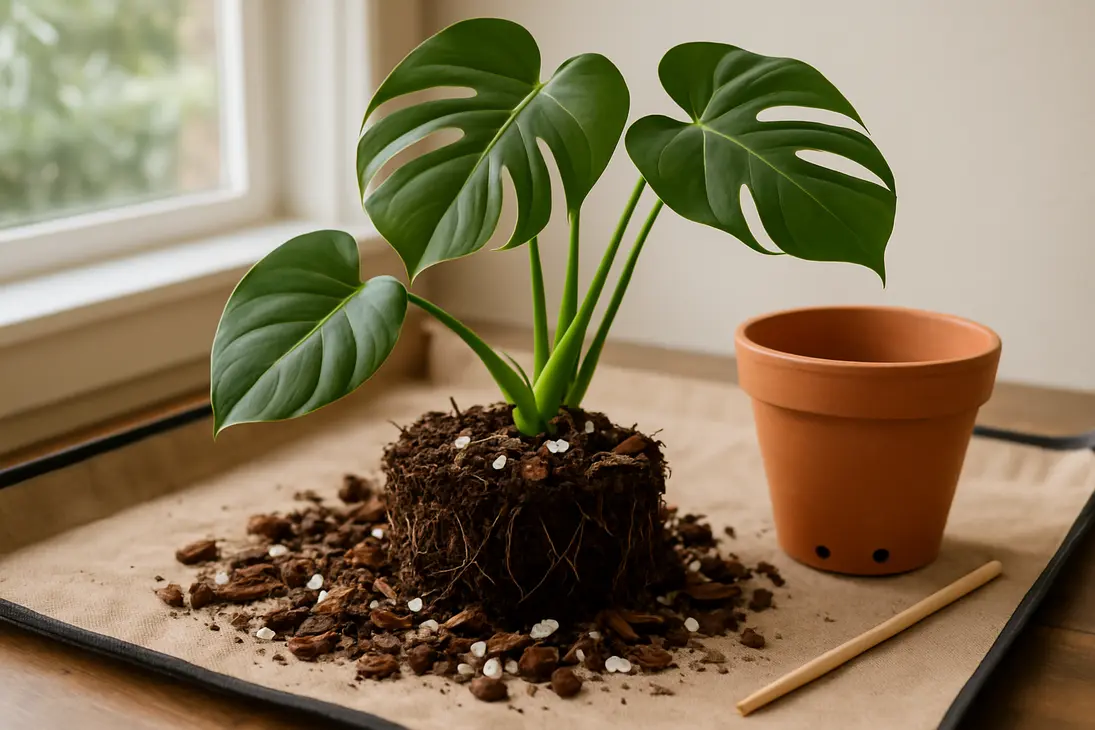
Wet soil after repotting is a common Monstera soil issue. Some lingering moisture is normal, especially if you watered after moving the plant. But soil that stays soggy for many days, smells sour, or comes with spreading yellow leaves can mean the roots are sitting without enough oxygen.
Do not automatically repot again. Monsteras dislike repeated disturbance, and a second repot can worsen stress if the roots are healthy. However, if the mix is dense, the pot is oversized, drainage is poor, or roots are rotting, waiting can cause more damage.
Diagnose How Serious the Wet Soil Problem Is
First decide whether the soil is simply moist or dangerously wet. A freshly repotted Monstera may dry more slowly because disturbed roots are not using water normally yet.
Check the soil moisture beyond the surface
The surface can dry while the bottom stays wet, especially in deep pots or compact mixes.
Check moisture by:
- Pushing your finger 2–3 inches into the mix.
- Inserting a wooden chopstick near the root zone.
- Using a moisture meter as a rough guide in several spots.
The warning sign is not damp soil after two days. It is the lower half of the pot staying wet for a week or more in normal indoor conditions, especially in low light or an oversized pot.
Look for root rot signs: smell, mushiness, black roots
Healthy Monstera roots may be white, tan, or light brown. Texture and smell matter more than color.
Signs of root rot include:
- Sour, swampy, or rotten smell
- Mushy, slimy, hollow, or peeling roots
- Black roots that collapse when touched
- Wet soil that smells anaerobic instead of earthy
- Continued decline while the mix remains wet
If roots are firm and there is no bad smell, the plant may recover without another full repot. If roots are mushy or foul-smelling, treat it as an active root problem.
Read leaf symptoms carefully: yellowing, drooping, black spots
Leaf symptoms after repotting overlap, so do not diagnose from one yellow leaf alone.
| Symptom | Possible meaning |
|---|---|
| One or two older lower leaves yellowing | Mild repotting stress |
| Many leaves yellowing quickly | Wet soil, damaged roots, low light, or shock |
| Drooping with wet soil | Roots may lack oxygen |
| Black soft spots with yellow halos | Possible rot-related stress |
| Crispy brown edges | Underwatering, low humidity, fertilizer burn, or root damage |
If yellowing continues while the soil stays wet, investigate quickly.
Why Monstera Soil Stays Wet Too Long
Monsteras are tropical aroids, not swamp plants. Indoors, they need a mix that holds some moisture but also drains quickly and lets air return to the root zone.
The pot is too large for the root system
An oversized pot is one of the most common causes. Roots can only use moisture where they actually grow, so extra soil around a small root ball stays wet like a sponge.
This often happens after dividing a large Monstera. The leaves may still look big, but each division has a smaller root system. Choose a pot only slightly larger than the roots, usually about 1–2 inches wider in diameter.
The mix is not chunky or airy enough
Many standard houseplant mixes are peat- or coir-heavy and hold too much water when used alone. A good Monstera mix should show visible chunks such as bark, pumice, perlite, or coco chips.
A mix can drain from the bottom and still be poorly aerated. Water may run through while fine particles remain saturated around the roots.
Drainage holes are blocked or insufficient
Even a good mix stays wet if water cannot escape.
Check for:
- A decorative cachepot holding runoff
- Blocked drainage holes
- A pot with one tiny hole
- A saucer that is not emptied
- A flat-bottomed pot sitting tightly on a surface
If the pot has no drainage holes, repotting is strongly recommended. Stones, gravel, or LECA at the bottom do not replace drainage holes and can create a wet zone near the roots.
The plant was watered before it had dried down
Repotting often includes watering to settle the soil. That can be fine, but if the old root ball was already wet, then placed into moist fresh mix and watered again, the pot may stay wet far too long.
This is more likely when the plant was watered shortly before repotting, the new mix was pre-moistened, the pot is larger, the plant is in lower light, or it is winter. After repotting, roots may temporarily slow down, so the mix dries mostly by evaporation.
Additives like LECA or vermiculite may hold moisture longer
Not all “drainage” ingredients behave the same way. Perlite, pumice, bark, and coco chips can improve air space when mixed throughout. Others increase water retention or cause problems when layered.
Use caution with:
- Vermiculite: Holds water and is usually unhelpful when soil is already too wet.
- LECA balls: Can keep the lower pot damp, especially as a bottom layer.
- Fine coco coir or peat-heavy soil: Can compact and stay wet.
Adding pumice or perlite to saturated soil rarely fixes a soggy core. If the pot is oversized or the mix is wet throughout, a better repot may be needed.
What to Do Right Now: Leave It, Dry It, or Repot Again?
Choose the least disruptive option that addresses the real risk. Healthy roots can often be left alone, but rotting roots need action.
If the roots look healthy
If roots are firm, there is no rotten smell, and yellowing is limited, do not rush into another full repot. Help the pot dry safely.
You can:
- Move the plant to bright, indirect light.
- Keep it warm and away from cold drafts.
- Remove it from any decorative outer pot.
- Empty the saucer after watering.
- Increase gentle airflow.
- Hold off on watering until the mix dries partway down.
Avoid fertilizer while the plant is stressed. If the plant is stable and the pot is the right size, patience is reasonable. A few older leaves may still yellow from the repotting event.
If the soil is soggy and leaves keep yellowing
If the mix remains soggy and more leaves keep yellowing, intervene. A Monstera may handle one careful correction better than weeks in oxygen-poor soil.
Repot again if:
- The mix is heavy, wet, and compacted throughout.
- The pot is much too large.
- The pot lacks proper drainage.
- Leaves are yellowing one after another.
- The bottom of the pot stays wet long after the top dries.
In dense soil, “letting it dry” may not work fast enough, especially in a cool or low-light room.
If root rot has already started
If you find mushy, black, smelly roots, remove the plant and clean up the root system.
A practical response:
- Gently remove wet soil.
- Rinse only if needed to see the roots.
- Trim mushy, hollow, or foul-smelling roots with clean tools.
- Keep firm roots, even if tan or brown.
- Repot into a smaller pot if the root system is reduced.
- Use a chunky, lightly moist mix.
- Delay heavy watering until the mix begins drying.
Do not cut healthy roots just because they are not white. If very few roots remain, treat the plant more like a cutting while it regrows.
How to reduce stress if you must repot again
A second repot is not ideal, so make it efficient and gentle.
Reduce stress by:
- Preparing the new pot and mix first.
- Handling the root ball carefully.
- Removing dense wet soil without stripping roots unnecessarily.
- Choosing a pot that fits the current roots.
- Keeping the plant in bright indirect light afterward.
- Avoiding fertilizer for several weeks.
- Supporting the plant with a pole or stake if needed.
Expect some cosmetic damage. Judge recovery by firmness, stable stems, and new growth rather than every older leaf.
Build a Better Monstera Soil Setup
The best prevention is a potting setup that balances moisture with oxygen. Monsteras like access to moisture, but their roots also need air.
Use a chunky, fast-draining mix
A good Monstera mix should drain freely without becoming dense or muddy. A simple recipe is:
- 1 part quality indoor potting mix
- 1 part orchid bark or coco chips
- 1 part perlite or pumice
For a large Monstera, increase bark and pumice for more structure. The exact recipe matters less than the result: loose, airy, and quick to drain.
Good ingredients: orchid bark, perlite, pumice, charcoal, coco chips
Useful ingredients include:
- Orchid bark: Adds structure and air pockets.
- Perlite: Improves drainage and keeps the mix light.
- Pumice: Adds aeration and weight.
- Horticultural charcoal: Adds chunkiness in small amounts.
- Coco chips: Hold some moisture while staying coarse.
If the plant is top-heavy, pumice can help stabilize the pot. If you need a lighter pot, perlite is easier to move.
Ingredients to use carefully: dense potting soil, vermiculite, water-retentive layers
Standard potting soil is not automatically bad, but for Monstera it usually needs amendment.
Be careful with:
- Vermiculite: Holds moisture.
- Fine peat or coco coir: Can compact.
- Compost-heavy mixes: May stay too wet indoors.
- Bottom layers of LECA, gravel, or stones: Do not fix drainage and may keep water perched.
A uniformly chunky mix is better than a fine mix with a “drainage layer” at the bottom.
Choose a pot only slightly larger than the root ball
Size the pot to the roots you have now, not the leaf size. This matters especially after division or root pruning.
Choose:
- A pot with drainage holes
- A diameter about 1–2 inches wider than the root ball
- A depth that does not leave a large wet reservoir below the roots
- A stable material for large climbing plants
Terracotta dries faster than plastic or glazed ceramic, which can help heavy-handed waterers. In warm, bright rooms, it may dry too quickly.
Watering After Repotting
Once the soil setup is corrected, watering habits matter. A chunky mix gives more margin for error, but overwatering is still possible.
Let the mix partially dry before watering again
After repotting into moist mix, you may not need to water immediately. If the roots were rinsed or the mix was pre-moistened, wait until the pot dries partway.
For most indoor Monsteras, water when the upper portion of the mix is dry and the pot feels lighter. Avoid watering on a fixed calendar after repotting, because water use may be lower for several weeks.
Use finger checks, chopstick checks, or a moisture meter
Use practical checks instead of guessing.
- Finger check: Best for smaller pots and upper soil.
- Chopstick check: Better for deeper pots.
- Moisture meter: Useful for trends, less reliable in very chunky mixes.
Also learn the pot’s weight. A watered pot feels much heavier than one that is ready for water.
Water thoroughly only when the plant is ready
When it is time, water thoroughly until excess runs from the drainage holes. Then let the pot drain completely.
Avoid letting the pot sit in runoff. Also avoid frequent small sips, which can keep the top damp while leaving the root ball unevenly moist. The better pattern is: water thoroughly, drain fully, then wait.
Adjust for light, season, pot size, and indoor humidity
A Monstera in bright indirect light and warmth dries faster than one in a dim winter corner.
Water less often when:
- Days are short
- Temperatures are cool
- Light is low
- The pot is plastic or glazed
- The mix is fine or water-retentive
- The pot is large for the roots
Water more often when:
- The plant is actively growing
- Light is bright but indirect
- The mix is very chunky
- The pot is terracotta
- Indoor air is warm and dry
- Roots fill the pot
The goal is a cycle of moisture and air, not constantly wet soil.
Conclusion
If your Monstera soil stays too wet after repotting, check the root zone, not just the surface. Firm roots with no bad smell usually mean you can improve light, airflow, warmth, and drainage while waiting for the mix to dry. Soggy soil plus ongoing yellowing is more serious, especially in an oversized pot or dense mix.
Repot again only when the setup is likely to keep damaging roots: poor drainage, compact wet soil, an overly large pot, or signs of rot. If you do repot, use a smaller well-draining container and a chunky mix with bark, pumice, perlite, charcoal, or coco chips.
FAQ
Should I repot my Monstera again if the soil is too wet?
Repot again if the soil is soggy, dense, poorly drained, or in a pot that is much too large, especially if leaves keep yellowing or roots smell bad. If roots are healthy and the soil is only moderately moist, try brighter indirect light, airflow, and delayed watering first.
Can I just mix pumice or perlite into wet soil?
Sometimes. It may help if the soil is only slightly too heavy. But if the pot is soggy, compacted, or oversized, mixing amendments into wet soil may disturb roots without fixing the wet core. A proper repot into a chunky mix is usually safer.
Why are my Monstera leaves turning yellow after repotting?
Yellowing can come from transplant shock, root disturbance, overwatering, dense soil, low light, or root rot. One or two older yellow leaves may be normal stress. Repeated yellowing with wet soil, drooping, or a sour smell points to root stress from excess moisture or poor aeration.
How long should Monstera soil stay moist after watering?
In a suitable chunky mix and proper pot, Monstera soil may stay lightly moist for several days, then gradually dry. If the lower half is still wet after a week or more, especially with yellowing leaves, the mix or pot may be holding too much water.
You Might Also Like