Where Should You Place Plants in a Sunroom?
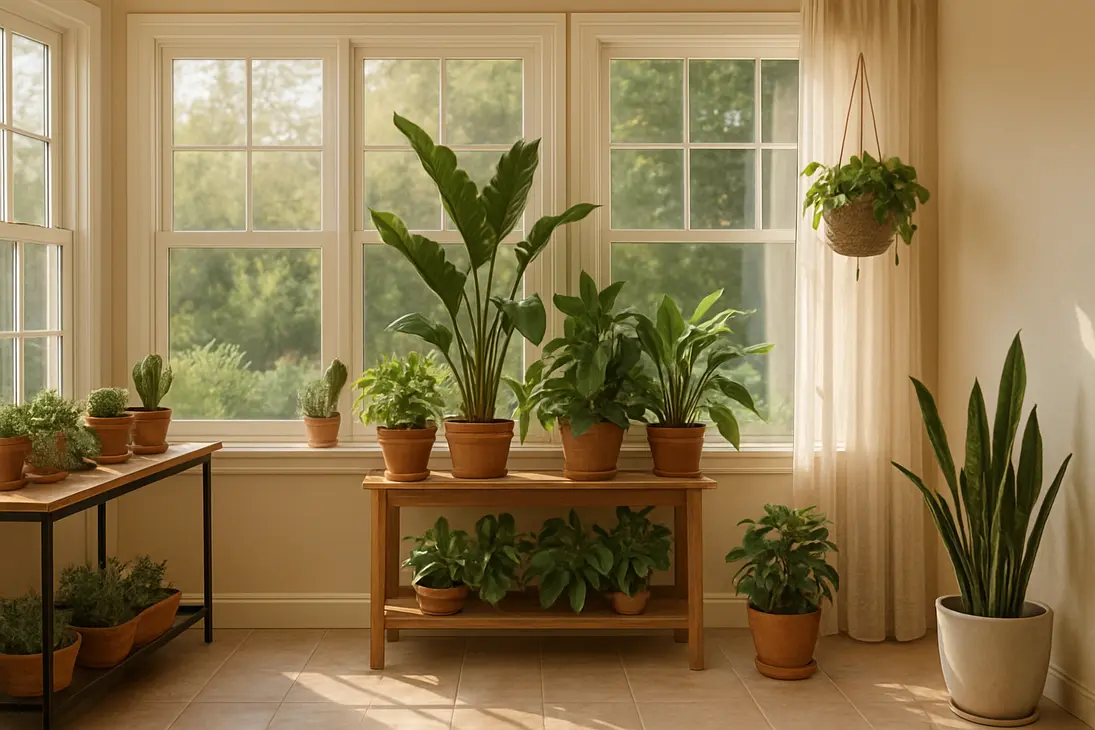
The best place for plants in a sunroom is not simply “near the window.” A sunroom has microclimates: hot glassy corners, gentle morning light, shaded walls, cold winter windows, and dry spots near vents. Good placement means matching each plant to the part of the room with the right light, temperature, airflow, and access for care.
Before arranging pots, observe the room at different times of day. Notice where direct sun lands, where afternoon heat builds, which windows feel cold after sunset, and which corners stay dim.
Start With the Sunroom’s Light Zones
A sunroom can look bright everywhere to human eyes, but plants respond to actual light strength and duration. Map your room into practical zones:
| Light zone | What it looks like | Good plant candidates |
|---|---|---|
| Direct sun | Sunbeams hit leaves for several hours | Cacti, succulents, citrus, herbs |
| Bright indirect light | Bright room without long direct sun on leaves | Tropical foliage plants, orchids, begonias, anthuriums |
| Partial shade | Morning sun or filtered light, dimmer later | Peace lily, pothos, philodendron, some calatheas |
| Low-light corners | No direct sun, far from windows | Snake plant, ZZ plant, pothos, cast iron plant |
Check the room in the morning, early afternoon, and late afternoon. Sticky notes can help you track where direct sun falls and when.
South- or west-facing windows
South- and west-facing windows are usually the brightest and warmest spots. Use them for plants that tolerate strong light and drier air, such as succulents, cacti, jade plants, aloes, agaves, citrus, and many herbs.
The main risk is heat. Air near glass can be much hotter than the center of the room. Signs of too much intensity include bleached leaves, crispy patches, sudden wilting despite moist soil, or leaves turning away from the pane.
Keep foliage a few inches from the window to improve airflow and reduce scorch or winter chilling. West-facing windows need extra caution because afternoon sun is often harsh. If leaves scorch, move the plant back, add a sheer curtain, or place a tougher plant in front.
East-facing windows
East-facing windows are among the most forgiving sunroom spots. Morning sun is bright enough for many plants but less stressful than afternoon sun.
Good candidates include orchids, African violets, begonias, anthuriums, hoyas, philodendrons, and some calatheas if humidity is steady. Parsley, cilantro, and mint may also do well if they are not allowed to dry out.
If you are unsure where to start, try an east-facing area. If the plant stretches toward the window, it may need brighter light. If leaves fade, curl, or crisp, move it farther back or filter the light.
North-facing windows and shaded corners
North-facing windows and shaded corners are the lowest-light areas in most sunrooms. They are useful, but not for citrus, most succulents, or plants that need strong light to flower.
Use these spaces for snake plants, ZZ plants, pothos, heartleaf philodendron, cast iron plants, and some dracaenas. “Low-light tolerant” does not mean the plant prefers darkness; growth will usually be slower.
If a corner is both dim and cold, water carefully. Low light plus cold, wet soil is a common cause of root problems.
Match Plants to the Right Spots
Once you know the light zones, place plants by need rather than looks alone:
- High light: succulents, cacti, citrus, olives, many herbs, bougainvillea, bird of paradise if acclimated.
- Medium to bright indirect light: monstera, philodendron, hoya, anthurium, orchid, ficus, many palms, begonias.
- Lower light tolerant: snake plant, ZZ plant, pothos, peace lily, cast iron plant, heartleaf philodendron.
These categories are flexible. Plant response depends on your climate, glass, season, and how gradually the plant was introduced to brighter light.
Best spots for succulents, cacti, and citrus
Succulents, cacti, and citrus belong in the brightest safe parts of the sunroom: near a south-facing window, a bright west-facing window, or a sunny upper shelf. They need strong light to stay compact and healthy.
For succulents and cacti, choose a spot with several hours of direct sun if possible. Rotate pots every week or two so they do not lean toward the glass. Use containers with drainage holes, and avoid crowding them so tightly that air cannot move.
Citrus needs especially bright light. Place lemon, lime, or calamondin trees near the brightest window, but keep leaves off cold glass in winter. If citrus drops leaves after a move, stabilize light, temperature, and watering before moving it again.
Herbs such as rosemary, thyme, basil, and oregano also belong in sunny zones, though basil dislikes cold nights and rosemary dislikes soggy soil.
Best spots for tropical plants and flowering houseplants
Many tropical foliage plants prefer bright indirect light rather than hot direct sun. In a sunroom, that often means 2 to 5 feet back from a strong south or west window, beside an east-facing window, or behind a sheer curtain.
Monstera, philodendron, anthurium, hoya, peperomia, ficus, and many palms often do well in these middle-bright areas. Orchids, begonias, African violets, and anthuriums may bloom better in bright filtered light than in a dim room, but they can scorch against hot glass.
Use the shadow test: a sharp, dark hand shadow suggests direct, intense light; a soft but visible shadow usually means bright indirect light; almost no shadow may be too dim for many flowering plants.
Best spots for ferns, pothos, snake plants, and other lower-light plants
Ferns, pothos, snake plants, ZZ plants, peace lilies, and cast iron plants are good for gentler sunroom areas: side walls, bright corners without direct sun, lower shelves, or spaces farther from windows.
Ferns need bright indirect light, not darkness. Keep them away from hot panes and vents. Grouping ferns with other moisture-loving plants or using a wide pebble tray can help with humidity, though it does not replace proper watering.
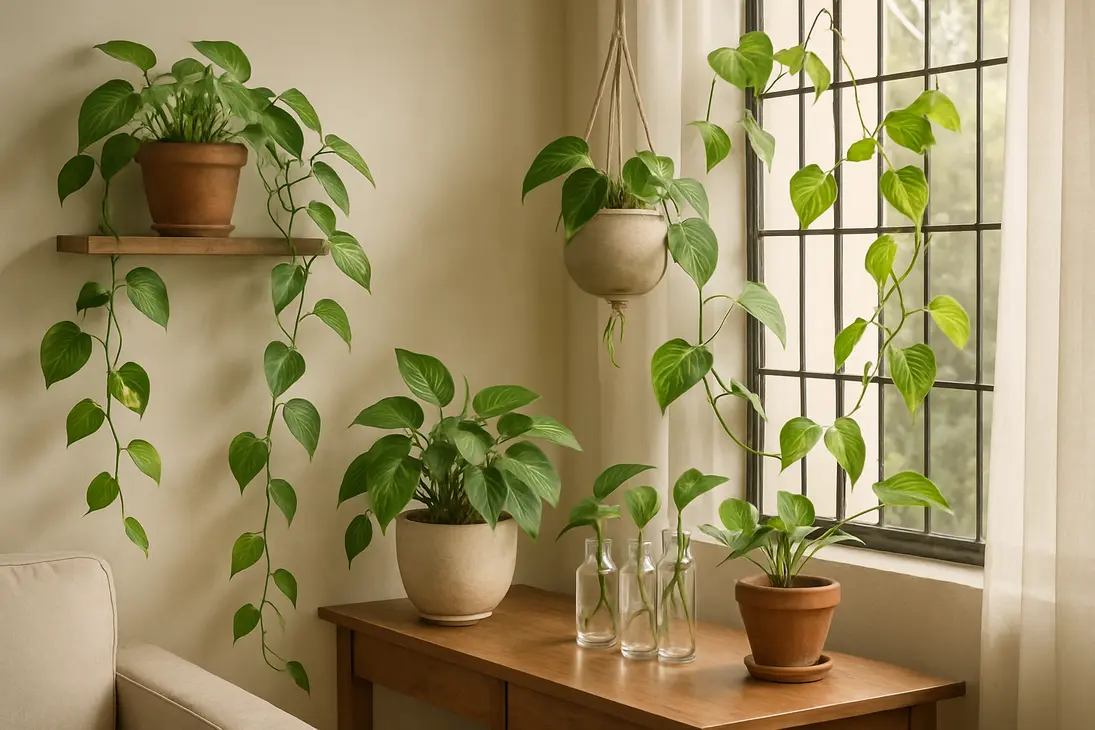
Pothos and heartleaf philodendron work well in hanging baskets or on shelves near east or north windows. In lower light, variegation may fade and growth may slow.
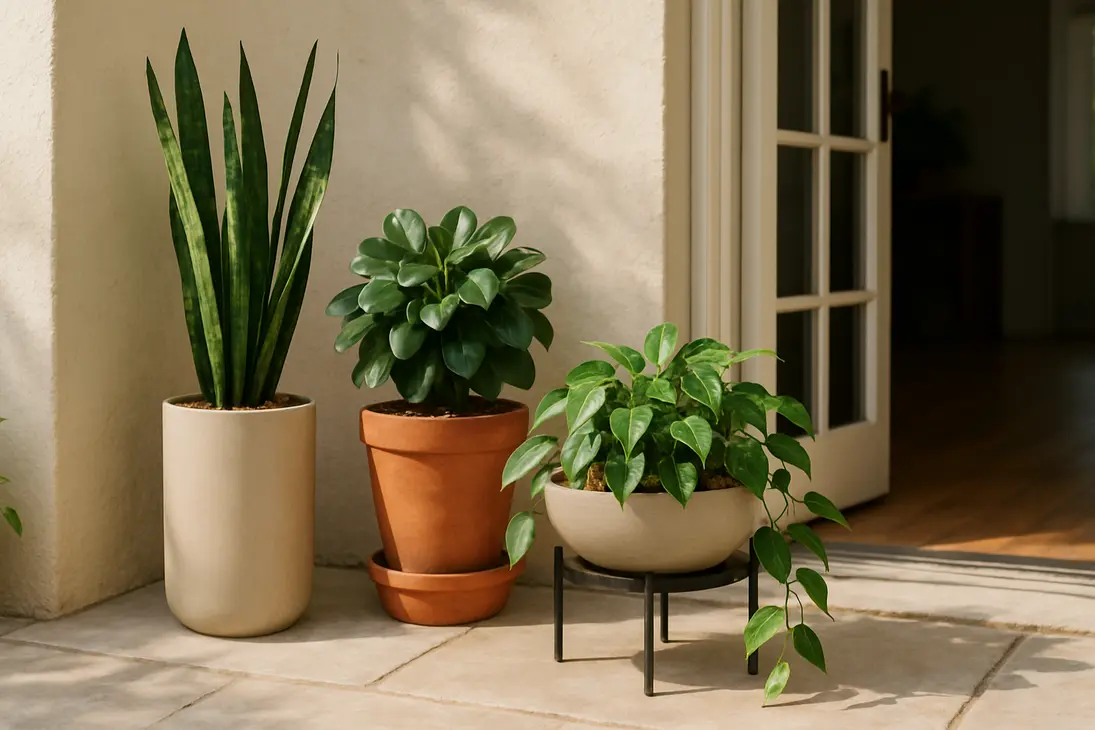
Snake plants and ZZ plants can handle the dimmest usable spaces, but they still grow better with some indirect light. Avoid overwatering them in shaded corners because the soil dries slowly.
Protect Plants From Heat, Cold, and Drafts
A plant can receive ideal light and still struggle if it is too hot by day, too cold at night, or exposed to drafts. Sunroom glass creates temperature swings, and conditions can vary sharply between the floor, windowsill, and upper shelves.
Keep sensitive plants away from cold glass
In winter, air beside sunroom glass can become very cold at night. Leaves touching the pane may develop water-soaked patches, blackened edges, or sudden collapse.
Keep foliage from touching glass, and move cold-sensitive plants slightly into the room during winter. This matters for orchids, calatheas, anthuriums, ficus, crotons, and other tender tropicals. If tile or stone floors become cold, lift pots onto stands, cork mats, or wooden caddies.
Do not assume a heated sunroom is uniform. Check nighttime conditions near the windows before leaving tropical plants there all winter.
Watch for afternoon heat buildup
On sunny days, a sunroom can heat quickly. Plants near south- and west-facing glass may wilt even when soil is moist because leaves are losing water faster than roots can replace it.
Signs of heat stress include curling leaves, bleached patches, crispy margins, limp afternoon growth, and flowers dropping early. Move affected plants back from the glass, improve ventilation, or add filtered shade during the hottest hours.
Do not answer every wilt with water. If the soil is already moist, more water can suffocate roots. Check the soil first, then adjust placement if heat is the real issue.
Avoid HVAC vents and drafty doors
Keep plants away from HVAC vents, space heaters, exterior doors, and frequently opened sliding doors. Blasts of hot, cold, or dry air can cause brown edges, leaf drop, uneven drying, and stalled growth.
This is especially important for ferns, orchids, flowering plants, and broad-leaved tropicals. If the only available space is near a vent, use a deflector or choose tougher, drought-tolerant plants.
Arrange Plants for Growth, Access, and Visual Balance
Good sunroom placement is both horticultural and practical. Plants need room to grow, you need room to care for them, and the room still needs to function.
Avoid packing every bright window with pots. Crowding reduces airflow, hides pests, and makes watering harder.
Group plants with similar water and humidity needs
Group plants by care needs. Put succulents, cacti, rosemary, and other dry-soil plants together in sunny, airy areas. Place humidity-loving tropicals together in bright indirect light. Keep lower-light, slower-drinking plants separate so they are not watered as often as sun-lovers.
| Group | Placement | Care advantage |
|---|---|---|
| Succulent and citrus group | Bright south or west exposure | Easier to let soil dry |
| Tropical foliage group | Bright indirect area | Similar moisture needs |
| Low-light tolerant group | North side or interior corners | Slower watering schedule |
| Quarantine or recovery area | Separate bright indirect spot | Easier pest monitoring |
Keep new plants slightly separate for a few weeks if possible so pests are easier to spot.
Use height to create layers without blocking light
Plant stands, shelves, hanging baskets, and benches help use vertical space, but do not let tall plants shade smaller plants that need light. Place citrus, fiddle-leaf fig, bird of paradise, ficus, or palms behind shorter plants or to the side of the main light path.
Upper shelves can work for compact bright-light plants, such as succulents or trailing hoyas, but heat rises. Test high shelves during sunny afternoons before placing delicate plants there.
Hanging baskets work well near east-facing or bright indirect windows. Pothos, philodendron, hoya, lipstick plant, and some ferns can trail beautifully, as long as they do not block light or hang in walkways.
Leave room for watering, pruning, and plant rotation
Leave enough space to reach every pot, check soil, remove dead leaves, and inspect for pests. If you have to climb over furniture to water a plant, it is probably in the wrong place.
Rotate pots periodically because plants lean toward light. Large plants are easier to move on wheeled caddies.
Protect floors and furniture with waterproof trays, empty standing water after watering, and keep walkways clear so saucers do not become slipping hazards.
Adjust Placement by Season
A spot that works in April may be too hot in July or too cold in January. Seasonal adjustment is essential in sunrooms because sun angle, day length, outdoor temperature, and indoor heating or cooling all change the room.
Summer placement tips
In summer, the main risks are heat buildup, intense sun, faster drying, and sunburn on plants used to weaker winter light.
Move delicate tropicals farther from south- or west-facing windows if leaves fade or crisp. Use sheer curtains during the hottest part of the day if the room becomes greenhouse-like. Increase airflow with open windows or a fan set to gentle circulation, but avoid blasting plants directly.
Small pots may dry quickly on shelves and ledges. Check more often, but water by soil moisture rather than the calendar. If moving houseplants outdoors for summer, acclimate them gradually.
Winter placement tips
In winter, the main risks are cold glass, shorter days, lower humidity, and overwatering. Many plants grow more slowly and use less water.
Move tropical plants away from cold panes and drafty doors. Keep pots off cold floors when possible. Give high-light plants the brightest safe positions, because winter light may be weak even in a sunroom.
Succulents and cacti can stay bright and relatively dry, but not freezing or damp. Citrus usually needs the brightest winter spot available, stable watering, and protection from drafts.
Reduce watering as growth slows. Plants in lower-light corners stay damp longer and are more vulnerable to root problems.
Conclusion
The best place to put plants in a sunroom depends on light exposure, temperature stability, plant type, and season. Put succulents, cacti, citrus, and sun-loving herbs in the brightest safe areas. Give tropical foliage and many flowering houseplants bright indirect light. Use shaded corners for lower-light tolerant plants such as snake plants, ZZ plants, pothos, and cast iron plants.
Then keep watching. Scorched leaves, leaning stems, slow-drying soil, leaf drop, or repeated wilting are clues that a plant needs a different spot. A good sunroom arrangement shifts through the year.
FAQ
Can plants get too much sun in a sunroom?
Yes. Sunroom glass can intensify light and trap heat, especially near south- and west-facing windows. Too much sun may cause bleached leaves, crispy patches, curled foliage, or afternoon wilting even when soil is moist.
Move the plant farther from the window, add a sheer curtain, or replace it with a more sun-tolerant plant. Introduce plants to strong sun gradually.
How far should plants be from sunroom windows?
It depends on the plant and window exposure. Sun-loving plants such as cacti, succulents, citrus, and many herbs can sit close to bright windows if leaves do not touch hot or cold glass. Tropical plants usually do better a few feet back from intense south or west windows, or beside east-facing windows.
As a starting point, place high-light plants close to the brightest windows, medium-light plants 2 to 5 feet back or behind filtered light, and lower-light plants along side walls or in bright corners.
What plants do best in a sunny sunroom?
Sunny sunrooms suit cacti, succulents, jade plants, aloe, citrus trees, rosemary, thyme, oregano, ponytail palm, bird of paradise, and some ficus varieties. Many flowering plants also do well if the light is bright but not scorching.
Match the plant to the whole microclimate, not just brightness. A citrus tree may love the light but dislike a freezing window; a fern may enjoy brightness but not direct afternoon sun.
Should I move sunroom plants in winter?
Often, yes. Move cold-sensitive plants away from chilly glass, drafty doors, and cold floors. At the same time, give high-light plants the brightest safe positions because winter days are shorter.
You may not need to rearrange everything, but shift plants if leaves touch cold windows, soil stays wet too long, or leaf drop begins near a draft. Reduce watering as growth slows, especially in lower-light areas.
You Might Also Like