What Are the Best Low-Maintenance Landscaping Options in Las Vegas?
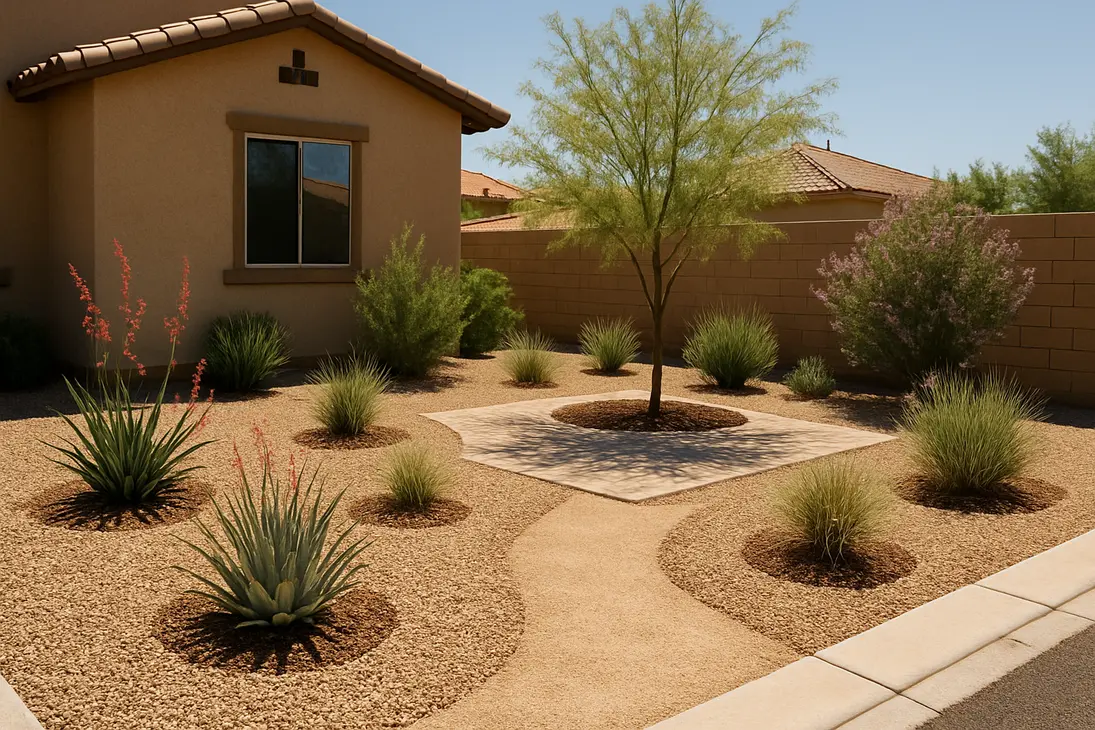
The best low-maintenance landscaping in Las Vegas combines desert rock, decomposed granite, pavers, drip irrigation, mulch, and desert-adapted plants. The goal is not a bare rock yard, but a landscape that handles Mojave Desert heat, wind, alkaline soil, reflected sun, and limited water without constant mowing, trimming, or plant replacement.
A good Las Vegas yard should look intentional after summer. That means choosing materials that do not create excessive heat, spacing plants for mature size, and designing for easy irrigation checks, pruning, and weed control.
What “Low-Maintenance” Means in a Las Vegas Yard
Low-maintenance landscaping in Las Vegas means less watering, less mowing, less plant failure, and less weekly cleanup. It does not mean no care. Even desert landscapes need seasonal pruning, drip checks, weeding, and occasional mulch or rock refreshes.
Plan for heat, sun, wind, and poor soil
Before choosing plants or materials, look at the yard’s toughest conditions:
- Afternoon sun, especially south- and west-facing areas
- Reflected heat from walls, driveways, windows, and patios
- Drainage problems or low spots
- Wind exposure that can dry young plants
- Compacted, rocky, or caliche-heavy soil
Many desert plants tolerate lean soil once established, but they still need proper planting, drainage, and water during their first season or two.
Reduce lawn areas instead of trying to maintain thirsty turf
Removing or shrinking grass is usually the fastest way to reduce maintenance. Lawn needs frequent irrigation, mowing, edging, fertilizing, weed control, and heat-stress repair.
You do not have to remove every green area. Keep small, useful patches for children, pets, or visual softness, and replace unused turf with gravel, decomposed granite, pavers, desert plants, and shade trees.
Choose materials and plants that still look good after summer
Many landscapes look good at installation but struggle after one or two Las Vegas summers. Plants scorch, artificial turf gets hot, dark rock radiates heat, and crowded shrubs need constant pruning.
Choose for long-term performance:
- Light to medium desert-toned rock instead of very dark stone in full sun
- Plants proven for desert heat, not just generic “full sun”
- Hardscape where people actually walk, sit, or gather
- Trees placed far enough from homes, walls, utilities, and roofs
- Simple plant groupings that are easy to prune and inspect
Best Low-Maintenance Landscaping Options for Las Vegas Homes
The best Las Vegas landscapes combine several low-care elements. Rock alone can look stark and hot. Plants alone require more water and pruning. Pavers alone can feel hard and expensive. A balanced design gives you durability, shade, curb appeal, and usable space.
Desert rock landscaping
Desert rock is popular because it needs no mowing, uses no water, and holds up well in strong sun. It works for front yard turf replacement, side yards, dry creek beds, utility areas, and around desert shrubs or accent plants.
Use rock size and color carefully. Very small gravel scatters and tracks indoors. Large rock is harder to walk on and move. For many homes, 3/8-inch to 3/4-inch rock is practical. Avoid very dark rock in hot exposures and very pale rock where glare will be uncomfortable.
Decomposed granite pathways
Decomposed granite, or DG, works well for informal paths, seating areas, and transitions between planting zones. It looks more natural than concrete and more finished than loose gravel.
DG performs best when compacted, edged where needed, slightly sloped for drainage, and kept out of heavy runoff areas. A Reddit discussion among Las Vegas locals mentioned decomposed granite paths with gravel and desert plants as a lower-cost, low-maintenance approach. That can work well, but installation quality matters.
Gravel with native or desert-adapted plants
Gravel looks better and feels cooler visually when paired with plants. Use repeated groups instead of one of everything. Good combinations include red yucca near entries, Texas ranger along walls, deer grass or muhly grass for movement, agave or sotol as accents, and desert willow for small-scale shade.
Leave enough room for mature growth. Open space is part of desert design and helps plants look intentional instead of crowded.
Pavers and hardscaping for usable outdoor space
Pavers, concrete pads, stepping stones, patios, and seat walls reduce planted area and create practical outdoor rooms. They are useful for patio extensions, grill areas, trash can paths, side yard walkways, and shaded seating zones.
Pavers are not maintenance-free. Weeds may grow in joints, sand may need replenishing, and poorly installed bases can settle. Still, a well-built paver area is usually easier to maintain than turf or dense planting in high-use spaces. In Las Vegas, pair hardscape with shade when possible.
Artificial turf for small green areas
Artificial turf can work for small pet areas, play spots, or visual contrast. It provides a green look without mowing, but it can become very hot in direct sun and still needs cleaning.
Use artificial turf when the area is small, purposeful, well-drained, and shaded for part of the day if possible. Pet areas may require rinsing, brushing, and odor control. Avoid covering large, unshaded yards without considering heat buildup and replacement cost.
Mulch around plants to reduce evaporation and weeds
Organic mulch helps reduce evaporation, moderate soil temperature, and suppress weeds around trees and shrubs. It is especially useful around young trees, where hot rock can stress the root zone.
Keep mulch slightly away from trunks and stems. In a rock landscape, a ring of organic mulch around key plants can be a smart compromise.
Best Low-Maintenance Plants for Las Vegas Landscaping
The best plants for Las Vegas are not just drought-tolerant. They must handle intense sun, alkaline soil, reflected heat, low humidity, and occasional winter cold. Even low-water plants need regular irrigation while establishing.
Native desert plants
Native Mojave and Southwestern plants are often durable choices for natural-looking yards. Good options include:
- Creosote bush: Extremely drought-tolerant once established; best in open, naturalistic areas.
- Brittlebush: Silver foliage and yellow spring flowers; may need light cleanup after bloom.
- Desert marigold: Yellow flowers and good reseeding in suitable spots.
- Globemallow: Tough orange to apricot blooms with an informal shape.
- Chuparosa: Tubular flowers that can attract hummingbirds; benefits from occasional irrigation.
- Desert willow: Small flowering tree with light shade and summer blooms.
Native plants are not always formal or tidy, so match them to the style of the home and any HOA expectations.
Drought-tolerant shrubs
Shrubs provide structure, screening, and color with far less water than lawn. Choose by mature size, not nursery size.
| Plant | Best use | Maintenance notes |
|---|---|---|
| Texas ranger | Hedges, color, foundations | Avoid overwatering; prune lightly |
| Jojoba | Screens, slopes | Durable once established |
| Hopseed bush | Screening, narrow areas | Can get large if crowded |
| Dalea | Pollinator color | Light pruning after bloom |
| Damianita | Borders, low mounds | Needs good drainage |
| Turpentine bush | Dry natural areas | Best for informal designs |
Avoid forcing shrubs into tight shapes. Constant shearing creates extra work and can shorten plant life.
Heat-tolerant ornamental grasses
Ornamental grasses soften rock landscapes and move well in wind. Good choices include deer grass, pink muhly grass, blue grama, sideoats grama, and Mexican feather grass where allowed and appropriate.
Most need an annual cutback or occasional dead-blade cleanup, which is still far less work than weekly mowing.
Low-water trees for shade
Shade is one of the best investments in a Las Vegas yard. It makes patios more usable, protects nearby plants, and softens rock and hardscape.
Consider desert willow, palo verde, mesquite, chitalpa, or ironwood where space allows. Trees are low-maintenance only when placed correctly. Keep them away from foundations, walls, sewer lines, driveways, rooflines, and utility areas.
Succulents and accent plants
Succulents and sculptural desert plants add structure with little pruning. Good options include red yucca, agave, sotol, yucca, Parry’s agave, beavertail cactus, and golden barrel cactus in protected spots.
Place spiny plants away from walkways, driveways, play areas, and pet routes.
Plants to avoid if you want less maintenance
Limit plants and features that need frequent water, pruning, cleanup, or heat protection, such as:
- Large areas of cool-season turf
- Hydrangeas, azaleas, and other high-water acid-loving shrubs
- Tropical plants that scorch in dry heat
- Bamboo
- Fast-growing hedges that need constant shearing
- Large palms with expensive trimming needs
- Plants labeled “full sun” but suited to milder climates
How to Reduce Water Use and Yard Work
Plant choice matters, but layout and irrigation determine whether a yard stays easy to care for. Tough plants still fail if they are watered poorly, crowded, or placed in the wrong exposure.
Install drip irrigation instead of sprinklers
Drip irrigation is usually better than sprinklers for desert landscapes because it delivers water near roots with less overspray and evaporation. It also keeps water off sidewalks, walls, and rock areas where it encourages weeds.
Check drip systems regularly. Emitters clog, tubing cracks, and plants may outgrow their original watering setup.
Group plants by water needs
Do not place high-water plants and desert natives on the same irrigation line if possible. One group will usually suffer. Separate very low-water natives, moderate-water shrubs, trees, pots, and turf or turf-cleaning zones.
Hydrozoning makes watering simpler and reduces plant loss.
Water deeply but less often once plants are established
New plants need consistent water while roots develop. Once established, many desert-adapted plants prefer deeper, less frequent irrigation instead of shallow daily watering.
Adjust by plant response, soil, exposure, season, and local watering rules. Warning signs include wilting that does not recover by morning, crispy leaf edges, yellowing from overwatering, or overly fast, floppy growth.
Use weed barrier carefully under rock areas
Weed fabric can help under open rock areas, but it is not permanent. Dust and debris collect on top, allowing weeds to sprout. Fabric can also interfere with water movement and make future planting harder.
Use it mainly under broad rock areas with few plants and avoid tightly wrapping tree and shrub root zones.
Leave space for mature plant growth
Crowding creates unnecessary pruning. Small plants look sparse at first, but many shrubs quickly block paths, hide windows, or compete for water.
Believe mature-size labels. If a shrub grows 5 feet wide, do not plant it 18 inches from a walkway. If a tree spreads 25 feet, do not treat it like a small accent.
Keep plant layouts simple and accessible
Simple designs are easier to maintain. Use repeated plant groups, clear paths to gates and utilities, accessible planting beds, and fewer varieties used well. Keep thorny plants away from maintenance access, AC units, hose bibs, and electrical panels.
Common Mistakes That Make Landscaping Harder to Maintain
Many homeowners create more work by choosing the wrong materials, ignoring mature size, or assuming desert landscaping takes care of itself.
Choosing plants that are not suited to Las Vegas heat
A plant that survives “full sun” in a mild climate may fail in Las Vegas afternoon sun. Look for plants known to handle desert heat, reflected heat, and low humidity. When unsure, test a few before planting a full hedge or border.
Installing too much artificial turf without considering heat buildup
Artificial turf reduces mowing and watering, but large unshaded areas can become hot and uncomfortable. In pet areas, odor control and drainage matter. Use turf where it has a clear purpose and combine it with shade, hardscape, and desert planting.
Using the wrong rock size or color
Rock that is too small scatters. Rock that is too large is hard to walk on and clean. Dark rock increases heat, while very light rock can create glare. Choose rock based on function, exposure, and comfort.
Planting trees or shrubs too close to the house
Small nursery plants can become large structural problems. Trees and shrubs planted too close to homes can crowd windows, scrape roofs, block walkways, damage walls, or require constant pruning. Leave clearance for mature width, height, roots, and repair access.
Skipping soil preparation
Desert plants do not need rich garden soil, but they do need drainage and a root zone they can grow into. Break up compacted soil, avoid planting too deep, and use mounds or berms for plants that require excellent drainage.
Assuming desert landscaping needs no care
Desert landscaping reduces maintenance; it does not eliminate it. Expect occasional weed removal, drip repairs, pruning, wind cleanup, plant replacement, pest checks, and mulch or rock refreshing. The benefit is periodic care instead of constant lawn care.
Conclusion
The best low-maintenance landscaping Las Vegas homeowners can choose is a balanced desert design: rock or gravel for open areas, decomposed granite for paths, pavers for usable space, drip irrigation for efficient watering, mulch around key plants, and desert-adapted plants for shade, color, and structure.
For the lowest long-term effort, reduce thirsty lawn, avoid overcrowding, choose plants that truly tolerate Mojave Desert heat, and design around mature size.
FAQ
What is the cheapest low-maintenance landscaping option in Las Vegas?
Usually, a simple gravel or desert rock yard with a few well-spaced native or desert-adapted plants on drip irrigation. Decomposed granite paths can also be affordable when the layout is simple.
Is artificial grass a good low-maintenance option in Las Vegas?
Yes, for small, purposeful areas. It is less ideal for large unshaded spaces because it can get very hot. It also needs drainage, rinsing, brushing, odor control for pets, and eventual replacement.
What plants need the least water in Las Vegas?
Low-water choices include creosote bush, brittlebush, desert marigold, globemallow, red yucca, agave, yucca, sotol, desert willow, palo verde, and some cactus species. Water new plants regularly until established.
Can a low-maintenance Las Vegas yard still look green?
Yes. Use desert-adapted shrubs, ornamental grasses, low-water trees, succulents, and limited artificial turf or small lawn areas where they make sense. Texas ranger, jojoba, hopseed bush, deer grass, red yucca, desert willow, and palo verde can provide greenery with much less water than a traditional lawn.
Sources
- Reddit discussion on affordable Las Vegas landscaping ideas: https://www.reddit.com/r/vegaslocals/comments/1oazxcn/landscapers_in_las_vegas/
You Might Also Like