Can You Use Garden Soil in Containers?
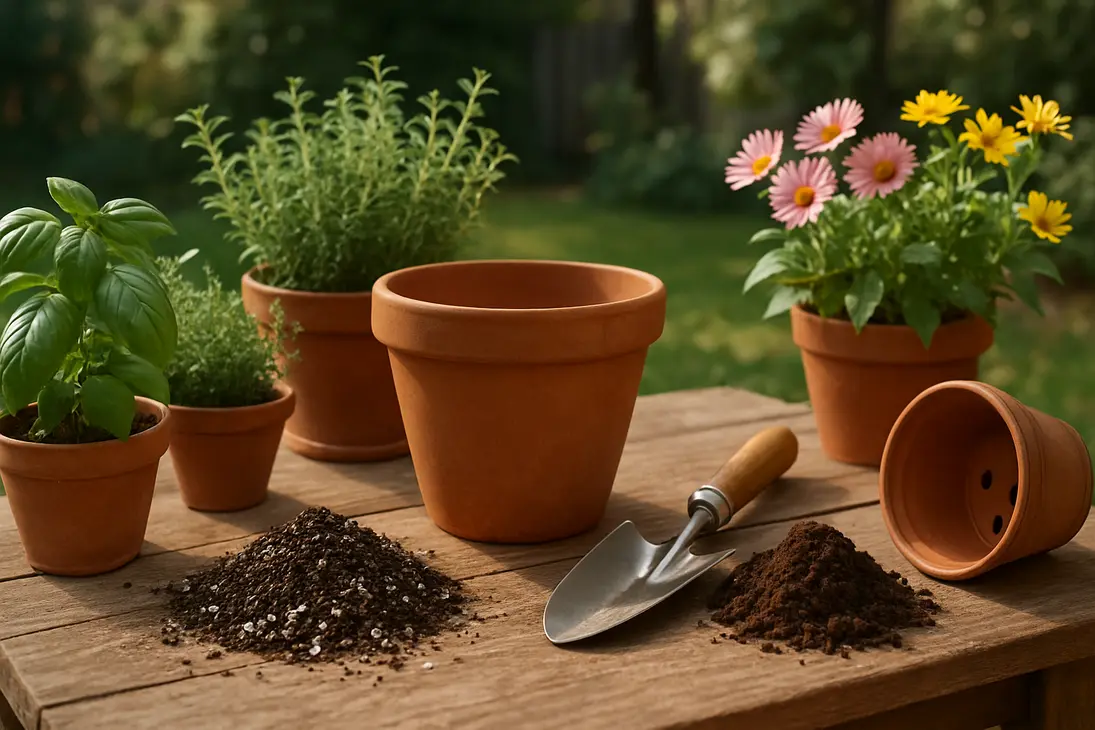
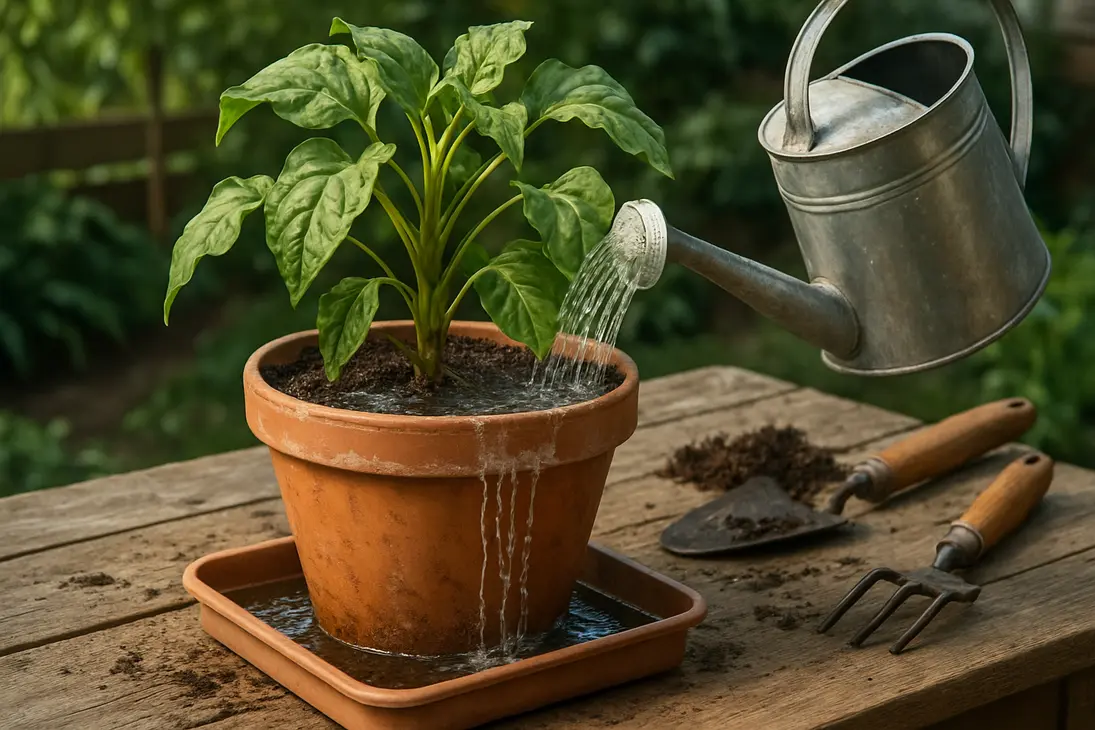
Yes, you can put garden soil in containers, but it is usually not the best choice. Soil that works in the ground often performs poorly in pots because containers restrict drainage, airflow, and root growth. In a bed, excess water can move away and roots can spread. In a pot, soil can compact, stay wet, and suffocate roots.
For most container plants, a proper potting mix is safer because it stays lighter, drains better, and leaves oxygen around roots.
The Short Answer: Garden Soil Usually Performs Poorly in Pots
Garden soil usually causes problems in containers because it becomes dense after watering, settles into a heavy mass, and limits oxygen. Even soil that looks loose at first can compact after a few watering cycles.
Some tough plants may survive for a while in garden soil, especially outdoors in large containers with good drainage. But survival is not the same as healthy growth. Stunted plants, yellow leaves, wilting in damp soil, and root rot are common signs that the soil is not working well.
When garden soil might be usable
Garden soil may be usable in containers only when:
- The container is large, deep, and has several drainage holes.
- The plant is tough and not sensitive to wet roots.
- The soil is naturally crumbly and loamy, not heavy clay.
- You mix it with lighter materials for drainage and aeration.
- The pot is outdoors with good airflow.
- You are growing short-term annuals, not valuable houseplants or perennials.
A small amount of clean, crumbly garden soil in a large outdoor planter may work for hardy herbs or seasonal flowers. Filling a small indoor pot entirely with garden soil is much riskier.
When it is likely to harm container plants
Garden soil is most likely to harm container plants when:
- The soil is clay-heavy, sticky, or slow-draining.
- The pot is small or has poor drainage.
- The plant is a houseplant, succulent, seedling, citrus, orchid, or other plant that needs airy soil.
- The soil came from a diseased, weedy, or pest-prone bed.
- The container sits in a saucer of water.
- You water often without checking deeper moisture.
If you are planting something you care about, especially indoors, use potting mix.
Using Garden Soil in Containers
The issue is not that garden soil is always “bad.” It is that garden soil is meant for the ground. In a pot, it loses the drainage path, air exchange, and root space it would have in a bed.
A good container medium must hold some moisture, drain excess water, support the plant, provide air pockets, and resist compaction. Regular garden soil often fails at one or more of these jobs.
What Garden Soil Does to Container Plants
When garden soil causes trouble, symptoms often look like general stress: slow growth, yellowing, drooping, or sudden decline. Many gardeners add fertilizer, but the real problem is often below the surface.
Roots need both water and oxygen. Dense, wet soil can stop roots from working even when the pot seems moist.
It compacts and limits root growth
Garden soil contains sand, silt, clay, and organic matter. In the ground, worms, roots, microbes, and drainage help maintain structure. In a pot, repeated watering can make fine particles settle together.
As soil compacts, roots struggle to spread. Signs include water pooling on the surface, soil shrinking from the pot edge when dry, a hard crust, poor root growth, or plants staying the same size for weeks. A compacted pot may feel heavy even when the top inch is dry.
It holds too much water or drains unevenly
Garden soil can hold too much water in containers, especially if it contains clay or fine silt. The top may dry while the lower half stays soggy, leading you to water again when the roots are already too wet.
Drainage may also become uneven. Water can run down cracks near the pot wall instead of soaking the root ball, or it may enter slowly and stay trapped near the bottom. A plant can wilt in wet soil when damaged roots can no longer absorb water properly.
It reduces oxygen around the roots
Healthy roots need oxygen. Potting mix contains larger, lighter particles that leave air spaces after water drains. Garden soil often loses those air pockets in a container.
When water fills the spaces and lingers, oxygen drops. Roots weaken, beneficial microbes decline, and root rot organisms may become more active. Warning signs include yellow lower leaves, limp stems, blackened roots, or a sour smell.
It may bring pests, weed seeds, or disease into the pot
Ground soil can carry weed seeds, insect eggs, fungal spores, nematodes, or disease organisms. In a pot, the plant has little room to escape.
Outdoor containers may sprout weeds quickly. Indoor pots can introduce fungus gnats, ants, or other pests, especially if the soil stays damp. Avoid soil from beds where plants died, weeds are seeding, or pests have been persistent.
Nutrients and pH may be inconsistent
Garden soil is not automatically fertile or balanced. One shovel may be crumbly and rich; another may be depleted, alkaline, acidic, salty, or poorly structured. In the ground, roots can grow outward. In a pot, they are stuck with what you provide.
Bagged garden soil can also vary. Some products contain composted forest materials, sand, or soil conditioners meant for beds, not containers. “Feeds plants” does not necessarily mean “suitable for pots.”
Garden Soil vs. Potting Mix: How to Tell the Difference
Bag labels can be confusing. “Garden soil,” “topsoil,” “raised bed mix,” and “potting mix” are not interchangeable.
| Product | Best use | Good for containers? | Why |
|---|---|---|---|
| Garden soil | In-ground beds | Usually no | Often too dense unless amended |
| Potting mix | Pots and containers | Yes | Designed for drainage, moisture, and aeration |
| Raised bed mix | Raised beds, large planters | Sometimes | May be too heavy for small pots |
| Topsoil | Filling, leveling, blending into beds | No | Dense, variable, and low in structure |
Garden soil
Garden soil is usually meant to improve outdoor beds. Bagged garden soil may contain mineral soil, compost, bark fines, or other amendments. If the label says to mix it with native soil, it is not intended to be used alone in pots.
Potting mix
Potting mix is made for containers. Many mixes are soilless and may contain peat moss, coconut coir, composted bark, perlite, vermiculite, or other lightweight materials.
A good potting mix feels light and springy. It absorbs moisture but drains freely. Succulents need faster drainage, moisture-loving annuals can use standard potting mix, and orchids need chunky bark-based media.
Raised bed mix
Raised bed mix sits between garden soil and potting mix. It is usually made for deeper, open-bottom beds or large planters. It may work in large outdoor troughs if it drains well, but it can be too dense for small containers, window boxes, and indoor pots.
Topsoil
Topsoil is the upper layer of mineral soil removed from the ground. Bagged topsoil varies widely and may be sandy, clayey, low in organic matter, or screened mainly for texture. It is generally unsuitable for containers by itself.
What to Do If You Already Used Garden Soil in a Container
If you already planted in garden soil, do not panic. Decide based on the plant’s condition and the soil’s moisture.
Check whether the pot has drainage holes, water drains out after watering, the soil stays wet for days, the plant is yellowing or wilting, and the soil is hard, sticky, sour-smelling, or pulling from the pot.
If the plant is failing to thrive
If the plant is declining, repotting is usually best. This is especially true if leaves are yellowing, the plant wilts in wet soil, growth has stopped, or the pot smells sour.
Remove the plant and inspect the roots. Healthy roots are usually firm and pale, though color varies. Troubled roots may be brown, black, mushy, or sparse. Replace as much dense, wet soil as you can without tearing off too many healthy roots. Replant in fresh potting mix suited to the plant, using a pot with drainage holes.
Avoid moving the plant into a much larger pot than it needs. Oversized pots hold extra moisture around a small root system.
If the plant still looks healthy
If the plant looks healthy, you may be able to wait, especially with outdoor annuals in large pots. Water only when needed, check moisture below the surface, keep the pot out of constant rain if the soil stays wet, and watch for yellowing, wilting, fungus gnats, or slow growth.
For houseplants, succulents, seedlings, citrus, perennials, or expensive plants, repotting sooner is usually safer.
How to repot without shocking the plant
Repot gently and avoid combining too many stressful steps.
- Water lightly the day before if the soil is bone dry.
- Slide the plant out while supporting the root ball.
- Loosen the outer soil with your fingers.
- Trim only dead, mushy, or badly rotted roots with clean tools.
- Replant in fresh potting mix at the same depth.
- Water thoroughly until water drains out.
- Keep the plant in bright, indirect light or a protected spot for a few days.
Do not fertilize immediately after stressful repotting unless the plant and mix clearly call for it.
How to improve drainage temporarily
If you cannot repot right away, reduce risk with short-term fixes:
- Make sure drainage holes are open.
- Empty saucers after watering.
- Move the pot under cover during heavy rain.
- Gently loosen the top inch if crusted.
- Tilt the pot slightly after watering to help excess water escape.
Do not add gravel to the bottom as a cure. It does not fix heavy soil and can leave the wettest zone closer to the roots.
Can You Make Potting Mix With Garden Soil?
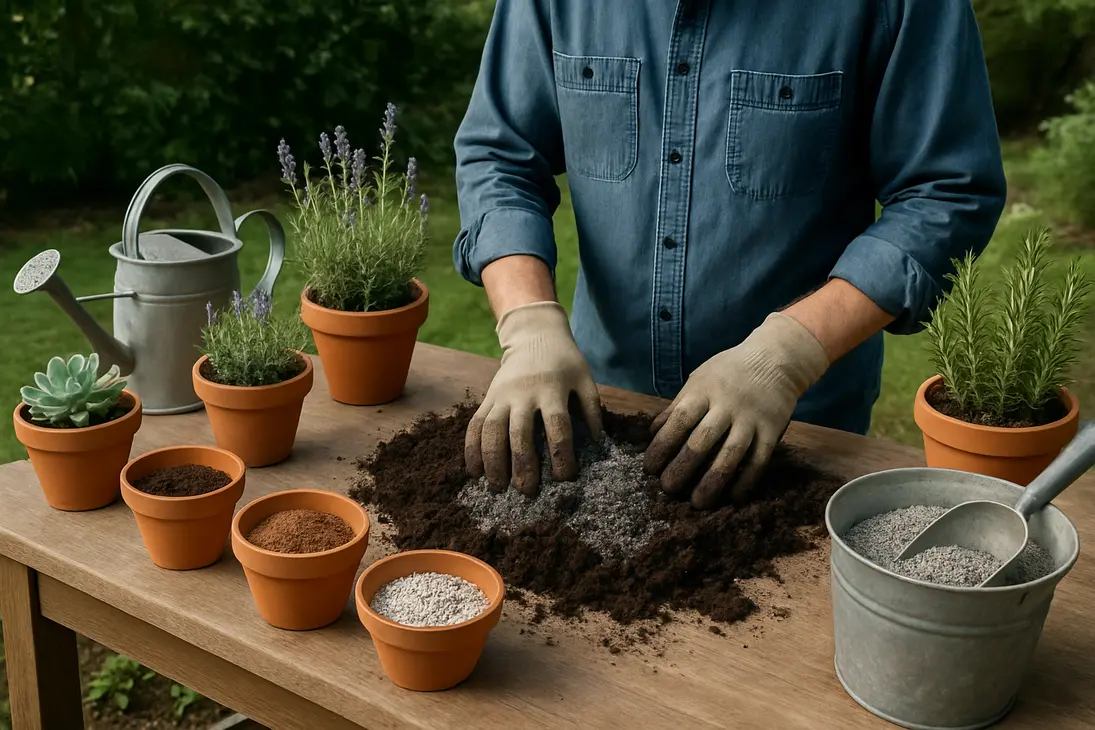
You can use garden soil as one ingredient in some homemade mixes, but it should not be the main ingredient for most pots. The goal is a medium that holds moisture while allowing air and drainage.
Homemade mixes are easiest for large outdoor containers and short-term crops. For houseplants, seedlings, succulents, and specialty plants, commercial potting mix is more dependable.
Use garden soil sparingly
Use garden soil as a small portion of the blend. A practical limit is about one part garden soil to two or three parts lighter materials, depending on the soil.
For a large outdoor container, you might use:
- 1 part clean, crumbly garden soil
- 1 part finished compost
- 1 to 2 parts perlite, pine bark fines, or quality potting mix
The finished mix should feel loose, not sticky or heavy.
Add materials that improve aeration and drainage
Useful amendments include:
- Perlite: improves air space and drainage.
- Pine bark fines: add structure and resist compaction.
- Compost: improves moisture and nutrient holding, but too much can become dense.
- Coir or peat-based potting mix: adds lightness and moisture balance.
- Coarse sand or grit: useful in some mixes; fine sand can make soil heavier.
A handful of perlite will not fix a pot full of clay soil. Heavy soil needs major lightening or should be avoided.
Avoid heavy clay soil in containers
Heavy clay is especially difficult in pots. It holds water, compacts tightly, and can dry into a hard block. If your soil forms a sticky ribbon when squeezed or dries into hard clods, do not use it as a container base.
Do not reuse contaminated or pest-filled soil
Do not use soil from areas with root rot, nematodes, persistent weeds, pest infestations, herbicide exposure, or unknown chemicals. In a pot, contamination becomes concentrated and can spread to other containers.
Common Container Gardening Mistakes to Avoid
Container failures are often soil and watering problems. Garden soil makes these mistakes more damaging because the root zone has less margin for error.
Using pots without drainage holes
A container without drainage holes is risky even with potting mix. With garden soil, it is worse. Water collects at the bottom, oxygen disappears, and roots may rot.
Use decorative pots without holes as cachepots: keep the plant in a nursery pot with drainage, remove it to water, let it drain, and place it back.
Watering on a fixed schedule instead of checking moisture
Plants do not use water on a fixed schedule. Temperature, sunlight, pot size, plant size, and soil type all affect drying time.
Check before watering with your finger, a wooden skewer, or the weight of the pot. With dense garden soil, the surface may dry while the lower soil stays wet.
Adding fertilizer before fixing soil structure
Yellow leaves and slow growth can mean nutrient problems, but they can also mean poor roots. If soil is compacted or waterlogged, fertilizer will not solve the main issue and may worsen salt stress. Fix drainage, aeration, watering, and pot size first.
Reusing old or compacted soil without refreshing it
Old container soil breaks down. Particles become smaller, air spaces collapse, and salts or disease organisms may build up. Before reusing soil, remove old roots, break up compacted sections, and refresh it with new potting mix and aerating materials. Do not reuse soil from a plant that died of disease or root rot.
Conclusion
Regular garden soil is usually not ideal for containers because it compacts, drains poorly, and stresses roots. It may work in large outdoor planters when mixed with lighter materials, but it is rarely the best choice on its own.
For healthier container plants, use potting mix whenever possible. If you already used garden soil, watch moisture closely and repot if the plant declines or the soil stays wet.
FAQ
Why did my plant stop growing after I used garden soil in a pot?
The most likely reason is compaction. Dense garden soil reduces air around roots, so the plant may stop growing, turn yellow, or wilt even when the pot feels moist. If the plant is declining, repot into fresh potting mix.
Can I mix garden soil with potting mix?
Yes, but use garden soil sparingly. A small amount of clean, crumbly garden soil can be blended into mixes for large outdoor pots with potting mix, compost, perlite, or bark fines. Avoid heavy clay soil.
Is bagged garden soil the same as potting soil?
No. Bagged garden soil is usually intended for in-ground beds. Potting soil or potting mix is designed for containers, where drainage and aeration are limited. If the label says “for in-ground use” or “mix with native soil,” choose potting mix for pots.
Should I repot a plant that is already in garden soil?
Repot if the plant is yellowing, wilting, not growing, sitting in wet soil, or showing root stress. If the plant is healthy and outdoors in a large pot, you may be able to leave it temporarily and water carefully.
You Might Also Like