Does Music Help Plants Grow?
Playing music for plants is a charming idea: harmless, easy to try, and just scientific enough to feel plausible. Many gardeners wonder whether a favorite houseplant, herb pot, or greenhouse tray might grow better with background sound.
So, does music for plants actually work?
The careful answer is: maybe in limited ways, but not as people often imagine. Plants do not hear music like humans. They do not appreciate Mozart, dislike rock, or understand lyrics. However, sound is vibration, and plants can respond to physical stimuli. Some research suggests certain frequencies or vibration patterns may influence germination, root growth, enzyme activity, or stress responses under controlled conditions.
That does not make music a plant fertilizer. If a plant lacks light, has soggy roots, or is covered in pests, a playlist will not fix it. Music is best treated as an optional experiment, not a core plant-care method.
Does Music Really Affect Plant Growth?
Plants do not have ears, brains, or nervous systems like animals. They do not “listen” emotionally or cognitively. A fern is not soothed by a piano sonata, and a tomato plant is not motivated by upbeat pop music.
What plants can do is sense and respond to their surroundings. They react to light direction, gravity, touch, moisture, temperature, chemicals, and mechanical disturbance. Sound waves are mechanical vibrations moving through air, water, or solid materials, so they can theoretically reach plant tissues and trigger responses.
That is where the idea becomes plausible—but also complicated. If a plant responds, it is probably reacting to vibration, frequency, intensity, duration, or how sound energy interacts with cells and tissues. It is not responding to “music” as art.
The evidence is mixed. Some experiments report changes in seed germination, root development, shoot growth, or metabolism after exposure to certain sounds. Others find weak, inconsistent, or hard-to-repeat effects. Plant species, sound source, volume, duration, growing conditions, and experimental design all matter.
For a home gardener, the balanced view is simple: moderate music is unlikely to harm plants and may have subtle effects in some cases. But it should not be treated as a proven shortcut to faster growth, bigger leaves, or heavier harvests.
What the Research Suggests About Music for Plants
Research into sound and plants is still developing. Studies have examined sound frequencies, acoustic vibration, mechanical stimulation, and plant responses at different growth stages. The most promising findings usually involve specific sound treatments, not ordinary household playlists.
Researchers have explored whether sound exposure affects:
- Seed germination
- Root and shoot growth
- Hormones or enzyme activity
- Cell membrane behavior
- Stress tolerance
- Responses to natural sounds such as insects or water movement
Some studies suggest low-to-moderate frequencies may encourage certain growth responses. Others suggest intense or unsuitable sound may stress plants. This is not surprising: many plant responses are dose-dependent. Gentle mechanical stimulation can strengthen some stems, while constant wind can damage leaves and slow growth. Sound may be similarly nuanced.
One reason results are hard to simplify is that “sound” is not one thing. A single tone is different from orchestral music, bass-heavy dance music, birdsong, a leaf blower, or a speaker vibrating on a greenhouse shelf. Frequency, loudness, rhythm, duration, distance, and whether vibration travels through air, soil, pots, or benches can all change the effect.
Another challenge is that plant growth depends on many variables. Small differences in light, moisture, temperature, seed quality, pot size, or fertilizer can easily overwhelm any subtle sound effect.
Music vs. Sound Vibrations
When people discuss music for plants, they often focus on genre: classical, jazz, rock, chanting, nature sounds, or ambient music. From a plant biology perspective, genre is probably less important than physical sound properties.
A plant is more likely to respond to:
| Sound factor | Why it matters |
|---|---|
| Frequency | Different frequencies create different vibration patterns. |
| Volume | Gentle vibration differs from loud sound pressure. |
| Duration | Brief daily exposure is not constant noise. |
| Distance | Nearby speakers create stronger vibration. |
| Medium | Vibrations move differently through air, soil, pots, and shelves. |
This is why claims like “plants love classical music” or “plants hate rock music” are too simplistic. Classical music can be soft or dramatic. Rock can be moderate or extremely loud. A quiet acoustic track and a booming speaker next to a pot create very different conditions.
For home use, assume music is simply a source of vibration and environmental sound. If there is any benefit, it likely comes from mild acoustic stimulation rather than melody, harmony, lyrics, or genre.
Why Some Claims About Plant Music Are Misleading
The topic attracts exaggeration because it blends gardening, wellness, and the appealing idea that plants are more aware than we realize. There is nothing wrong with enjoying that connection. The problem begins when charming ideas are presented as settled science.
Common misleading claims include:
- “Classical music is best for all plants.” There is no reliable reason to think every species prefers classical music.
- “Plants can understand or enjoy songs.” Plants can respond to stimuli, but they do not process music as emotion or meaning.
- “Music will make plants grow faster no matter what.” Growth depends first on light, water, nutrients, roots, and overall health.
- “If music helped one plant, it will help every plant.” Basil, orchids, succulents, lettuce, and tomatoes have very different needs.
- “Loud music works better.” More sound is not necessarily better and may become stressful.
Treat music as an optional experiment, not a substitute for diagnosing real problems. A pale pothos likely needs better light or nutrition. A wilting peace lily may need watering adjustment or root inspection. A leggy tomato seedling needs stronger light, not a symphony.
What Kind of Music Might Be Best for Plants?
If you want to try music for plants, choose low-risk options: steady, moderate, and not excessively loud. The goal is not to entertain the plant. It is to create gentle vibration without disturbing your home, neighbors, pets, or the plant’s growing conditions.
Good choices include:
- Gentle instrumental music
- Soft classical or acoustic tracks
- Ambient music
- Nature sounds such as rain, streams, or birdsong
- Calm playlists without sudden extreme volume changes
Avoid turning the experiment into a stress test. Very loud bass, speakers pressed against pots, or continuous noise for many hours may create more disturbance than benefit. Plants already experience natural vibrations from wind, rain, insects, foot traffic, appliances, and outdoor sound.
For indoor plants, choose music you can comfortably sit near. If the sound is harsh or too loud for you in the same room, it is probably not a sensible treatment for plants either. This is not because plants share human preferences, but because comfortable room volume is a reasonable safety limit.
For outdoor gardens, music is less practical. Wind, traffic, birds, insects, and neighborhood noise already create a changing sound environment. Speakers outdoors can also disturb wildlife and neighbors. If you experiment outside, keep it brief, local, and considerate.
Volume and Duration Matter
Volume and duration matter more than genre. A gentle playlist for an hour is very different from loud music blasting beside a plant all day.
For a home experiment, try:
| Factor | Practical recommendation |
|---|---|
| Volume | Comfortable room volume; avoid loud bass. |
| Duration | 30 minutes to 2 hours per day. |
| Timing | Same time each day if possible. |
| Distance | A few feet from plants, not touching pots. |
| Consistency | Use the same playlist or sound type. |
| Trial length | At least 4 to 6 weeks. |
There is no universally proven “best” number of minutes. The aim is moderate exposure that does not become another stress. Continuous sound is unnecessary for a casual home trial and makes results harder to interpret.
How to Try Music With Your Own Plants
The best way to explore music for plants is to set up a simple comparison instead of playing music to one plant and guessing. You do not need laboratory equipment, but you do need consistency.
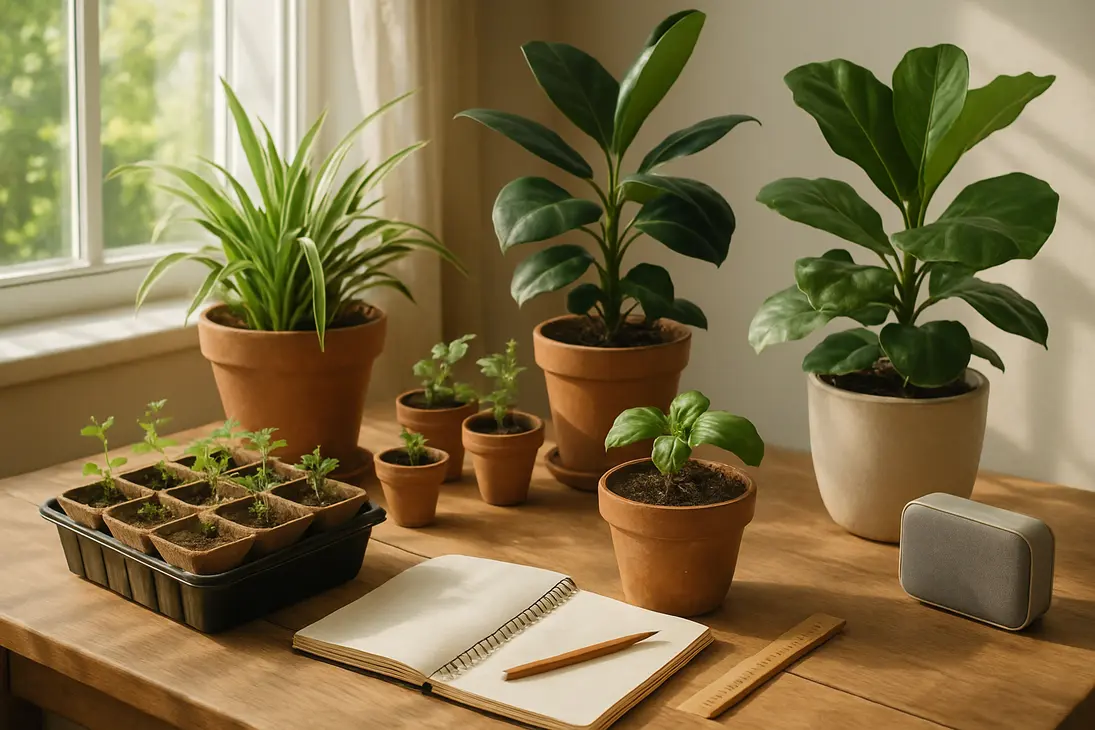
Choose plants that are as similar as possible. Seedlings are useful because they start at similar sizes, but small houseplants can also work if they are the same species and in similar condition.
A simple setup:
- Choose at least two similar plants. Four to six is better, with half in the music group and half in the control group.
- Use the same species and similar size. Comparing basil to a snake plant will not tell you much.
- Keep light the same. Give both groups equal light, or rotate carefully while keeping music exposure separate.
- Use the same potting mix and pot size. Root space and drainage strongly affect growth.
- Water the same way. Check soil moisture so one group does not accidentally get different care.
- Play music only for the test group. Keep the control group similar but without added music.
- Use the same schedule daily. For example, one hour of gentle instrumental music each morning.
- Track changes for several weeks. A few days is not enough for most plants.
The control group matters. Without it, normal growth can look like a music effect. If both groups grow equally, music probably was not the deciding factor. If the music group grows more, you still need to consider whether light, warmth, watering, or pot differences played a role.
Do not change too many things at once. If you start playing music, fertilize, repot, and move the plant to a brighter window in the same week, you will not know what caused any improvement.
What to Track
Good notes make the experiment more useful. Measure the same things each week, such as:
- Plant height
- Number of leaves and new leaves
- Leaf size, if practical
- Stem sturdiness
- Buds or flowers
- Soil moisture before watering
- Watering and fertilizer dates
- Stress signs such as yellowing, browning, wilting, curling, or leaf drop
- Pest problems
- Light exposure or location changes
A simple notebook table works well:
| Week | Music group | Control group | Care notes |
|---|---|---|---|
| 1 | Starting height, leaf count, color | Starting height, leaf count, color | Same window and watering |
| 2–3 | New leaves? Stress? | New leaves? Stress? | Note moisture and light changes |
| 4–6 | Compare growth pattern | Compare growth pattern | Keep routine consistent |
Photos help too. Take them from the same angle, distance, and lighting once a week. It is easy to misremember slow plant growth.
Also be prepared for no obvious difference. That is still useful. A good experiment does not have to confirm the idea; it just helps you observe more carefully.
What Matters More Than Music for Plant Health
Music may be fun, but the major drivers of plant growth are much better understood. If your goal is healthier plants, start with the basics.
Light is often the biggest indoor factor. A bright-light plant will not thrive in a dim corner, playlist or not. Leggy growth, small leaves, leaning stems, and slow growth often point to inadequate light.
Watering is another common issue. Many houseplants suffer more from overwatering than underwatering. Roots need both moisture and oxygen. Constantly wet soil can lead to root decline, yellow leaves, fungus gnats, and rot. Drought-sensitive plants, meanwhile, may wilt or crisp if they dry too far.
Soil and drainage determine how air and water move around roots. A cactus mix, orchid bark mix, seed-starting mix, and general houseplant mix behave differently. The right medium depends on the plant.
Temperature and humidity matter because plants have preferred ranges. Tropical houseplants may struggle in cold drafts or dry winter air. Cool-season vegetables may bolt or decline in heat.
Nutrients support growth, but more fertilizer is not always better. A nutrient-starved plant may be pale and slow, while an overfertilized plant may develop burned roots or leaf tips.
Pest control is essential. Spider mites, aphids, thrips, scale, mealybugs, and fungus gnats can weaken plants quickly. Music will not stop an infestation.
Consistency ties everything together. Plants often respond poorly to repeated stress: drying to wilt, then sitting wet; moving from shade to harsh sun; irregular fertilizer; or frequent repotting.
If a plant is struggling, check the fundamentals first:
- Is it getting the right light?
- Is the pot draining properly?
- Are the roots healthy?
- Is the soil staying wet too long or drying too fast?
- Is the temperature suitable?
- Are there pests?
- Was it recently moved, repotted, or shocked?
- Is it actively growing or resting for the season?
Once those are addressed, adding gentle music is unlikely to be a problem. But it should sit at the edge of plant care, not the center.
Conclusion
Music for plants is a pleasant idea with a small but interesting scientific basis. Plants do not hear songs the way people do, and they do not prefer genres emotionally. Still, sound is vibration, and plants can respond to physical signals in their environment. Some research suggests certain sound frequencies or vibration patterns may affect germination, root growth, or other processes under specific conditions.
For gardeners, the sensible approach is curiosity without exaggeration. If you want to play gentle music near your plants, go ahead. Keep the volume moderate, limit the duration, and use a control group if you want useful observations.
Just do not let music distract from what plants need most: good light, appropriate watering, healthy roots, suitable soil, stable temperatures, nutrients, humidity, and pest prevention. A well-cared-for plant in the right environment has the best chance to grow—playlist or no playlist.
FAQ
Do plants actually like music?
Plants do not “like” music in the human sense. They do not have ears, emotions, or musical preferences. If music has any effect, it is more likely due to vibration, frequency, volume, and duration than enjoyment.
Is classical music better for plants than other music?
There is no solid reason to say classical music is automatically better for all plants. It is often used because it can be gentle, but soft ambient music, calm instrumental tracks, or nature sounds may be just as reasonable.
How long should I play music for my plants?
For a simple home trial, try 30 minutes to 2 hours per day at a comfortable room volume. Keep the timing consistent and observe plants for at least 4 to 6 weeks.
Can loud music hurt plants?
Very loud sound or strong vibration could potentially stress plants, especially if a speaker is close to the pot or vibrating the surface beneath it. Keep music at a comfortable volume and avoid continuous blasting.
You Might Also Like